
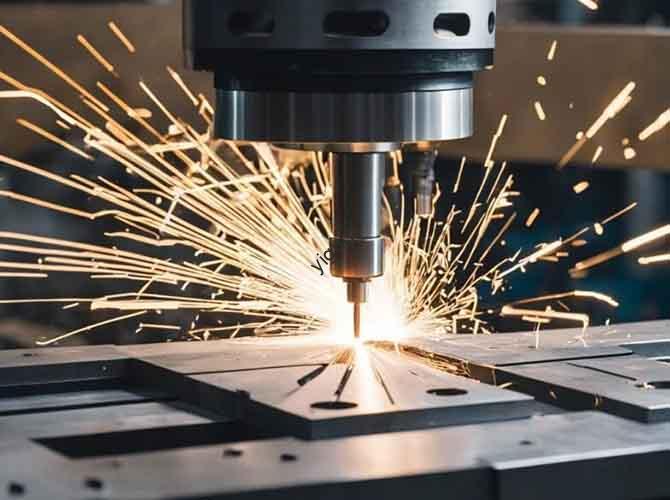
In the fast-paced world of manufacturing, finding the right balance between speed and precision is vital. The vertical CNC machining center, often called a VMC, has become the primary choice for shops making flat parts and complex molds. These machines use computer controls to automate cutting, making them more reliable than manual tools. Whether you are a small startup or a large factory, understanding how a VMC works can help you boost your production efficiency. This guide explains the core features, parts, and benefits of these powerful machines.
What Is a Vertical Machining Center?
A vertical CNC machining center is a computer-aided machine tool where the spindle sits in a vertical position. This means the cutting tool moves up and down while the workpiece stays on a flat table. This setup allows the machine to cut from the top, which is perfect for drilling, milling, and tapping plate-shaped parts.
Key Features of a VMC
Compared to other machine types, the VMC is known for being compact and easy to use. Because the spindle is vertical, gravity helps hold the part down, making it easier to set up your work.
| Feature | Description |
| Orientation | Vertical spindle for top-down cutting. |
| Footprint | Takes up 30-50% less space than horizontal models. |
| Cost | Much more affordable than horizontal centers. |
| Visibility | Excellent view of the part during the cutting process. |
How Does a VMC Work Internally?
To reach micron-level accuracy, a VMC relies on several high-tech parts working together. It is not just about spinning a tool; it is about controlled, precise motion.
Core Components and Their Roles
- The Bed: This is the heavy cast iron base. It absorbs vibrations to keep your cuts smooth.
- The Headstock: This holds the spindle. High-speed VMCs can spin at 15,000 RPM, allowing for very fast material removal.
- Servo Motors: These are the “muscles” of the machine. They move the table along the X, Y, and Z axes with an accuracy of ±0.001mm.
- The CNC System: This is the “brain.” It reads G-code (programming language) to tell the motors exactly where to move.
Pro Tip: Modern VMCs often include an Automatic Tool Changer (ATC). This allows the machine to switch between 20 or 30 different tools in seconds without any human help. This reduces downtime and keeps the machining cycle short.
Why Is a VMC Better for You?
Choosing a VMC offers several technical edges that solve common manufacturing headaches. From cost savings to high-speed output, here is why it stands out.
High-Speed and Heavy Cutting
Because the structure is rigid, a VMC can cut through tough materials like hardened steel or titanium. For example, a manufacturer making aluminum phone cases can use a VMC to drill 100 holes in one cycle. This is much faster than using manual tools, often cutting production time in half.
Ease of Operation and Setup
One of the biggest wins for a VMC is its usability. Operators can easily see the workpiece, which makes it simple to debug programs. Clamping a flat part to the table is quick, which is ideal for shops that need to change setups often for different jobs.
Precision Engineering Results
VMCs use linear scales to track movement. This ensures that the machine can repeat the same cut perfectly thousands of times. If you need a tolerance of ±0.005mm, a well-calibrated VMC is the most cost-effective way to get it.
Yigu Technology’s Perspective
At Yigu Technology, we believe the VMC is the backbone of the modern machine shop. It offers the best return on investment for companies making plates, shells, or molds. We focus on providing VMCs with durable cast iron beds that reduce maintenance costs by 20%. For our clients, we recommend the VMC because it is easy to learn and delivers consistent precision machining from day one.
FAQ
Can a VMC process 3D curved parts?
Yes, but it is best for shallow curves. For very deep or complex 3D shapes, a 5-axis machine is usually a better choice.
How much floor space do I need for a VMC?
A small industrial VMC typically needs about 2m x 3m of space. Larger units for high-volume work may need 3m x 4m.
What is the daily maintenance for a VMC?
You should clean the worktable and spindle every day. Also, check the lubrication levels once a week to keep the lead screws moving smoothly.
Discuss Your Projects with Yigu Rapid Prototyping
Are you looking for high-quality parts with fast turnaround times? At Yigu Technology, we specialize in using advanced Vertical CNC Machining Centers to bring your designs to life. Our team can help you choose the best materials and processes to save costs and improve quality.
Would you like a free quote or a review of your CAD files?