
Introduction
The world of 3D printing is no longer a futuristic novelty; it’s a critical tool for prototyping, custom manufacturing, and artistic creation. However, the sheer variety of 3D printing equipment—from a $200 desktop gadget to a million-dollar industrial system—can be overwhelming. Choosing the wrong technology can lead to wasted budgets, unmet project goals, and frustrating limitations. This isn’t just about buying a printer; it’s about selecting a manufacturing process that aligns with your required material properties, precision, and production scale. This guide provides a professional, application-focused framework to cut through the jargon. We’ll compare core technologies, translate technical specs into real-world outcomes, and provide a clear decision matrix to ensure you invest in the equipment that truly fits your needs.
What Are the Core 3D Printing Technologies and Their Real-World Applications?
Each type of 3D printer uses a fundamentally different method to create objects. Understanding these core principles is the first step to making an informed choice.
Fused Deposition Modeling (FDM): The Versatile Workhorse
FDM printers build parts by extruding a thermoplastic filament through a heated nozzle, depositing material layer by layer. It’s the most common and accessible technology.
- Ideal For: Concept modeling, functional prototypes, low-volume custom parts, educational tools, and large-format builds.
- Key Materials: PLA, ABS, PETG, Nylon, TPU (flexible), and composites (carbon fiber, wood-filled).
- Strengths: Lowest equipment and material cost, wide material selection, large build volumes, and ease of use and maintenance. Excellent for testing form, fit, and basic function.
- Limitations: Visible layer lines requiring post-processing for smooth finishes, anisotropic strength (weaker between layers), and generally lower resolution and detail compared to resin-based systems.
Stereolithography (SLA) & Digital Light Processing (DLP): The Detail Masters
These vat photopolymerization technologies use a light source (laser in SLA, projector in DLP) to cure liquid resin into solid plastic layer by layer.
- Ideal For: High-detail prototypes, jewelry casting patterns, dental and medical models, intricate miniatures, and molds for casting.
- Key Materials: Standard, tough, flexible, castable, and biocompatible photopolymer resins.
- Strengths: Exceptional surface finish and detail resolution (layer heights down to 0.025mm), isotropic part strength, and ability to produce very fine features and smooth organic shapes.
- Limitations: Higher material cost, smaller build volumes on desktop systems, post-processing required (washing and curing), resin can be messy and requires careful handling, and parts may degrade in UV light.
Selective Laser Sintering (SLS): The Functional Prototyping Powerhouse
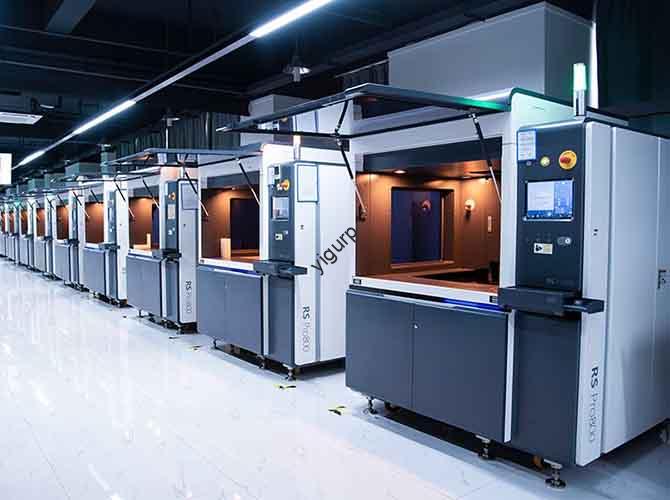
SLS printers use a high-power laser to fuse small particles of polymer powder (typically Nylon) into a solid structure. The unfused powder supports the part during printing.
- Ideal For: Complex, functional prototypes, end-use production parts, ducting, housings, and components with integrated moving parts or hinges.
- Key Materials: Nylon 11, Nylon 12, and TPU powders.
- Strengths: No support structures needed, enabling incredibly complex geometries. Parts have excellent, isotropic mechanical properties—they are strong, durable, and heat-resistant. Ideal for parts that must function like final injection-molded products.
- Limitations: High machine cost, granular surface finish, and the process requires post-processing powder handling and recycling. Primarily an industrial/service bureau technology.
Metal Additive Manufacturing (SLM/DMLS, EBM): The Industrial Game-Changer
These systems fuse fine metal powder using an energy source (laser for SLM/DMLS, electron beam for EBM) to create fully dense metal parts.
- Ideal For: Aerospace components, medical implants, high-performance automotive parts, and complex tooling (conformal cooling molds).
- Key Materials: Titanium alloys, stainless steel, aluminum, Inconel, and cobalt-chrome.
- Strengths: Creates high-strength, lightweight metal parts with geometries impossible to machine. Enables part consolidation and performance optimization.
- Limitations: Extremely high capital and operational costs, requires specialized facilities and operator expertise, and parts often need significant post-processing (heat treatment, support removal, machining).
How Do You Systematically Choose the Right Equipment? A Decision Matrix
The following table provides a direct comparison based on key decision drivers. Use it to narrow down your options.
| Decision Driver / Requirement | FDM | SLA/DLP | SLS | Metal (SLM/EBM) |
|---|---|---|---|---|
| Primary Use Case | Visual models, rough functional tests, tools/jigs. | High-detail visual models, intricate designs, casting patterns. | Advanced functional prototypes, complex ducting, end-use parts. | End-use, high-performance metal components. |
| Target Budget (Equipment) | $200 – $5,000 (Desktop) | $2,000 – $10,000 (Prosumer) | $10,000 – $100,000+ (Industrial) | $200,000 – $1,000,000+ |
| Material Cost & Variety | Low. Wide variety of inexpensive thermoplastics. | Medium-High. Specialty resins can be costly. | High. Powder materials are expensive. | Very High. Metal powders are premium materials. |
| Part Strength & Durability | Good, but anisotropic. Best for light to medium duty. | Brittle to Tough (depends on resin). Good isotropic strength. | Excellent. Strong, durable, and isotropic. Ideal for functional parts. | Superior. Full-density metal with properties near wrought material. |
| Surface Finish & Detail | Poor to Fair. Visible layer lines. | Excellent. Smooth, high-detail surfaces. | Fair (grainy, matte finish). Good feature detail. | Fair to Good. Often requires machining for smoothness. |
| Operational Complexity | Low. Good for beginners. | Medium. Post-processing is involved. | High. Powder handling requires care and space. | Very High. Demands specialized facilities and expertise. |
| Best Suited User | Hobbyists, educators, startups, engineers for early-stage R&D. | Designers, jewelers, dentists, engineers needing high-fidelity models. | Professional engineers, product developers, low-volume manufacturers. | Aerospace, medical, automotive industries with capital for advanced manufacturing. |
What Are the Critical Hidden Costs and Considerations?
Beyond the sticker price of the machine, several factors significantly impact total cost of ownership and success.
How Much Does Post-Processing Infrastructure Cost?
- FDM: May require sanding, priming, painting stations. A dry box for filament storage is highly recommended.
- SLA/DLP: Requires a wash station (IPA or solvent) and a UV cure chamber. These are often sold separately and are essential.
- SLS/Metal: Requires powder recovery systems, sieves, and bead blasters. For metal, dedicated heat treatment furnaces and CNC machines for final finishing are often necessary, representing a major additional investment.
What is the True Cost of Materials and Consumables?
- FDM: Filament is cheap, but nozzles wear out (especially with composites). Build surfaces (PEI sheets, glue) are consumables.
- SLA/DLP: Resin cost per liter is high. Resin tanks (FEP film) and build platforms are regular wear items that need replacement.
- SLS/Metal: Material cost is high. For SLS, a significant portion of powder is recycled, but refresh rates affect consistency. In metal printing, support structures add to material waste and post-processing labor.
How Demanding is Facility and Operational Support?
- Ventilation: SLA/DLP resins and FDM with ABS require good ventilation or filtration. SLS and Metal printers often require dedicated, climate-controlled rooms with industrial ventilation and gas management systems.
- Power & Space: Industrial machines require three-phase power and significant floor space for the printer and ancillary equipment.
- Expertise: Operating an SLS or Metal printer is a skilled technical role, not a task for a casual user. Factor in training costs or hiring specialized personnel.
Can You Provide a Real-World Selection Scenario?
Scenario: A medical device startup is developing a new surgical guide. They need to produce 50-100 patient-specific, sterile-compatible guides per month for clinical trials.
- Requirements: High accuracy (<0.1mm error), biocompatible material, smooth surface finish (to avoid tissue irritation), and ability to iterate designs quickly.
- Analysis:
- FDM: Lacks the required accuracy and surface finish. Most biocompatible filaments are not certified for direct patient contact.
- SLS: Excellent for complex parts, but the grainy surface is not ideal for tissue contact, and obtaining biocompatible powder certifications is challenging.
- SLA/DLP: The clear winner. They can use a medical-grade, Class I biocompatible resin on a high-accuracy DLP printer. The process yields parts with the necessary smoothness and detail. Post-processing (washing, curing, and sterilization) is manageable at their volume.
- Outcome: The startup invests in a professional-grade DLP printer, a wash/cure station, and establishes a post-processing workflow compliant with their quality management system. This allows them to control production in-house, iterate rapidly, and ensure quality for their clinical study.
Conclusion
Selecting the right 3D printing equipment is a strategic decision that hinges on a clear understanding of your output requirements, budget constraints, and operational capabilities. There is no “best” printer, only the best printer for your specific application. Use the technology comparison and decision matrix to align your needs with a printer’s core competencies: choose FDM for affordability and versatility, SLA/DLP for unparalleled detail, SLS for robust functional parts, and Metal AM for high-performance end-use components. Crucially, remember to budget for the total ecosystem—post-processing, materials, facility needs, and expertise. By taking this comprehensive, application-driven approach, you can transform 3D printing from a confusing array of options into a precise and powerful tool that accelerates innovation and delivers tangible value.
FAQ: Choosing 3D Printing Equipment
Q: I need to make both high-detail prototypes and durable functional parts. Should I buy two printers?
A: It depends on your volume and budget. For a professional workshop, it is common to have both an FDM and an SLA printer to cover a wide range of needs. However, if you must choose one, consider an FDM printer capable of printing advanced engineering materials (like Nylon or PC blends) and invest heavily in dialing in settings for the best possible surface finish. For very high-quality functional prototypes, using an SLS printing service might be more cost-effective than purchasing the machine yourself.
Q: How important is build volume, and can I print large objects on a small printer?
A: Build volume is a hard limit. You cannot print an object larger than the printer’s build area in a single piece. While slicing software allows you to cut models into parts for assembly, this adds post-processing labor (gluing, sanding) and can weaken the structure. For consistent production of large items, a printer with an appropriate build volume is essential. Consider your most common part size when choosing.
Q: What does “open filament” or “closed ecosystem” mean, and why does it matter?
A: Some printer manufacturers, particularly in the SLA/DLP space, use a “closed ecosystem” where you are required to use their proprietary (and often more expensive) resins and software. “Open” systems (common in FDM) allow you to use third-party materials and open-source slicing software, giving you more flexibility and potentially lower material costs. This is a significant long-term cost and flexibility consideration.
Q: Is it better to start with a cheap printer to learn?
A: This is a classic debate. A very cheap FDM printer can be a frustrating introduction due to constant calibration and reliability issues, potentially discouraging new users. A mid-range, well-reviewed FDM printer from a reputable brand often provides a much better learning experience with higher success rates, allowing you to focus on design rather than machine troubleshooting. Consider it an investment in a productive workflow.
Discuss Your Projects with Yigu Rapid Prototyping
Navigating the complex landscape of 3D printing technologies is what we do best. At Yigu Rapid Prototyping, we don’t just sell equipment; we provide solutions based on deep application engineering. Our team can analyze your project goals, material requirements, and production volumes to recommend the optimal technology path—whether that’s purchasing the right equipment for your facility or leveraging our on-demand manufacturing service for prototypes and production parts. We offer hands-on training, ongoing technical support, and material consulting to ensure your investment delivers maximum value. Contact us for a no-obligation consultation to map out your 3D printing strategy.