
Our CNC Thread Machining Services
Elevate your component’s reliability with our CNC Thread Machining services—where advanced CNC Technology transforms raw materials into high-precision threads (internal, external, metric, imperial, and more).
Yigu combine expertise in Thread Cutting and Thread Milling to deliver threads with tight tolerances, durable finishes, and consistent quality, tailored to automotive, aerospace, and industrial sectors. Partner with us for cost-effective, on-time thread solutions that ensure seamless assembly and long-lasting performance.
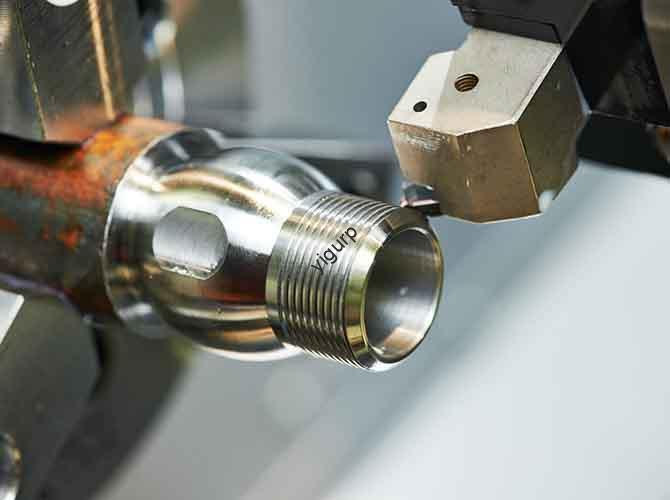
Our Capabilities: What We Can Deliver
Our CNC Thread Services cover a full range of thread types and project scales, from prototypes to high-volume production. Below is a detailed breakdown of our Machining Capacity, Precision Thread Machining skills, and supported Thread Types:
| Capability Category | Details | Specifications |
| Thread Types | Internal (tapped), external (bolts/screws), metric, imperial, ACME, square, buttress, pipe threads | Size range: M1–M100 (metric); #0–1″ (imperial); Pitch: 0.25–5 mm (metric); 4–40 TPI (imperial) |
| Workpiece Size | Small components (e.g., electronic connectors) to large parts (e.g., industrial shafts) | Max workpiece diameter: 1,500 mm; Max thread depth: 200 mm |
| Production Volume | Flexible for low-batch prototypes and mass production | Prototypes: 1–100 units; Mass production: 10,000–1,000,000+ units/year |
| Precision Level | Ultra-tight control for critical thread performance | Thread tolerance: ISO 4H/4g (high precision); ISO 6H/6g (standard); Runout: ±0.002 mm |
| Customization | Tailored to unique designs and industry standards | Supports custom thread profiles, non-standard pitches, and hard-to-reach threads (e.g., deep holes) |
No matter your thread needs—whether a single custom ACME thread for a machine lead screw or 500,000 metric tapped holes for automotive parts—our Capabilities are scaled to meet your timeline and quality goals.
What Is CNC Thread Machining?
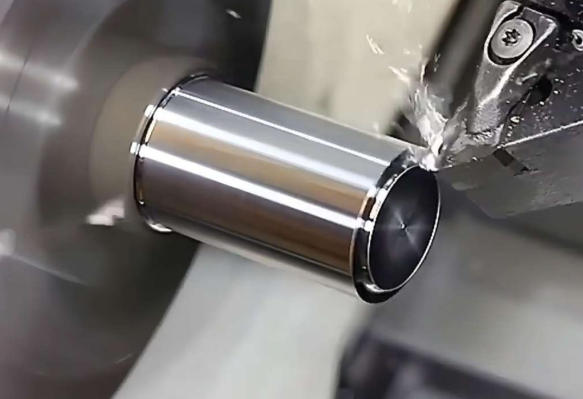
CNC Thread Machining is a computer-controlled manufacturing process that creates threaded features—helical ridges (threads) on a workpiece’s surface or interior, designed to fasten, connect, or transmit motion between components. Unlike manual thread cutting (which depends on operator skill and risks inconsistency), CNC Thread Machining uses pre-programmed CNC Technology to automate every step, ensuring repeatable precision.
The process primarily relies on two core methods: Thread Cutting (removing material to shape threads, e.g., with taps or dies) and Thread Milling (using rotating milling cutters to carve threads, ideal for complex or large workpieces). CNC Thread Machining integrates CAD/CAM software to define thread parameters—pitch, diameter, depth, and profile—making it suitable for both standard threads (e.g., metric M5, imperial 1/4-20) and custom designs. Whether for tiny electronic fasteners or large industrial bolts, CNC ensures threads that fit and function perfectly.
Process: The CNC Thread Manufacturing Steps
The CNC Thread Machining Process follows a structured sequence to ensure consistent quality and functionality. Below is a step-by-step overview of our Thread Manufacturing Steps, including Thread Cutting Process, Thread Milling Process, and Thread Forming Process:
- Design & Programming: We start with your 2D/3D CAD model (e.g., STEP, IGES) and use CAM software to create a CNC program. This program defines key thread parameters: type (internal/external), size, pitch, depth, and machining method (cutting/milling/forming).
- Material Preparation: The chosen material (e.g., steel, aluminum) is cut into blanks and secured in a CNC machine’s fixture. For hard materials (e.g., tool steel), we may pre-heat-treat to improve machinability.
- Rough Machining (If Needed): For large threads or thick workpieces, we first remove excess material to create a near-final diameter (reducing stress on thread tools during finishing).
- Thread Machining: We select the method based on thread type and material:
- Thread Cutting: Uses taps (for internal threads) or dies (for external threads) to remove material. Ideal for small, standard threads (e.g., M3–M10) and high-volume production.
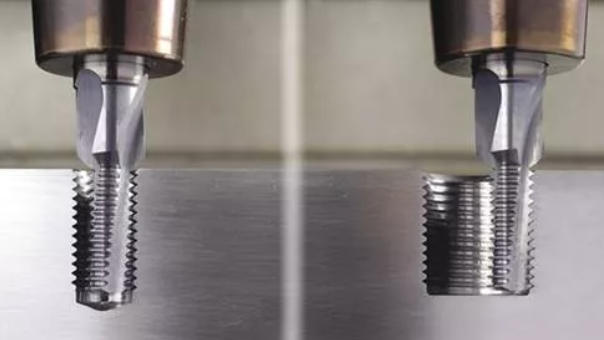
- Thread Milling: Uses multi-flute milling cutters to carve threads. Perfect for large threads (e.g., M50+), complex profiles (e.g., ACME), or hard-to-reach areas (e.g., deep internal threads).
- Thread Forming: For ductile materials (e.g., aluminum, brass), we use rolling dies to reshape material (no cutting) for stronger, more durable threads.
- Quality Inspection: After machining, we inspect threads using tools like thread gauges (GO/NO-GO), optical comparators, or CMMs to verify pitch, diameter, and tolerance compliance.
Materials: Suitable for CNC Thread Machining
CNC Thread Machining works with any material that is machinable (for cutting/milling) or ductile (for forming). Below are the Common Thread Materials we process, along with their Material Properties and ideal uses:
| Material | Hardness (HRC) | Tensile Strength (MPa) | Key Properties | Typical Thread Applications |
| Carbon Steel (1045) | 15–20 (annealed); 30–35 (heat-treated) | 600–700 | Good strength, low cost, easy to machine | Bolts, nuts, industrial fasteners |
| Stainless Steel (316) | 18–22 | 550 | Corrosion resistance, durability | Marine hardware, medical equipment |
| Aluminum Alloy (6061) | 6–12 | 310 | Lightweight, high ductility, good conductivity | Aerospace components, electronic enclosures |
| Brass (C36000) | 15–20 | 310 | Excellent machinability, low friction | Plumbing fittings, electrical connectors |
| Titanium Alloy (Ti-6Al-4V) | 30–35 | 900 | High strength-to-weight ratio, biocompatibility | Aircraft fasteners, orthopedic implants |
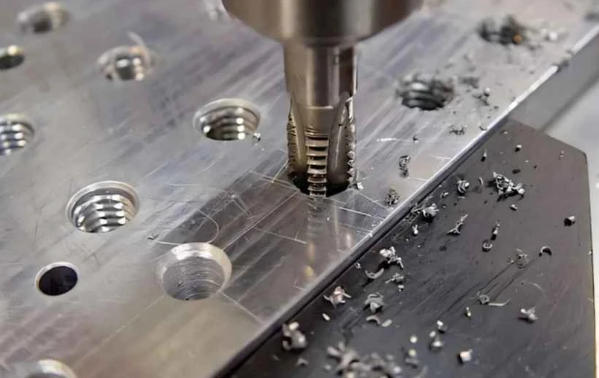
Our Material Selection process involves collaborating with you to match material properties to your thread’s use case—e.g., corrosion resistance for marine threads, lightweight for aerospace, or ductility for formed threads.
Tolerances: Precision for Reliable Thread Function
Thread Tolerances directly impact fit and performance: too loose, and threads may vibrate loose; too tight, and they may seize or break. We maintain strict Tolerance Control to meet global standards. Below are our Precision Tolerances for key thread features:
| Thread Feature | Tolerance Levels | Industry Standard (ISO 965-1) | Impact on Performance |
| Major Diameter (External Threads) | ±0.003–±0.01 mm | 4g (high precision); 6g (standard) | Ensures proper fit with nuts; prevents excessive play |
| Minor Diameter (Internal Threads) | ±0.004–±0.012 mm | 4H (high precision); 6H (standard) | Maintains thread strength; avoids thread stripping |
| Pitch Error | ±0.002–±0.008 mm | Class 3 (high precision); Class 2 (standard) | Ensures smooth assembly; reduces wear during tightening |
| Thread Runout | ±0.001–±0.005 mm | ISO 1101 | Prevents uneven load distribution; reduces vibration |
Our Machining Tolerances are calibrated to your application—from Class 2/6H/6g (everyday fasteners) to Class 3/4H/4g (critical aerospace or medical threads).
Advantages: Why Choose CNC Thread Machining?
CNC Thread Machining offers clear benefits over manual or traditional thread-making methods. Below are the key Advantages of CNC Thread Machining:
- Superior Precision: With Precision Advantages like Class 3 tolerance and ±0.002 mm pitch error, CNC ensures threads that fit perfectly every time. Manual tapping often struggles to meet even Class 2 standards.
- Cost Advantages: For high-volume production, CNC automates labor-intensive steps (e.g., tapping, milling), reducing labor costs by 35–50% vs. manual methods. It also minimizes tool wear (CNC tools last 2–3x longer), cutting replacement costs.
- Flexibility for Custom Threads: CNC easily handles non-standard threads (e.g., custom pitches, ACME profiles) or hard-to-reach threads (e.g., deep internal holes) without retooling. Manual methods require new tools for each custom design.
- Quality Advantages: CNC uses real-time monitoring to detect issues (e.g., tool wear, material defects) early, ensuring 99.8% defect-free production. Manual threading relies on operator judgment, leading to 5–10% error rates.
- Faster Lead Times: CNC machines run 24/7, cutting lead times by 40–60% for high-volume orders. A batch of 10,000 tapped holes takes 1–2 days with CNC, vs. 3–5 days with manual tapping.
Applications Industry: Where CNC Threads Add Value
Our CNC Thread Services support diverse Industry Sectors, addressing unique challenges in each field. Below are key Industry Applications and how we deliver value:
| Industry | Application Fields | CNC Thread Uses | Key Requirements Met |
| Automotive | Engine blocks, transmission casings, chassis components | Metric tapped holes (M6–M12), external bolts | High volume (500,000+ units/year); ISO 6H/6g tolerance; corrosion resistance |
| Aerospace | Aircraft wings, engine mounts, hydraulic systems | Titanium/Inconel threads, ACME lead screws | Lightweight materials; Class 3 precision; high-temperature resistance |
| Industrial Machinery | Machine tool beds, conveyor rollers, pump housings | Large pipe threads (NPT), square threads | High load capacity; ISO 7H/7g tolerance; wear resistance |
| Electronics | Circuit board enclosures, connector ports | Small metric threads (M1–M3), brass tapped holes | Miniature size; low friction; electrical conductivity |
| Medical | Surgical instruments, implantable devices (e.g., bone screws) | Titanium threads, polished finishes | Biocompatibility; Class 3 precision; corrosion resistance (ISO 10993) |
Case Studies: Success Stories from Our Clients
Case Study 1: Automotive Engine Block Tapped Holes
Challenge: A leading automotive manufacturer needed 1 million metric tapped holes (M8 × 1.25, ISO 6H) in aluminum engine blocks. The holes required consistent depth (15 mm), no burrs, and a 5-day lead time—manual tapping couldn’t meet the volume or precision.
Solution: We used CNC multi-spindle tapping machines (8 spindles/unit) to tap 8 holes simultaneously. We chose aluminum alloy (6061) for the blocks and added zinc plating to the taps for longer tool life. Our real-time monitoring system checked hole depth and tolerance after each cycle.
Result: Delivered 1 million holes in 4.5 days with 99.9% defect-free rate. The client reported a 30% reduction in assembly time (no burrs to clean) and a 25% lower tool cost vs. their previous supplier.
Case Study 2: Aerospace Titanium Lead Screws
Challenge: An aerospace company needed 200 ACME lead screws (1″ diameter, 5 TPI, Class 3 tolerance) for aircraft hydraulic systems. The screws required titanium alloy (Ti-6Al-4V) threads, 100 mm thread depth, and FAA certification—manual machining couldn’t reach the precision or depth.
Solution: We used 5-axis CNC thread milling with solid carbide cutters. We heat-treated the titanium to 35 HRC before machining and added Teflon coating to prevent thread seizing. Each screw was inspected with a CMM and thread gauge to verify Class 3 compliance.
Result: All screws passed FAA certification. The client noted that the threads handled 25% more load than their previous steel screws and showed no wear after 1,000+ test cycles.