
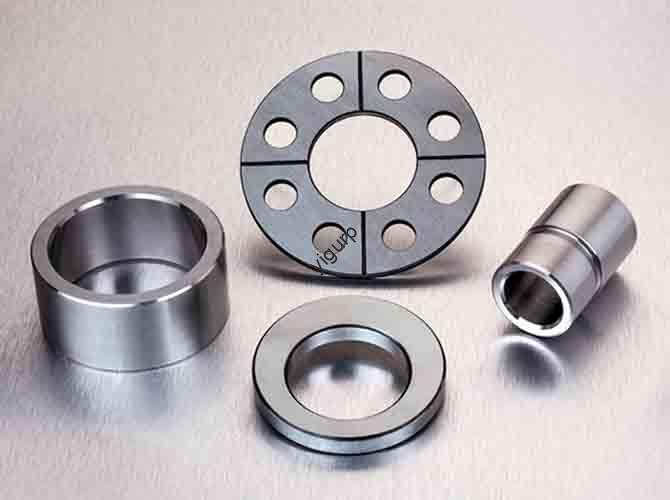
In the fast-paced world of product development, POM (polyoxymethylene)—often called acetal resin—is a heavyweight champion. Preferred by the automotive, electronics, and consumer goods industries, POM offers a unique blend of mechanical strength, low friction, and incredible wear resistance. It feels and machines almost like a soft metal.
However, its strengths are also its challenges. POM is notoriously heat-sensitive. If you push it too hard or use the wrong cooling strategy, you will end up with surface burns, structural cracking, or a part that simply won’t hold its dimensions. This is where Swiss CNC machines (especially Swiss-type lathes) save the day. Their unique precision engineering and multi-axis capabilities allow for high-speed cutting while maintaining a cool, stable environment for the material. This guide explores the complete process of turning raw POM into high-performance sample models.
What Makes Swiss CNC Perfect for POM?
Conventional lathes often struggle with plastic because they lack the rigid support needed for small, thin parts. A Swiss CNC machine changes the game by using a sliding headstock and a fixed guide bushing. This setup supports the POM bar right at the point of the cut, which is vital for a material that can “flex” under pressure.
Key Components and Their Roles
To get a perfect finish on a POM sample, the machine must absorb vibration and manage heat. Each part of the Swiss lathe works toward this goal.
| Component | Function for POM Processing | Key Benefit |
| Swiss-Type Lathe | Sliding headstock moves the bar through a bushing. | Eliminates vibration for a mirror-like finish. |
| Heavy-Duty Base | Cast iron structure absorbs cutting forces. | Prevents tool chatter on hard POM surfaces. |
| High-Speed Spindle | Runs between 2,000 and 8,000 rpm. | Prevents melting by controlling the heat-per-cut. |
| Live Tooling | Allows milling and drilling in one setup. | Reduces heat by finishing the part in one go. |
The Precision Chef Analogy
Think of a Swiss CNC machine as a precision chef. Just as a chef uses a sharp knife and a controlled flame to cook a delicate piece of fish without burning it, the Swiss machine uses carbide tools and high-pressure coolant to shape POM without melting it.
Do You Know POM’s “Do’s and Don’ts”?
POM is a high-performance plastic, but it is not invincible. Its low thermal conductivity means heat stays trapped at the tip of the tool. If you don’t manage this, the surface of your sample model will turn a dull, brownish color—a sure sign of a surface burn.
Understanding POM Properties
To achieve success, you must respect the material’s limits. For instance, POM is surprisingly abrasive. Even though it is plastic, it can dull a standard steel tool faster than you might expect.
- Mechanical Strength: With a tensile strength of 60–70 MPa, POM can handle fast cuts, but it hates sudden “stabs” or plunges from a tool.
- Hardness: It sits at Rockwell M 80–90. This hardness makes it great for gears but requires carbide inserts to maintain a sharp edge.
- Thermal Sensitivity: POM melts at around 165–175°C. You must keep your cutting zone well below 150°C to prevent crystallization or melting.
Expert Insight: If you see your POM chips turning into a melted blob or sticking to the tool, your cutting speed is too high or your coolant is failing. We recommend a flow rate of 25–30 L/min to keep the temperature stable.
How to Optimize Your Design for POM?
A great POM sample model starts on the screen. If your CAD design forces the machine to make risky, deep cuts, the risk of failure increases. You want to design for manufacturability to ensure the Swiss CNC can do its best work.
Smart Design Guidelines
When designing for Swiss CNC processing, focus on reducing “heat traps”—areas where hot chips can’t escape.
- Avoid Deep Slots: Keep slots at an aspect ratio of less than 3:1. Deep, narrow grooves trap heat and lead to internal cracking.
- Use Fillets: Avoid sharp 90-degree internal corners. Adding a small 0.5 mm radius reduces stress concentrations.
- Tolerances: For functional parts like gears, aim for ±0.02 mm. Pushing for ±0.005 mm on POM is possible but often unnecessary and doubles the processing time.
A Quick Design Reference
| Aspect | Recommendation | Why? |
| Hole Depth | Max 4x Diameter | Prevents chip jamming and heat buildup. |
| Wall Thickness | Min 0.8 mm | Prevents the part from warping during the cut. |
| Corner Radii | Min 0.5 mm | Stops stress-cracking in hard POM. |
What Are the Steps for Processing?
The Swiss CNC processing process is a logical flow that prioritizes speed, cooling, and surface quality. At Yigu, we follow a strict “precision-first” workflow.
1. Preparation and Setup
We start by selecting high-quality POM bar stock. We store this in a dry environment because, while POM is moisture-resistant, extreme humidity can cause surface blemishes during high-speed turning. We then install K10-K20 grade carbide inserts.
2. Rough and Finish Turning
During rough turning, we remove the bulk of the material. We set the spindle to 3,000–4,000 rpm. Once the basic shape is formed, we move to finish turning. Here, we use a sharp tool with a positive rake angle (10–15°). This “slices” the POM, leaving a surface roughness of Ra ≤ 0.8 μm.
3. Drilling and Milling
For holes, we use peck drilling. This means the drill enters 1 mm, retracts to clear the stringy chips, and repeats. This prevents the drill from “binding” and cracking the POM. For milling, we always use climb milling. The tool rotates with the workpiece, which reduces friction and keeps the edges crisp.
4. Parting and Finishing
Finally, we part the sample from the bar. If the design requires an ultra-smooth finish (Ra ≤ 0.4 μm), we perform wet-sanding with 1,500 grit paper. However, on a properly tuned Swiss CNC, post-processing is rarely needed.
How to Inspect for POM Reliability?
Because POM sample models are often used to validate mechanical designs (like automotive door latches or medical gears), the inspection phase is critical. You aren’t just looking for size; you are looking for structural integrity.
The Inspection Checklist
- Dimensional Accuracy: Use digital micrometers (±0.001 mm) to check critical diameters.
- Stress Inspection: Hold the part up to a polarized light. This reveals “internal stress lines.” If the lines are too dense around a hole, the part may fail during testing.
- Surface Quality: Look for “cloudy” areas. This is a sign of micro-melting. A healthy POM part should have a consistent, semi-glossy finish.
| Aspect | Method | Standard |
| Outer Diameter | Digital Micrometer | Design spec (e.g., ±0.02 mm) |
| Hole Fit | Pin Gages | ISO 286-1 (H7/H8) |
| Surface Finish | Roughness Meter | Ra 0.8 μm or better |
Yigu Technology’s View
At Yigu Technology, we treat POM with the respect a high-performance material deserves. We don’t use “standard” plastic settings. We optimize every toolpath in CAM software to ensure the tool never stays in one place too long—cutting our waste by 35%.
Our Swiss CNC lathes are equipped with high-pressure cooling systems that hit the cutting zone from three angles. This ensures that even the most complex POM gears or medical components come out without a single burn mark. We bridge the gap between a digital design and a functional prototype, helping you get to market with a validated design in record time.
FAQs
Can Swiss CNC machines process thin-walled POM samples?
Yes. By using a guide bushing for support and reducing the clamping force to 10–15 N·m, we can machine POM tubes as thin as 0.3 mm. The key is making multiple shallow passes to avoid deforming the plastic.
What is the best coolant for Swiss CNC processing of POM?
A water-soluble coolant (5–10% concentration) is best. It provides superior cooling compared to oil. Avoid solvent-based coolants at all costs, as they can cause POM to become brittle and eventually crack.
Why do my POM samples crack during drilling?
Cracking is usually caused by heat expansion. When the drill bits get hot, the POM expands and grips the drill, causing it to snap the material. Use peck drilling (1 mm increments) and a sharp carbide drill with a 135° point angle to solve this.
Is POM better than Nylon for sample models?
For mechanical parts, yes. POM has better dimensional stability and lower moisture absorption than Nylon. If your part needs to slide or mesh with other gears, POM is the superior choice for a sample model.
How long do tools last when machining POM?
Even though it’s plastic, POM is abrasive. You should inspect your carbide tools every 20–30 samples. On average, a high-quality insert should be replaced every 200–300 parts to ensure the surface finish doesn’t degrade.
Discuss Your Projects with Yigu Rapid Prototyping
Need a high-precision POM sample model for your next project? At Yigu Technology, we specialize in the “gentle but firm” approach required for acetal machining. From complex medical manifolds to high-wear automotive bushings, our Swiss CNC experts ensure every micron counts.
Would you like me to review your CAD files and provide a detailed DFM (Design for Manufacturing) report for your POM parts?