
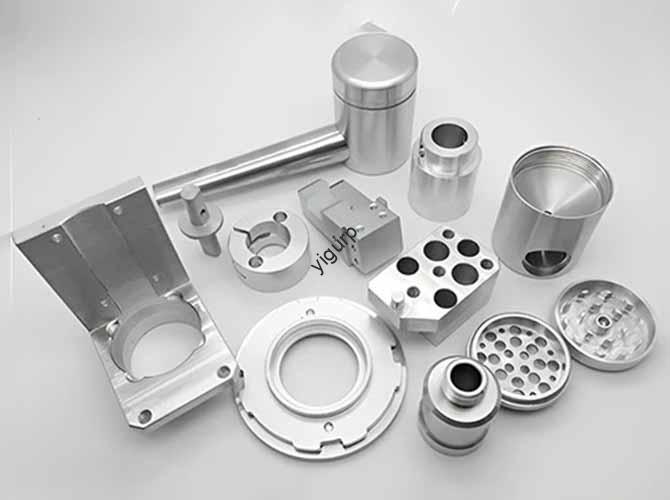
In the fast-paced world of precision engineering, the path from a digital sketch to a physical product is paved with prototypes. Creating high-quality metal prototype parts is a vital step for any design team. You need parts that feel, fit, and function exactly like the final product. While many methods exist, Swiss Machine Technology has become the gold standard for those who demand extreme accuracy.
But how does this technology actually help you? By using a unique sliding headstock and a guide bushing, Swiss machines solve the biggest headaches in prototype part production: vibration and deflection. This guide will walk you through how this technology streamlines the metal machining process. We will help you understand how to cut lead times, meet tight tolerances, and reduce risks in your next development cycle.
What Makes Swiss Machine Technology Unique?
At the heart of modern prototype production is the CNC Swiss Machine. To the untrained eye, it looks like a standard lathe. However, the internal mechanics are vastly different. In a conventional lathe, the part stays still while the tool moves. In a Swiss machine, the part moves through a guide bushing while the tools stay close to the support point.
The Power of the Guide Bushing
The guide bushing is the secret to precision engineering. It supports the metal bar right at the point where the cutting tool meets the material. This setup eliminates “flex.” Without flex, you can achieve tight tolerances that other machines simply cannot touch. This is why Swiss machines are the top choice for small, long, or complex parts.
Key Components of the System
To get the most out of your metal machining process, you need to know the tools in the shed. Each part of the Swiss system plays a specific role in ensuring your sample part is perfect.
| Component | Primary Function | Benefit for Prototypes |
| Swiss Lathe | The main body for turning metal. | Provides a stable base for all cuts. |
| CNC Control | Automates the entire tool path. | Ensures 100% repeatable accuracy. |
| Live Tooling | Tools that spin (mills, drills). | Enables milling and drilling in one setup. |
| Guide Bushing | Supports the metal stock. | Allows for ultra-precise, vibration-free cuts. |
How Does the Machining Process Work?
Producing a metal prototype is a linear journey. It moves from a digital idea to a physical reality through a series of controlled steps. Because Swiss machines use “done-in-one” logic, the process is much faster than traditional methods.
1. Design and Digital Programming
Everything starts with a 3D model. Engineers take your CAD file and translate it into code for the CNC Swiss Machine. At this stage, we select the best metal for your needs. For instance, if you are testing a medical tool, we might choose 316L Stainless Steel. If you just need a fit-test, 6061 Aluminum is a cost-effective choice.
2. Loading and Turning
The raw metal stock—usually a long bar—is fed into the machine. The Swiss-type lathe then performs the primary turning. It shapes the outer diameter of the part. Because the tool is so close to the guide bushing, the cuts are incredibly clean.
3. Secondary Operations with Live Tooling
This is where the magic happens. In the past, you would have to move a part from a lathe to a milling machine to add a hole or a slot. With live tooling, the Swiss machine does it all. It can drill, mill, and thread the part while it is still in the main spindle.
4. Final Refinement and Inspection
Once the “heavy lifting” is done, we might perform grinding to reach a mirror finish. Finally, the sample part goes through a rigorous inspection. We use digital micrometers and CMMs to ensure the part matches your drawing to the micron.
Expert Case Study: I recently worked with a client developing a new fuel injector. They needed a prototype with a tiny internal thread and a micro-hole. Using conventional methods, the part took 6 days and 3 different machines. We switched to a CNC Swiss Machine with live tooling and delivered the finished part in 24 hours.
Why Is Swiss Machining Better for Prototypes?
When comparing Swiss Machine Technology to conventional lathes, the winner is clear for high-precision work. Traditional machines struggle with thin parts or complex features because the metal “pushes away” from the tool.
Accuracy and Surface Finish
Swiss machines can hold a tolerance of ±0.0005mm. That is thinner than a human hair! For prototype part production, this means your test results will be more reliable. If the prototype fits perfectly, you know the mass-produced version will too.
Drastic Reduction in Turnaround Time
Time is money in product development. Conventional machining often requires 5 to 7 days because of multiple setups. A Swiss machine can often finish the same metal prototype in 1 to 3 days. By removing the need to move parts between machines, we eliminate the risk of “stacking errors.”
Comparison Table: Swiss vs. Conventional
| Factor | Swiss Technology | Conventional Machining |
| Precision | Ultra-High (±0.0005mm) | Moderate (±0.01mm) |
| Complexity | Handles micro-features easily. | Struggles with small details. |
| Lead Time | 1–3 Days | 5–7 Days |
| Setup Risk | Low (One setup) | High (Multiple setups) |
Can Swiss Machines Meet Tight Tolerances?
The term “precision engineering” is often thrown around, but in Swiss machining, it is a hard requirement. The goal is total control over every micron. This is especially critical for industries like aerospace and medical devices.
Controlling Deflection
In standard machining, a long, thin part will bend when the tool hits it. In a Swiss machine, the metal is supported so well that deflection is almost zero. This allows for micro machining where we can produce parts as small as 0.5mm in diameter.
Reliability in Testing
If you are producing a batch of 10 prototypes for a clinical trial, every single one must be identical. CNC programming ensures that the 10th part is exactly the same as the 1st. This level of accuracy in reproduction is what allows engineers to trust their data during prototype testing.
How to Optimize Your Prototype Production?
To get the most out of your budget, you should follow specific manufacturing techniques. These strategies help you solve the most common challenges in the shop.
Use the “Done-in-One” Strategy
Always design your parts to take advantage of live tooling. If you can avoid a secondary operation, you will save roughly 30% on labor costs. Ask your manufacturer if they can perform all drilling and milling on the Swiss machine in a single run.
Material Choice Matters
Don’t just pick a metal because it’s cheap. For a functional prototype, you must use the same material as the final product.
- Titanium: Best for weight-sensitive aerospace parts.
- Stainless Steel: Best for corrosion resistance in medical tools.
- Brass: Excellent for electrical conductivity.
Start with Small Batches
Swiss machines are very efficient for small runs of 5 to 50 parts. Before you commit to a huge order, run a small batch of sample parts. This allows you to catch design flaws early. Because the setup is so efficient, making these small batches is surprisingly affordable.
Yigu Technology’s Perspective
At Yigu Technology, we believe that Swiss Machine Technology is the ultimate shortcut for product developers. We have seen firsthand how it removes the “guesswork” from the metal machining process. Our clients often come to us with designs that other shops say are “too small” or “too complex.”
By using high-end CNC Swiss Machines, we provide our partners with a competitive edge. We don’t just make parts; we help you accelerate your entire development cycle. When you can get a high-precision metal prototype in a few days instead of a few weeks, you can iterate faster and beat your competition to market.
Conclusion
Mastering the production of metal prototype parts requires the right tools and a smart strategy. Swiss Machine Technology provides the stability, speed, and accuracy that modern engineers demand. By supporting the workpiece with a guide bushing and using live tooling for secondary cuts, these machines turn complex designs into reality with ease. Whether you are working on a micro-medical valve or a high-performance aerospace fastener, Swiss machining is the key to unlocking true precision engineering.
FAQ
1. How long does it take to make a metal prototype with a Swiss machine?
For most parts, the turnaround is 1 to 3 days. If the design is very complex or requires exotic metals like Titanium, it might take up to 5 days. However, this is still significantly faster than traditional methods which can take over a week.
2. Can Swiss machines handle all types of metal for prototypes?
Yes, Swiss machines are incredibly versatile. They work perfectly with Aluminum, Stainless Steel, Brass, Titanium, and high-temp alloys. We simply adjust the cutting tools and the CNC speed to match the hardness of the metal.
3. Is Swiss machining cost-effective for small prototype batches (1–10 parts)?
Actually, yes. While the machine itself is expensive, the “one-setup” efficiency reduces labor costs. You don’t have to pay a machinist to move parts between different stations, which makes the cost-per-part lower for small batches of high-precision items.
4. What is the smallest part a Swiss machine can make?
We can accurately produce parts with a diameter as small as 0.5mm. Because of the guide bushing support, we can machine these tiny parts without them breaking or bending during the process.
5. Does Swiss machining produce a good surface finish?
Yes, the surface finish is excellent. Because the machine is so rigid and free of vibration, we can achieve finishes as smooth as 0.4 to 0.8 Ra without secondary polishing.
Discuss Your Projects with Yigu Rapid Prototyping
Are you ready to see your design come to life with unmatched precision? At Yigu Technology, we specialize in Swiss Machine Technology for the most demanding metal prototype projects. Our team of senior product engineers is ready to review your CAD files and provide a detailed DFM (Design for Manufacturing) analysis.
Would you like me to provide a custom quote for your next batch of precision metal prototypes?