
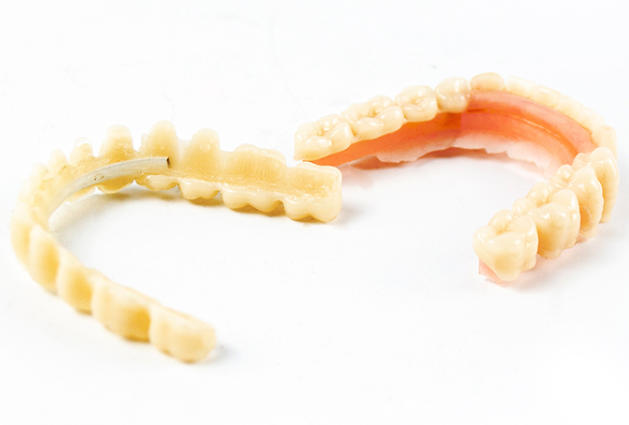
Choosing the right strong 3D printing material is not about picking the “strongest” one. It’s about finding the perfect match for your project’s specific needs. A part that needs to bend and a part that must not break under weight require very different types of strength. This guide cuts through the confusion. We will look at key strength traits like tensile strength and impact resistance. You will learn how to read a material data sheet. We also cover real-world uses, from simple tools to car parts. Our goal is to give you the knowledge to choose wisely, save money, and make prints that last.
Introduction
You have a great 3D model. Now, what material should you use? If you pick wrong, your part might snap, warp, or fail when you need it most. The world of 3D printing materials has grown a lot. We have moved past just PLA and ABS. Today, we have strong options like PETG, Nylon, and Polycarbonate. Each material has a unique “strength profile.” Some are tough and can take a hit. Others are rigid and can hold heavy loads. Knowing these differences is the key to success. This guide will help you understand material strength like a pro. You will learn how to match a material’s power to your project’s demands.
How Do We Define “Strength” in 3D Printing?
“Strength” is not one simple thing. It is a mix of several mechanical properties. A material that is good in one area might be weak in another. For a part to work, you must know which type of strength it needs most.
- Tensile Strength: This is how much pulling force a material can handle before it breaks. Think of it as a tug-of-war with your printed part. A high tensile strength is vital for parts under constant pull, like a belt clip or a load-bearing bracket.
- Impact Resistance: This is the material’s ability to survive a sudden shock or blow without cracking. A material with high impact resistance will bend or dent. A brittle material will shatter. This is crucial for tools, protective cases, or any part that might be dropped.
- Flexural Strength (Stiffness): This measures how much a material can bend before it deforms permanently. A high flexural modulus means the material is very stiff and won’t flex much. A lower one means it is more flexible. You need stiffness for structural parts. You may want flexibility for snap-fit parts or living hinges.
What Are the Top Strong Materials for FDM Printing?
Fused Deposition Modeling (FDM) is the most common 3D printing method. Here are the top strong materials for FDM printers, broken down by their best use case.
Need a Tough, All-Rounder? Use PETG.
PETG (Polyethylene Terephthalate Glycol) hits a sweet spot. It is stronger and more durable than PLA. It is also easier to print than ABS. It offers excellent layer adhesion, which makes prints very reliable.
- Key Strengths: Good impact resistance and chemical resistance. It is also water-resistant. It prints with very little warping.
- Ideal For: Functional prototypes, mechanical parts, containers, and outdoor items.
- Real Case: A maker created custom mounts for a boat’s GPS and radio using PETG. The parts resisted sun, salt spray, and vibration for over two years without failing.
Need High Strength and Durability? Use Nylon.
Nylon (Polyamide) is a premium choice for heavy-duty parts. It is known for being very tough, wear-resistant, and somewhat flexible. It has a high tensile strength and can handle repeated stress.
- Key Strengths: Exceptional toughness, good fatigue resistance, and resistance to abrasion. It is great for parts that move or rub together.
- Ideal For: Gears, hinges, custom tools, and functional parts that undergo stress.
- Real Case: An engineering team used Nylon (PA6) to print a custom drill guide jig. It survived guiding over 500 holes in aluminum without significant wear, outlasting a previous ABS version tenfold.
Need the Ultimate Strength and Heat Resistance? Use Polycarbonate.
Polycarbonate (PC) is one of the strongest thermoplastics you can print. It is used in things like bullet-proof glass and car parts. It has an extremely high tensile strength and can withstand high temperatures.
- Key Strengths: Superior strength, stiffness, and high heat deflection temperature (often above 110°C).
- Ideal For: High-strength fixtures, tooling, parts near engines, or demanding engineering applications.
- Important Note: Printing pure PC requires a printer with an enclosed chamber and a high-temperature hot end (often 270°C+). For easier printing, look for PC blends (like PC-ABS or PC-PETG).
Material Strength Comparison Table
The table below gives a clear, side-by-side view of these strong materials to help you compare.
| Material | Best For | Tensile Strength | Impact Resistance | Heat Resistance | Print Difficulty |
|---|---|---|---|---|---|
| PETG | General-purpose durability | High | High | Medium | Easy |
| Nylon | Tough, wear-resistant parts | Very High | Very High | Medium-High | Medium |
| Polycarbonate | Maximum strength & heat resistance | Extremely High | High | Very High | Hard |
How Does Resin (SLA) Printing Compare for Strength?
SLA resin printing is famous for fine details. But what about strength? Engineering resins have changed the game. They can now match or beat some FDM plastics for specific jobs.
- Tough and Durable Resins: These resins act like ABS or PP plastic. They offer high impact resistance and can bend and flex without breaking. They are perfect for snap-fit cases, connectors, and durable prototypes.
- High-Temperature Resins: These can withstand heat from 200°C to over 280°C. They are used for making molds for casting or for hot air ducts.
- The Trade-off: Standard “gray” resin is often brittle. It has high tensile strength but low impact resistance. It can snap if dropped. Always choose an “engineering,” “tough,” or “flexible” resin if you need mechanical strength.
What Practical Tips Ensure a Strong Print?
Your choice of material is only half the battle. How you print decides the final part’s strength. These factors have a huge effect.
How Crucial are Print Settings?
Your slicer settings directly control strength. Layer height and infill are two of the biggest levers.
- Layer Height: Thinner layers (e.g., 0.1mm) create more layer bonds per millimeter. This often makes the part stronger in the Z-axis (vertical direction) than thicker layers.
- Infill Density and Pattern: A higher infill percentage (like 40-100%) makes a part stronger but uses more material. The infill pattern also matters. Gyroid or grid patterns often provide better strength than simple lines.
- Wall/Perimeter Count: The outer shells of your print bear most of the stress. Increasing the number of perimeters (e.g., 3-5) is one of the best ways to boost strength without greatly increasing print time or weight.
Does Print Orientation Matter?
Yes, it matters a lot. 3D prints are anisotropic. This means they are not equally strong in all directions. They are weakest where the layers stick together (the Z-axis).
- The Rule: Orient your part so that the expected force or stress runs along the print layers, not across them.
- Example: A hook that will hold weight should be printed on its side. This puts the pulling force on the long, strong layer lines. Printing it upright would make the weight try to pull the layers apart, which is much weaker.
Should You Use Post-Processing?
Some methods can make your part even stronger.
- Annealing: This involves baking your part in an oven at a controlled temperature. It can relieve internal stresses and increase strength and heat resistance. It works well for PETG and Nylon. Warning: The part may shrink or warp slightly.
- Epoxy Coating: Brushing or dipping a part in epoxy resin can seal the layer lines. This adds surface hardness, waterproofing, and a small boost to overall strength.
How to Choose: A Simple Decision Flowchart
Follow these steps to make your choice:
- Define the Need: Will the part be under impact, constant load, heat, or wear?
- Check Your Printer: Can it print the material? Does it have the needed hot end temperature and bed?
- Balance Cost and Ease: Is this a one-off prototype or a final part? PETG is a great, easy start for strong parts.
- Test and Iterate: Always print a small test piece first. Do a bend or break test to see if it meets your needs.
Conclusion
Selecting a strong 3D printing material is a thoughtful process. It blends science with your project’s practical needs. There is no single “best” material. The winner is the one that best fits your specific use, printer, and budget. Start by knowing the different types of strength. Then, learn the pros of top materials like PETG, Nylon, and Polycarbonate. Finally, master key print settings. This knowledge lets you move beyond guesswork. You can now confidently create parts that are not just models, but tough, reliable tools.
FAQ
- What is the strongest 3D printing material overall?
For FDM printing, Polycarbonate (PC) often has the highest tensile strength and heat resistance. For resin printing, specialized engineering resins can be incredibly strong and tough. The “strongest” choice always depends on the type of stress the part will face. - Why are my 3D prints weak and breaking easily?
This is often due to under-extrusion (not enough plastic), poor layer adhesion from low printing temperature, or incorrect print orientation where force is applied across the weak layer bonds. Check your printer calibration and review your slicer settings. - Can I make PLA stronger?
Standard PLA is quite rigid but brittle. For more strength, use PLA+ or Pro blends. These have additives that improve layer adhesion and impact resistance. You can also try annealing PLA, but follow guides carefully to avoid deformation. - Is resin stronger than filament?
It depends. Standard resin is brittle and can shatter on impact, making it weaker than FDM plastics like PETG for many uses. However, tough or engineering resins are specifically formulated to be very durable and can outperform many filaments in impact resistance and flexural strength.
Discuss Your Projects with Yigu Rapid Prototyping
Choosing the right material is critical for your project’s success. At Yigu Rapid Prototyping, we help you navigate these choices every day. Our team of experts can advise you on the optimal material—whether it’s a tough Nylon for a functional gear or a high-temp Polycarbonate for an engine part.
We offer access to industrial-grade printers and a wide range of professional materials. We ensure your parts are not only strong but also printed with the correct settings for maximum performance. Contact us today to discuss your project. Let us help you turn your design into a durable, high-quality reality.