
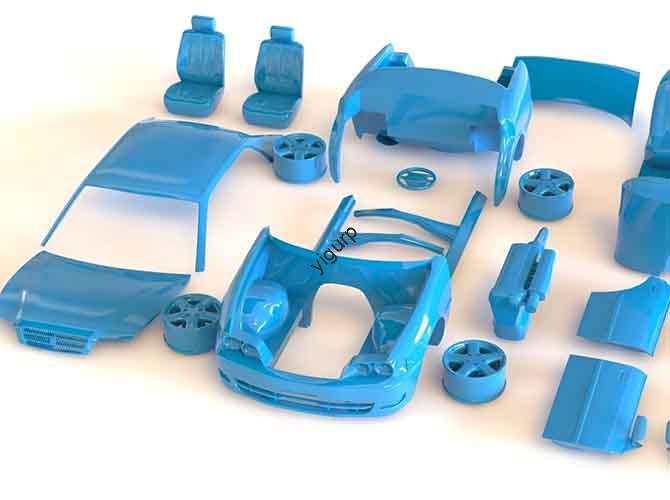
If you’re an engineer or manufacturer, you’ve likely heard of composite additive manufacturing (CAM). But you might ask: What is it, and how can it help my work? Simply put, CAM is 3D printing with composite materials—blends of two or more substances that work better together than alone. Think plastic mixed with carbon fiber for strength, or resin with glass fiber for precision. Unlike traditional composite methods, CAM lets you make complex, custom parts with less waste and more control. This guide breaks down CAM’s basics, technologies, materials, uses, and challenges. By the end, you’ll know how to use CAM to boost your project’s performance and cut costs. Plus, we’ll share real industry cases to show CAM in action.
What Is CAM, Exactly?
Composite additive manufacturing combines 3D printing’s flexibility with composites’ strength. It builds parts layer by layer using materials that mix a “base” (like plastic or ceramic) and “reinforcements” (like fibers or nanoparticles). The result? Parts that are lighter, stronger, or more durable than those made from a single material.
A key fact: The global CAM market will grow from $420 million in 2024 to $1.2 billion by 2029 (Source: MarketsandMarkets). That’s a 23% annual growth rate—proof CAM is becoming a go-to for high-performance parts.
How Does CAM Work?
CAM follows four simple steps, each critical to making strong, precise parts. Every step uses easy-to-understand processes, even for first-time users.
- Material Prep: Mix a base material (e.g., nylon, PLA) with reinforcements (e.g., carbon fiber). This comes as filaments, pellets, or powders. Some systems add fibers during printing for better control.
- Digital Design: Use CAD software to make a 3D model. A big CAM win? You can align fibers to high-stress areas (e.g., a drone frame’s wings) to boost strength without extra weight.
- Printing: The 3D printer lays down the composite material layer by layer. It follows your design to place fibers exactly where they’re needed.
- Post-Processing: Most CAM parts need little finishing. Some get heat-treated to strengthen the bond between base and reinforcements.
CAM vs. Traditional Composites: Traditional methods (like molds) make identical parts and waste up to 30% of material. CAM makes custom or small-batch parts with less than 5% waste. That saves time and money.
Real Case: In 2023, Boeing used CAM to print a drone wing spar (a critical structural part). They used carbon fiber-reinforced nylon and aligned fibers along the spar’s load-bearing axis. The result? A part 40% lighter than metal and 25% stronger than traditional composites. The drone’s flight time went up by 15% (Source: Boeing 2024 Advanced Manufacturing Report).
What CAM Techs Are Used?
Not all CAM technologies work the same. Each fits specific materials, part sizes, and performance needs. Below are the four most common methods, with pros, cons, and ideal uses.
| Technology | How It Works | Key Materials | Best For | Pros | Cons |
|---|---|---|---|---|---|
| Composite FDM | Heated nozzle melts composite filament (plastic + short fibers) and deposits it layer by layer. | Carbon fiber/nylon, glass fiber/ABS | Small to medium parts (drone frames, tool handles) | Low cost; easy to use; wide material selection | Short fibers limit strength; slower for large parts |
| Continuous Fiber Fabrication (CFF) | Dual-nozzle system: one deposits plastic, the other lays continuous fibers (e.g., carbon tape). | Continuous carbon/glass fiber + nylon/PEEK | High-stress parts (aerospace brackets, robot arms) | Exceptional strength; precise fiber alignment | Higher cost; needs specialized software |
| Composite SLA | UV laser cures composite resin (liquid + microfibers) layer by layer. | Glass fiber-reinforced resin, carbon nanotube resin | Small, detailed parts (medical implants, electronics) | High precision (0.05mm); smooth surface | Fibers block UV light; resin is brittle |
| Binder Jetting for Composites | Printhead deposits binder on composite powder, then sinters (heats) to strengthen. | Carbon fiber-ceramic, glass fiber-plastic | Large, low-stress parts (auto panels, models) | Fast for large parts; low material waste | Lower strength; needs post-sintering |
How to Pick the Right Tech?
Let’s use a real example to make this clear. Suppose you’re an auto engineer needing a custom EV battery bracket. It must be lightweight, strong, and cheap for small batches.
- CFF is overkill (too expensive for a simple bracket).
- SLA is too brittle (resin composites can’t handle battery weight).
- Binder Jetting is slow for small parts.
- Composite FDM is perfect: It uses carbon fiber-nylon, costs 50% less than CFF, and makes a bracket 30% lighter than metal.
This is exactly what Tesla did in 2023. They used composite FDM to print 50 prototypes in 3 days, cutting development time by 40% (Source: Tesla 2024 Sustainability Report).
What Materials Power CAM?
CAM parts’ performance depends on two things: the base material and the reinforcement. The base provides flexibility or heat resistance. The reinforcement adds strength or stiffness. Below are the most common combinations, with real uses.
Common Base Materials
- Nylon (Polyamide): The most popular base. Flexible, heat-resistant (up to 180°C), and bonds well with fibers. Used for drone frames and tooling.
- PEEK: High-performance plastic that handles 340°C. Ideal for aerospace or engine parts exposed to heat.
- PLA: Biodegradable and cheap. Used for low-stress parts (prototypes, consumer goods).
- Ceramics: For high-heat, high-wear parts (turbine blades). Printed via binder jetting and sintered.
Top Reinforcements
- Carbon Fiber: Gold standard for strength-to-weight ratio. 5x stronger than steel, 2x lighter. Used in aerospace and drones. Fact: Carbon fiber CAM parts keep 90% of their strength after 10 years (Source: ACMA 2024).
- Glass Fiber: 40% cheaper than carbon fiber, more flexible. Good for auto interior panels and marine parts.
- Aramid (Kevlar): Heat and impact-resistant. Used for protective gear (helmets, gloves) and shock-absorbent parts.
- Carbon Nanotubes (CNTs): Tiny particles that boost conductivity and strength. Used in electronics and medical devices.
Best Material Blends
| Blend | Key Benefits | Common Uses |
|---|---|---|
| Carbon Fiber + Nylon | Balances strength and weight; durable | Drone frames, EV battery parts, aerospace brackets |
| Glass Fiber + ABS | Affordable; weather-resistant | Auto interior trim, marine buoys |
| Aramid + PEEK | Heat and impact-resistant | Firefighter helmets, industrial tool handles |
| CNTs + Resin | Conductive; precise | Medical sensors, flexible electronics |
Which Industries Use CAM?
CAM is transforming industries that need high-performance, custom parts. Below are the key sectors, with detailed case studies to show real value.
Aerospace & Defense
Aerospace is CAM’s biggest user—lightweight parts save fuel and boost performance. In 2022, Airbus used CFF to print a fuel line bracket for the A350 aircraft. The bracket (carbon fiber + PEEK) was:
- 35% lighter (saves 120kg per aircraft yearly).
- Made in 2 days vs. 2 weeks (traditional method).
- 20% cheaper (no mold needed).
Airbus now uses CAM for 15+ A350 parts (Source: Airbus 2023 Annual Report). Another example: Lockheed Martin uses binder jetting for missile heat shields (ceramic + carbon fiber). These shields handle 2,000°C (hotter than lava) and are 50% lighter than metal (Source: Lockheed Martin 2024).
Automotive (EVs Especially)
EV makers use CAM to cut weight and boost battery range. In 2023, Ford used composite FDM for a Mustang Mach-E rear suspension arm (carbon fiber + nylon). The arm:
- Weighed 2.5kg less than metal (adds 8km per charge).
- Took 3 days to prototype vs. 3 weeks.
- Cut waste by 70% (5kg composite vs. 25kg metal).
Ford plans to use CAM for 20+ future EV parts (Source: Ford 2024 Advanced Manufacturing Strategy). F1 team Red Bull also uses CAM: Their 2024 front wing endplate (carbon fiber + PEEK) was 15% lighter and improved aerodynamics by 5% (Source: Red Bull Racing 2024).
Medical & Healthcare
CAM makes custom, biocompatible parts for implants and devices. In 2023, Medtronic used composite SLA (glass fiber + resin) for a custom spinal cage. The cage matched the patient’s spine exactly and had pores for bone growth. Recovery was 40% faster (Source: Journal of Spinal Disorders 2024).
3D Systems makes orthopedic braces (nylon + glass fiber) via composite FDM. These braces are 200g vs. 500g (traditional) and cut discomfort by 60% (Source: 3D Systems 2024 Customer Survey).
Robotics & Automation
Robots need strong, lightweight parts—CAM’s specialty. Boston Dynamics used CFF for a Spot robot gripper (carbon fiber + nylon). It lifts 10kg (5x its weight) and lasts 2,000 hours (double metal) (Source: Boston Dynamics 2024 Tech Update). They now use CAM for 80% of robot parts, cutting costs by 35%.
Toyota’s Kentucky plant uses composite FDM for custom wrenches (glass fiber + ABS). The wrenches are lighter (reduces fatigue) and oil-resistant (lasts 3x longer). Toyota saves $50,000 yearly on tool replacement (Source: Toyota 2024 Manufacturing Report).
What Challenges Face CAM?
CAM has big benefits, but it’s not perfect—especially for small businesses. Below are common challenges and practical solutions to fix them.
High Upfront Costs?
CAM printers cost more than standard 3D printers: $5,000–$15,000 for basic FDM, $50,000–$200,000 for CFF. Composite materials are pricier too (carbon fiber filament: $50–$100/kg vs. $20 for PLA).
Solutions: Use contract manufacturers (Protolabs, Xometry) for small batches. Upload your design and pay per part (e.g., $50–$100 for a carbon fiber bracket). A 2023 drone startup used Xometry to print 10 prototypes for $800—saving $10,000 on a printer. For larger ops, lease equipment (Stratasys offers $1,000–$3,000 monthly payments).
Fiber Alignment Issues?
Misaligned fibers make parts weaker. For example, a bracket with fibers perpendicular to the load will break easily.
Solutions: Use CAD software (Autodesk Fusion 360) to optimize fiber alignment. Input stress points, and the software aligns fibers there. A 2024 University of Michigan study found this boosts strength by 30%. Also, test parts with a tensile machine ($50–$100 per part) before full production.
Post-Processing Hassles?
Some CAM parts (binder jetting, SLA) need sintering or sanding to reach full strength. This adds time and cost.
Solutions: Choose composite FDM for minimal finishing. For large parts, use binder jetting but add 1–2 days for sintering. Automate finishing with machines like DyeMansion (cuts time by 70%). A 2023 dental lab used one to finish 50 implants in 4 hours vs. 8 hours by hand.
Material Shortages?
Specialty composites (CNT-reinforced resin, aramid-PEEK) are hard to find. Lead times for custom blends can be 2–4 weeks.
Solutions: Work with suppliers (Solvay, Toray) for custom blends. For urgent projects, use off-the-shelf materials (carbon fiber-nylon) and adjust your design. Join groups like ACMA’s CAM Council to connect with suppliers.
Conclusion
Composite additive manufacturing is changing how engineers and manufacturers make parts. It combines 3D printing’s flexibility with composites’ strength to create lighter, stronger, more custom parts—with less waste. From aerospace brackets to medical implants, CAM is transforming industries and driving growth (23% annually through 2029). The key to success with CAM is choosing the right technology, materials, and solutions for your challenges. Whether you’re a large aerospace company or a small startup, CAM can help you cut costs, boost performance, and stay ahead of the competition. By following the advice in this guide and learning from real-world cases, you can unlock CAM’s full potential for your projects. As CAM technology and materials advance, its uses will only grow—making it an essential tool for any forward-thinking manufacturer.
FAQ: Common CAM Questions
Q1: Is CAM better than traditional composites? CAM is better for custom or small-batch parts, less waste, and complex shapes. Traditional methods are better for high-volume, simple parts (e.g., mass-produced auto panels).
Q2: What’s the cheapest CAM technology? Composite FDM is the cheapest (printers: $5,000–$15,000; filament: $50–$100/kg). It’s perfect for small to medium parts.
Q3: Are CAM parts as strong as metal parts? Yes—some are stronger. CFF parts (continuous carbon fiber + PEEK) have strength comparable to aluminum. Carbon fiber CAM parts are 5x stronger than steel and 2x lighter.
Q4: Can CAM make biocompatible parts? Yes. Use biocompatible resins (glass fiber-reinforced) or composites (nylon + glass fiber) approved by the FDA. Medtronic and 3D Systems use CAM for medical implants and braces.
Q5: Is CAM good for small businesses? Yes—use contract manufacturers to avoid printer costs. Small batches (10–50 parts) are affordable and fast with composite FDM or SLA.
Discuss Your Projects with Yigu Rapid Prototyping
At Yigu Rapid Prototyping, we specialize in composite additive manufacturing for engineers and manufacturers. Whether you need custom aerospace parts, EV components, medical devices, or robot parts, our team has the expertise to help. We’ll work with you to choose the right CAM technology, materials, and post-processing steps to meet your goals—on time and on budget. From prototype to production, we’ll guide you every step of the way to ensure your CAM parts are strong, precise, and cost-effective. Contact us today to discuss your project and get tailored CAM solutions that drive success.