
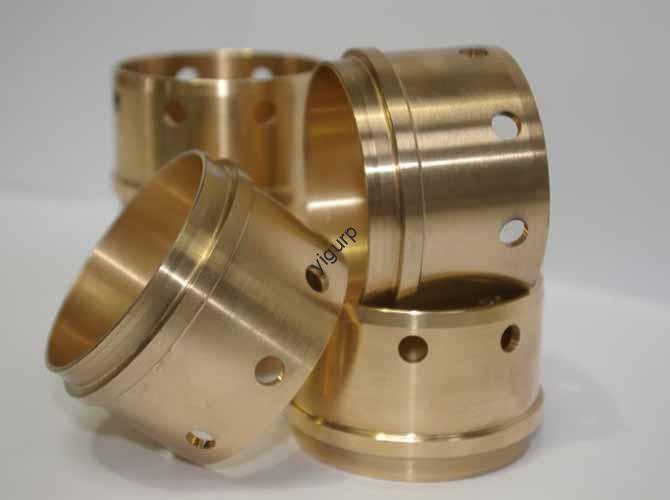
In the world of manufacturing, CNC small batch parts processing sits at a challenging crossroads. It demands the extreme precision of mass production but lacks the “safety net” of large-scale economies. Whether you are a startup making 50 custom brackets or an aerospace firm testing 20 prototype components, quality control is your most important metric.
When you only have a few parts, a single mistake can ruin the entire order. Poor quality leads to wasted materials, delayed timelines, and—in the case of medical tools or automotive components—serious safety risks. This guide breaks down the five core stages of quality control for CNC small batch processing. We will provide actionable strategies, real-world data, and professional tools to ensure every part you receive meets your exact design standards.
Do You Check Materials and Equipment Before Cutting?
Quality control begins long before the machine starts humming. In small batch processing, pre-processing checks are your first line of defense against avoidable errors.
Raw Material Quality Control
Small batches often require specialized materials, such as high-strength aluminum for drones or medical-grade titanium for implants. Minor flaws like hidden cracks or inconsistent hardness can ruin a part halfway through the build.
| Check Item | Implementation Method | Acceptance Standard |
| Material Composition | Use a spectrometer to verify elements. | Matches the material certificate (MTR). |
| Hardness | Use a Rockwell or Shore durometer. | Within ±5% of design requirements. |
| Surface Defects | 10x magnifying glass inspection. | No cracks, deep scratches, or rust. |
Expert Experience: We once worked with a client making 30 CNC-machined gears. They skipped the hardness test on the incoming steel. During machining, the material proved to be 10% softer than spec, causing the gears to bend under pressure. Retesting materials upfront would have saved $2,000 in waste and three days of rework.
CNC Equipment and Tooling Checks
Small batch success relies on machine precision. Even a tiny deviation in a spindle or a worn tool can cause a “batch-wide” defect.
- Machine Calibration: We use a laser interferometer to check positioning accuracy. For small batches, this must be within ±0.005mm.
- Tool Inspection: Check for chips or cracks on the cutting edge. A dull end mill is the primary cause of poor surface finish.
- Fixture Alignment: Ensure clamps and vises are perfectly clean. Any debris under a fixture causes the part to shift, leading to dimensional errors.
How to Monitor Quality During the Machining Process?
In-process quality control is about catching mistakes while they are happening. Since small batches leave no room for waste, you must monitor key parameters in real-time.
First-Piece Inspection (FPI)
This is the “Golden Rule” of small batch processing. You must machine exactly one part first and perform a total inspection—dimensions, surface finish, and geometry.
Pro Tip: If the FPI shows a surface roughness issue, you can adjust the feed rate or spindle speed before the remaining 19 parts are ruined. Catching a 0.1mm error here saves the entire batch.
Real-Time Parameter Monitoring
Modern CNC shops use sensors to track the “health” of the cut. If these numbers drift, the machine operator pauses the work immediately.
- Cutting Force: Monitored via a dynamometer. A ±15% spike usually means the tool is about to break.
- Spindle Vibration: Tracked with accelerometers. Vibration over 0.1g causes “chatter marks,” which ruin aesthetic parts.
- Cutting Temperature: Targeted with infrared thermometers. For aluminum, staying below 250°C prevents warping and material weakening.
Are You Refining Parts Correctly After Machining?
Once the part comes off the machine, it often requires post-processing like polishing, deburring, or anodizing. Quality control here ensures these steps improve the part rather than damage it.
Surface Treatment and Verification
Many small batch parts are for consumer electronics or high-end tools where look and feel are vital.
- Polishing/Grinding: We use a surface roughness tester to measure the Ra value. For visible casings, we aim for Ra <1.6μm.
- Anodizing/Coating: We use a thickness gauge to ensure the layer is within ±10% of the design (e.g., 50–55μm for corrosion resistance).
- Deburring: This is often overlooked. A tiny burr on a camera mount can scratch a lens. We use a 5x magnifying glass to ensure all edges are smooth.
What Does a Final Comprehensive Validation Look Like?
The final inspection is your last line of defense. For critical industries like aerospace, this stage uses advanced metrology to leave zero room for error.
The Final Inspection Checklist
We use a combination of traditional and high-tech tools to validate the batch.
- Dimensional Accuracy: We use a Coordinate Measuring Machine (CMM) for complex parts. This ensures every shaft and hole is within the ±0.01mm tolerance.
- Shape and Position: An optical comparator or 3D scanner checks for warping. A flat part should have less than 0.05mm of bow.
- Material Strength: For structural parts, we may perform a tensile test to ensure the strength exceeds 300MPa.
Pass/Fail Standards for Small Batches
- Medical/Aerospace: 0 defective parts allowed (100% pass rate).
- General Industrial: Max 5% defective parts. If more than 1 in 20 is bad, we stop to analyze the root cause before re-machining.
Why Is Documentation the Secret to Long-Term Quality?
Small batch processing is often iterative. You might make 20 parts this month and 50 more next year. Without documentation, you lose the “recipe” for success.
What We Document
- Pre-processing logs: Material certificates and hardness test results.
- In-process data: Trends in cutting force and FPI adjustment notes.
- Final reports: Photos of any defects and a detailed root cause analysis.
Continuous Improvement Example: In one project, 2 out of 15 sensor housings had inconsistent wall thickness. By reviewing our in-process data, we found the spindle speed was fluctuating slightly. We adjusted the maintenance schedule for that machine, and the next batch of 20 parts had zero defects.
Yigu Technology’s Perspective
At Yigu Technology, we specialize in CNC small batch quality control for high-stakes industries. We know that in small batches, even one bad part destroys client trust. That is why we prioritize 100% final inspection and use real-time vibration monitoring on all our CNC lines.
Our engineers help clients optimize their tool paths and material selection from the start, which typically reduces defect rates by 30–40%. Quality isn’t just a checklist for us; it is a repeatable process that balances speed, cost, and extreme precision.
FAQ
Is 100% inspection necessary for CNC small batch parts?
For safety-critical parts (like medical implants or automotive brakes), yes. Zero defects are non-negotiable. For decorative or non-functional parts, sampling inspection (checking every 5th part) is usually enough to maintain quality while saving time.
How much does quality control add to the total cost?
Typically, it adds 10–15% to the processing cost. However, this is a smart investment. Reworking a failed batch can add 50–100% to your costs and delay your project by weeks. Spending $150 on QC for a $1,000 batch is a insurance policy against failure.
What is the most common cause of defects in small batches?
Tool wear is the leading culprit. Because the batch is small, operators sometimes try to use one tool for everything. Even a 0.01mm dull edge can cause consistent dimensional errors. We recommend replacing tools after 20–30 parts for hard steel or 100 parts for aluminum.
Can I get a quality report for my small batch order?
Yes. Any professional shop should provide a Final Inspection Report that includes dimensional checks, material certifications, and surface roughness data.
How do you handle “warping” in thin-walled plastic parts?
We control the cutting temperature with constant coolant and use “stress-relieving” tool paths. We also let the parts “rest” for 24 hours after machining before the final dimensional check to account for material relaxation.
Discuss Your Projects with Yigu Rapid Prototyping
Are you looking for a partner who takes your CNC small batch quality as seriously as you do? At Yigu Rapid Prototyping, we combine years of engineering expertise with the latest metrology tools to deliver perfect parts. Whether you need a small run of 10 or a pilot batch of 100, we ensure every dimension is spot on. Would you like me to review your design and provide a detailed quality plan for your next small batch project?