
Introduction
If you are new to CNC machining or looking to get your workshop better organized, you are probably wondering: what tools do I actually need for CNC work? The answer depends on your specific projects, whether you are doing milling, turning, or routing. But a solid CNC tools list always covers the same core categories: cutting tools, workholding devices, measuring tools, tool holders, and safety gear. In this guide, I will break down each category with specific examples, real-world tips, and even a comparison table to help you prioritize. There will be no confusing jargon, just practical information to help you get started or refine your current setup.
What Are the Core Cutting Tools for CNC Machining?
Cutting tools are the real “workhorses” of CNC. They are the parts that actually shape your material—whether it is metal, wood, or plastic—into the final part you want. The right cutting tool depends on the material and the operation, but these are the essentials you will find in most professional workshops.
- End Mills: These are used for milling operations, like cutting slots, pockets, or complex contours. For example, a 4-flute carbide end mill is a go-to tool for machining aluminum. Its sharp edges and heat resistance mean cleaner cuts and less tool wear. I once tried a cheaper high-speed steel (HSS) end mill on the same aluminum part and had to replace it halfway through the job. The carbide tool lasted three times longer.
- Drill Bits: Used for creating precise holes. CNC-specific drill bits, like indexable insert drills, are designed for precision. They are self-centering, which means you avoid the problem of off-center holes. A 10mm carbide drill bit is a staple for most metal projects.
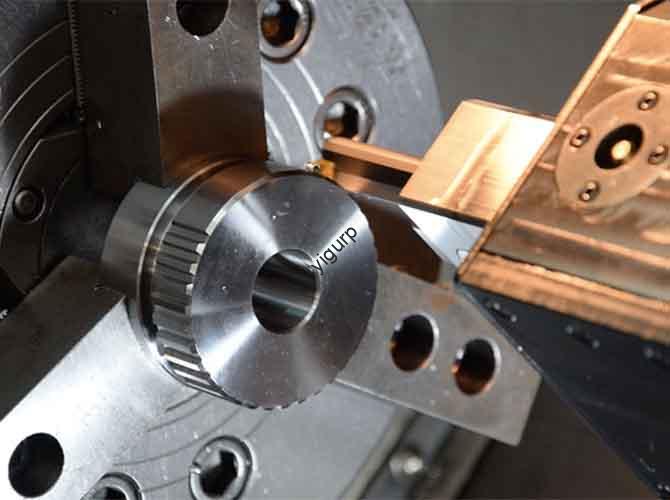
- Turning Inserts: These are for use on CNC lathes, which shape cylindrical parts. They are replaceable inserts that come in different grades for different materials. For instance, CCMT inserts work very well for stainless steel, while TNMG inserts are a better choice for mild steel. A client recently saved 20% on their tool costs by switching to coated turning inserts. The coating helps resist chip buildup, so they don’t need frequent replacement.
- Router Bits: Used for CNC routers, which are common for wood, plastic, or soft metals. A spiral upcut bit is perfect for wood because its design pulls chips up and out of the cut, preventing clogging. I often use a 1/4-inch spiral bit for making cabinet doors; it leaves such a smooth finish that I don’t need to do any sanding.
Pro Tip: Always match the cutting tool material to your workpiece. Carbide tools are ideal for hard metals like steel and titanium. High-speed steel (HSS) works well for softer materials like aluminum and wood, especially if you are on a budget.
What Workholding Tools Keep Your Material Secure?
Workholding tools are what hold your workpiece firmly in place during machining. If the workpiece is loose, your part will be inaccurate, and the situation could even become dangerous. Here is what you need to know.
- Vises: These are the most common workholding tool. A CNC mill vise with a 6-inch jaw width can handle most small to medium-sized parts. You should look for one with a “zero-backlash” design. This means there is no movement when the CNC applies pressure. I once used a cheap vise that slipped during an aluminum milling job, and it completely ruined a $50 part. Investing in a quality vise saved me from making that mistake again.
- Clamps: These are for larger or irregularly shaped parts that won’t fit in a vise. Toggle clamps are fast and easy to use—they lock in place with one hand. I use them to hold wooden panels on my CNC router. They are strong enough to keep the wood from shifting but gentle enough not to leave marks.
- Chucks: These are for CNC lathes. A 3-jaw chuck is very versatile and can grip round or hexagonal parts. A 4-jaw chuck is better for square or irregular parts because you can adjust each jaw individually. Last year, I used a 4-jaw chuck to machine a custom brass fitting. It kept the part perfectly aligned, even with its odd shape.
The table below compares these common workholding tools to help you choose the right one for the job.
| Tool Type | Best For | Strengths | Weaknesses |
|---|---|---|---|
| CNC Vise | Small to medium, flat parts | High precision, zero-backlash design | Limited to flat, parallel surfaces |
| Toggle Clamps | Large or irregularly shaped parts | Very fast to use, gentle on materials | Less holding force than a vise |
| 3-Jaw Chuck | Round or hexagonal parts for lathes | Quick setup, very versatile | Cannot grip irregular shapes securely |
| 4-Jaw Chuck | Square or irregular parts for lathes | Highly adjustable, great accuracy | Slower setup than a 3-jaw chuck |
What Measuring Tools Ensure Precision?
CNC machining is all about accuracy. Even a tiny error of 0.1mm can ruin a part. These measuring tools help you check dimensions, align your workpiece, and make sure everything is perfect.
- Calipers: Used for measuring length, width, and thickness. Digital calipers are much easier to read than analog ones. My 6-inch digital caliper has a resolution of 0.01mm, so I can get very exact measurements. I use it to check the thickness of aluminum sheets before I start machining. If the sheet is too thick, the CNC program would cut too deep.
- Micrometers: These offer even more precision, down to 0.001mm. Outside micrometers measure the diameter of round parts like bolts. Inside micrometers measure the size of holes. I use an outside micrometer to check the diameter of turned steel parts. My clients often require tolerances of ±0.005mm, and the micrometer is the only way to ensure I meet that.
- Edge Finders: These are used to align the workpiece with the CNC’s “zero point”—the exact starting point for the cut. A mechanical edge finder is a simple tool. You touch it to the edge of the part, and it “clicks” when it is perfectly aligned. I use one every single time I set up a new part. It takes about 30 seconds and prevents costly misalignments.
- Dial Indicators: These are used for checking runout, which is how much a part wobbles as it spins during turning. A dial indicator with a 0.001mm resolution helps me make sure that parts on the lathe are perfectly round. Last week, I used one to fix a wobbly brass part. It turned out the chuck was slightly loose, and adjusting it solved the problem.
Key Fact: According to the Precision Machining Association, using quality measuring tools can reduce part defects by up to 35%. Skipping these tools might seem like a time-saver, but it leads to much more wasted material and rework later on.
What Tool Holders Connect Cutting Tools to the CNC?
Tool holders attach your cutting tools, like end mills or drill bits, to the CNC spindle. They need to be very rigid and precise to avoid vibration during cutting.
- CAT40/CAT50 Holders: These are commonly used for CNC mills. CAT40 is for smaller mills that run at speeds up to about 10,000 RPM. CAT50 is for larger, high-torque mills. I use CAT40 holders for my vertical mill. They are lightweight but still strong enough for cutting aluminum and steel.
- BT Holders: These are very popular in Asia and are similar to CAT holders but have a different taper angle. BT40 is the most common for small to medium-sized mills. A client once sent me parts that were machined with BT40 holders, and the precision was just as good as with CAT40. So, don’t hesitate to use them if they fit your machine.
- Collets: These are used for holding smaller cutting tools, like 1/4-inch router bits. ER collets are the industry standard. They grip the tool tightly and have very low runout. I use ER32 collets for my CNC router. They work with tools ranging from 1mm all the way up to 16mm, so I don’t need to buy a separate collet for every tool size.
Professional Insight: Always clean your tool holders before you use them. Dust or tiny metal chips on the taper can cause vibration, which leads to poor cut quality. I make a habit of wiping my holders with a lint-free cloth every time I change a tool. It takes just 10 seconds and makes a big difference.
What Safety Gear Is Non-Negotiable for CNC Work?
CNC machines are powerful and can be dangerous. Safety gear protects you from flying chips, loud noise, and sharp tools. This is not optional.
- Safety Glasses: These are an absolute must. Look for glasses that are ANSI Z87.1 certified, which means they are tested to resist impact from flying debris. I once had a small aluminum chip fly straight at my face. It hit my safety glasses and bounced right off. I was completely fine. Never use regular sunglasses; they do not offer enough protection.
- Ear Protection: CNC mills and lathes can be very loud, sometimes reaching up to 100 decibels. Using foam earplugs or earmuffs reduces the noise to a safe level, below 85 decibels. I wear earmuffs during long machining sessions. My ears don’t ache afterward, and I can focus much better on my work.
- Gloves: These are for handling sharp parts or tools. Nitrile gloves are better than latex because they are chemical-resistant and don’t tear as easily. I use them when loading aluminum sheets into the mill. They prevent cuts and keep my hands clean.
- Dust Mask: This is especially important for CNC routers, which can create a lot of fine dust from wood or plastic. An N95 mask filters out 95% of dust particles. I always wear one when routing MDF, because the dust is very fine and can irritate your lungs if you breathe it in.
Authority Note: The Occupational Safety and Health Administration (OSHA) requires the use of safety glasses and ear protection in professional CNC workshops. Violating these rules can lead to fines, but more importantly, it puts your health at serious risk.
How to Build Your Own CNC Tools List: A Step-by-Step Guide
Now that you know the core categories, here is how you can tailor a list to your specific needs.
- Define Your Projects: Start by thinking about what you will be machining most often. If you are making wooden signs on a CNC router, you should prioritize router bits, clamps, and a good dust mask. If you are making metal bolts on a CNC lathe, focus on turning inserts, a 3-jaw chuck, and micrometers.
- Set a Budget: You don’t need to buy everything at once. Start with the true essentials: a quality vise, a basic set of end mills and drill bits, a pair of digital calipers, and your safety glasses and ear protection. You can add more specialized tools, like a dial indicator or a 4-jaw chuck, later as you take on more complex projects.
- Choose Quality Over Quantity: A cheap end mill might only cost $10, but it will wear out very fast. A good $30 carbide end mill will last five times longer and give you much better results. I once bought a set of very cheap drill bits, and half of them broke the very first time I used them. Spending a little more upfront saves money in the long run.
- Organize Your Tools: Use a tool cart, a cabinet, or a drawer system to keep everything organized. Label your drawers with clear categories like “End Mills,” “Measuring Tools,” or “Workholding.” I also use a magnetic tool strip on my wall for my most-used tools, like edge finders and calipers. It saves me a lot of time during setup.
Conclusion
Building a comprehensive CNC tools list is a foundational step for anyone serious about machining. The right tools are not just about getting the job done; they are about getting it done safely, accurately, and efficiently. Your list must include the essential cutting tools like end mills and inserts, reliable workholding like vises and chucks, precise measuring tools like calipers and micrometers, secure tool holders, and, most importantly, the proper safety gear. By understanding these categories and following a simple plan to build your own list, you can set up a workshop that is ready for anything, from simple prototypes to complex production parts.
FAQ
Do I need different tools for CNC milling vs. CNC turning?
Yes. While some tools like digital calipers and safety glasses are universal, the core cutting and workholding tools are different. Milling requires end mills, a vise, and edge finders. Turning requires turning inserts, a chuck, and a dial indicator.
Can I use HSS tools instead of carbide to save money?
HSS tools work well for soft materials like wood and aluminum, especially at lower RPMs. However, they wear out very quickly on harder materials like steel. If you are machining steel regularly, investing in carbide is worth it. It lasts much longer and provides a better surface finish.
How often should I replace cutting tools?
This depends on how much you use them. A good carbide end mill used on steel might last 20 to 40 hours of machining time. An HSS end mill might only last 5 to 10 hours. You will know it is time to replace a tool when you see dull edges causing rough cuts, when you notice chipping on the tool, or when you feel increased vibration during the cut.
What’s the most important safety tool?
Safety glasses are the most important. Flying metal chips are the most common hazard in any CNC workshop. You should always wear ANSI Z87.1 certified glasses, even for what you think will be a very short project.
Discuss Your Projects with Yigu Rapid Prototyping
Are you ready to put your CNC tools to work on a new project? At Yigu Rapid Prototyping, we have a fully equipped workshop with all the essential tools and advanced machinery needed to handle complex jobs. Our experienced team can help you take a design from a digital file to a finished, high-quality part. Whether you need a single prototype or a production run, we are here to help.
Contact Yigu Rapid Prototyping today to discuss your project. Upload your design files for a free, expert quote and design review. Let’s build something great together.