
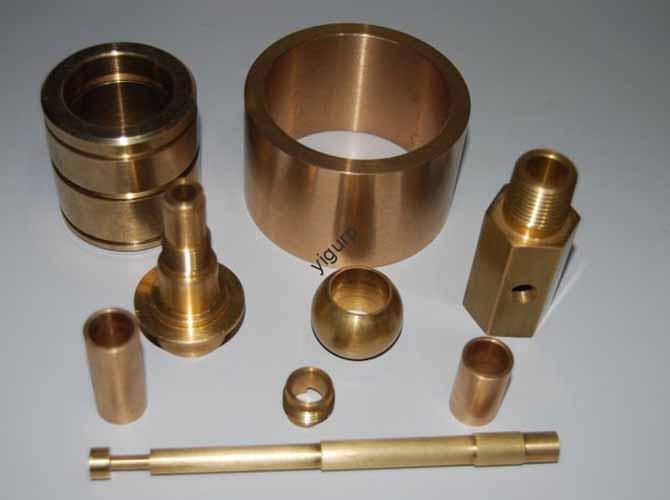
Copper prototypes are the heart of modern innovation. From high-speed electronics to life-saving medical devices, copper is vital. Its ability to conduct heat and electricity makes it a top choice for testing real-world performance. However, copper is famously difficult to machine. It is soft, gummy, and warps under heat.
To get the best results, you need a process designed for precision. Swiss-type lathe machining is the gold standard for these parts. It solves the common issues of rough surfaces, slow speed, and loose tolerances. This guide explains why Swiss-type lathes are the perfect match for your next copper project.
Why is Swiss Precision Better for Copper?
When you design a copper connector for a smartphone, a tiny error can ruin the part. You need micron-level accuracy. Traditional lathes often struggle with copper because the material bends during the cut.
The Vital Guide Bushing Advantage
The secret to Swiss success is the guide bushing. In a standard lathe, the material hangs out far from the support. This causes the metal to vibrate or bend. This is called deflection. Because copper is soft, it deflects easily.
A Swiss-type lathe holds the copper bar stock right next to the cutting tool. The support is usually only 1mm to 2mm away. This setup removes almost all vibration. It allows for unrivaled precision even on very thin parts.
Real-World Case: Medical Needles
A medical firm once needed copper needle prototypes. These had a 0.5mm inner diameter. They required a tolerance of ±0.001 mm to ensure proper fluid flow.
Using a standard lathe, 40% of their parts failed inspection. The thin copper walls kept bending. We switched the project to a Swiss-type lathe. Every single part met the spec on the first try. This saved the client two weeks of testing delays.
Critical Precision Metrics
| Metric | Swiss-Type Performance | Why It Matters |
| Accuracy | ±0.001 – ±0.003 mm | Parts fit perfectly in tight spaces. |
| Repeatability | ±0.0005 mm | Every part in the batch is identical. |
| Consistency | < 0.001 mm variation | Reliable data during product testing. |
| Tolerances | ±0.0005 mm for holes | Meets strict ISO standards. |
How Does It Handle Copper’s Properties?
Copper has unique traits that help your design but hurt the machine. It carries heat well, but that same heat can warp the part. Swiss-type lathes are built to turn these challenges into strengths.
Managing High Thermal Conductivity
Copper has a thermal conductivity of 401 W/(m·K). During machining, heat builds up fast. If the part gets too hot, it expands and warps.
Swiss lathes use coolant mist systems. These systems target the exact spot where the tool meets the metal. This keeps the copper cool. It prevents heat warping and protects your dimensional accuracy. It also keeps the tools sharp for a longer time.
Cutting Without the “Tear”
Because copper is “gummy,” it often sticks to tools. This causes ragged edges. Swiss-type lathes use high-grade carbide tools. These tools are extremely sharp. They use “shear cutting” to slice the copper like a pair of scissors. This leaves a clean, crisp edge that does not need extra cleaning.
Protecting Electrical Performance
For prototypes like electrical terminals, you cannot damage the metal’s structure. Some processes leave burrs or cracks that lower electrical conductivity. Swiss machining is gentle. It preserves the metal’s integrity. This ensures your prototype performs exactly like the final mass-produced part.
Can Swiss Lathes Boost Your Productivity?
In the world of R&D, time is money. If you can test three designs in the time it usually takes for one, you win. Swiss-type lathes can cut your lead times by nearly 50%.
Multiple Operations in One Run
Standard lathes usually just turn a part. If you need a hole or a flat edge, you must move the part to a second machine. This adds 15 minutes of setup for every move. It also adds a chance for errors.
Swiss lathes have live tool turrets. They can turn, mill, drill, and thread the part all at once. You put a copper bar in one side, and a finished complex prototype comes out the other.
Simultaneous Dual-Spindle Machining
These machines have two spindles. The main spindle works on the front of the part. Then, the sub-spindle grabs the part and works on the back. Both happen at the same time. This cuts the cycle time in half. A 10mm copper shaft that takes 5 minutes on an old lathe takes only 2 minutes here.
Automation and Waste Reduction
Swiss lathes use automated bar feeders. You can load a 3-meter copper bar and let the machine run for hours.
- Higher Output: Produce 50+ parts in one shift without stopping.
- Lower Waste: Material loss is only 5–8%.
- Cost Savings: Since copper is expensive, reducing waste saves significant money.
Is the Surface Finish Quality High?
A rough surface on a heat exchanger can lower performance by 15%. For consumer products, it just looks bad. Swiss-type lathes create flawless surfaces right off the machine.
Achieving Mirror-Like Finishes
We measure surface quality using the Ra value. A lower number means a smoother part. For copper prototypes, we follow these standards:
| Finish Type | Ra Value | Best Use Case |
| Functional | 0.4 – 0.8 μm | Standard electrical connectors. |
| Precision | 0.1 – 0.4 μm | Moving valve cores or sliding parts. |
| Aesthetic | ≤ 0.02 μm | Wearables or luxury decorative parts. |
Solving Common Surface Defects
- No Tool Marks: We use constant feed rates and sharp inserts.
- No Oxidation: Targeted cooling keeps the copper below 50°C. This prevents ugly dark spots.
- Clean Edges: Shear cutting avoids the “tearing” common in traditional shops.
Are Tooling Costs Really Lower?
Many people think high-precision tools are too expensive for small batches. In reality, the efficiency of a Swiss lathe saves money in the long run.
Setup and Tooling Efficiency
Setting up a traditional lathe takes time. You have to change tools, calibrate them, and run tests. This can take 90 minutes.
With a Swiss-type lathe, we use modular tool holders. Swapping a tool takes 10 seconds. We also use pre-programmed libraries for copper. We already know the best speeds and feeds. This cuts setup time to under 30 minutes.
Longer Tool Life
We use carbide tools with a TiN coating. This coating reduces friction on soft copper. Because the Swiss setup is so stable, tools don’t chip or break. They last up to three times longer than tools on conventional machines.
Case Study: Sensor Prototypes
A client making copper sensor housings saved 14 hours of production time per month by switching to Swiss lathes. The faster setup allowed them to run smaller batches more often. This helped them fix design flaws in days instead of weeks.
Yigu Technology’s View
At Yigu Technology, we don’t just see copper as a material. We see it as a challenge that demands the best equipment. We choose Swiss-type lathes because they turn copper’s “weaknesses”—like its softness—into strengths.
We use high-precision guide bushings that hold a ±0.0005 mm tolerance. To protect the conductivity of your electrical parts, we use dual coolant systems to stop any heat damage. Our team has built a massive library of copper-specific programs. This means we can start your project faster than anyone else. Whether you need a thin-walled tube or a tiny micro-pin, we deliver precision you can trust.
Conclusion
The advantages of Swiss-type lathes for copper are clear. You get micron-level accuracy, faster production, and a beautiful surface finish. By using a guide bushing to support the material, you eliminate the bending and warping that ruin parts on other machines.
If your project involves complex copper parts, don’t settle for “good enough.” Choose a process that ensures your prototype works perfectly in the real world. From saving on material waste to cutting your lead times in half, Swiss machining is the smartest choice for high-quality copper prototype parts.
FAQ
Can Swiss-type lathes handle very small copper parts?
Yes. We regularly machine copper pins as small as 0.3mm in diameter. The guide bushing provides the support needed to keep such tiny parts from bending or snapping.
Is it too expensive for just 10 or 20 prototypes?
Actually, it often costs less. While the machine is advanced, the setup time is much shorter. You also waste less expensive copper. For a batch of 20 parts, the total cost is usually 15-20% lower than using traditional methods.
Does this machining affect the electrical properties of copper?
No. Because Swiss lathes use low-force, low-heat cuts, they preserve the molecular structure of the metal. Your parts will retain 98-99% of their raw conductivity.
What is the best coating for tools used on copper?
We recommend TiN (Titanium Nitride) or DLC (Diamond-Like Carbon). These coatings lower the friction so the “gummy” copper doesn’t stick to the tool.
How do you prevent the copper from oxidizing during machining?
We use a continuous flow of specialized coolant mist. This keeps the temperature low and creates a temporary barrier against the air. This ensures the parts stay bright and shiny.
Discuss Your Projects with Yigu Rapid Prototyping
Are you looking for a partner who understands the fine details of copper machining? At Yigu Rapid Prototyping, we combine years of engineering experience with the latest Swiss-lathe technology. We help you move from a CAD drawing to a perfect prototype in record time. Our team is ready to help you optimize your design for the best performance and lowest cost. Would you like me to review your design and provide a free quote for your copper prototypes today?