
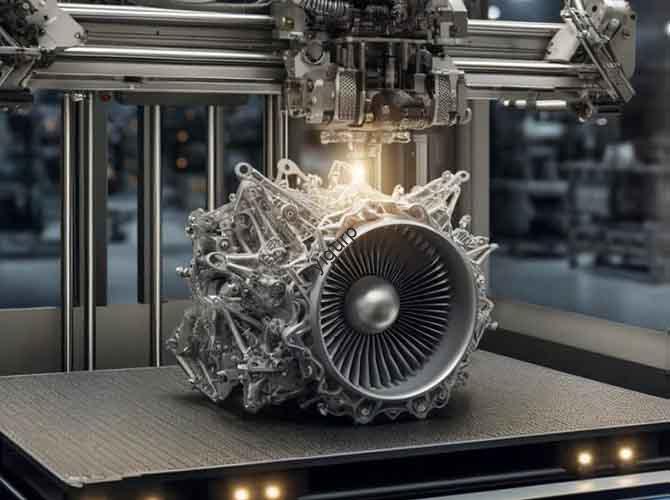
For many small and medium factory owners, metal additive printing—or metal 3D printing—sounds like tech for giants. You may ask: “Is this for me? Can it cut costs? Speed up my work?” The short answer is yes. This is not just a buzzword. It is a proven tool. It builds strong, complex metal parts layer by layer. It uses metal powder and a laser or electron beam. Compared to old ways like forging or milling, it is faster for prototypes. It creates less waste. It allows shapes once thought impossible. This guide will show you how it works. We will explain why it is now within your reach. You will see real cases and data. We will help you decide if it can transform your shop.
How Does This Technology Actually Build a Part?
At its heart, metal 3D printing is about adding material, not cutting it away. The most common method for shops like yours is Laser Powder Bed Fusion (LPBF). Think of it as a high-precision, digital welding process. Here is a simple step-by-step view.
From File to Finished Part: The LPBF Process
- Design: It all starts with a 3D digital model. You use software like Autodesk Fusion 360 to prepare the file. This step lets you optimize the design for printing, such as adding supports.
- Prepare: The machine spreads a thin layer of metal powder (as fine as flour) on a build plate.
- Fuse: A powerful laser beam scans the layer. It melts the powder in the exact shape of your part’s first slice.
- Repeat: The plate lowers. A new powder layer is spread. The laser fuses it to the layer below. This repeats hundreds or thousands of times.
- Finish: After printing, you remove the part from the powder bed. You then clean it and remove support structures. The unused powder is sifted and recycled for the next job.
How It Stacks Up Against Traditional Methods
| Method | How It Works | Key Strengths | Key Limits | Best For |
|---|---|---|---|---|
| Metal Additive Printing | Melts powder layer by layer with a laser. | Complex designs, less waste, fast for prototypes. | Higher cost for big runs, size limits. | Custom parts, prototypes, low-volume runs. |
| Forging | Shapes hot metal with force. | Very strong parts, good for high volume. | Limited complexity, high energy use. | Simple, high-strength parts (e.g., shafts). |
| CNC Milling | Cuts away metal from a solid block. | Very precise for simpler shapes. | High waste, slow for complex designs. | Low-complexity parts in medium volumes. |
The core difference is freedom. Additive manufacturing lets you make internal channels, lattice structures, and organic shapes. These are too hard or costly to mill or forge.
Why Was This Tech Out of Reach for Smaller Shops?
You were right to be skeptical. For years, this was for big aerospace and medical firms. Why? Three big walls kept SMEs out.
1. Cost: From a Luxury to a Practical Investment
Early industrial systems cost over $500,000. Now, new compact models built for SMEs cost a fraction of that. How? Companies now use know-how from laser tool making. They make smaller, simpler machines. The price now fits the budget of a shop doing prototypes or small batches.
2. Complexity: From Needing a PhD to Pressing Start
Old machines needed a specialist. You had to handle tricky powder, tweak lasers, and fix errors. Now, user-friendly features are standard:
- Pre-packaged powder cartridges: Like printer toner. No messy handling.
- Cloud-based software: Guides you to prepare files easily.
- Automated steps: Some systems clean parts and recycle powder on their own.
3. Space and Safety: From a Clean Room to the Shop Floor
You once needed a special lab. New compact printers are built for your floor. They have sealed systems to keep powder safe. They have built-in air filters. They can sit near your CNC mill.
Who Is Using This Now? Real-World Cases
Let’s move past theory. Here is how real businesses use metal 3D printing to solve problems.
Case 1: The SME That Fixed a Supply Chain Snag
A German maker of laser tools needed a custom driver component. It had a complex internal keyway. Milling it was slow and costly for small batches. They switched to metal additive printing.
- They optimized the design in their software.
- They stacked multiple parts in one print job.
- They used recycled powder from past jobs.
The result? Production time fell by 30%. Costs went down. They got a strong, precise part.
Case 2: Aerospace – Proving the Strength
If you doubt the strength, look up. NASA plans to 3D print over 80% of some future rocket engines. Why? The parts must be light and handle extreme heat. Printing allows complex cooling channels inside a single part. SpaceX does this too. It cut one engine’s part count from 1,000+ to just 10. This slashes assembly time and boosts reliability.
Case 3: Construction – The Printed Bridge
In Amsterdam, a stainless steel bridge was 3D printed. It was made in parts and assembled on-site. This method used less material. It created a strong, light, and complex design. It showed how printing can change even heavy industries.
What Should You Consider Before Investing?
Ready to explore? Avoid pitfalls. Focus on these four areas to get true value.
Pick the Right Machine for Your Needs
Not all printers are equal. For an SME, look for:
- Size & Build Volume: Will it fit in your shop? Can it make your largest needed part?
- Ease of Use: Does it have automated powder handling? Is the software easy to learn?
- Material Compatibility: Does it work with stainless steel, aluminum, or titanium powders you need?
Design for Additive, Not Just Redesign
Do not just print an old milling design. To win, you must design for the process.
- Minimize Supports: Use angles over 45 degrees to create self-supporting shapes.
- Hollow Out Parts: Add lattice structures inside to save weight and material.
- Consolidate Assemblies: Merge multiple pieces into one printed component.
Know the Real Costs
The machine price is just the start. Factor in:
- Metal Powder: Ranges from $50 to $200/kg.
- Software: May need a subscription (e.g., ~$50/month).
- Maintenance: Time for cleaning and upkeep.
The payoff comes from faster prototyping, less waste, and new design possibilities.
Handle Powder with Care
Metal powder needs respect. For safety and quality:
- Use Sealed Systems: Choose machines with cartridges.
- Store Properly: Keep powder dry and cool.
- Recycle: Use machines with integrated sieves to clean and reuse powder.
What Does the Future Look Like?
This is a fast-growing field, not a fad. Data from Grand View Research shows the global market was worth $3.52 billion in 2022. It will grow by nearly 24% each year until 2030.
New Chances for SMEs
- Custom & Spare Parts: Make on-demand parts for old machines or niche markets.
- Tooling: Create custom jigs, fixtures, and molds faster.
- Partner with Big Firms: Large companies seek SMEs with printing skills for supply chains.
Conclusion: Is It Time for Your Shop?
Metal additive printing is now a viable, powerful tool for small and medium manufacturers. The walls of cost, complexity, and space have fallen. This tech lets you make complex parts faster, with less waste, and unlock new designs. The key is to start with a clear plan. Begin with a high-value, small project. Learn the process. Then scale up. For factories ready to innovate, metal 3D printing is not just a change in how you make things. It is a change in what you can imagine and create.
FAQ: Your Top Questions Answered
Is 3D printed metal as strong as forged metal?
Yes. When done right, printed parts have a dense, strong structure. For some uses, like with internal cooling channels, they can perform better than traditional parts.
How long does it take to print a metal part?
It varies by size. A small fist-sized part may take 4-8 hours. A large, complex part could take 24+ hours. But this is often much faster than waiting for a prototype from a machine shop.
Can I use this for making thousands of parts?
It is best for low to medium volumes (10 to 1,000 units). For very high volume, methods like injection molding may still be cheaper. But the speed and cost for printing keep getting better.
What metals can I print with?
Common types are stainless steel, aluminum, titanium, and nickel alloys. Each has traits for different jobs, like strength, weight, or heat resistance.
Do my staff need special training?
Modern SME machines are made to be learned quickly. Many makers offer good training. Your current skilled machinists or designers can often learn the basics in a few days.
Discuss Your Projects with Yigu Rapid Prototyping
Do you have a part that is hard to make with old methods? Are long lead times or high waste hurting your projects? Yigu Rapid Prototyping specializes in helping SMEs like yours adopt practical additive manufacturing solutions. Our team can provide a free design-for-AM review, recommend the right equipment and materials, and help you build a business case. Let’s discuss how metal 3D printing can bring your most innovative ideas to life, efficiently and reliably. Contact us today to start the conversation.