
Introduction
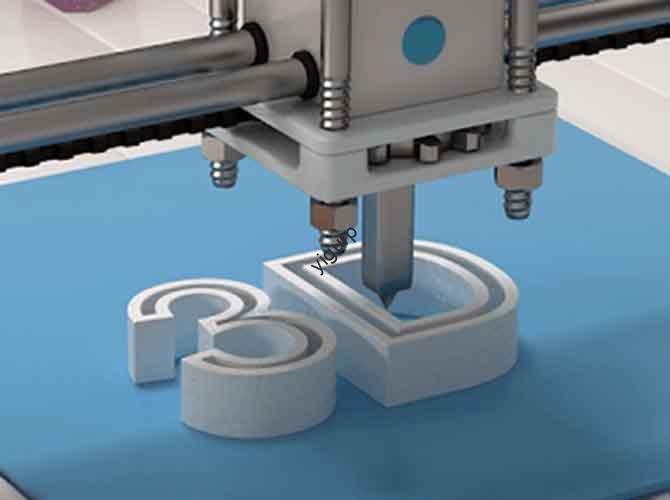
For decades, the audio industry has been defined by mass production: black plastic boxes, off-the-shelf earbuds, and a one-size-fits-all approach to sound. But what if your speakers could be as unique as your home decor, or your headphones could be shaped precisely for your ears? 3D printing is dismantling these traditional constraints, ushering in a revolution that empowers both creators and listeners. This technology is not merely a new manufacturing method; it’s a paradigm shift, solving long-standing pain points around customization, acoustics, and production agility. Let’s explore how 3D printing is not just changing how audio devices are made, but redefining what they can be—turning them into deeply personal, high-performance extensions of our identity and environment.
What Is the Core Value Proposition of 3D Printed Audio?
The true power of 3D printing in audio lies in its ability to unify form, function, and personalization in ways previously impossible or prohibitively expensive. It moves audio devices from being commoditized products to bespoke instruments.
| Traditional Audio Limitations | 3D Printed Audio Solutions | Resulting Impact |
|---|---|---|
| Design Homogeneity: Limited to shapes viable for injection molding (simple, flat, or gently curved). | Geometric Freedom: Enables intricate lattices, organic curves, and topological structures that are both aesthetic and acoustic. | Devices become functional art, seamlessly integrating into personal or architectural spaces. |
| Fixed Acoustics: Internal cabinet geometry is standardized, limiting acoustic tuning. | Acoustic Optimization: Allows for precise, complex internal baffles, waveguides, and damping structures printed as part of the main body. | Sound quality can be tailored for specific environments (e.g., a bookshelf speaker for a reflective room) or listener preferences. |
| Slow Innovation Cycles: New designs require costly and time-consuming tooling (molds). | Rapid Prototyping & Iteration: Design, print, and test a new acoustic concept in days, not months. | Faster R&D, enabling startups and audiophiles to experiment with novel driver arrangements and enclosure theories. |
| Generic Fit: Headphone earcups and earbuds use average anthropometric data. | True Personalization: Enclosures can be 3D scanned and printed to match the unique contours of an individual’s ears or head. | Dramatically improved comfort, noise isolation, and consistent sound delivery. |
How Does 3D Printing Enhance Audio Performance and Acoustics?
Beyond aesthetics, 3D printing offers profound advantages for sound quality through precise mechanical control.
The Acoustic Engineering Advantage
The internal pathway of sound waves—the enclosure, ports, and waveguides—is critical to performance. 3D printing allows these elements to be engineered with unprecedented precision.
- Optimized Enclosure Rigidity: Vibration is the enemy of clear sound. 3D printing can produce stiff, monolithic structures or strategically place internal ribbing to raise the enclosure’s resonant frequency far beyond the audio band, eliminating “boxy” coloration.
- Complex Ports and Waveguides: Instead of simple round ports, a 3D printed speaker can feature a tapered, spiraling bass reflex port that reduces port noise (chuffing). Similarly, a horn or waveguide for a tweeter can be integrally printed with mathematically smooth curves to control dispersion.
- Integrated Damping Structures: Internal labyrinthine channels or Helmholtz resonator arrays can be printed directly into the walls to absorb specific standing waves or resonances, a task nearly impossible with traditional cabinet making.
Case Study: The Diffuse-Field Calibrated Monitor
A boutique studio sought near-field monitors that matched the diffuse-field equalization standard—a specific acoustic target. Using 3D printing, they created a waveguide with a gradually morphing elliptical-to-circular cross-section. This shape precisely controlled the high-frequency dispersion pattern to meet the standard, a part that would be astronomically expensive to machine. The result was a monitor with exceptional imaging and a consistent “sweet spot,” all from a desktop-sized printer.
What Materials Define the Future of 3D Printed Sound?
Material choice is no longer just about durability; it’s a key parameter in the acoustic equation.
| Material Class | Example Materials | Acoustic & Functional Properties | Ideal Use Case |
|---|---|---|---|
| Polymers (FDM) | PLA, ABS, PETG, ASA | Good general damping, cost-effective. PETG/ASA offer better moisture and UV resistance. | Prototyping, hobbyist projects, indoor speakers. Great for testing form and function. |
| Photopolymer Resins (SLA/DLP) | Standard, Tough, & Castable Resins | Can produce exceptionally smooth, airtight surfaces right off the print bed. Low inherent damping. | Detailed grilles, smooth waveguides, master patterns for casting in other materials. |
| Advanced Composites | Carbon Fiber, Fiberglass, or Kevlar-filled Nylon (e.g., PA-CF) | Extremely high stiffness-to-weight ratio. Minimizes enclosure flex for tighter bass. Requires abrasive-resistant nozzles. | High-performance speaker enclosures and headphone frames where maximum rigidity is critical. |
| Metal | Aluminum (AlSi10Mg), Stainless Steel | Extremely dense and rigid, effectively reflecting sound waves internally. Can be heavy and expensive. | High-end audiophile enclosures, driver components (housings, magnet assemblies), and acoustic horns. |
Pro Insight on Multi-Material Printing: The next frontier is printing a single enclosure with variable material properties. Imagine a speaker baffle where the area around the driver is printed in a rigid composite for stability, while the rear chamber uses a sound-absorbing, flexible filament. This capability is moving from research labs to professional-grade printers.
What Does the Workflow Look Like for Creating Custom 3D Printed Audio?
Bringing a custom audio device to life involves a blend of art, science, and technology.
- Design & Acoustic Modeling: It starts in CAD software (e.g., Fusion 360, SolidWorks) coupled with acoustic simulation software. Designers model the enclosure while simulating driver behavior, port tuning, and internal standing waves digitally.
- Rapid Prototyping: A prototype is printed, often in a basic material like PLA, to verify fit, form, and basic assembly. This stage is where 3D printing shines, allowing for multiple iterations in a week.
- Acoustic Testing & Refinement: The prototype undergoes real-world measurement in a test chamber or with calibrated microphones. Data from these tests informs tweaks to the digital model—adjusting port length, volume, or damping structures.
- Final Production & Finishing: The final design is printed in the chosen performance material. Post-processing is key: smoothing surfaces, sealing prints (for FDM), applying acoustic coatings, and assembling with drivers, electronics, and damping materials like fiberfill or acoustic foam.
Conclusion
3D printed audio represents more than a niche for hobbyists; it is a fundamental evolution in the relationship we have with sound technology. It democratizes high-fidelity design, enables acoustic personalization at an individual level, and drastically accelerates innovation by removing the financial and temporal barriers of tooling. For the listener, it promises devices that fit not just a room, but a lifestyle—delivering tailored sound from objects of personal significance. For the industry, it’s a call to move from mass production to mass customization. While traditional manufacturing will continue to dominate the broad consumer market, 3D printing is carving out the future of high-end audio, professional tools, and truly personal sound experiences, one meticulously printed layer at a time.
FAQ (Frequently Asked Questions)
Q: Can 3D printed speakers really sound as good as high-end wooden speakers?
A: They can sound different, and in some aspects, superior. A well-designed 3D printed enclosure made from a stiff composite can surpass a poorly built wooden box in rigidity, reducing distortion. However, wood has inherent damping qualities many enjoy. The advantage of 3D printing is the precision and repeatability of complex internal geometries that can be optimized to outperform simple box designs, regardless of material.
Q: How do I get started designing my own 3D printed speaker?
A: Begin with the driver. Choose a high-quality driver unit (woofer, tweeter) first, as its specifications (Thiele-Small parameters) dictate the required enclosure volume and port tuning. Use free software like VituixCAD or WinISD to model an enclosure design. Then, model that design in a beginner-friendly CAD tool like Fusion 360 (free for personal use). Start by printing a test enclosure in PLA to learn before investing in advanced materials.
Q: Are there any downsides to 3D printed headphones or earbuds?
A: The main challenge is comfort and biocompatibility for in-ear parts. Using standard plastics for earbud tips that contact skin for long periods may cause irritation for some. The solution is to use skin-safe, certified resins (like dental or medical-grade resins) for final production parts. For headphone frames, ensuring a smooth finish at contact points (headband, earcups) is crucial for comfort.
Q: Is 3D printing being used by mainstream audio brands?
A: Yes, increasingly so. Brands are using it for rapid prototyping of new concepts and for manufacturing complex, low-volume components. For instance, some high-end brands use 3D printing for intricate waveguides or grilles. The shift towards direct end-use part production is growing, especially in the custom in-ear monitor (CIEM) market, where every pair is already scanned and custom-made.
Discuss Your Audio Projects with Yigu Rapid Prototyping
Are you an audio engineer with a groundbreaking enclosure design? A startup aiming to launch a line of distinctive, acoustically tuned speakers? At Yigu Rapid Prototyping, we provide the bridge from your acoustic vision to a tangible, high-fidelity product. Our expertise encompasses acoustically-informed DfAM (Design for Additive Manufacturing), multi-material printing strategies for optimal damping and rigidity, and precision post-processing to achieve audiophile-grade finishes. We can help you iterate rapidly, select the perfect material for your application, and transition from prototype to small-batch production. Contact us to explore how 3D printing can give your audio project a unique voice.