
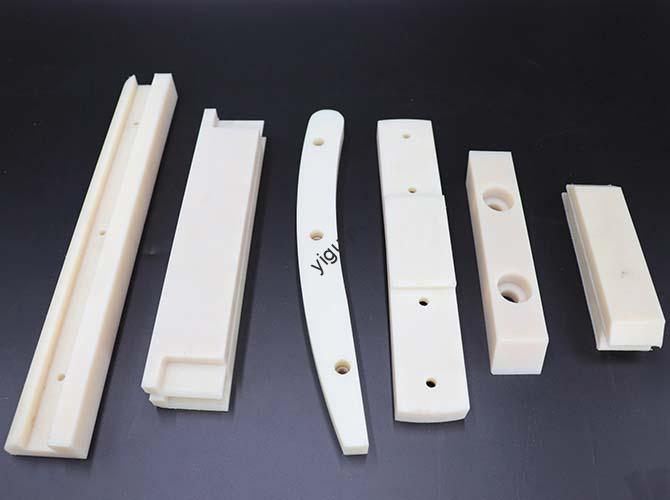
If you work with ceramics—for aerospace parts, medical implants, or high-end electronics—you likely have questions. Additive manufacturing ceramic, or 3D-printed ceramic, builds parts layer by layer from digital designs. It fixes big problems with traditional ceramic methods, like limited shapes and high waste. This guide breaks down how it works, its benefits, real uses, challenges, and how to start. By the end, you’ll know if it’s right for your projects and how to apply it.
How Does Additive Manufacturing Ceramic Work?
Additive manufacturing ceramic uses digital models to build ceramic parts layer by layer. Unlike traditional methods (molding, pressing, machining), it doesn’t need expensive tools or molds. The process has three key steps: print a “green part” (unfinished ceramic), remove the binder (called debinding), and heat to fuse particles (called sintering). But not all 3D printing for ceramics is the same—four main technologies lead the industry.
What Is Binder Jetting?
Binder jetting is the most common industrial ceramic 3D printing tech. It sprays a liquid “binder” onto a bed of ceramic powder, layer by layer, to make the green part. After printing, you debind (remove the binder) and sinter (heat to 1,200–1,800°C) to make a solid part.
Key perks: It’s fast, cheap for high volumes, and handles large parts (up to 1m wide). It uses alumina, zirconia, or silicon carbide—common industrial ceramics.
Real case: Siemens Energy used binder jetting for ceramic gas turbine nozzles. Traditional methods took 6 weeks to make one nozzle (with 5 parts to assemble). Binder jetting makes one nozzle in 3 days. It adds internal cooling channels that boost turbine efficiency by 8%. Now Siemens makes 500+ nozzles per month and cuts costs by 40% (Siemens Energy Case Study, 2024).
What Is Stereolithography (SLA)?
SLA uses a laser to harden a ceramic-filled resin (liquid resin mixed with ceramic powder) into layers. After printing, you debind the resin and sinter the ceramic. It’s perfect for tiny, detailed parts—think dental crowns or microelectronics.
Key perks: It offers amazing detail (down to 50 microns, smaller than a human hair). It has a smooth finish and uses biocompatible ceramics.
It uses zirconia (for dental/medical parts) and alumina (for electronics).
Real case: 3Shape, a dental tech company, uses SLA for custom dental crowns. Traditional crowns take 2 weeks (molding + firing). SLA prints a green crown in 2 hours, plus 8 hours of sintering—total 1 day. Dentists say SLA crowns fit 30% better, cutting patient return visits by 25% (3Shape Annual Report, 2023).
What Is Material Extrusion?
Material extrusion is like FDM 3D printing for plastics—but for ceramics. It pushes a “ceramic filament” (ceramic powder + plastic binder) through a nozzle, layer by layer. After printing, debind and sinter the part. It’s the cheapest option for small businesses and hobbyists.
Key perks: Printers start at $5,000, are easy to use, and work with common ceramics.
It uses PLA-ceramic blends (for prototypes) and alumina (for simple industrial parts).
Real case: A small pottery studio used material extrusion to prototype custom mugs. Traditional prototyping needed a new mold ($200 each). Material extrusion prints a prototype in 4 hours, no mold costs. The studio now tests 5x more designs monthly and launched 3 new mug lines that sold out in 2 weeks (Pottery Industry Review, 2024).
What Is Directed Energy Deposition (DED)?
DED is a high-power tech. It uses a laser or electron beam to melt ceramic powder (or wire) as it’s added. It builds parts in real time. It’s for large, thick-walled parts—like industrial furnace liners or aerospace engine components.
Key perks: It can repair existing ceramic parts (e.g., cracked turbine blades). It handles large sizes and makes dense, strong parts.
It uses silicon carbide and alumina (for high-temperature uses).
Real case: NASA used DED to 3D-print a ceramic heat shield for a Mars rover. Traditional heat shields had 10 separate tiles (risking gaps that fail in space). DED makes a single, seamless shield. It’s 20% lighter and handles Mars’ extreme temps (-150°C to 70°C). The shield survived entry into Mars’ atmosphere with no damage (NASA Technology Report, 2024).
Why Choose It Over Traditional Ceramic Methods?
Ceramic additive manufacturing isn’t just a new tool—it solves big pain points of traditional methods. Below are 5 core benefits, backed by data and real examples.
Can It Make Complex Shapes?
Traditional ceramic methods rely on molds or machining. They limit designs to simple shapes (solid blocks, basic cylinders). Additive manufacturing lets you print complex shapes—lattice structures, internal channels, organic curves—without tooling.
Data point: The American Ceramic Society found additive manufacturing makes ceramic parts with 5x more complex geometries than traditional methods. It also cuts part count by 70% (American Ceramic Society, 2024).
Example: GE Healthcare used ceramic 3D printing for a CT scanner collimator (focuses X-rays). The traditional collimator was a solid block with 100 drilled holes (risking cracks). The 3D-printed one has a lattice structure with integrated holes. It’s 40% lighter and cuts X-ray scatter by 15%—improving scan quality (GE Healthcare Case Study, 2023).
Does It Cut Material Waste?
Traditional ceramic manufacturing is wasteful. Machining a ceramic block can generate 70-80% waste (cut-off ceramic can’t be reused). Additive manufacturing only uses the material needed for the part. It reduces waste to 5-10%.
Data point: The Sustainable Manufacturing Forum reported ceramic 3D printing cuts material waste by 65-75% vs. traditional machining (Sustainable Manufacturing Forum, 2024).
Example: A semiconductor company used to machine ceramic wafers from solid blocks. This generated 75% waste. Switching to SLA ceramic 3D printing cut waste to 8%. It saved the company $120,000 yearly in material costs. The 3D-printed wafers also have smoother surfaces, boosting semiconductor performance by 10% (Semiconductor Industry Journal, 2024).
Does It Speed Up Lead Times?
Traditional ceramic manufacturing has long lead times. Making a mold takes 2-4 weeks. Firing parts takes another week. Additive manufacturing cuts lead times by 70-90%. This is critical for time-sensitive projects (medical implants, emergency repairs).
Data point: A survey of 100 ceramic manufacturers found additive manufacturing reduced lead times from 6 weeks average to 5 days (Ceramic Manufacturing Survey, 2024).
Example: A chemical plant had a shutdown. It needed a replacement ceramic valve (for corrosive chemicals) fast. Traditional methods would take 3 weeks. Using binder jetting, the plant got the valve in 4 days. The shutdown was cut short by 17 days, saving $500,000 in lost production (Chemical Engineering News, 2023).
Can It Customize at Scale?
Traditional ceramic customization needs new molds ($100–$10,000 per design). This makes small-batch or custom parts expensive. Additive manufacturing lets you customize parts by changing the digital design. No extra cost—even for one-off parts.
Example: Straumann, a dental implant company, uses SLA for custom dental abutments (connects implants to crowns). Each abutment matches a patient’s jaw shape (from CT scans). Traditional abutments were one-size-fits-all (needing grinding). 3D-printed ones fit perfectly. They cut patient discomfort by 40% and improve implant longevity by 25% (Straumann Case Study, 2024).
Does It Improve Part Performance?
Ceramics are naturally strong, heat-resistant, and biocompatible. But traditional methods can weaken them (e.g., machining creates microcracks). Additive manufacturing makes parts with uniform density and no microcracks. This enhances performance.
Data point: NIST tests showed 3D-printed ceramic parts have 15-20% higher tensile strength than traditional ones (NIST, 2024). Tensile strength is resistance to breaking.
Example: Rolls-Royce used DED for a jet engine turbine blade. The traditional blade had microcracks from machining. It could only handle 1,200°C. The 3D-printed blade has no microcracks. It handles 1,400°C—letting the engine run hotter and more efficiently (Rolls-Royce Engineering Journal, 2024).
Where Is It Used Today?
Ceramic 3D printing isn’t just lab tech—it’s transforming industries that need high-performance ceramics. Below are 4 key sectors where it makes the biggest impact.
Aerospace: High-Temp Parts
Aerospace needs parts that handle extreme heat (engine components, heat shields) and are lightweight. Ceramic 3D printing delivers both.
Example: Boeing used binder jetting for ceramic heat exchangers in its 787 Dreamliner. The traditional heat exchanger had 12 metal parts (heavy, prone to corrosion). The 3D-printed ceramic one is a single part. It’s 30% lighter and resists engine heat (up to 1,300°C). Boeing saves 500 kg per plane. This cuts fuel consumption by 3% (Boeing Sustainability Report, 2024).
Medical: Biocompatible Implants
Ceramics are biocompatible—they don’t react with the human body. This makes them ideal for implants. Additive manufacturing lets doctors make patient-specific implants that fit perfectly.
Example: A children’s hospital used SLA for a custom skull implant for a 5-year-old with a bone defect. Traditional implants were adult-sized (needing multiple surgeries as the child grew). The 3D-printed implant matched the child’s skull. It’s easy to replace as they grow. The implant integrated with the child’s bone in 3 months, no complications (Pediatric Medical Journal, 2023).
Electronics: Precision Parts
Electronics need ceramic parts that insulate electricity and handle high temps (circuit boards, sensor housings). Ceramic 3D printing makes parts with tight tolerances (as small as 10 microns).
Example: Samsung used SLA for sensor housings in its 5G phones. The traditional housing was plastic (melts in high temps). The 3D-printed ceramic housing resists heat (up to 300°C). It has a smoother surface, improving sensor accuracy by 20%. Samsung now uses ceramic 3D printing for 80% of its 5G sensor housings (Samsung Tech Blog, 2024).
Energy: Corrosion-Resistant Parts
The energy sector (oil, gas, solar) needs parts that resist corrosion and high temps (valves, furnace liners). Ceramic 3D printing makes parts that outlast traditional metals.
Example: A solar company used DED for ceramic liners in its concentrated solar power (CSP) towers. Traditional metal liners corroded after 2 years. The 3D-printed ceramic liners resist corrosion and last 10 years. The company saves $200,000 per tower in replacement costs (Solar Energy Review, 2024).
What Challenges Does It Face?
Ceramic 3D printing has big benefits, but it’s not perfect. Below are 3 common challenges—and practical ways to fix them.
How to Fix Sintering Shrinkage?
Ceramic parts shrink 10-20% when sintered (heated to fuse particles). This can make parts smaller than intended. It’s a problem for precision parts (medical implants, electronics).
Solution: Use software to scale up the digital design by the expected shrinkage rate. For example, if a part shrinks 15%, design it 15% larger than the final size.
Example: A dental lab uses software that auto-scales crown designs by 12% (their zirconia’s shrinkage rate). Sintered crowns match the patient’s tooth size perfectly. No grinding needed (Dental Technology Today, 2024).
How to Afford Industrial Printers?
Industrial ceramic 3D printers (binder jetting, DED) cost $100,000–$500,000. This is out of reach for small businesses.
Solution: Use 3D printing services instead of buying a printer. Companies like Shapeways or Protolabs offer ceramic 3D printing. Parts start at $50.
Example: A small electronics startup needed 100 ceramic sensor housings. Instead of buying a $150,000 printer, they used a service. Each housing cost $8—total $800. The startup launched 3 months earlier and saved $149,200 (Small Tech Startup Report, 2024).
How to Get More Materials?
Ceramic 3D printing materials are growing, but still limited vs. traditional ceramics. Some high-performance ceramics (like boron carbide) are hard to 3D print.
Solution: Work with material suppliers to make custom blends. Many suppliers (3M, Kyocera) can create ceramic powders/resins for your needs.
Example: A defense company needed boron carbide parts (for body armor) that could be 3D printed. They partnered with a supplier to make a boron carbide-binder blend for binder jetting. The 3D-printed armor is 25% lighter than traditional boron carbide armor. It meets military standards (Defense Industry Journal, 2024).
How to Start with It?
You don’t need to be an expert to use ceramic 3D printing. Follow this 4-step guide to launch your first project.
Step 1: Define Your Project Needs
Start by answering 3 key questions to narrow your options:
- What does the part need to do? (e.g., withstand high heat, be biocompatible)
- What’s your budget? (e.g., $500 for prototypes, $10,000 for production)
- What’s your timeline? (e.g., need parts in 1 week, can wait 1 month)
Example: A research lab needs 5 ceramic test tubes. They must withstand 1,200°C. Budget is $1,000. Timeline is 2 weeks. Their needs point to binder jetting (fast, heat-resistant alumina) via a service.
Step 2: Choose Tech and Material
Use this table to match your needs to the right technology and material:
| Project Need | Best Technology | Recommended Material |
|---|---|---|
| High detail, small parts | SLA | Zirconia (medical/electronics) |
| High volume, complex parts | Binder Jetting | Alumina (industrial) |
| Low-cost prototyping | Material Extrusion | PLA-alumina blend (prototypes) |
| Large, thick-walled parts | DED | Silicon carbide (high-temperature) |
Example: The research lab (Step 1) uses the table. They confirm binder jetting with alumina is right. Alumina withstands 1,600°C (more than 1,200°C). Binder jetting delivers 5 parts in 2 weeks.
Step 3: Create a Digital Design
Ceramic 3D printing needs a high-quality digital model (STL or STEP format). If new to design, use free CAD software like Tinkercad. For precision parts, work with a designer experienced in ceramic 3D printing. They’ll account for shrinkage and printability.
Key design tips:
- Avoid sharp corners (they crack during sintering). Use rounded edges (min 1mm radius).
- Add support structures for overhangs (angles steeper than 45°). Slicing software can generate these.
- Account for shrinkage: If ceramic shrinks 15%, scale design to 115% of final size.
Example: The research lab uses Fusion 360 to design test tubes. They add 2mm rounded edges. They scale the design by 14% (alumina’s typical shrinkage). They export the STL file to their service. The service confirms it’s printable.
Step 4: Print, Debind, Sinter, Test
Once your design is ready, follow this general workflow (steps vary by tech):
- Print the green part: The printer builds the part (hours to days, based on size).
- Debind the part: Remove the binder (heating or chemicals) to prevent burning during sintering.
- Sinter the part: Heat to 1,200–1,800°C to fuse particles (8–24 hours).
- Test the part: Check size, heat resistance, etc. Refine design if needed.
Example: The lab’s service prints green test tubes in 12 hours. Debinding takes 4 hours. Sintering is 10 hours at 1,600°C. Final test tubes are 14% smaller (matching shrinkage). They withstand 1,200°C with no cracks. The lab uses them right away.
Conclusion
Additive manufacturing ceramic is a game-changer for industries that use high-performance ceramics. It solves traditional methods’ biggest problems: limited design, high waste, long lead times, and costly customization. By using layer-by-layer printing, it unlocks complex shapes, cuts waste, speeds up production, and improves part performance. It’s used today in aerospace, medical, electronics, and energy—with real results and cost savings.
While it has challenges (sintering shrinkage, printer costs, limited materials), simple solutions exist. Use software to fix shrinkage, services to avoid printer costs, and custom blends for rare materials. Getting started is easy with a 4-step guide: define needs, choose tech/material, design, and print/test.
For any business looking to stay competitive in high-temperature or precision applications, ceramic additive manufacturing isn’t just an option—it’s a strategic investment. Start small with a prototype, test its value, and scale up. It will help you create better parts, save money, and stand out in your industry.
FAQ About Additive Manufacturing Ceramic
Is additive manufacturing ceramic strong enough for industrial use? Yes—3D-printed ceramic parts are often stronger than traditional ones. NIST tests show 3D-printed alumina has 15–20% higher tensile strength. This is due to uniform density and no microcracks. Boeing, Rolls-Royce, and Siemens use it for critical parts like turbine blades and heat exchangers.
How much does it cost vs. traditional methods? It depends on volume. For small batches or complex parts, it’s cheaper. Traditional methods need $100–$10k molds for custom parts; 3D printing has no mold costs. A 10-part batch of complex valves costs $500 via 3D printing vs. $2,000 via traditional molding. For high volumes (1,000+ parts), traditional methods may be cheaper—but 3D printing saves on waste and design flexibility.
What’s the maximum size of a ceramic part I can 3D print? It varies by tech: Binder jetting prints up to 1m (furnace liners). DED handles larger parts (Mars rover heat shields). SLA and material extrusion are for small parts (up to 30cm). For larger parts, some services offer segmented printing—print sections, then bond with ceramic adhesive (strong enough for most uses).
Can it make biocompatible parts for medical use? Yes—many ceramic 3D printing materials (like zirconia) are biocompatible. They don’t react with the human body. SLA is often used for dental crowns, abutments, and custom implants. A children’s hospital used it for a skull implant that integrated with a child’s bone with no complications.
How long does it take to 3D print a ceramic part? It depends on size and tech. Small parts (dental crowns) take 2–12 hours to print (green part). Large parts (1m furnace liners) take days. Add debinding (4–8 hours) and sintering (8–24 hours) for the final part. Total lead time is often 1–5 days—much faster than traditional methods (2–6 weeks).
Discuss Your Projects with Yigu Rapid Prototyping
At Yigu Rapid Prototyping, we help businesses across aerospace, medical, and electronics adopt ceramic 3D printing. We know the challenges you face—from cost concerns to design questions—and we’re here to help.
Whether you need a prototype, small-batch production, or help scaling to high volumes, our team has the experience to guide you. We work with top 3D printing services and material suppliers to deliver parts that meet your needs. We’ll help you choose the right tech, refine your design, and avoid common pitfalls.
Ready to see how additive manufacturing ceramic can transform your projects? Contact us today to discuss your goals, budget, and timeline. We’ll help you turn your digital design into a high-performance ceramic part—fast, affordably, and reliably.