
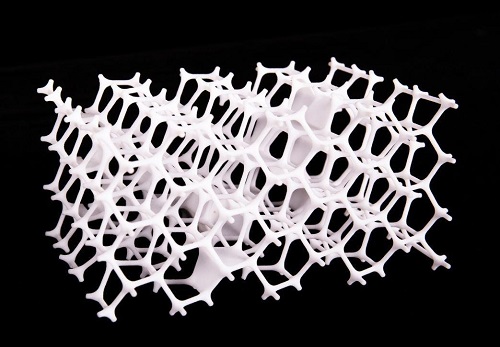
The true magic of 3D printing isn’t just in the machines; it’s in the vast, evolving library of materials they can process. This material diversity is what transforms the technology from a simple model-making tool into a full-spectrum manufacturing solution. But with great choice comes great complexity. Selecting the wrong material can lead to failed prints, inadequate part performance, or blown budgets. This guide is your strategic map. We’ll move beyond basic lists to explore the core properties, trade-offs, and real-world applications of each major material category. You’ll learn not just what materials exist, but how to think like a materials engineer to match the right substance to your specific functional, aesthetic, and economic requirements.
How Do Engineering Thermoplastics Serve as the Universal Prototyping Foundation?
These are the workhorse materials, bridging the gap between accessibility and functionality. Understanding their polymer chemistry is key to predicting their behavior.
PLA vs. PETG vs. ABS: Navigating the “Big Three” for FDM?
| Material | Polymer Family & Key Traits | Ideal Use Cases | Critical Limitations & Handling |
|---|---|---|---|
| PLA | Amorphous, bio-based polyester. Stiff, low-warp, easy to print. | Visual prototypes, display models, low-stress fixtures, educational tools. | Brittle (poor impact resistance). Low HDT (~55°C). Hygroscopic – must be dried. |
| PETG | Semi-crystalline copolymer (PET + glycol). Tough, chemically resistant, low odor. | Functional enclosures, mechanical parts, outdoor fixtures, laboratory equipment. | Prone to stringing. Requires precise retraction. Can be “gooey” during printing. |
| ABS | Amorphous thermoplastic terpolymer. Impact resistant, sandable, paintable. | Automotive interiors, consumer electronics housings, parts needing acetone smoothing. | High warping. Requires a heated bed (100-110°C) and enclosed chamber. Emits fumes. |
The Professional Insight: Don’t default to PLA for “ease.” For a snap-fit enclosure prototype that must survive assembly testing, PETG’s superior layer adhesion and toughness make it the clear choice over brittle PLA. For a part needing a smooth, painted finish, ABS is preferable due to its compatibility with acetone vapor and automotive primers.
What Are the Advanced Engineering Filaments and When Do You Need Them?
Beyond the basics, specialized filaments unlock industrial performance on desktop printers.
- ASA: The Outdoor ABS. Offers UV stability and weather resistance without yellowing or degrading. Perfect for automotive exterior components, drone bodies, and garden fixtures.
- PC (Polycarbonate): The Impact Champion. Exceptional impact strength and heat resistance (HDT ~110°C). Requires high-temperature hotends (290°C+) and an enclosure. Used for functional, load-bearing prototypes.
- Nylon (PA6, PA12): The Durable Performer. Renowned for fatigue resistance, toughness, and slight flexibility. Extremely hygroscopic and requires drying before and during printing. Ideal for gears, hinges, and custom tooling.
- Composites (CF, GF): Filaments filled with Carbon Fiber (CF) or Glass Fiber (GF). They offer increased stiffness (rigidity), dimensional stability, and reduced weight, but are abrasive (wear brass nozzles) and more brittle. Use for jigs, fixtures, and lightweight structural parts.
Why Are Photosensitive Resins the Kings of Detail and Finish?
Vat polymerization (SLA, DLP) uses liquid resins that cure with UV light. Their isotropic curing results in parts with uniform mechanical properties and exceptional surface resolution.
How Do You Decipher the Resin Spectrum?
Resins are formulated for specific outcomes, not just “hardness.”
- Standard/General Purpose: Balanced for detail and moderate strength. The default for conceptual models and master patterns.
- Tough/Durable (e.g., ABS-like, Engineering): Modified for higher elongation at break and impact resistance. Used for snap-fits, housings, and functional assemblies. Often require longer post-cure times.
- High-Temperature: Formulated with ceramic fillers or specialized chemistry to achieve Heat Deflection Temperatures (HDT) of 200-280°C. Critical for hot air ducts, molds for low-temperature casting, and heat-resistant fixtures.
- Castable: Designed for complete, ash-free burnout in investment casting for jewelry and dental applications. Water-washable versions are a common pitfall; they often leave residue. Solvent wash is mandatory for reliable casting.
- Dental & Medical (Class I/IIa): Biocompatible formulations certified for surgical guides, dental models, and temporary implants. Require validated, documented post-processing protocols.
Case Study: A luxury watchmaker needed prototypes for a new case design with micro-engraved text and a mirror-like finish. Using a high-resolution, clear castable resin on a DLP printer, they produced masters that could be directly used for silicon mold-making and subsequent cold casting with metal powders, bypassing traditional machining entirely.
When Do You Step into the Realm of Metal and Ceramic Printing?
These are no longer just prototyping materials; they are direct digital manufacturing mediums for end-use parts.
What Are the Realities of Metal Additive Manufacturing (SLM, DMLS, Binder Jetting)?
Metal printing isn’t a single process, and material choice is tied to the technology.
| Metal Alloy | Primary Process(es) | Defining Properties | Signature Applications |
|---|---|---|---|
| Stainless Steel 316L | SLM, Binder Jetting | Excellent corrosion resistance, good strength. The “workhorse” of metal AM. | Fluidic systems, food-safe components, marine hardware, architectural details. |
| Ti6Al4V (Grade 5 Titanium) | SLM (DMLS) | High strength-to-weight ratio, biocompatible. | Aerospace brackets, high-performance automotive, orthopedic implants, surgical tools. |
| AlSi10Mg (Aluminum) | SLM | Lightweight, good thermal conductivity, moderate strength. | Heat exchangers, drone frames, lightweight automotive/aviation components. |
| Inconel 718 (Nickel Superalloy) | SLM (DMLS) | Exceptional high-temperature strength & corrosion resistance. | Turbine blades, rocket engine components, high-temp exhaust systems. |
Critical Consideration: The microstructure and mechanical properties of 3D-printed metal are anisotropic and process-dependent. Post-processing like Hot Isostatic Pressing (HIP) is often required for aerospace and medical parts to eliminate internal porosity and achieve isotropic, forged-like properties.
Where Do Technical Ceramics Fit?
3D-printed ceramics (via SLA of ceramic-loaded resin or binder jetting) are for extreme environments.
- Alumina (Al₂O₃): High hardness, electrical insulation, excellent wear and corrosion resistance. Used for insulators, wear plates, labware, and custom catalyst supports.
- Zirconia (ZrO₂): Exceptional fracture toughness and strength (transformation toughening), biocompatible. Used for dental crowns & bridges, cutting tools, and high-stress insulating components.
- Silicon Carbide (SiC): Extreme temperature stability, high thermal conductivity, semiconductor properties. For aerospace components, advanced heat exchangers, and fusion reactor parts.
How Do Elastomers, Composites, and Biomaterials Expand the Possibility Frontier?
These specialized categories solve niche but critical challenges.
Elastomers: Simulating Rubber from Shore 20A to 90A
- TPU/TPE (FDM): Flexible filaments. Shore 95A is “stiff” flexible; Shore 85A is “squishy.” Great for gaskets, grips, vibration dampeners, and protective cases.
- Flexible & Elastic Resins (SLA/DLP): Can achieve softer, more rubber-like feels (Shore 50A-70A) with better surface finish. Used for ergonomic handles, seals, and wearables prototyping.
Advanced Composites: The Next Generation
These are materials engineered at the nano- or micro-scale for performance.
- Continuous Fiber Composites: Systems that lay down continuous strands of carbon, glass, or Kevlar® fiber within a plastic matrix (usually nylon). The result is parts with strength and stiffness rivaling aluminum, used for ultimate load-bearing brackets and structural reinforcements.
- Conductive Inks/Filaments: Polymers doped with carbon black, graphene, or silver nanoparticles. They enable printed circuits, capacitive touch sensors, and anti-static housings directly within a 3D print.
Biomaterials & Food: The Cutting Edge
- Bio-inks: Hydrogels laden with living cells. Used in bioprinting research to create tissue scaffolds for drug testing and regenerative medicine. This is a rapidly evolving R&D field.
- Food Grade Materials: Chocolate, sugar pastes, plant-based purees. Beyond garnishes, this is used for customized nutrition (elderly, athletes) and creating complex food textures impossible by hand.
Conclusion
Choosing a 3D printing material is a multi-variable optimization problem balancing function, form, feasibility, and cost. It requires asking: Does it need to survive (strength, temperature), feel a certain way (flexibility, surface finish), interact with something (biocompatibility, conductivity), or be made affordably (material and processing cost)? By understanding the inherent chemical and mechanical families of materials—from the user-friendly but limited polymers to the high-performance, process-intensive metals and ceramics—you move from guessing to strategic selection. This knowledge empowers you to not just replicate existing parts, but to design entirely new products optimized for the unique freedoms of additive manufacturing.
FAQ
What are the most common 3D printing materials for beginners?
For FDM, PLA is the undisputed starting point due to its low warping and easy printability. For resin printing, a Standard/General Purpose resin offers a good balance of detail and strength for learning the post-processing workflow.
Which 3D printing materials are suitable for high-temperature applications?
For plastics, consider High-Temperature Resins (HDT >200°C), Polycarbonate (PC), or PEEK/PEKK (advanced, requiring expert-grade printers). For the most extreme environments, Alumina or Zirconia ceramics or Nickel-based superalloys like Inconel are used.
Are there environmentally friendly 3D printing materials?
PLA is biobased and compostable in industrial facilities, but not in home compost. Newer rPETG filaments made from recycled bottles are gaining traction. True sustainability also considers energy use during printing and end-of-life recyclability; PETG is widely recyclable (#1), while mixed composite filaments are not.
Can 3D printed parts be as strong as injection-molded parts?
It depends on the material, process, and orientation. FDM parts are typically weaker and anisotropic (stronger in-plane than between layers). Properly processed SLA resins or SLS Nylon can approach isotropic properties. Fully dense SLM metal parts, post-HIP, can meet or exceed cast metal specifications. The key is designing for the additive process, not against it.
How do I choose between FDM and Resin for a detailed prototype?
Choose FDM if you need functional toughness, larger size, or lower cost per part. Choose Resin (SLA/DLP) if you need microscopic detail, a smooth surface finish right off the printer, or isotropic mechanical properties. For a small, intricate gear, resin wins. For a large, stress-bearing bracket, FDM with PETG or Nylon is better.
Discuss Your Projects with Yigu Rapid Prototyping
Navigating this complex material landscape alone is daunting. Selecting the wrong material can waste time and resources. Partnering with experts ensures your design is realized with the optimal balance of performance, aesthetics, and cost.
At Yigu Rapid Prototyping, we are your material science partners. Our capability goes beyond printing:
- Comprehensive Material Library: We offer the full spectrum—from standard and engineering plastics (FDM/SLS) to specialty and medical-grade resins (SLA/DLP), and production metals (SLM). We help you select based on data, not guesswork.
- Process Expertise: We understand that a material’s performance is defined by its processing. Our engineers optimize print orientation, parameters, and post-processing (heat treatment, HIP, surface finishing) to ensure your parts meet specification.
- Application-Focused Guidance: Is it for a visual concept model, a functional test rig, or a final-use production part? We align the material and technology to your project’s stage and requirements, ensuring success from prototype to production.
Unsure which material is right for your breakthrough design? Consult with our engineering team for a free, in-depth application analysis. Let us help you materialize your vision with confidence.