
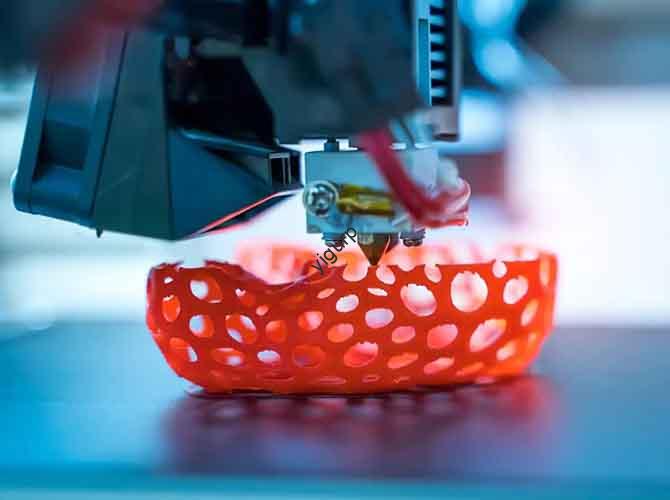
You walk into a toy store, and it’s a sea of sameness. The same licensed characters, the same generic playsets, the same lack of anything that reflects your child’s unique interests. What if a child could not just play with a toy, but help design it? What if a teacher could print a custom manipulative overnight for a lesson the next day? 3D printed toy models are turning these “what-ifs” into reality. Moving far beyond simple novelties, they represent a fundamental shift towards personalized, on-demand, and educationally rich playthings that empower creators, parents, and educators. This guide explores how this technology is unleashing creativity, solving real-world problems, and redefining what a toy can be.
Introduction
The traditional toy industry operates on a model of mass production and mass distribution. This creates affordable toys but at the cost of personalization, local relevance, and rapid iteration. A broken part means a discarded toy; a unique educational need goes unmet. 3D printing technology disrupts this model by enabling digital inventory and hyper-local manufacturing. A 3D printed toy model starts as a digital file—infinitely customizable, easily shared, and producible anywhere there’s a printer. This isn’t just about making plastic trinkets; it’s about democratizing toy creation, fostering STEM skills, and creating a more sustainable, meaningful relationship with the objects of play. Let’s build the story from the ground up.
What Exactly Are 3D Printed Toy Models?
At their core, 3D printed toy models are physical play objects fabricated layer-by-layer through additive manufacturing processes, most commonly Fused Deposition Modeling (FDM) for plastics and Stereolithography (SLA) for high-detail resins. The “toy” is defined not by a factory mold, but by a digital design file (STL, 3MF). This file can be created from scratch, modified from an existing design, or downloaded from a vast online ecosystem.
The Key Differentiators from Traditional Toys:
- Zero Tooling Cost: No need for a $10,000+ injection mold. This makes economical small-batch or one-off production possible.
- Digital-First Nature: The toy exists as a shareable, modifiable digital asset. Lose a piece? Reprint it. Want a larger version? Scale it in software.
- Complexity for Free: Intricate interlocking parts, internal mechanisms, and organic shapes that are impossible or prohibitively expensive to injection mold can be printed as easily as a solid block.
What Are the Best Materials for Safe and Durable Toys?
Material choice is paramount, especially for children’s toys. It dictates safety, feel, durability, and cost.
| Material | Best For | Key Properties & Safety Profile | Considerations |
|---|---|---|---|
| PLA (Polylactic Acid) | The gold standard for child-safe toys. Figurines, puzzles, building blocks, educational models. | Biodegradable, non-toxic, derived from corn starch. Low warping, easy to print. Brittle under impact (breaks safely into larger pieces, not sharp shards). | Can soften in hot cars. Excellent for most applications. Always sand edges smooth. |
| PETG (Glycol-modified PET) | Durable, functional toys. Robot parts, mechanical models, outdoor toys, thicker building systems. | Tougher and more flexible than PLA, food-safe, good chemical resistance. Higher temperature resistance. | Slightly more difficult to print than PLA (can be stringy). Still very safe when printed well. |
| TPU (Thermoplastic Polyurethane) | Flexible and squishy toys. Wheels, gaskets, grippy handles, stress balls, bendable figures. | Rubber-like elasticity (various Shore hardnesses). Durable and wear-resistant. | Requires a direct-drive extruder to print reliably. Ensure the formulation is phthalate-free. |
| ABS | High-strength, classic toy feel. LEGO-compatible bricks, detailed model kits, automotive toys. | Very strong, slightly flexible, can be smoothed with acetone vapor. Traditional “plastic” feel. | Requires ventilation while printing (fumes). Can produce sharp edges when broken. Better for older kids/display models. |
| SLA/DLP Resins | Ultra-high-detail collectibles. Miniature figures, detailed dollhouse accessories, intricate jewelry-toys. | Unmatched surface detail and smoothness. “Standard” resins can be brittle; “Tough” or “Durable” resins are better for handling. | Liquid resin is toxic and requires safe handling. Parts must be fully cured and washed. Only for older children/adult collectors when using certified bio-safe resins. |
Safety First Protocol: Regardless of material, post-process every toy: Sand sharp edges, wash with soap and water, and for young children, ensure parts are too large to be a choking hazard (use a choke tube tester).
Where Do You Find and Create Designs? The Digital Ecosystem
You don’t need to be a CAD expert to start. A thriving online community supports creators at all levels.
Tier 1: Download & Print (Easiest)
Platforms like Thingiverse, Printables, and MyMiniFactory host millions of free and paid designs.
- Example: Search for “articulated dinosaur,” download the file, and print a posable T-Rex in a few hours.
- Pro-Tip: Look for designs marked “Print-in-Place“—these are clever models with moving parts (like gears or hinges) that print fully assembled and ready to use.
Tier 2: Customize & Remix (Intermediate)
Use simple, browser-based tools like Tinkercad to modify existing designs.
- Workflow: Import a basic car model into Tinkercad. Add a child’s name as embossed text, modify the wheel design, or scale it to be larger. This teaches basic 3D design concepts in a playful way.
Tier 3: Design from Scratch (Advanced)
Software like Fusion 360 (free for hobbyists), Blender, or Onshape allows for full custom creation. This is where truly unique toys—like a custom puzzle of your dog’s face or a fully engineered pull-back racer—are born.
What Are the Transformative Applications? Beyond Just Play
The impact of 3D printed toys extends far into education, therapy, and community.
1. Education & STEM Learning:
This is arguably the most powerful application. 3D printing turns abstract concepts into tangible objects.
- Math: Print fraction blocks, geometric nets, and base-ten manipulatives.
- History & Biology: Print accurate fossil replicas, archaeological artifacts, and anatomical models.
- Engineering: Print gear trains, bridge designs, and simple machines for hands-on physics lessons.
- Case Study: A middle school class studying ancient Egypt designed and printed their own scale models of pyramids and shadoofs. The project integrated history, geometry, and design thinking, resulting in dramatically higher engagement and retention.
2. Inclusive & Adaptive Toys:
The “one-size-fits-all” model fails many children. 3D printing enables rapid prototyping of adaptive toys.
- Examples: Puzzle pieces with large, easy-to-grip handles for children with motor challenges; button pressers with custom grips for those with limited dexterity; sensory toys with specific textures. Organizations like The Enable Community showcase open-source designs for assistive devices and toys.
3. Restoration & Nostalgia:
Broken piece from a vintage, out-of-production board game or model kit? Instead of scouring eBay, scan, model, and print a replacement. This preserves childhood memories and keeps heirloom toys in play.
4. Creative Play & Storytelling:
Children can co-design characters and props for their own stories. Print a custom castle, spaceship, or set of fantasy creatures unique to their imaginative world, moving them from passive consumers to active creators of their play narrative.
What Are the Practical Benefits and Considerations?
The Advantages:
- Ultimate Personalization: Toys become keepsakes when they feature a child’s name, favorite color, or unique design.
- Unbeatable Speed to Market (or Playroom): From idea to physical object in hours, not months.
- Sustainability & Repair Culture: Print only what you need. Fix what breaks. Use biodegradable PLA.
- Cost-Effectiveness for Small Runs: Perfect for classroom sets, niche interests, or testing a toy idea before investing in mass production.
The Current Limitations:
- Production Speed vs. Injection Molding: For making 10,000 identical action figures, traditional methods are faster and cheaper per unit.
- Surface Finish: FDM prints have layer lines. Achieving a smooth, glossy “store-bought” finish requires post-processing (sanding, priming, painting).
- Material Limitations: While diverse, the feel and performance of some specialty plastics (like super-soft rubbers) aren’t fully replicated yet.
The Future of 3D Printed Toys: What’s Next?
- Multi-Material Printing: Single prints that combine rigid, flexible, and even conductive materials, creating toys with integrated lights, sensors, and varied textures straight off the printer.
- AI-Assisted Design: “Describe a toy” to an AI, which generates a printable 3D model, lowering the barrier to creation even further.
- Augmented Reality (AR) Integration: Printed toys acting as physical markers to unlock digital games or stories, blending physical and digital play.
Conclusion
3D printed toy models are more than a technological curiosity; they are a gateway to a new paradigm of creative expression, personalized learning, and inclusive play. They shift power from centralized factories to distributed creators—be they parents, teachers, therapists, or kids themselves. By understanding the materials, tapping into the vast design ecosystem, and recognizing the applications beyond mere amusement, we can harness this technology to create toys that are not just entertaining, but meaningful, educational, and deeply personal. The future of play is not on a shipping container from overseas; it’s being built, layer by layer, in homes, schools, and libraries everywhere.
FAQ: Your 3D Printed Toy Model Questions Answered
Q: Are 3D printed toys strong enough for rough play?
A: It depends on the design and material. A solid, well-designed part printed in PETG or ABS can be extremely durable—capable of being stepped on or thrown. However, thin-walled, delicate models printed in standard PLA will be brittle. The key is to adjust infill density (20-40% for toys) and use multiple perimeters (3-4 walls) for strength. For high-stress parts (like axle joints), consider designing in reinforcements or using a tougher material.
Q: How can I make my 3D printed toys smooth and paintable?
A: To achieve a professional finish: 1) Sanding: Start with 120-grit, move to 400-grit. 2) Priming: Use a filler primer spray (multiple light coats), sanding between coats. 3) Painting: Use acrylic paints. For an ultra-smooth finish on PLA or ABS, you can use food-safe epoxy resin for a glossy coating, or for ABS only, acetone vapor smoothing (with extreme caution).
Q: Is it legal to download and print a toy model of a copyrighted character (like Spider-Man)?
A: This is a serious legal gray area. Downloading and printing a copyrighted character for personal, non-commercial use often falls under a less-scrutinized zone, but it is technically a copyright infringement. Selling such prints is illegal. The safest route is to stick to original designs or use platforms like Disney’s 3D model platform (when available) that offer authorized files. Teaching children about intellectual property through this discussion is a valuable lesson in itself.
Q: What’s a good first 3D printer for making toys at home?
A: For a balance of safety, ease of use, and print quality for toys, look for a closed-frame FDM printer like the Bambu Lab A1 Mini (with AMS for multi-color), Prusa Mini+, or any reliable Creality model (Ender 3 V3 SE). A closed frame is safer around curious kids, and these printers handle PLA excellently. Avoid open-frame printers if young children are present.
Q: Can I make money selling 3D printed toys?
A: Yes, but focus on original designs or licensed/public domain characters. Success comes from: 1) Unique Design: Create toys no one else has. 2) Quality: Excellent printing and finishing. 3) Niche Marketing: Sell on Etsy, at local craft fairs, or to educators. Remember, you’re selling design and craftsmanship, not just plastic. Be aware of local toy safety regulations if marketing to children.
Discuss Your Projects with Yigu Rapid Prototyping
Envisioning a line of educational STEM kits, a custom toy for a specific therapeutic need, or a prototype for a novel play concept? At Yigu Rapid Prototyping, we help creators and organizations bring playful ideas to life with precision and care. Our expertise spans kid-safe material selection, robust design for repeated handling, and scalable production for small batches. We can assist with design optimization for printability, multi-color printing, and achieving those coveted smooth finishes. Whether you’re an inventor, a teacher developing classroom resources, or a company exploring a new product line, we provide the engineering and manufacturing support to ensure your 3D printed toy models are not only creative but also durable, safe, and manufacturable. Contact us to discuss how we can help build the next generation of play.