
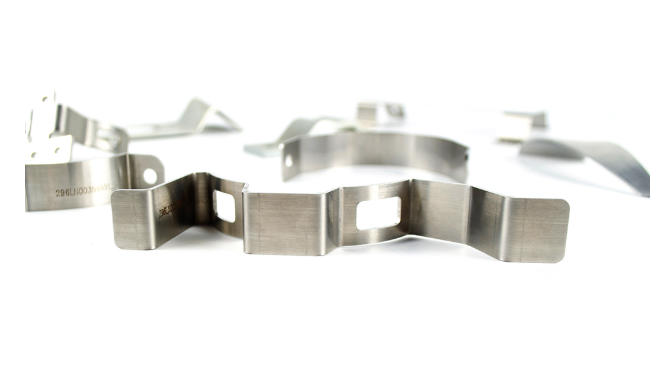
You’re developing a component for a saline environment, a chemical processing unit, or an implantable device. It needs to be strong, biocompatible, and exceptionally resistant to corrosion. Traditional prototyping with 316 stainless steel is slow, expensive for complex geometries, and limits design exploration. 3D printing with 316 stainless steel now offers a direct path from CAD to a functional, metallurgically sound prototype in days. However, the journey from digital file to validated metal part is fraught with potential pitfalls in design, process, and post-processing. For engineers and procurement specialists in medical, marine, chemical, and food-grade industries, mastering this process is essential for accelerating innovation and de-risking production. This guide provides the complete, step-by-step workflow for creating high-integrity 316 stainless steel prototypes.
Introduction
316L stainless steel (the low-carbon variant standard in additive manufacturing) is the workhorse of corrosion-resistant alloys. Its high chromium and nickel content, enhanced with molybdenum, provide outstanding performance in aggressive environments. Laser Powder Bed Fusion (LPBF), the dominant metal 3D printing process, enables the creation of 316L prototypes with internal lattices, conformal cooling channels, and topology-optimized structures impossible to machine. Yet, a successful prototype is more than a shape; it’s a validated pre-production part that must meet mechanical and chemical specifications. This process involves a tightly coupled chain of design for additive manufacturing (DfAM), precise parameter control, rigorous post-processing, and functional validation. Let’s walk through each critical stage.
Why Choose 316 Stainless Steel for Prototyping?
Before diving into the process, understanding the “why” ensures it’s the right material for your application.
- Superior Corrosion Resistance: The addition of Molybdenum (2-3%) significantly improves resistance to pitting and crevice corrosion in chloride environments compared to 304 stainless steel. This is non-negotiable for marine, chemical, and biomedical applications.
- Excellent Biocompatibility: In its properly finished and passivated state, 316L is widely used for surgical instruments, temporary implants, and dental devices. It meets ISO 5832-1 and ASTM F138 standards for implantable materials.
- Good Mechanical Properties: As-printed and heat-treated 316L can achieve tensile strength > 500 MPa and yield strength > 200 MPa, suitable for many functional and structural prototypes.
- Design Freedom: LPBF allows for part consolidation (combining multiple assembled components into one) and lightweighting through lattice structures, enabling prototypes that test not just form, but revolutionary function.
The Complete 316 Stainless Steel 3D Printing Prototype Workflow
Achieving a successful prototype requires meticulous attention through a five-phase process.
Phase 1: Design for Additive Manufacturing (DfAM)
This is the most critical phase, where up to 80% of the final part’s cost and success are determined. It’s not just about designing a part; it’s about designing it for the LPBF process.
- Geometry Optimization:
- Self-Supporting Angles: Design overhangs to be ≥ 45° from the horizontal to minimize or eliminate the need for support structures on non-critical surfaces.
- Avoid Large, Flat Surfaces: These are prone to warping due to residual stress. Add gentle curves or ribs for stiffening.
- Hole Orientation: Vertical holes print better than horizontal ones. For horizontal holes, consider designing them as teardrop-shaped to avoid support inside the bore.
- Support Structure Strategy: Supports in metal printing are not just for overhangs; they also act as heat sinks to draw heat away from the part and anchor it to the build plate to resist warping. They are solid metal and must be removed mechanically. Design them to be accessible for removal, often requiring EDM (Electrical Discharge Machining) for internal supports.
- Critical Design Rule: Involve Your Manufacturing Partner Early. A seasoned LPBF engineer can identify unfriendly features (like trapped powder in hollow channels) and suggest design modifications that save time, material, and post-processing cost.
Case Study: Chemical Manifold Consolidation
- Challenge: A fluid handling system comprised 8 separate machined and welded 316L parts. Prototyping was costly and leak-prone at welds.
- DfAM Solution: The assembly was redesigned as a single, monolithic LPBF part with internal, branching channels. Supports were strategically placed only on external surfaces.
- Outcome: The 3D printed prototype eliminated all potential leak paths, reduced part count by 8x, and was ready for pressure testing in 5 days instead of 6 weeks for machined/welded prototypes.
Phase 2: File Preparation & Build Setup
Once the design is finalized, it moves to the “slicing” and nesting stage.
- File Translation: Export the final CAD as an STL or 3MF file. Ensure the mesh is watertight (manifold) with no errors.
- Build Platform Nesting: Multiple prototype parts are arranged (nested) on the virtual build platform to maximize machine capacity. Orientation is key:
- Critical Surfaces: Orient the part so that functionally critical surfaces (e.g., sealing faces) are vertical or angled to avoid direct contact with supports.
- Z-Height Minimization: Reducing the number of layers reduces build time and cost.
- Support Generation: Automated and manual support structures are added using the printer’s proprietary software. This requires experience to balance part integrity with post-processing difficulty.
Phase 3: The LPBF Printing Process & In-Situ Monitoring
The part is built layer-by-layer in a controlled atmosphere.
- Material: Gas-atomized 316L powder with a tightly controlled particle size distribution (typically 15-45 μm). Powder must be dry and handled in an inert environment to prevent oxidation.
- Core Process Parameters: These are often proprietary “recipes” developed by the machine manufacturer or service bureau. They control:
- Laser Power & Scan Speed: Dictate energy density, affecting melt pool stability and final density.
- Hatch Spacing & Layer Thickness: Control the overlap between scan tracks and vertical resolution.
- Scan Strategy: The pattern the laser follows (stripes, chessboard) is crucial for managing thermal stress and minimizing distortion.
- In-Process Monitoring: Advanced systems use co-axial melt pool monitoring and layer-wise photography to detect anomalies like spatter or lack-of-fusion in real-time. This data is critical for quality assurance of high-value prototypes.
Phase 4: Post-Processing: From “Green Part” to Finished Prototype
The part that emerges from the powder bed is not ready for use. Post-processing is a multi-step, essential sequence.
| Step | Purpose & Method | Key Consideration for 316L |
|---|---|---|
| Powder Removal & Recovery | Remove loose powder from internal channels and surfaces. Blast with compressed air or use specialized powder recovery systems. | Safety: Metal powder is hazardous. Process in a controlled, ventilated environment. Powder is sieved and can be reused for non-critical applications. |
| Stress Relief & Heat Treatment | Annealing (e.g., 900-1100°C in vacuum/inert atmosphere) relieves internal residual stresses, preventing later distortion and improving ductility. | Mandatory for functional prototypes. Alters the as-printed microstructure, stabilizing mechanical properties. |
| Support Removal | Remove support structures using wire EDM, band saws, or precision machining. | This is a skilled, manual operation. Poor removal can damage the prototype’s surface. |
| Hot Isostatic Pressing (HIP) | (For high-integrity prototypes) Uses high heat and isostatic pressure to eliminate internal porosity and heal defects. | Significantly increases fatigue life and ensures leak-tightness for pressure vessels. Adds cost and time. |
| CNC Machining | Achieve tight tolerances (±0.025 mm) and fine surface finishes (Ra < 0.8 μm) on critical datum surfaces, threads, and sealing interfaces. | Hybrid manufacturing is standard for professional prototypes. The LPBF part is the near-net-shape; CNC provides precision. |
| Surface Finishing | Options include vibratory tumbling, abrasive flow machining, electro-polishing, or manual polishing. | Electro-polishing is excellent for 316L as it improves corrosion resistance and de-burrs internal channels while providing a clean, sanitary finish. |
| Passivation | A chemical bath (usually nitric or citric acid) removes free iron from the surface, enhancing the natural chromium oxide layer. | Critical for maximizing corrosion resistance, especially for medical and food-contact prototypes. |
Phase 5: Validation & Functional Testing
The prototype must prove it meets design intent before sign-off for production.
- Dimensional Inspection: Use CMM (Coordinate Measuring Machine) or laser scanning to verify critical dimensions against the CAD model.
- Mechanical Testing: Perform tensile, compression, or hardness tests on printed coupons built alongside the prototype in the same job to validate material properties.
- Application-Specific Testing:
- Corrosion Testing: Salt spray (ASTM B117), pitting potential, or immersion tests.
- Pressure/Leak Testing: For fluid-handling parts.
- Fatigue Testing: For dynamically loaded components.
- Biocompatibility Testing (ISO 10993): For medical device prototypes.
Common Challenges & Mitigation Strategies
- Porosity: Caused by improper parameters or gas entrapment. Solution: Optimize laser parameters, use HIP.
- Warping/Distortion: From residual thermal stress. Solution: Optimize scan strategy, ensure adequate supports, perform stress-relief annealing before cutting the part from the build plate.
- Surface Roughness: As-printed surfaces have a characteristic “waviness” (Ra 10-25 μm). Solution: Plan for necessary post-processing (machining, polishing) on functional surfaces.
- Cost & Lead Time: While faster than tooling-based methods, it’s not instant. Solution: Plan for the full 2-3 week timeline from order to validated part, including post-processing. Cost is justified by part complexity and accelerated development.
Conclusion
Prototyping with 316 stainless steel 3D printing is a powerful, mature technology that bridges the gap between conceptual design and certified production. It demands a holistic view of the entire digital thread—from intent-driven DfAM to rigorous post-processing and validation. Success is not guaranteed by the printer alone; it is engineered through collaboration between design and manufacturing expertise. By understanding and respecting each phase of this workflow, engineers can leverage 316L’s unique properties to create prototypes that are not just visual models, but fully functional, test-ready components that derisk projects, unlock innovative designs, and dramatically compress development cycles for the most demanding applications.
FAQ:
Q: What is the difference between 316 and 316L for 3D printing, and which should I use?
A: 316L is the standard for additive manufacturing. The “L” denotes low carbon content (<0.03%), which is crucial. During the rapid heating and cooling cycles of LPBF, higher carbon levels in standard 316 can lead to chromium carbide precipitation at grain boundaries, reducing the chromium available for corrosion resistance and making the material susceptible to intergranular corrosion. 316L avoids this issue, ensuring the printed part retains the alloy’s famous corrosion resistance.
Q: How does the strength of a 3D printed 316L prototype compare to a wrought (e.g., machined from bar stock) 316L part?
A: LPBF 316L can be stronger in tensile and yield strength than its wrought counterpart due to the extremely fine, cellular microstructure formed by rapid solidification. Typical as-printed and annealed LPBF 316L shows ultimate tensile strength of 500-600 MPa and yield strength of 250-400 MPa, often exceeding the ASTM A240 specification for sheet/plate. However, ductility (elongation at break) can be slightly lower, and anisotropy (direction-dependent properties) may be present, with slightly different strengths in the X/Y plane vs. the Z (build) direction.
Q: Can I print threads directly, or do they need to be machined afterwards?
A: Small, non-critical threads can be printed directly, especially if oriented vertically. However, for functional, load-bearing, or sealed threads, post-print machining (tapping or thread milling) is strongly recommended. Printed threads will have a stair-stepped surface, reduced strength, and may not achieve a proper seal. Designing a threaded insert or a machinable pilot hole is considered best practice.
Q: What is the typical surface roughness (Ra) of an as-printed 316L part, and how can it be improved?
A: The vertical surfaces (parallel to the build direction) typically have an Ra of 10-25 μm, with a characteristic rough, granular texture from partially sintered powder particles. Downward-facing surfaces (where supports attach) are rougher. Upward-facing surfaces are smoother (~5-10 μm). Improvement methods, in order of increasing smoothness: shot peening, vibratory finishing, abrasive flow machining (for internal channels), and electropolishing. For a mirror finish, sequential hand polishing is required after machining.
Q: Is it feasible to 3D print a 316L prototype with internal cooling channels?
A: Yes, this is one of the hallmark advantages of LPBF. You can design complex, conformal cooling channels that follow the part’s contour, which are impossible to machine. Critical considerations: Channel diameter must be large enough (typically > 2mm) to allow for powder removal. Channels must have exit holes for powder to escape. Abrasive flow machining (AFM) is highly effective for smoothing internal channel surfaces after printing.
Discuss Your Projects with Yigu Rapid Prototyping
Navigating the intricacies of 316 stainless steel prototype development requires a partner with deep material and process mastery. At Yigu Rapid Prototyping, we specialize in guiding complex projects from DfAM consultation through to validated, ready-to-test metal prototypes. Our ISO 13485 and AS9100-certified workflows ensure traceability and quality for medical and aerospace applications. We operate a fleet of industrial LPBF systems and maintain a full in-house post-processing shop—including CNC machining, HIP, and advanced surface finishing—providing a seamless, integrated service. Contact our engineering team today for a design-for-manufacturability review and a detailed project plan to bring your most demanding 316L prototypes to life with confidence.