
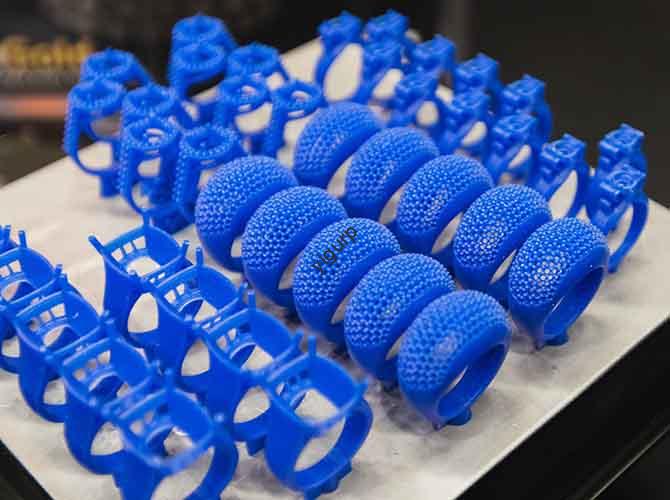
You’ve just pulled a 3D print off the build plate. The design is perfect, but the surface is marred by visible layer lines, rough support marks, and a generally unfinished look. This is where the real magic happens. Post-processing for 3D printing is the critical set of finishing techniques that transforms a raw print into a polished, functional, and professional-grade part. Whether you’re an enthusiast perfecting a PLA display model, an engineer smoothing an ABS prototype for fit-testing, or an artist detailing a resin sculpture, mastering post-processing is the key to unlocking your printer’s full potential. This guide will walk you through the complete workflow, from basic support removal to advanced finishing, helping you solve common flaws and achieve exceptional results.
Why Can’t You Skip Post-Processing?
Think of a 3D printer as a rough draftsman. It creates the shape with incredible precision, but it’s up to you to provide the final polish. Skipping post-processing leaves inherent artifacts that can compromise aesthetics, function, and safety. These include:
- Persistent Layer Lines: The most common signature of a 3D print, these ridges can trap dirt, weaken the part by creating stress concentrators, and prevent smooth mechanical movement in gears or sliders.
- Unseemly Support Marks: Necessary for overhangs, supports often leave behind rough scars or dimples that require careful removal and repair.
- Dimensional Inaccuracies: Minor elephants foot, warping, or stringing can affect how parts fit together in assemblies.
A Real-World Case: A client once printed a custom PLA mount for a camera. Straight off the printer, it fit poorly due to minor warping and had rough edges that interfered with adjustment. A simple 15-minute post-process—light sanding of the mating surfaces and a pass with a heat gun to relieve internal stress—resulted in a snug, professional fit. This highlights how targeted post-processing directly solves functional problems.
What Are the 8 Key Post-Processing Techniques You Must Know?
How Do You Cleanly Remove Supports?
Support removal is step one. The wrong technique can snap thin features or leave irreparable damage.
- Manual Removal & Cutting:
- Best For: Most FDM prints (PLA, PETG, ABS).
- Process: Use flush-cutters, needle-nose pliers, or a deburring tool. Gently twist supports off rather than pulling. For interfaces close to the model, carefully cut away excess material before sanding the remnant.
- Pro Tip: Adjust your slicer’s support Z-distance (like a 0.2mm gap for FDM) to make removal easier without sacrificing overhang quality.
- Dissolvable Supports:
- Best For: Complex geometries, internal channels, and resin prints.
- Process: For FDM, materials like PVA or HIPS dissolve in water or limonene. For resin, many specialized support resins dissolve in isopropyl alcohol (IPA) or dedicated solvents.
- Key Consideration: This requires a dual-extruder printer for FDM or specific resin materials, adding to cost but saving immense time and improving surface quality on intricate parts.
How Can You Smooth Sanding and Polishing Workflows?
Sanding is foundational. A systematic approach is efficient and prevents damage.
| Grit Range | Primary Purpose | Technique & Notes |
|---|---|---|
| 100-220 Grit | Aggressive Removal of large layer lines, support nubs, and major flaws. | Use a sanding block for flat surfaces to avoid rounding edges. Never stay in one spot—friction heat can melt PLA. |
| 320-600 Grit | Smoothing & Refining the surface, preparing it for priming or further treatment. | Switch to wet sanding (using waterproof sandpaper and water) to reduce dust, achieve a smoother scratch pattern, and extend sandpaper life. |
| 800-1500+ Grit | Final Polishing for a near-mirror finish, especially on resin prints. | For resins and some filaments, follow with a polishing compound (like Novus 3-step) and a soft cloth or buffing wheel. |
Advanced Tooling: For production or frequent work, rotary tools with sanding drums or vibratory tumblers (for small, durable parts) can dramatically speed up the process.
Is Chemical Smoothing the Ultimate Finish for Certain Materials?
Chemical treatments can dissolve the outer layer of a print, fusing layer lines into a smooth, glossy surface.
- Acetone Vapor Smoothing for ABS & ASA:
- Process: Place the ABS print on a platform inside a sealed container with a small amount of heated acetone at the bottom. The vapor gently melts the surface for 10-30 minutes. The result is a glossy, injection-molded-like finish.
- Critical Safety: This must be done in a well-ventilated fume hood with no sparks or flames. Acetone is highly flammable.
- Ethyl Acetate for PLA:
- A Developing Technique: Unlike ABS, PLA doesn’t react well to acetone. Ethyl acetate shows promise but requires careful control and is less predictable. For most users, sanding and priming remain the recommended finish for PLA.
- Resin Print Polishing:
- After standard IPA washing and curing, resin prints can be wet-sanded to high grits and then coated with a clear UV-resistant spray lacquer to enhance shine and protect against yellowing.
What Are the Best Practices for Filling and Bonding?
Gaps, layer seams, and multi-part assemblies need strong, invisible joins.
- Gap Filling: Use a 3D-printing specific filler putty or even CA glue (cyanoacrylate) mixed with baking soda for instant, sandable fills. Apply sparingly, let cure, and sand smooth.
- Part Bonding: Material choice is key.
- PLA/PETG: Plastic cement or CA glue works well. For high strength, consider a two-part epoxy.
- ABS: The strongest bond is achieved using an acetone slurry (ABS scraps dissolved in acetone) or a solvent-weld cement. This actually fuses the pieces together.
- Resin: CA glue is standard. For clear parts, use a UV-curing resin applied along the seam and cured with a UV flashlight.
How Do You Achieve Professional Painting Results?
Painting adds color, texture, and true professionalism.
- Priming is Non-Negotiable: A high-quality filler primer (like from Rust-Oleum or Tamiya) does two jobs: it reveals any remaining layer lines for spot-sanding and creates a uniform surface for paint adhesion. Apply 2-3 light coats.
- Paint Selection:
- Spray Cans/Airbrushing: Provide the smoothest, most even finish. Use light, multiple passes to avoid drips.
- Acrylic Brush Paints: Great for detail work. Thin your paints and use multiple layers.
- Top Coat for Protection: Seal your work with a clear matte, satin, or gloss varnish to protect the paint and unify the finish.
When Should You Use Advanced Replication Methods?
For creating multiples of a master print, traditional manufacturing techniques take over.
- Silicone Molding: Create a flexible silicone mold around your master print. You can then cast urethane resin, epoxy, or even low-melt metal copies. Ideal for small batches of detailed parts.
- Vacuum Forming: Your 3D print becomes a positive mold (or “buck”). A heated plastic sheet is draped over it, and vacuum pressure forms the sheet to its shape. Perfect for producing housings, covers, and packaging.
How Do You Choose the Right Post-Processing Path?
Follow this decision matrix based on your primary goal:
| Your Goal | Recommended Primary Techniques | Material Considerations |
|---|---|---|
| Functional Part (Gears, Mounts, Tools) | Sanding for fit, Gap Filling for seals, Epoxy Bonding for strength. | ABS/ASA for chemical resistance; PETG for toughness. |
| Display Model / Figurine | Fine Sanding, Priming, Detailed Hand-Painting, Clear Coating. | Resin for finest detail; PLA for ease of painting. |
| Smooth, Glossy Aesthetic | Chemical Smoothing (ABS), High-Grit Wet Sanding & Polishing (Resin/PLA). | ABS/ASA is king for vapor finishing. |
| Creating Multiple Copies | Silicone Molding & Urethane Casting. | The master print can be in any material; ensure it’s perfectly finished. |
The Professional Prototyping Perspective: Beyond the Hobby Bench
In a professional rapid prototyping environment like ours, post-processing is not an afterthought—it’s a critical phase in the design-for-manufacturability cycle. We treat it with the same precision as the print itself.
- Data-Driven Process Control: For instance, when vapor-smoothing ABS components for automotive clients, we don’t guess. We track exposure time, vapor density, and ambient temperature to achieve consistent, predictable results that meet specific surface roughness (Ra) specifications.
- Scaling for Production: A recent project involved a medical device housing. We printed the master in high-temp resin, performed micro-abrasive blasting for a uniform matte texture, then created a silicone mold to produce 50 urethane copies for user testing. This hybrid approach delivered production-like quality at prototype speed and cost.
- The Critical Insight: The most common mistake is impatience. Sanding and priming are iterative processes. Rushing to paint over an imperfect primer coat will magnify every flaw. The professional result comes from embracing the cycle: Prime > Inspect > Spot-Sand > Repeat.
Conclusion
Post-processing for 3D printing is the bridge between a good idea and a great product. It empowers you to move beyond the limitations of the layer-by-layer process, achieving strength, beauty, and functionality that rival traditional manufacturing. By understanding the techniques aligned with your material and end-goal—from basic sanding to chemical smoothing and professional painting—you gain complete control over your final output. Start with one technique, master it, and gradually expand your toolkit. The difference in your prints will be immediately visible and profoundly satisfying.
FAQ:
Q: Is post-processing always necessary for 3D prints?
A: It depends entirely on the part’s purpose. A functional prototype for internal fit-checking may need none. However, any part for end-use, presentation, or that interfaces with users or other components will almost always benefit from at least some cleaning (support removal) and smoothing to improve safety and performance.
Q: What’s the fastest way to smooth PLA without sanding?
A: While sanding is still the most reliable, techniques using controlled heat from a heat gun (very carefully) or a brief pass through a fluidized bed can reduce layer visibility. However, these methods risk warping and require significant practice. For most, sanding followed by a high-build filler primer is the most controllable and effective method.
Q: How do I avoid weakening my print during chemical smoothing?
A: The key is time and vapor control. Overexposure to acetone vapor (for ABS) doesn’t just smooth; it can cause fine details to melt away and reduce the wall thickness, compromising strength. Always perform test exposures on scrap pieces from the same print job to dial in the timing.
Q: Can I use regular wood or automotive filler on 3D prints?
A: You can, but 3D-printing specific putties (like Apoxie Sculpt or Bondo spot putty) are often formulated for better adhesion to plastics and have a similar shrinkage rate. Always test adhesion on a scrap piece first.
Q: What safety equipment is non-negotiable for post-processing?
A:
- Respiratory Protection: A NIOSH-rated dust mask for sanding, and organic vapor cartridges for chemical smoothing or spray painting.
- Eye Protection: Safety glasses are a must.
- Gloves: Nitrile gloves for handling chemicals and resins.
- Ventilation: A well-ventilated area or fume extractor is critical for any process generating dust, fumes, or aerosols.
Discuss Your Projects with Yigu Rapid Prototyping
Ready to elevate your 3D-printed parts from functional prototypes to market-ready products? Our engineering team specializes in advanced finishing techniques and low-volume production solutions. Whether you need a batch of vapor-smoothed ABS components with a specific surface finish, cast urethane replicas from a master print, or guidance on the optimal post-processing workflow for your application, we provide the expertise and precision to meet your exact specifications.
Let’s discuss how we can help perfect your prints. Contact our prototyping specialists today for a consultation.