
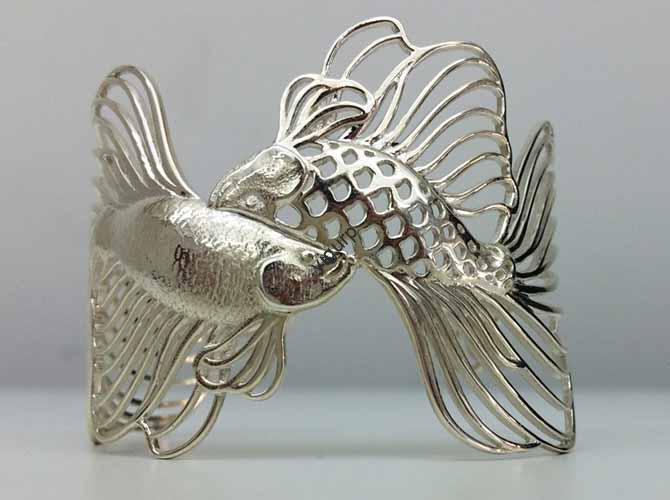
You have a great idea for a part, a model, or a tool. You want to make it real. How do you get from that first spark in your mind to a solid object in your hand? The path is not as complex as it seems. At its core, 3D printing is a simple, four-step process. It turns a digital file into a physical thing. This guide will walk you through each main step of 3D printing. We will cover it for all users, from beginners to pros. You will learn the key actions, see real-world cases, and get tips to avoid common errors. Our goal is to give you a clear map. This map will lead you to consistent, high-quality results every time you print.
What Are the 4 Key Steps?
All 3D prints follow the same basic path. Think of it like a recipe. You need the right ingredients, prepared the right way, cooked correctly, and then plated. The four main steps of 3D printing are:
- Modeling: You create the digital blueprint.
- Slicing: You translate that blueprint into printer commands.
- Printing: The machine builds the object layer by layer.
- Post-Processing: You clean and finish the raw print.
Each step builds on the last. A mistake early on can cause failure later. But when you master all four, you hold the power to make almost anything.
How Do You Create a 3D Model?
This is step one. You must have a 3D digital model. It is the heart of the whole process. A printer is only as good as the file you give it. A flawed model means a flawed object. So, how do you get a good model?
Two Main Paths to a Model
You can make your own or find one that is already made. Your choice depends on your skill, time, and project needs.
| Path | How It Works | Best For | Tools & Sources |
|---|---|---|---|
| DIY Design | You use CAD software to build the model from scratch. You control every shape, hole, and curve. | Custom parts, unique designs, or when you need exact size and fit. | Starters: Tinkercad (free, easy). Pros: Fusion 360, SolidWorks. |
| Find a Model | You download a ready-to-use file from an online library. Or, you scan a real object with a 3D scanner. | Quick projects, fun models, or when you want to copy an existing item. | Libraries: Thingiverse, Printables. Scanners: EinScan-SE. |
What Is a “Watertight” Model?
This is a key idea for success. A model must be “watertight.” This means it is a solid, closed shape with no holes or gaps in its digital skin. If the model has gaps, the slicer software gets confused. It does not know what is inside or outside the shape.
A hobbyist once tried to print a vase. The print finished, but it leaked water from the bottom. The problem was not the printer. The CAD model had a tiny, unseen gap where the base met the wall. The slicer could not read it right. The fix took five minutes in a free tool called Meshmixer. This tool can find and seal these gaps. Always check your model before you slice it. It saves time, material, and frustration.
How Does Slicing Prepare Your Model?
Your 3D printer is a simple machine. It does not understand complex 3D shapes. It needs simple, step-by-step orders. Slicing is the act of turning your 3D model into these orders. The slicer software cuts your model into many thin, flat layers. It then creates a G-code file. This file tells the printer where to move, how fast to go, and when to put down material.
What Key Settings Matter in Slicing?
The slicer has many settings. They control the print’s quality, strength, and time. Here are the big three:
- Layer Height: This is how thick each layer of plastic or resin is. A thin layer (like 0.1 mm) gives a smooth face but takes a long time. A thick layer (like 0.3 mm) is faster but shows more lines.
- Supports: Printers cannot print in mid-air. If your model has an overhang (like a statue’s outstretched arm), the slicer adds temporary support structures. You remove these after the print.
- Infill & Speed: Infill is the inside structure. A 20% infill is light. A 100% infill is solid. Print speed affects quality. Slower is often neater.
| Software | Ease of Use | Best For | Key Feature |
|---|---|---|---|
| Cura | Very Easy | New users, most FDM printers. | Free. Has many ready-made profiles. |
| PrusaSlicer | Medium | Prusa printers, strong functional parts. | Great tools for fine-tuning layer adhesion. |
| Simplify3D | Advanced | Complex, professional jobs. | Lets you print many different parts at once. |
A real case shows why slicing matters. An engineer needed a plastic gear for a test. They loaded the model into Cura. They picked a “Strong Part” profile. This set the layer height to 0.2 mm and the infill to 50%. It added supports in the gear’s center hole. The resulting G-code told the printer to move in perfect circles for each tooth. The final gear fit with other parts on the first try. Good slicing turns a design into a working object.
What Makes a Print Succeed or Fail?
This is the step where your machine does the work. You load the G-code file, start the print, and wait. But you cannot just walk away. Proper setup is key to avoid a failed print.
How Do You Set Up for Success?
Follow this simple three-step routine before every print:
- Prepare the Build Plate: A clean, level bed is vital. Wipe it with isopropyl alcohol to remove oils. For PLA filament, a glue stick can help the first layer stick well. An unlevel bed is the top cause of failed prints.
- Load the Material: Pick the right filament for your job. PLA is easy for starters. ABS is stronger but needs a warm space. Check the spool for tangles. A tangle can stop the flow and ruin a long print.
- Start and Watch: Start the print and watch the first layer go down. This first layer is the base for all others. If it sticks well and looks even, the rest will likely be fine.
What Are Common Print Problems?
Even with good setup, issues can occur. Here is how to fix three common ones:
- Problem: Layers splitting apart.
- Cause: The nozzle is too cold, or the print speed is too fast.
- Fix: Raise the nozzle temperature by 5-10°C. Slow the print speed.
- Problem: Thin strings of plastic between parts.
- Cause: The retraction setting is too low. This setting pulls filament back when the nozzle moves.
- Fix: Increase the retraction distance in your slicer to 2-3 mm.
- Problem: The print’s corners lift off the bed.
- Cause: The bed is too cold, or there is a draft of air.
- Fix: Increase the bed temperature. Use a simple enclosure to block drafts.
A user once started a 10-hour print of a car model. They did not check the filament spool. After six hours, the filament had a hidden tangle. The printer ran out of material. The print was wasted. Now, they always unspool a bit of filament first to check. This small act saves hours of time and material.
Why Is Post-Processing Needed?
Your printer finishes. You have a raw object. But it is often not ready to use. It may have support structures attached. The surface may be rough. This final step, post-processing, turns a rough draft into a final product.
What Techniques Can You Use?
The method you choose depends on your material (plastic or resin) and your goal.
| Goal | Tools Needed | Best For | Result |
|---|---|---|---|
| Remove Supports | Pliers, tweezers, knife. | Any print with overhangs. | Cleans off the temporary support material. |
| Smooth Surfaces | Sandpaper, files, polish. | Parts you will touch or see, like a case. | Turns layer lines into a smooth, even face. |
| Add Color | Acrylic paint, spray paint. | Models, toys, or display pieces. | Brings your creation to life with color. |
| Make Strong & Sealed | Epoxy resin, clear spray. | Parts that get wet or handled a lot. | Adds a hard, protective top coat. |
Can You See a Real Example?
A small jeweler uses a resin printer to make earrings. After printing, the white resin pieces are fragile and cloudy. Their post-processing steps are:
- Snap off the thin supports.
- Wash the parts in isopropyl alcohol to clean off sticky resin.
- Harden them under a UV lamp.
- Sand any rough spots with fine sandpaper.
- Paint them with bright colors.
This extra 30 minutes of work turns a simple print into a finished, sellable product. The value goes up ten times. For a working part, like a gear, post-processing might just be removing supports and checking the size. The need changes with the project’s goal.
What Step Do Most People Forget?
There is a “Step 0” that happens before modeling. It is planning. A few minutes of thought can prevent most common errors.
- Know Your Machine: Check what materials it can use. Not all printers can use all filaments.
- Calibrate: Ensure the bed is level. Check that the extruder pushes the right amount of filament. Print a small test cube first.
- Plan the End Use: Ask: Does this part need to be strong? Smooth? Exact in size? Your answers will guide your choices in every later step.
Mastering these four main steps of 3D printing gives you control. You move from just running a machine to truly creating. Each step is a skill. With practice, you will know how to model for strength, slice for speed, print with care, and finish for beauty. The process becomes a powerful tool to bring your ideas to life.
FAQ
How long does the full 3D printing process take?
The time varies a lot. A small keychain might take 1 hour to model, 5 minutes to slice, 30 minutes to print, and 10 minutes to post-process. A large, detailed model could take days of printing alone. The slicing step is usually the fastest.
Can I skip the post-processing step?
Yes, sometimes. If you are printing a quick prototype just to test the shape or fit, you can use it right off the build plate. But for any final product you want to look good, feel smooth, or be strong, post-processing is essential.
What is the single most important setting for a good print?
First layer adhesion. If the first layer of your print does not stick firmly to the build plate, the whole print will likely fail. This is why bed leveling and a clean build surface are the most critical setup tasks.
Do I need to buy expensive software to start?
No. You can start 3D printing for free. Use Tinkercad for simple modeling. Use Cura for slicing. Download free models from Thingiverse. This free toolkit is very powerful for beginners and hobbyists.
Discuss Your Projects with Yigu Rapid Prototyping
Are you looking to move from idea to functional prototype or final part? At Yigu Rapid Prototyping, we combine deep technical expertise with real-world production experience. We can guide you through each step of the 3D printing process, from selecting the right material and technology to optimizing your design for print and applying the perfect finish. Let’s talk about how to make your project a success. Contact our engineering team today for a fast, informed quote.