
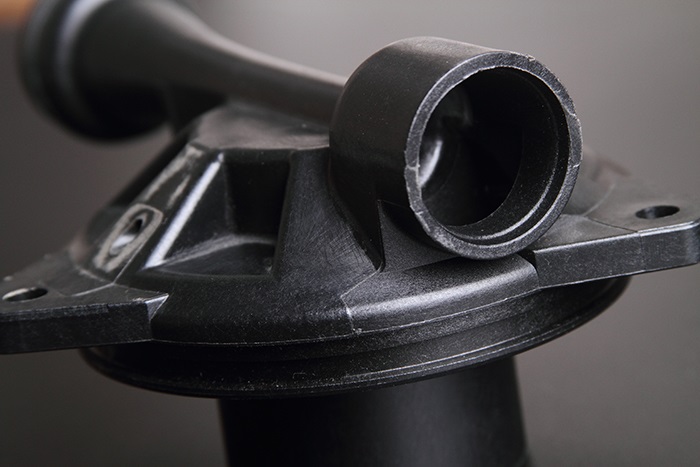
The short answer is: standard 3D prints are rarely waterproof by default. Their layer-by-layer nature leaves tiny gaps for water to seep through. But don’t let that stop you. With smart material choices, slicer settings, and post-processing, you can make 3D printed parts highly water-resistant, or even fully waterproof for demanding uses like outdoor gear or plumbing parts. This guide explains why 3D prints leak, provides a clear, science-backed path to seal them, and shows real-world examples of waterproof 3D printing in action.
Introduction:
You’ve designed a perfect part, maybe a custom planter or a prototype for a fluid system. You hit print, but then you wonder: will this hold water? The honest truth is that a typical 3D print straight off the bed is not a sealed vessel. The very process of fused deposition modeling (FDM) printing creates a path for moisture through microscopic layer gaps and inherent material porosity. However, achieving reliable waterproof 3D prints is entirely possible and practical. It requires a strategic approach, treating the print as a system where material, design, and finish all work together. Whether you’re a hobbyist or a professional, this guide will walk you through the proven methods to block water ingress and create durable, water-tight parts.
Why Aren’t 3D Prints Waterproof by Default?
To fix a problem, you first need to understand its root causes. The two main enemies of a watertight 3D print are layer adhesion gaps and material water absorption.
How Do Layer Gaps Cause Leaks?
FDM 3D printers build objects one layer at a time. Even with a perfectly calibrated machine, the bond between these layers is a potential weak point. If the extrusion temperature is slightly off or the layer adhesion isn’t optimal, microscopic channels can form. These channels act like a network of tiny capillaries, allowing water to slowly wick through the part over time.
What is Material Water Absorption?
Beyond layer gaps, the plastic itself can be the issue. Some materials are hygroscopic, meaning they naturally absorb moisture from the air or direct contact. This doesn’t just cause leaks; it can weaken the part. For example, a nylon (PA) part might not show visible leaks but can absorb over 5% of its weight in water, swelling and losing structural integrity. This is a critical distinction: a part can appear sealed but still fail due to material degradation from moisture.
How to Make Waterproof 3D Prints: A Three-Step Strategy
You can overcome these challenges by following a systematic approach. Think of it as building a defense in depth: start with the right foundation, reinforce the structure, and finally, apply a protective shield.
Step 1: Choose the Right Water-Resistant Material
Your material choice is the most critical decision. It sets the ceiling for your part’s potential waterproof performance. Not all filaments are created equal.
Common 3D Printing Material Water Resistance Guide
| Material | Water Resistance Rating | Key Characteristics | Best For |
|---|---|---|---|
| Polypropylene (PP) | Excellent | Naturally hydrophobic; shows almost zero water absorption (<0.01%). The gold standard for long-term immersion. | Functional parts for plumbing, underwater housings, chemical containers. |
| PETG | Very Good | Low porosity, good layer adhesion, and chemical resistance. A great all-rounder for water exposure. | Outdoor planters, water bottles, shower accessories, protective cases. |
| ABS/ASA | Good | Resistant to moisture but can warp; requires stable printing conditions. Good for coated or short-term exposure parts. | Automotive parts, outdoor tool handles, prototypes for finishing. |
| Nylon (PA11/PA12) | Poor (for immersion) | High strength but high water absorption (>5%). Unsuitable for waterproofing without excellent sealing. | Parts requiring toughness but not long-term water tightness (gears, tools). |
| PLA | Low | Biodegradable and absorbs moisture. Becomes brittle and can degrade with prolonged water contact. | Short-term indoor prototypes, decorative items with no water exposure. |
- Case Study: A study by Sculpteo subjected 3D printed parts to pressure equivalent to 100 meters of depth. Polypropylene (PP) was the only material that passed all long-term immersion tests without absorbing measurable water, making it uniquely suited for truly waterproof applications.
Step 2: Optimize Slicer Settings for a Dense Structure
With the right filament loaded, your slicer settings are your next line of defense. The goal is to create the most dense, gap-free print possible.
- Increase Wall/Perimeter Count: Don’t rely on just 2 walls. Using 3 to 5 perimeter walls creates a thicker, more tortuous path for water to penetrate before it even reaches the infill.
- Maximize Infill Density: For a part that must hold pressure or be submerged, 100% infill density is often necessary. This eliminates internal cavities where water can pool or travel. For less critical parts, 80%+ is a good target.
- Adjust Layer Height: A moderate layer height (like 0.2mm) can sometimes produce better layer bonding than an extremely fine layer, as it allows for more substantial material deposition.
- Calibrate Flow and Temperature: Slightly increasing your extrusion flow rate (to 102-105%) can ensure layers are pressed together firmly. Always print at the optimal temperature for your filament to ensure strong interlayer fusion.
Step 3: Apply a Post-Processing Sealant
For guaranteed waterproofing, especially with FDM prints, a sealant is your final, most effective step. Sealants fill the microscopic valleys between layer lines and create a continuous, non-porous barrier.
- Epoxy Resin: The best-performing option. A thin coat of a two-part clear epoxy (like XTC-3D) creates a hard, impermeable shell. It’s ideal for parts that will be submerged or exposed to weather.
- Specialized Spray Sealants: Acrylic or polyurethane-based sprays are easy to apply and good for water resistance against rain or splashes. Multiple thin coats work best.
- Water-Based Coatings: For moisture mitigation in construction, two-component resin-based membrane-forming systems are specified to create continuous barriers. While not for small prints, this highlights the principle of using resins to block water vapor.
Important: Surface smoothing (like vapor polishing for ABS) can improve water resistance by melting the outer layer to fill gaps. However, research indicates that for some materials, this smoothing does not significantly reduce the material’s core permeability to water vapor. A true sealant coating is more reliable.
How Do I Design Parts to be Watertight?
Good design works hand-in-hand with material and process choices.
- Avoid Supports on Sealing Surfaces: If your part has a lid or a joint, design it so that critical sealing surfaces are printed cleanly, without support material scars.
- Incorporate Gaskets and O-Rings: For assemblies, design grooves for standard O-rings. Using silicone grease on the O-ring can improve the seal, though it won’t stop material absorption.
- Minimize Post-Processing Seams: Design parts to be printed in orientations that minimize the need to cut or drill, which can breach the sealed perimeter.
Real-World Applications and What to Use
| Application Goal | Recommended Material | Key Settings & Post-Process | Why It Works |
|---|---|---|---|
| Submersible Part (e.g., camera housing, sensor case) | Polypropylene (PP) | 100% infill, 4+ walls, Epoxy resin coating. | PP’s near-zero absorption and epoxy barrier withstand pressure and long-term immersion. |
| Outdoor Planter | PETG | 80%+ infill, 3 walls, Spray sealant on interior. | PETG resists UV and moisture; sealant provides extra insurance against slow seepage. |
| Shower Caddy or Tool | ASA or PETG | 25%+ infill, 3 walls, Optional light spray sealant. | These materials resist humid environments and occasional direct splashes well. |
| Water Pipe or Fluid Prototype | PP or PETG | 100% infill, 5 walls, Epoxy resin on threads/joints. | High density and coating prevent leaks under pressure at connection points. |
How Can I Test My Waterproof Prints?
Before relying on a part, test it.
- The Visual Leak Test: Submerge your part in water for several hours. Look for air bubbles escaping or water inside after drying.
- The Paper Test: As done in formal studies, place dry paper inside a sealed part, submerge it, and check for wetness after a set time.
- Pressure Testing (Advanced): For functional parts, gently pressurize the sealed object with air while submerged to identify very small leaks.
Industry Standards: For rigorous validation, industries refer to standards like ASTM D2247, which outlines practices for testing water resistance in 100% relative humidity environments. For coatings and sealants themselves, practices like ASTM F3010 govern the performance of two-component resin based membrane-forming systems designed for moisture mitigation.
Conclusion
So, is 3D printing waterproof? Not inherently—but it is highly water-resistable. The journey from a porous print to a sealed, reliable part is a matter of intentional choices. Start with a hydrophobic material like PP or PETG, reinforce it with dense slicer settings like high wall count and infill, and lock in the defense with a protective epoxy or spray sealant. By understanding the “why” behind the leaks and applying this layered strategy, you can confidently create 3D printed parts that stand up to rain, spills, and even full immersion, unlocking a world of practical and durable applications.
FAQ
Q: Can I make a standard PLA print waterproof for long-term use?
A: It’s not recommended. PLA is biodegradable and absorbs water, which leads to swelling and brittleness over time. While a heavy epoxy coating might delay failure, the material itself will degrade. For any part meant for long-term water exposure, choose PETG or PP instead.
Q: Is 100% infill always necessary for waterproofing?
A: Not always, but it is the safest bet. For a small container that only needs to handle occasional splashes, 80% infill with 4-5 walls may suffice. For anything holding water under pressure or meant for submersion, 100% infill is crucial to eliminate all internal pathways for water.
Q: Does smoothing a print (like with acetone for ABS) make it waterproof?
A: It significantly improves water resistance by smoothing the surface and filling some gaps, but it may not make it fully waterproof against pressure or long-term immersion. Research on materials like PA11/PA12 shows that smoothing did not significantly reduce the material’s core water absorption. For guaranteed results, a sealant coating is superior.
Q: What is the single most important factor for a waterproof print?
A: Material selection. You cannot make a highly water-absorbent material like standard nylon truly waterproof through settings or coating alone. Starting with a low-absorption, hydrophobic filament like Polypropylene (PP) provides the fundamental foundation for success.
Discuss Your Projects with Yigu Rapid Prototyping
Do you have a project that demands reliable, watertight performance? At Yigu Rapid Prototyping, we combine expert material science with precision manufacturing to turn your designs into durable, functional parts. We can guide you to the ideal material—whether it’s waterproof Polypropylene for marine applications or chemical-resistant PETG for industrial prototypes—and ensure your parts are printed with optimized settings for maximum density and strength. Our post-processing expertise, including professional coating and sealing, adds the final layer of protection. Let’s ensure your next 3D printed part doesn’t just look good, but stands up to real-world conditions. Contact us today for a consultation.