
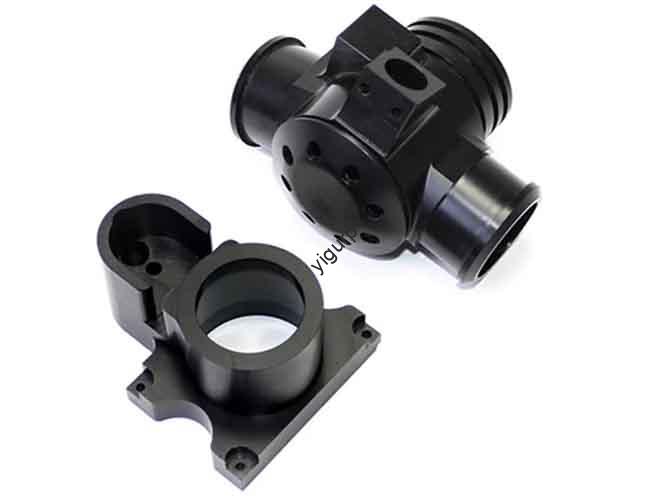
When most people think of 3D printing, they picture colorful PLA trinkets or tough ABS prototypes. But what about applications that demand more—parts that must endure harsh weather, chemical exposure, and mechanical stress while keeping costs in check? This is where 3D printing material PVC, or polyvinyl chloride, emerges as a serious contender. Gaining traction for outdoor and industrial applications, PVC offers a compelling blend of chemical stability, mechanical strength, and cost-effectiveness that common filaments can’t match. However, printing with it isn’t as straightforward as loading a spool of PLA. This guide dives deep into PVC’s properties, showcases its real-world power, demystifies the printing challenges, and provides clear solutions to help you successfully leverage this versatile material.
What Exactly Is 3D Printing Material PVC?
3D printing PVC is a thermoplastic polymer specifically formulated for additive manufacturing processes. It’s primarily available as a filament for FDM (Fused Deposition Modeling) printers and as a specialized resin for certain SLA (Stereolithography) systems. To understand its niche, consider how it differs from the staples:
- PLA: Easy to print, biodegradable, but has poor heat and chemical resistance.
- ABS: Impact-resistant and durable, but prone to warping and emits fumes.
PVC strikes a unique balance. It’s the industrial workhorse of the 3D printing material world—not always the first choice for beginners, but indispensable for projects where environmental resilience and budget matter. Its inherent resistance to weathering, UV rays, and many chemicals makes it ideal for parts that live outdoors or in challenging settings.
Why Consider PVC Over Other 3D Printing Materials?
How do you know if PVC is the right material for your project? Its value becomes clear when you compare its core performance-to-cost ratio against other plastics.
| Property | PVC (Polyvinyl Chloride) | PLA (Polylactic Acid) | ABS (Acrylonitrile Butadiene Styrene) | PVC’s Practical Advantage |
|---|---|---|---|---|
| Tensile Strength | 50–70 MPa | 40–60 MPa | 40–50 MPa | Handles higher sustained loads, perfect for functional brackets and fixtures. |
| Heat Resistance | 60–80°C (Continuous Use) | 40–60°C | 70–90°C | Surpasses PLA for warm environments, like enclosures in summer sun. |
| Chemical & UV Stability | Excellent. Resists oils, acids, and weathering. | Poor. Degrades in UV; soluble in alcohols. | Moderate. Can swell in oils; UV resistance requires additives. | Ideal for outdoor/industrial parts exposed to rain, chemicals, or sunlight. |
| Cost (per kg) | $25–35 | $20–30 | $35–50 | 20–30% cheaper than ABS, offering significant savings for large-scale production. |
| Key Printing Challenge | Requires equipment upgrades; emits fumes if overheated. | Very easy; low warping. | Requires a heated chamber; prone to warping. | Demands more setup but rewards with durable, cost-effective parts. |
The bottom line: Choose PVC when your part needs to survive harsh environments where PLA would fail, but your budget can’t stretch for continuous ABS printing or more exotic materials.
What Are the Real-World Applications of 3D Printed PVC?
PVC’s properties aren’t just theoretical. They solve tangible problems across industries. Let’s look at four key areas where it delivers exceptional value.
1. Can PVC Create Durable Architectural Models and Prototypes?
Absolutely. A mid-sized architecture firm needed over 300 detailed scale models for a coastal residential project. PLA models warped during outdoor client presentations in humid weather, and outsourcing ABS models was prohibitively expensive.
Solution: They switched to in-house FDM printing using PVC filament. The models withstood direct sunlight and moisture without deformation. The firm saved 47% on per-unit costs and eliminated model failures due to environmental factors, translating to tens of thousands in saved reprint and delay costs.
2. Is PVC Suitable for Custom Medical Devices?
For external devices, yes. A clinic required customized, lightweight orthopedic braces. Traditional methods were slow and costly. While PLA was too brittle, PVC offered a strong, sterilizable alternative.
Solution: Using patient scans, they 3D printed braces from medical-grade, skin-contact compliant PVC. The process reduced production time from two weeks to two days and cut the device cost by over 60%, improving patient access to personalized care.
3. How Does PVC Protect Sensitive Electronics?
Exceptionally well. An IoT company manufacturing outdoor environmental sensors faced high failure rates. ABS enclosures became brittle in freezing temperatures, and PLA degraded in rain.
Solution: They adopted PVC for sensor housings. The material’s low-temperature toughness (down to -15°C) and inherent water repellency led to a dramatic drop in field failures. The lifespan of the enclosures tripled, drastically reducing maintenance and replacement logistics.
4. Can You 3D Print with Recycled PVC?
This is a growing trend. A sustainable design studio wanted to utilize waste PVC from construction sites. They partnered with a filament producer to create recycled PVC filament.
Solution: They used this filament to print furniture connectors and art installations. The project demonstrated a closed-loop system, diverting waste from landfills and proving that recycled PVC could retain about 90% of the mechanical strength of virgin material, all while promoting a compelling eco-narrative.
What Are the Technical Hurdles of Printing with PVC (And How Do You Solve Them)?
Switching to PVC isn’t plug-and-play. Here are the main challenges and practical, step-by-step solutions.
1. Is Your 3D Printer Compatible with PVC?
Most standard printers need minor upgrades. The chlorine in PVC can corrode common brass nozzles, and default temperature settings are often wrong.
Solutions:
- Upgrade Your Nozzle: Swap to a hardened or stainless steel nozzle ($15-$25). It’s corrosion-resistant and essential for long-term PVC printing.
- Adjust Printer Settings: You must manually configure your slicer. Disable cooling fans for the initial layers to prevent warping and ensure bed adhesion.
2. What Are the Optimal Printing Parameters for PVC Filament?
PVC has a narrower processing window than PLA. Getting the settings right is crucial for success.
Use the following table as a robust starting point for FDM printing:
| Parameter | Recommended Setting for PVC | Why It Matters |
|---|---|---|
| Nozzle Temperature | 185 – 210 °C | Prevents degradation. Staying below 220°C is critical to avoid fume release. |
| Heated Bed Temperature | 45 – 60 °C | Essential for adhesion and minimizing warp due to PVC’s shrinkage. |
| Print Speed | 30 – 50 mm/s | Slower than PLA speeds to ensure clean extrusion and layer bonding. |
| Build Surface | PEI Sheet or Glass with Adhesive | PVC sticks well to these when heated but can be removed once cool. |
Pro Tip: Always run a temperature tower test with a new PVC spool to find the sweet spot for your specific filament and printer setup.
3. How Do You Handle PVC’s Fumes and Safety?
Safety is the non-negotiable challenge. When overheated (above ~220°C), PVC can release hydrogen chloride (HCl) gas, which is irritating and corrosive.
Actionable Safety Protocol:
- Ventilate Actively: Never print in a sealed room. Use a printer enclosure with an exhaust vented outside or a high-quality HEPA/activated carbon filter combo.
- Monitor Temperature Faithfully: Use your printer’s thermal safeguards and consider an additional external thermometer for peace of mind.
- Store Filament Properly: Keep PVC filament in a dry, sealed bag with desiccant to prevent moisture absorption, which can worsen print quality and fume issues.
What Does the Future Hold for PVC in 3D Printing?
The evolution of 3D printing material PVC is focused on making it safer, easier to use, and more versatile.
- Safer Formulations: Expect more “green PVC” filaments with reduced or non-toxic plasticizers and enhanced biodegradability profiles.
- New Formats: While filament dominates, development of PVC-like resins for SLA/DLP printing will open doors for high-detail, waterproof parts in dental or jewelry applications.
- Turnkey Solutions: More printer manufacturers will offer PVC-ready printer kits or dedicated models with hardened components and integrated filtration systems, lowering the barrier to entry.
Conclusion
3D printing material PVC is a powerful tool for the pragmatic maker and engineer. It answers the call for durable, chemical-resistant, and affordable functional parts that must perform in real-world conditions. While it demands respect in terms of printer setup and safety precautions, the payoff is substantial. By understanding its properties, mastering its printing parameters, and adhering to safety guidelines, you can unlock a material capable of producing parts that stand up to challenges far beyond the reach of standard hobbyist filaments. For industrial prototyping, outdoor fixtures, or cost-sensitive production runs, PVC deserves a serious look.
FAQ
Q: Can I print PVC on my unmodified Creality Ender 3?
A: It’s not advisable. The standard brass nozzle will corrode, and the default PTFE tube may overheat. At minimum, invest in a hardened steel nozzle and ensure your hot end’s PTFE tube is rated for PVC’s printing temperatures. Always use active ventilation.
Q: Is 3D printed PVC food safe?
A: Generally, no. Most PVC filaments contain additives and plasticizers that are not approved for food contact. Furthermore, the layer lines can harbor bacteria. For food-related items, use certified food-grade materials like PLA or PETG.
Q: How does the strength of 3D printed PVC compare to injection-molded PVC?
A: 3D printed parts are generally weaker due to the anisotropic nature of layer adhesion. While an FDM PVC part can achieve good strength, it typically won’t match the isotropic strength of a molded part. Design with this in mind, often by adding slight thickness to critical stress areas.
Discuss Your Projects with Yigu Rapid Prototyping
Are you exploring whether PVC is the right material for your next industrial design, functional prototype, or end-use part? The experts at Yigu Rapid Prototyping can help. We combine deep material science knowledge with practical experience in printing a wide range of engineering thermoplastics. From selecting the right filament to optimizing your design for strength and printability, we provide end-to-end solutions that bridge the gap between concept and durable reality. Contact us today for a consultation on how to bring your most demanding projects to life with confidence.