
Introduction
If you are staring at a block of plastic and wondering how to turn it into a precision part, you are in the right place. Machining plastic parts is different from working with metal. Plastics are softer, they melt easier, and they can bend or warp under pressure. But when you do it right, the results are amazing. You get strong, lightweight, and precise parts that work perfectly in your project. Whether you are a beginner making your first prototype or a pro looking to refine your process, this guide will walk you through everything. We will cover material selection, the right tools, step-by-step methods, and common problems—with real fixes based on years of hands-on experience. By the end, you will know exactly how to machine plastic parts that meet your quality standards every time.
Why Is Machining Plastic Different from Metal?
Before you start cutting, you need to understand what makes plastic behave differently. This knowledge is the foundation of every good machining job.
Heat Stays Where It Starts
Plastics are terrible at moving heat away. When you cut metal, the heat from friction travels into the chips and the tool. But plastic traps heat right at the cutting point. It conducts heat about 100 to 1,000 times slower than aluminum or steel. This means the heat builds up fast. If you cut too quickly or use a dull tool, the plastic will melt. You will see rough, glazed edges instead of clean cuts. I once saw a beginner ruin a $200 sheet of acetal in minutes because they ran their spindle at 6,000 RPM—the plastic just turned into a melted mess.
Plastics Push Back
Unlike metal, which stays rigid, many plastics are flexible. When a cutting tool pushes against a soft plastic like polyethylene, the material can deflect away instead of getting cut cleanly. This leads to parts that are the wrong size or have rough surfaces. Harder plastics like PEEK behave more like metal, but they still need special care.
Chips Are Sticky and Stringy
Metal chips are usually small and break off easily. Plastic chips? They often come off as long, stringy strands that can wrap around your tool or workpiece. These strings can scratch your part or even break the tool if they tangle up. For example, when machining PVC, those sticky chips can reduce tool life by up to 30 percent if you do not manage them properly.
Here is a quick comparison to make it clear:
| Property | Metals | Plastics | What This Means for You |
|---|---|---|---|
| Heat Flow | Fast (heat moves away) | Slow (heat stays put) | Risk of melting. Use slower speeds and coolant. |
| Hardness | Consistent and high | Varies from soft to rigid | Soft plastics need very sharp tools to cut cleanly. |
| Chips | Short and manageable | Long, sticky, or stringy | You need air or special tools to clear chips away. |
How to Choose the Right Plastic for Machining?
Picking the right plastic is half the battle. The wrong material will crack, melt, or fail in your application. Here are the five most common machinable plastics and exactly when to use each one.
Acetal (Delrin): The All-Rounder
Acetal is the workhorse of plastic machining. It is stiff, has low friction, and does not absorb water. It machines beautifully with clean edges and holds tight tolerances well.
- Best For: Gears, bushings, bearings, and food-safe parts (it is FDA approved).
- Machining Tip: Run at higher speeds here—1,500 to 3,000 RPM works well. Use sharp tools and you will get a smooth, shiny finish.
- Real-World Example: A client once needed 50 small gears for a prototype conveyor system. We used acetal because it needed to slide against metal without lubrication. The gears ran silently for months of testing.
PEEK: The High-Performance Choice
PEEK is a serious plastic. It handles high heat (up to 250°C), resists harsh chemicals, and is incredibly strong. It is often used as a lightweight replacement for metal in demanding jobs.
- Best For: Aerospace parts, medical implants, and components in oil and gas equipment.
- Machining Tip: PEEK is dense. You need carbide tools, not high-speed steel. Keep speeds moderate—around 500 to 1,000 RPM slower than acetal—and use coolant to manage heat.
- Case Study: A medical device company needed a prototype for a surgical tool handle. It had to survive repeated sterilization. PEEK was the only plastic that fit the bill. We machined it carefully with coolant, and the handle passed all tests.
Nylon: Tough and Flexible
Nylon is known for being tough and absorbing shock. It is great for parts that vibrate or get bumped. But it has one big quirk: it soaks up moisture from the air, which can make it swell and warp during machining.
- Best For: Fasteners, spacers, casings, and wear pads.
- Machining Tip: Always dry nylon before cutting. Put it in an oven at 80°C (176°F) for 4 to 6 hours. This removes moisture and stops warping. Use coolant to keep friction down.
- Lesson Learned: We once skipped the drying step on a rush job. The part warped by 0.003 inches overnight and was useless. We had to start over, costing time and money.
PVC: The Budget Option
PVC is cheap, rigid, and fire-resistant. It is easy to find and easy to machine. But you must be careful—heated PVC releases toxic fumes.
- Best For: Pipe fittings, electrical boxes, and construction parts.
- Machining Tip: Ventilation is a must. Use a system with a HEPA filter to remove fumes. Keep your spindle speed under 2,000 RPM to avoid overheating.
- Safety First: Always wear a respirator rated for organic vapors when machining PVC. Your lungs will thank you.
Polycarbonate: Clear and Tough
Polycarbonate is the “bulletproof” plastic. It is transparent and takes a huge impact without breaking. But it scratches easily, so you have to handle it with care.
- Best For: Windows, safety shields, lenses, and transparent covers.
- Machining Tip: Use polished, sharp tools to avoid scratching the surface. Run at moderate speeds—1,000 to 2,000 RPM—and use an air blast to clear chips so they do not rub against the part.
What Tools Do You Need for Machining Plastic?
Using the right tools is just as important as picking the right plastic. Here is what you need in your shop.
Cutting Tools: Sharpness Is Everything
The number one rule for cutting tools on plastic is sharpness. A sharp tool cuts cleanly. A dull tool rubs, creates heat, and melts the plastic.
- High-Speed Steel (HSS): Good for soft plastics like nylon or polyethylene. They are affordable but need sharpening often—every 2 to 3 hours of use for soft materials.
- Carbide: The best choice for rigid plastics like acetal and PEEK. Carbide stays sharp 5 to 10 times longer than HSS and handles higher speeds. Look for tools with a high rake angle (15 to 20 degrees) to lift chips away.
- Diamond-Coated: For ultra-hard plastics or when you need a mirror finish (like on optical parts). They are expensive but last a very long time—up to 50 hours on PEEK.
Machines: CNC Mills, Lathes, and Routers
The machine you use depends on your part shape and how many you need.
- CNC Mills: Best for complex 3D shapes like housings or gears. They offer precision down to ±0.001 inches. Look for a mill with variable speed control so you can run at the lower RPMs that plastics need.
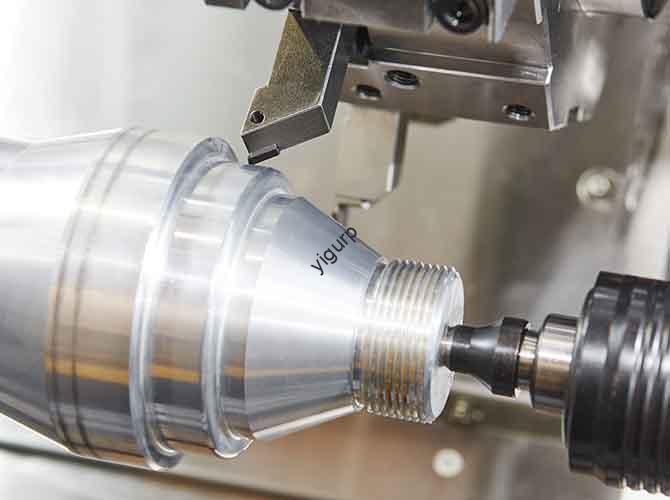
- Lathes: Perfect for round parts like shafts or bushings. The challenge is chip control. Use a lathe with an air blast to blow those stringy chips away before they wrap around everything.
- Routers: Good for flat parts or cutting sheets into shapes. Routers are less precise than CNC mills (around ±0.005 inches) but are great for quick, simple jobs.
Coolants and Lubricants: Keeping It Cool
You must manage heat. But you cannot use just any coolant.
- Water-Based Coolants: The safest choice for most plastics. They cool well and do not react with common materials. Make sure the label says “plastic-compatible.”
- Air Blasts: For plastics that hate moisture (like acetal), use compressed air at 80 to 100 PSI. It cools the tool and blows chips away without wetting the material.
- Avoid Oil-Based Coolants: These can soak into plastics like nylon and make them swell. In tests, nylon soaked in oil-based coolant expanded by 2 to 3 percent in 24 hours—enough to ruin a precision part.
Step-by-Step: How to Machine a Plastic Part
Let us walk through a real example: making an acetal gear. This process works for most plastics, just adjust for the material’s specific needs.
Step 1: Prepare Your Material
Start with a plastic blank slightly larger than your final part. Add about 0.1 to 0.2 inches extra for machining.
- Cut the Blank: Use a bandsaw with a fine-tooth blade (18 to 24 teeth per inch) to avoid chipping the edges.
- Dry If Needed: For acetal, you can skip drying. For nylon or polycarbonate, put them in the oven now.
- Mount the Blank: Secure it to your machine with clamps or a vice. Use soft jaws (made of aluminum or plastic) so you do not scratch the workpiece. Tighten just enough to hold it—over-tightening can squash soft plastics.
Step 2: Set Up Your Machine
- Pick the Tool: For acetal, a carbide end mill with a 15-degree rake angle is perfect. Use a 0.25-inch diameter tool for the gear teeth.
- Set Speed and Feed: Check the material guide. For acetal, start at 2,500 RPM with a feed rate of 5 inches per minute (IPM) . If unsure, start slower—you can speed up later.
- Apply Coolant: Position a water-based coolant nozzle right at the cutting area.
Step 3: Machine the Part
- Roughing Cut: Remove most of the extra material first. For the gear, cut the outer diameter to 2.1 inches (final size is 2.0 inches). Use deeper cuts here, about 0.1 inches per pass, to save time.
- Finishing Cut: Now make a light pass to hit the final size. Use 0.05 inches per pass. Go slow and steady to get a smooth finish. Cut the gear diameter to exactly 2.0 inches and refine the tooth shape.
- Check as You Go: Stop and measure with calipers. Check the tooth spacing and diameter. If it is too big, adjust the feed rate slightly. If too small, you may need a new blank.
Step 4: Finish and Clean Up
- Remove Chips: Use a soft brush—never a metal brush—to wipe away chips. For tight spots like gear teeth, use compressed air.
- Deburr the Edges: Plastics often have sharp little burrs. Use a deburring tool or fine sandpaper (400 to 600 grit) to smooth them. On the gear, clean up the tips of each tooth so they mesh smoothly.
- Clean the Part: Wipe with a lint-free cloth and mild cleaner like isopropyl alcohol. Avoid harsh chemicals that could damage the surface.
Step 5: Inspect Your Work
- Check the Surface: Look for melting, scratches, or rough spots. The finish should be smooth.
- Test the Function: Mount the gear on a motor. Does it spin freely? Any noise or catching means the teeth are not quite right.
- Write It Down: Record the speeds, feeds, and tool you used. For this acetal gear, note that 2,500 RPM and 5 IPM worked great. Next time, you can start right there.
What Are the Common Problems and How Do You Fix Them?
Even experienced machinists run into trouble. Here are the most frequent issues and exactly how to solve them.
Problem: Melted or Burned Edges
You see shiny, melted plastic along the cut lines. This means too much heat.
- Why It Happened: Speed too high, tool is dull, or not enough coolant.
- The Fix:
- Reduce cutting speed by 20 to 30 percent. If you were at 4,000 RPM, drop to around 3,000.
- Sharpen or replace the tool. A sharp tool cuts; a dull one rubs and heats.
- Increase coolant flow. Make sure it hits the cutting zone directly.
Problem: Rough, Scratched Surface
The part looks dull or has visible scratches.
- Why It Happened: Dull tool, chips rubbing against the part, or wrong tool material.
- The Fix:
- Switch to a sharper, polished tool. Diamond-coated is best for a smooth finish.
- Increase the feed rate slightly (by 10 to 15 percent). This helps lift chips away instead of letting them scratch the surface.
- Use a strong air blast to clear chips immediately. Do not let them sit on the part.
Problem: Part Is the Wrong Size
Your part measures too big or too small.
- Why It Happened: Material warped, you over-tightened the clamps, or the feed rate was off.
- The Fix:
- For plastics like nylon, make sure you dried them first. Moisture causes shrinkage after machining.
- Loosen the vice a bit. Over-tightening deforms soft plastics. Use soft jaws to spread the pressure.
- Adjust the feed rate. If the part is too big, increase feed rate slightly to remove more material. If too small, decrease it.
Problem: Tool Keeps Breaking
Your end mill snaps or chips.
- Why It Happened: Tool is too soft for the plastic, or you are cutting too deep.
- The Fix:
- Switch from HSS to carbide for rigid plastics like PEEK. Carbide handles the stress.
- Take shallower cuts. For hard plastics, limit each pass to 0.05 to 0.1 inches.
- Check that your tool is perfectly straight and aligned. A misaligned tool puts uneven pressure on the plastic and breaks easily.
Conclusion
Machining plastic parts does not have to be a mystery. Once you understand that plastic behaves differently from metal—that it holds heat, deflects under pressure, and makes sticky chips—you can adjust your approach and get great results. Start by picking the right material for your job. Acetal is great for general parts, PEEK for high-performance needs, and nylon for tough, flexible components. Use sharp tools, preferably carbide, and keep them cool with water-based coolant or a strong air blast. Follow a clear process: prepare your material, set up carefully, make roughing and finishing cuts, and always inspect your work. When problems pop up—and they will—refer back to the fixes in this guide. With practice, you will machine plastic parts that are precise, strong, and ready for whatever you throw at them.
FAQ About Machining Plastic Parts
1. Can I use regular metal-cutting tools on plastic?
You can, but they are not ideal. Metal-cutting tools are often less sharp than what plastic needs. A dull tool creates heat and melts the plastic. If you use metal tools, sharpen them first. Better yet, buy tools designed specifically for plastics—they have sharper edges and higher rake angles.
2. Do I always need coolant for plastic machining?
Not always, but it helps. For heat-sensitive plastics like acetal or PEEK, coolant (water-based) prevents melting. For moisture-sensitive plastics, an air blast is better. If you are making a very light cut at low speed, you might not need anything. Watch for signs of heat—if the plastic starts to look glossy or melt, add coolant.
3. How do I stop plastic chips from sticking to the tool?
Use an air blast aimed right at the cutting area. This blows the chips away before they can stick. You can also use tools with polished surfaces or special coatings that resist adhesion. Some machinists use a light mist of coolant to wash chips away, but check that your plastic can handle moisture first.
4. What is the best plastic for a beginner to machine?
Acetal (Delrin) is the best choice for learning. It cuts cleanly, does not absorb moisture, and holds tight tolerances. It is forgiving if your speeds are a little off. Start with acetal to build your skills, then move on to trickier materials like nylon or PEEK.
5. Can I machine clear plastic without scratching it?
Yes, but you have to be careful. Use polished, sharp tools. Run at moderate speeds. Most importantly, control your chips—use an air blast so chips do not blow back across the finished surface. When handling the part, wear soft gloves and set it on a clean, soft surface.
6. Is it safe to machine plastic at home?
It can be, with the right precautions. Some plastics (like PVC) release toxic fumes when heated, so you need good ventilation. Always wear safety glasses to protect against flying chips. A dust mask or respirator is a good idea. And never leave a running machine unattended—plastics can melt or catch fire if something goes wrong.
Discuss Your Projects with Yigu Rapid Prototyping
At Yigu Rapid Prototyping, we have spent years mastering the art of machining plastic parts for clients in every industry—from medical devices to consumer electronics. We know that every plastic is different, and every project has unique demands. That is why we do not just take your CAD file and push “start.” We talk with you. We ask about how the part will be used, what stresses it will face, and what your budget looks like. Then we apply our experience to choose the right material, the best tooling, and the perfect machining strategy. Whether you need one prototype or a thousand production parts, we deliver precision you can count on. Our shop is equipped with advanced CNC mills and lathes, and we stock over 20 different plastic materials ready to go. We handle the tricky stuff—like drying nylon to prevent warping or using diamond tools for scratch-free polycarbonate—so you do not have to. Contact Yigu today and let us help you turn your plastic part idea into a reality.