
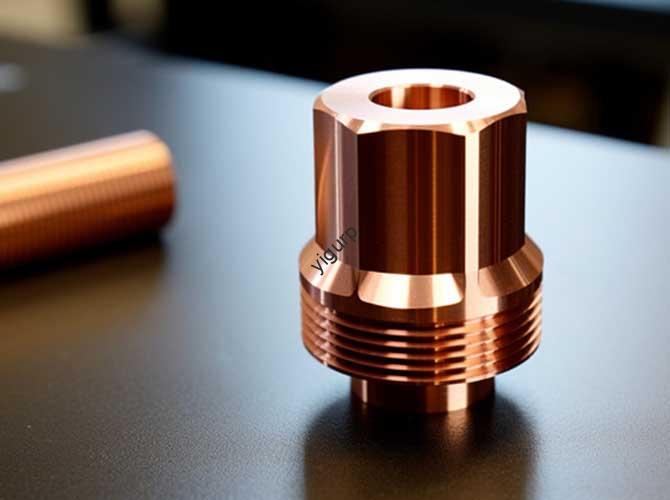
In the fast-moving world of product development, the jump from a digital sketch to a shelf-ready product is often a leap of faith. This is where high-precision prototypes step in. They act as the physical proof that a designer’s vision can actually survive in the real world. Among the many ways to build these models, CNC incoming processing prototype services have become the gold standard.
But why is this method so popular? It offers a rare mix of unmatched accuracy, a massive range of material options, and the ability to replicate even the most complex designs with total reliability. Whether you are building a sleek new smartphone or a critical part for a jet engine, this technology provides the precision needed to find and fix errors before they become expensive disasters. In this guide, we will explore the industries where this technology shines and how it solves the toughest development challenges.
How Does CNC Power the Electronics Industry?
The world of electronic communication moves faster than almost any other sector. From the newest smartphones to high-powered laptops, consumers expect perfection. Brands rely on CNC incoming processing prototypes to test the “fit and finish” of a device long before the factory lines start moving.
Precision in Consumer Devices
When you hold a flagship phone, the way the buttons click and how the case feels in your hand is the result of rigorous prototyping. CNC machining allows engineers to turn raw blocks of aluminum, magnesium alloy, or high-grade plastic into parts that look and act like the final product.
- Device Shells: We can achieve a precision of 0.01mm. This is vital for laptop casings where every internal component must fit into a tiny space.
- Functional Buttons: CNC ensures that volume keys and power buttons have a consistent shape. This leads to that “premium” tactile feel that users love.
- Internal Structures: We use CNC to create rigid frames for circuit boards. This protects delicate electronics during drop tests.
Real-World Case: The Flagship Smartphone
A major smartphone brand recently developed a new model with a unique curved edge. They needed a prototype shell that matched their CAD files exactly. Using CNC incoming processing, they produced an aluminum shell in just three days. We then applied a custom sandblasting and anodizing finish to mimic the final matte look. This allowed the design team to test the grip and the look of the phone under studio lights, saving them weeks of guesswork.
Why Is CNC Vital for Automotive Safety?
Modern cars are some of the most complex machines on earth. Every part must work in harmony to ensure both speed and safety. Because a failure on the road can be deadly, automakers use CNC prototypes as their first line of defense.
Replicating Real-World Performance
Unlike 3D printing, which often uses “proxy” materials, CNC machining uses the actual metals used in mass production. This means a CNC incoming processing prototype will react to heat, friction, and stress just like the final part.
- Engine Components: Parts like pistons and crankshafts need extreme precision (±0.02mm) to ensure proper fuel combustion.
- Interior Ergonomics: We machine dashboards and center consoles to test how a driver interacts with the car. Does the cup holder get in the way of the gear shift? CNC models give the answer.
- Structural Testing: Engineers use CNC-machined mounts to test how a car’s frame handles a collision.
Expert Experience: We once worked with a hybrid engine startup. They used our CNC services to create a prototype piston. During testing, the exact dimensions revealed a tiny fit issue that would have caused oil leaks over time. By fixing this on a $500 prototype, they avoided a potential $500,000 recall in the future.
Does CNC Machining Save Lives in Healthcare?
In the medical field, there is zero room for error. Whether it is a surgical tool or a permanent implant, “close enough” is never good enough. CNC incoming processing prototypes provide the micron-level accuracy required for patient safety.
High-Stakes Medical Applications
Medical devices must be biocompatible and easy to sterilize. CNC machining is the best way to shape medical-grade stainless steel and titanium without compromising the material’s integrity.
| Prototype Part | Critical Requirement | CNC Benefit |
| Surgical Tools | Sharpness & Sterility | Achieves smooth, burr-free edges that won’t trap bacteria. |
| Orthopedic Implants | Custom Geometry | Uses 3D scans to create a perfect fit for a patient’s unique bone structure. |
| MRI Components | Non-Magnetic Precision | Machines specialized plastics or aluminum with high structural strength. |
Case Study: The Spinal Implant
A medical tech firm was developing a new titanium spinal implant. They used CNC incoming processing to create a prototype based on a patient’s specific MRI scan. Because we could machine the titanium with such high precision, surgeons were able to “test fit” the implant on a model of the patient’s spine before the surgery. This reduced the time the patient spent on the operating table and led to a much faster recovery.
Why Does Aerospace Require Zero-Defect CNC?
Aerospace is an industry defined by “no margin for error.” Parts must withstand extreme pressure and temperature changes while being as light as possible. CNC machining is the gold standard here because it can handle superalloys and carbon fiber with ease.
Engineering for the Extremes
- Engine Blades: These have complex, twisted shapes to help with aerodynamics. CNC machines carve these from a single block of material, which prevents the weak points you might find in welded parts.
- Satellite Brackets: These need to be incredibly light to save on launch costs but rigid enough to survive the vibration of a rocket launch.
- Navigation Housings: CNC allows for the creation of intricate internal channels for wiring, all while keeping the outer shell air-tight.
The Mission-Critical Fix: We once helped an aerospace team prototype a solar panel bracket for a small satellite. The bracket required a precision of 0.005mm. Our CNC prototype revealed that a wire channel was slightly misaligned. If they had launched without this test, the solar panels might not have deployed in space, leading to a total mission failure.
Can CNC Enhance Smart Home Innovation?
Smart home devices—like smart locks, voice assistants, and high-end lamps—must blend into a person’s life. They need to look like art but work like high-tech tools. CNC prototypes allow brands to test both the “smarts” and the “style.”
Balancing Function and Style
Smart home products often use unique materials like brushed brass or walnut-infused plastics. CNC incoming processing allows designers to test these materials in a functional way.
- Smart Door Locks: We machine the lock cores to ensure the movement is smooth and quiet. We also test the keypad panels for resistance to wear and tampering.
- Acoustic Grilles: For smart speakers, the hole pattern in the grille affects the sound quality. CNC allows us to drill thousands of precise holes to find the perfect acoustic balance.
- Custom Finishes: Many smart home brands use our services to test different anodized colors, ensuring the final product matches a modern home’s decor.
How Does CNC Support the Toy Industry?
You might think toys are simple, but high-end interactive toys require complex engineering. From drones to robotic dolls, toys must be durable, fun, and, most importantly, safe.
Safety and Playability
- Interactive Joints: For action figures or robots, the joints must be tight enough to hold a pose but loose enough for a child to move. CNC prototypes let designers find that perfect tension.
- Durability Testing: Toy companies use CNC models to see if a part will snap when dropped or stepped on.
- Safety Checks: CNC allows for the creation of prototypes with no sharp burrs or small “choking hazard” parts, ensuring the toy meets strict global safety standards.
Yigu Technology’s Perspective
At Yigu Technology, we have seen firsthand how a high-quality prototype can change the trajectory of a product. We have supported over 200+ clients across the globe, providing CNC incoming processing prototypes that bridge the gap between “concept” and “commercial.”
In our experience, the biggest benefit of CNC isn’t just the precision—it’s the de-risking of the project. When you have a part that is 99.9% identical to the final product, you can test with confidence. We focus on surface treatments like sandblasting for electronics and biocompatible material control for medical devices. Our goal is to help you cut your development time by up to 30%, letting you get to market before your competition.
FAQ
What materials can be used for CNC incoming processing prototypes?
Almost any solid engineering material is fair game. This includes metals like Aluminum (6061/7075), Stainless Steel, and Titanium, as well as plastics like ABS, PC, and Delrin. We can even machine specialized composites like carbon fiber.
How long does it take to get a prototype?
For simple parts, we can often finish the work in 1–2 days. For complex aerospace or medical parts that require multi-axis machining, the timeline is usually 3–7 days. This is much faster than waiting for a custom mold or casting.
Is CNC machining too expensive for just one part?
Actually, CNC is very cost-effective for low-volume prototyping (1–100 parts). Because you don’t need to build expensive molds or “tooling,” the upfront cost is much lower than injection molding. It is perfect for testing several different design versions at once.
Can CNC prototypes be used for functional testing?
Yes! This is the main advantage of CNC. Because the prototype is made from the actual production material, you can use it for mechanical testing, heat resistance tests, and even regulatory certifications.
What is the maximum precision I can expect?
Standard CNC machining usually offers a tolerance of ±0.01mm to ±0.05mm. However, for specialized medical or aerospace parts, we can achieve tolerances as tight as ±0.005mm.
Discuss Your Projects with Yigu Rapid Prototyping
Are you ready to turn your CAD designs into high-precision reality? At Yigu Technology, we specialize in the “tough stuff.” Whether you need a medical-grade implant, a rugged automotive part, or a sleek consumer electronics shell, our team of expert engineers is here to help. We offer full DFM (Design for Manufacturing) feedback to ensure your parts are optimized for the best results.
Would you like us to provide a free quote and design review for your next CNC prototyping project?