
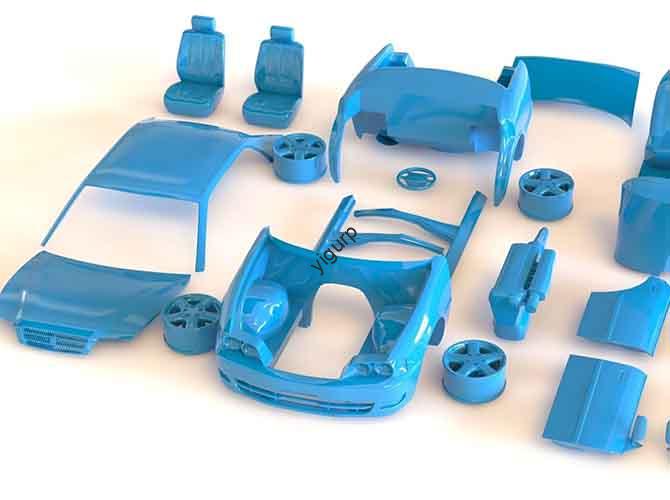
You’ve spent hours designing, slicing, and printing the perfect PLA model. Now comes the final, critical step: assembly. The wrong adhesive choice can lead to a weak, brittle, or unsightly joint, undermining all your hard work. So, what is the best glue for 3D printing PLA? The answer isn’t simple, because it depends entirely on your project’s specific needs—strength, flexibility, clarity, or environmental resistance. This definitive guide moves beyond generic lists to provide a materials science-based analysis of PLA bonding. We’ll compare adhesive chemistries, detail precise application techniques, and equip you with a decision-making framework to choose the perfect adhesive for every scenario, from delicate miniatures to functional outdoor gear.
Introduction
Polylactic Acid (PLA) is the friendly, accessible workhorse of 3D printing. However, its semi-crystalline nature and low surface energy make it a notoriously tricky plastic to bond reliably with common household glues. Unlike porous materials like wood, PLA presents a smooth, non-porous surface that many adhesives struggle to grip. Furthermore, PLA’s relatively low glass transition temperature (Tg) of around 60°C (140°F) means some adhesives can soften and fail under modest heat. Choosing the right glue is not just about sticking parts together; it’s about creating a durable, fit-for-purpose bond that considers mechanical stress, environmental exposure, and aesthetic requirements. This guide will demystify the chemistry of adhesion to PLA, providing you with the knowledge to make an informed, professional-grade choice for any project.
How Do You Choose the Right Adhesive? A Performance Matrix
Selecting a glue is a trade-off between key performance attributes. The following matrix categorizes common adhesives for PLA based on their primary strengths, helping you narrow down your options instantly.
| Adhesive Type | Best For… | Key Strengths | Critical Weaknesses | Ideal Project Example |
|---|---|---|---|---|
| Cyanoacrylate (CA) / “Super Glue” | Small, rigid assemblies; fast repairs. | Extremely fast cure (secs-mins), high shear strength on well-fitted parts. | Brittle, poor impact/peel strength, degrades with moisture & heat (>60°C). | Assembling a multi-part tabletop miniature or fixing a broken decorative bracket. |
| Two-Part Epoxy | High-strength, structural, and gap-filling bonds. | Exceptional tensile & shear strength, excellent chemical/water resistance, fills small gaps. | Long cure time (hours), requires precise mixing, can be messy. | Bonding a functional tool handle or assembling a load-bearing PLA bracket. |
| Plastic Cement / Solvent Welder | Creating nearly invisible, monolithic bonds. | Chemically fuses PLA at a molecular level, creating the strongest possible joint. | Requires very tight-fitting joints, emits strong fumes, limited gap-filling. | Seamlessly assembling a display case or a model kit where the seam should disappear. |
| Flexible Polyurethane Glue | Bonds subjected to vibration, thermal cycling, or slight flex. | Remains flexible when cured, good moisture & temperature resistance, fills larger gaps. | Expands as it cures (can be messy), requires clamping, long cure time. | Assembling a PLA enclosure for electronics or a part that will experience outdoor temperature swings. |
| Specialty Acrylic Adhesives | Optically clear bonds or bonding PLA to dissimilar materials. | Crystal clear finish, bonds well to metals, glass, and other plastics, good durability. | Often requires UV light for full cure, can be expensive, surface prep is critical. | Bonding a PLA lens to a housing or attaching metal fittings to a PLA prototype. |
What Are the Core Principles for Achieving a Strong PLA Bond?
Success depends on three universal principles, regardless of the adhesive chosen.
1. Surface Preparation: The Non-Negotiable First Step
A clean, mechanically activated surface is 90% of a successful bond. PLA often has a layer of dust, oils (from your skin), or release agents that prevent adhesion.
- Cleaning: Wipe the bonding area thoroughly with >90% Isopropyl Alcohol (IPA) using a lint-free cloth. Do not use acetone, as it can craze or dissolve PLA.
- Mechanical Abrasion: Lightly sand the bonding surfaces with 220-400 grit sandpaper. This increases surface area and provides “teeth” for the adhesive to grip. Blow away all dust after sanding.
2. Joint Design: Engineering the Connection
The geometry of the joint is as important as the glue itself.
- Butt Joints: The weakest design. Avoid when possible.
- Lap Joints & Reinforced Designs: Greatly increase bonded surface area. For critical parts, design in pins, tabs, or slots to provide mechanical interlock alongside the adhesive.
3. Application & Curing: Precision Matters
Follow the manufacturer’s instructions religiously.
- Mixing (for epoxies): Mix in the correct ratio for the full recommended time to ensure a complete chemical reaction.
- Clamping: Apply consistent, moderate pressure with clamps, tape, or rubber bands to hold parts in perfect alignment while the adhesive cures. This ensures a thin, uniform bond line, which is stronger than a thick, globby one.
- Cure Time: Respect the full cure time, not just the “handleable” time. Strength develops over hours or days.
How Do the Top Contenders Actually Perform? A Deep Dive
The Chemical Fusion Champion: Plastic Cement / Solvent Welding
This is the gold standard for PLA-to-PLA bonds where aesthetics and strength are paramount.
- Science Behind It: These cements contain solvents like Ethyl Acetate or Butanone (MEK) that temporarily dissolve the surface of the PLA. When pressed together, the polymer chains from each part intermingle. As the solvent evaporates, the PLA re-solidifies into a single, monolithic piece.
- Professional Technique: Apply a small amount with a fine brush or needle applicator only to one surface. Immediately press parts together firmly. You will see the plastic slightly soften and become cloudy at the joint—this is normal. Hold for 30-60 seconds. Full strength develops over 24-48 hours.
- Case Study: A model maker assembling a complex architectural diorama uses a non-dichloromethane-based plastic cement. The seams become virtually invisible, and the final model is robust enough to handle without fear of glued joints failing.
The Structural Workhorse: Two-Part Epoxy
When you need a bond that can handle real-world stress, epoxy is the answer.
- Choosing the Right Epoxy:
- Standard 5-Minute Epoxy: Good for quick fixes; full cure in a few hours.
- 24-Hour Slow-Cure Epoxy: Typically achieves higher ultimate strength and temperature resistance. Ideal for critical parts.
- Toughened or Flexible Epoxies: Incorporate modifiers to resist impact and peel forces better than brittle standard formulas.
- Industrial Application Insight: In a workshop, a functional drone chassis printed in PLA needed to withstand vibration and occasional impacts. A slow-cure, toughened epoxy was used to bond the arm assemblies to the central body. The bond’s shear strength exceeded the yield strength of the PLA itself, ensuring failure would occur in the part, not the joint.
The Fast & Functional Choice: Cyanoacrylate with an Accelerator
For speed without sacrificing too much strength, a CA glue system is ideal.
- Pro-Level Upgrade: Use a CA primer or accelerator. A primer (often a mild acid) conditions the PLA surface for a better bond. An accelerator sprayed on one part causes the CA to cure almost instantly upon contact, allowing for faster assembly without prolonged clamping.
- Limitation Management: Understand that CA bonds are brittle. They excel in compression and shear but are poor in tension and peel. Design your joint accordingly.
What About Specialized Scenarios?
Bonding PLA to Other Materials
- PLA to Metal: Use a two-part epoxy or a specialty acrylic adhesive like Loctite 3301. Ensure the metal is clean and abraded (e.g., with sandpaper or steel wool).
- PLA to Glass/ Ceramic: A UV-curing acrylic or clear silicone works well, providing both adhesion and flexibility to account for different thermal expansion rates.
- PLA to ABS/PETG: Epoxy or a specialized plastic bonding adhesive is required, as solvent cements designed for one plastic may not work on another.
Creating Waterproof or Outdoor Bonds
For parts exposed to the elements, the adhesive must withstand UV degradation and moisture.
- Best Choice: A marine-grade, UV-resistant epoxy or a clear, waterproof polyurethane sealant/adhesive (like those used in marine applications). These are formulated to resist environmental breakdown.
YiGu Technology’s Perspective: A Strategic Approach to Adhesive Selection
At YiGu Rapid Prototyping, we treat adhesive selection as an integral part of the Design for Assembly (DfA) process. The glue should not be an afterthought. When a client approaches us with a multi-part assembly, our first questions are: “What are the operational loads?” and “What is the operating environment?”
We categorize projects into three tiers:
- Aesthetic/Display Models: Here, invisible seams are key. We almost exclusively recommend and use solvent welding techniques or exceptionally clear, low-odor cyanoacrylates. Surface prep is meticulous to ensure a flawless finish.
- Functional Prototypes & Jigs: These require durability and repairability. We lean towards medium-cure epoxies or tough acrylics. The bond must survive handling, testing, and potential disassembly for iteration. We often design in alignment features to aid clamping.
- End-Use Parts in Mild Environments: For these, long-term reliability is paramount. We conduct material compatibility tests, often selecting a flexible polyurethane or a high-performance epoxy that can accommodate PLA’s slight creep and thermal expansion without losing adhesion over time.
We recently assisted a client creating a custom PLA mount for a scientific sensor that would be used in a humid lab. The mount consisted of two halves. While super glue was tempting for speed, we recommended and supplied a water-resistant, slow-cure epoxy. The result was a bond that remained intact through humidity cycles and provided the necessary long-term stability for sensitive equipment.
Conclusion
Selecting the best glue for 3D printing PLA is a deliberate engineering decision, not a guessing game. It hinges on a clear understanding of your project’s functional requirements, environmental exposures, and aesthetic goals. By moving beyond the one-size-fits-all “super glue” approach and leveraging the specific chemistries of plastic cements for fusion, epoxies for strength, and polyurethanes for flexibility, you can elevate your PLA assemblies from fragile constructs to durable, professional-grade creations. Remember, the adhesive is the final, critical component in your manufacturing process. Investing time in proper surface preparation, joint design, and adhesive selection will pay dividends in the longevity, performance, and appearance of your finished 3D printed project.
FAQ
Can I use Gorilla Glue (original polyurethane) on PLA?
Yes, but with important caveats. Original Gorilla Glue expands significantly as it cures via moisture. You must dampen the PLA surface slightly and use firm clamping to contain the foam and ensure a thin bond line. It can be messy and is best for non-visible, gap-filling applications where its flexibility and water resistance are needed. Consider Gorilla Epoxy or Gorilla Super Glue (Gel) for more controlled applications on PLA.
Why did my super glue bond on PLA fail so easily?
Cyanoacrylate creates a brittle, surface-level bond. Failure is common due to: 1) Poor surface prep (dust, oil), 2) A poorly designed joint (butt joint under peel stress), or 3) Environmental exposure to moisture or warmth that weakens the adhesive. CA works best on small, tightly mated, indoor parts that won’t be stressed.
Is there a food-safe adhesive for PLA projects like cookie cutters or planters?
This is a critical safety question. Most industrial adhesives are NOT certified food-safe. For items that will contact food, your best option is to design the part to print in one piece. If bonding is absolutely necessary, you must seek an adhesive with a NSF/ANSI 51 or FDA 21 CFR 175.105 certification for food contact. For planters, a silicone-based, waterproof sealant is a safer choice for moisture resistance.
How do I remove or disassemble glued PLA parts?
This depends on the adhesive:
- Cyanoacrylate: Can sometimes be weakened with acetone (applied carefully to the seam, but test first as acetone can damage PLA) or debonding solvents.
- Epoxy: Extremely difficult. Mechanical methods (careful cutting, sanding) are usually required. Heat above 150°C may soften the epoxy but will also deform the PLA.
- Solvent Welds: Effectively permanent; the parts have become one piece of plastic.
The difficulty of disassembly underscores the importance of planning and dry-fitting before you glue.
Discuss Your 3D Printing Assembly Project with YiGu Rapid Prototyping
Do you have a multi-part PLA print that needs to be assembled with strength, precision, or a flawless finish? Are you unsure which adhesive strategy is right for your functional prototype or end-use part?
YiGu Rapid Prototyping offers more than printing—we provide holistic manufacturing solutions. Our expertise extends to post-processing, finishing, and professional assembly techniques. Our engineers can advise on the optimal adhesive and joint design for your specific application, ensuring your assembled product meets its performance and aesthetic goals.
Contact us for a consultation. Send us your assembly drawings or describe your project’s requirements, and we’ll recommend a proven bonding strategy. Let us help you turn your individual prints into a cohesive, high-quality final product.