
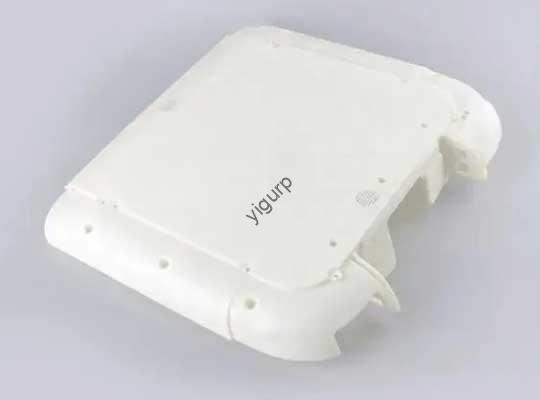
If you’ve been exploring the world of 3D printing for prototyping or production, you’ve likely come across Fusion Deposition Molding (FDM). It’s often the first technology people try—and for good reason. But is it the right choice for your specific needs? As someone who’s spent years in product development, I’ve seen teams choose FDM for projects where it shined, and I’ve also seen the frustration when its limitations weren’t fully considered upfront.
In this guide, we’ll walk through everything—from how FDM really works on the shop floor to picking the right material for a functional part. We’ll be honest about its strengths and its quirks, so you can make an informed decision. Think of this as a practical chat with an experienced engineer, not just a technical manual. Let’s dive in.
How Does FDM 3D Printing Actually Work? The Engine Under the Hood
At its core, FDM is an extrusion-based process that builds objects layer by layer using molten thermoplastic. Imagine a high-precision, computer-controlled hot glue gun. The magic isn’t just in melting plastic—it’s in the precise coordination of temperature, movement, and material flow that turns a digital file into a physical part.
What Are the Key Components That Make an FDM Printer Tick?
Every FDM printer, from a $300 desktop model to a $50,000 industrial system, is built around a few critical components. Understanding these helps you troubleshoot issues and appreciate what you’re paying for.
- Filament Spool: This is your raw material source—a coil of solid thermoplastic wire, typically 1.75mm or 2.85mm in diameter.
- Extruder Mechanism: This is the “feeder.” It uses a motor-driven gear to push the filament toward the hot end with consistent force.
- Hot End (Liquefier & Nozzle): The heart of the system. Here, the filament is melted in a heated block (the liquefier) and extruded through a tiny nozzle. Nozzle diameter (commonly 0.4mm) is a key driver of detail and speed.
- Build Platform: The surface where the part is constructed. A heated bed is crucial for materials like ABS to prevent warping by keeping the first layers warm.
- Motion System: This controls the movement, usually via stepper motors. Most printers use a Cartesian system (X, Y, Z axes), but some industrial models use a robotic arm for greater freedom.
- Control Board & Firmware: The printer’s brain. It interprets the instructions (G-code) from your sliced file and directs all the motors and heaters.
Can You Walk Me Through the FDM Process, Step-by-Step?
The journey from idea to object is a fascinating dance between software and hardware. Here’s how it flows in practice:
- Design & Prepare (CAD to STL): It all starts with a 3D model from CAD software (like SolidWorks or Fusion 360). This model is exported as an STL file—a format that approximates the shape with a mesh of triangles.
- Slicing – The Digital Blueprint: This is a critical step. Slicing software (Cura, PrusaSlicer) cuts the STL model into hundreds of horizontal layers and generates the G-code toolpath. Here, you set layer height, infill density, print speed, and support structures.
- Material Feeding & Melting: The printer feeds the solid filament into the hot end, where it’s heated past its glass transition temperature. For PLA, that’s around 180-220°C; for advanced materials like PEEK, it can exceed 400°C.
- Layer Deposition: The nozzle moves over the build plate, depositing a thin bead of molten plastic in the pattern defined for the first layer. Cooling fans immediately start to solidify the material.
- Layer-by-Layer Buildup: After each layer, the build plate drops (or the nozzle rises) by one layer height (e.g., 0.2mm), and the next layer is deposited on top. The heat from the new layer partially fuses it to the one below.
- Supporting Complex Shapes: For overhangs greater than about 45 degrees, the printer generates temporary support structures to hold up the plastic. These can be break-away or soluble in a secondary bath.
- Post-Processing – The Finishing Touch: Once printed, the part is removed. Supports are detached, and the part might be sanded, smoothed (via vapor polishing for ABS), painted, or even annealed for higher strength.
What Materials Can You Really Use with FDM?
Material versatility is one of FDM’s biggest draws. You’re not locked into one type of plastic. The choice of filament directly dictates the part’s properties, cost, and even the printer requirements.
What Are the Most Common FDM Filaments and Their Best Uses?
| Material | Key Characteristics | Best For | Watch Out For |
|---|---|---|---|
| PLA | Easy to print, biodegradable, stiff, low warp, good detail. | Concept models, visual prototypes, educational projects, decorative items. | Low heat resistance, brittle under impact. |
| ABS | Tough, impact-resistant, higher heat resistance, can be vapor-smoothed. | Functional prototypes, enclosures, automotive trim, LEGO-like parts. | Requires a heated bed & enclosure due to warping and fumes. |
| PETG | Combines PLA’s ease with ABS’s durability. Good chemical & moisture resistance. | Mechanical parts, containers, outdoor fixtures, protective components. | Can be “stringy” during printing; less rigid than ABS. |
| TPU | Flexible, elastic, rubber-like, high impact absorption. | Gaskets, grips, dampeners, wearables, phone cases. | Requires a direct-drive extruder for reliable printing. |
| Nylon (PA) | Very strong, durable, fatigue-resistant, good for functional parts. | Gears, hinges, tooling, wear-resistant components. | Highly hygroscopic—must be stored dry; often needs >250°C hot end. |
| PC (Polycarbonate) | Extremely high strength, heat resistance, and transparency. | Engineering prototypes, high-temp applications, protective gear. | Requires very high printing temps (270-310°C) and an enclosure. |
When Should You Consider Advanced & Composite Materials?
For demanding applications, material science has supercharged FDM. In one aerospace prototyping project I consulted on, standard ABS wasn’t surviving thermal cycling tests. The switch to a carbon fiber-reinforced nylon filament provided the necessary stiffness and heat deflection temperature, allowing the prototype to validate the design under near-real conditions. These composites bridge the gap between basic plastics and manufacturing-grade materials.
- Fiber-Reinforced (CF/GF): Filaments infused with carbon fiber or glass fiber offer dramatically increased stiffness, strength, and dimensional stability. They are abrasion-resistant but require hardened steel nozzles.
- High-Performance Polymers: Materials like PEEK and ULTEM are used in aerospace, medical, and automotive for their exceptional strength, chemical resistance, and high-temperature performance. They demand specialized, high-temperature printers.
What Are the Real Advantages of Choosing FDM?
Beyond being accessible, FDM offers concrete benefits that solve real-world product development challenges.
- Cost-Effectiveness (Printer & Material): Desktop FDM printers start under $500, and even industrial systems are often an order of magnitude cheaper than equivalent SLS or metal systems. Filament cost is low, typically $20-$150/kg, keeping the cost-per-part minimal.
- Unmatched Material Variety & Speed: From the ease of PLA to the strength of composites, you can match the material to the prototype’s purpose—be it for fit, form, or function. For simple geometries, FDM is also one of the faster 3D printing methods, letting you iterate designs in hours, not days.
- Design Freedom for Complex Geometries: It enables integrated assemblies, internal channels, and lightweight lattices that are impossible with machining. I once designed a fluidics housing with internal serpentine cooling channels that could only be made as a single piece via FDM.
- Office & Workshop Friendly: Unlike SLA (which uses resins) or SLS (powder handling), FDM is relatively clean and safe for an office or lab environment with minimal venting requirements for most materials.
What Are the Honest Limitations You Need to Plan For?
Being aware of FDM’s constraints is key to project success. Here’s what you’re signing up for:
- Layer Lines & Surface Finish: The “stair-stepping” effect on curved surfaces is FDM’s trademark. Aesthetic or high-precision parts require post-processing like sanding, priming, and painting, which adds time and skill.
- Anisotropic Strength: This is a critical engineering consideration. Parts are strongest in the X-Y plane (along the layers) and weakest in the Z-axis (between layers). A hook printed vertically might snap more easily under load than one printed on its side.
- Dimensional Accuracy & Warping: While good, accuracy (±0.1-0.5% is typical) isn’t as tight as SLA or machining. Thermal shrinkage (especially in ABS) can cause corners to lift (warping), affecting flatness and tolerances.
- The Support Structure Challenge: Supports are often necessary but can damage surface finish during removal and increase material use. Soluble supports (like PVA) solve this but double the material cost and require a dual-extruder printer.
How Does FDM Stack Up Against Other 3D Printing Tech?
Choosing a technology is about trade-offs. This comparison should help position FDM in the broader landscape.
| Feature | FDM | SLA (Resin) | SLS (Powder) |
|---|---|---|---|
| Best For | Functional prototypes, tooling, low-cost parts, education. | High-detail prototypes, miniatures, molds, dental models. | Complex, durable functional parts & end-use production. |
| Surface Finish | Visible layer lines; rough. | Smooth, glass-like finish. | Grainy, sand-like finish. |
| Accuracy | Good (±0.1-0.5mm). | Excellent (±0.05-0.1mm). | Very Good (±0.1-0.3mm). |
| Material Options | Wide variety of thermoplastics. | Limited to photopolymer resins. | Primarily nylons & some polymers. |
| Strength | Moderate, Anisotropic. | Brittle, Isotropic. | Strong, Isotropic (uniform in all directions). |
| Cost (Entry) | Low ($200+) | Medium ($1,500+) | High ($50,000+) |
The Bottom Line: Use FDM for toughness and function on a budget, SLA for stunning detail and accuracy, and SLS for complex, high-strength parts without supports.
So, Where Is FDM 3D Printing Used Successfully?
FDM’s practicality makes it a workhorse across industries:
- Rapid Prototyping: The most common use. Engineers print multiple iterations in a day to test form, fit, and function.
- Manufacturing Aids: Custom jigs, fixtures, and assembly guides can be made in-house overnight, improving production line efficiency. A client saved weeks of lead time and 60% cost by switching from machined aluminum to printed composite tooling.
- Low-Volume & Bridge Production: For runs of 10-500 parts before committing to expensive injection molding tooling.
- Education & Research: Affordable, hands-on tool for STEM, allowing students to hold their designs.
- End-Use Parts: With the right material (ASA, PETG, Nylon) and design, FDM parts are used in drones, agricultural equipment, and consumer products.
Frequently Asked Questions (FAQ)
How do I stop my ABS prints from warping off the build plate?
This is the #1 issue with ABS. The solution is a combination of a heated bed (100-110°C), an enclosed print chamber to maintain a stable, warm ambient temperature, and using a reliable adhesive like ABS slurry (made by dissolving old ABS in acetone) or a specialized bed adhesive.
Can FDM parts be truly watertight or pressure-rated?
It’s challenging due to microscopic gaps between layer lines. For watertightness, you can increase the number of perimeter shells (3-4), use a high infill density (80-100%), and apply a waterproofing sealant or epoxy coating. For critical pressure applications, testing is mandatory, and technologies like SLS might be more reliable.
What’s the real difference between a $300 and a $3,000 FDM printer?
The cheap printer gets you the basic function. The expensive one buys you reliability, consistency, and reduced hassle. You’re paying for: a sturdier frame (less vibration), better motion components (linear rails vs. rods), advanced firmware (better error correction), a reliable heated bed, and often community or professional support. For business use, the higher upfront cost pays off in saved time and failed prints.
Is FDM suitable for food-safe or medical applications?
Proceed with extreme caution. While some filaments (PLA, PETG) are technically food-safe, the printed part itself is not. The layer lines harbor bacteria that cannot be cleaned effectively. For any regulated medical or food-contact use, you must consider post-processing (smoothing to seal pores), material certifications, and sterilization compatibility—consult with a regulatory expert.
How do I improve the strength of my FDM parts?
Focus on print orientation (align the load with the X-Y plane), increase the number of perimeters/walls (this has a bigger impact than infill), use a higher infill pattern like gyroid or rectilinear, and consider annealing the part (controlled heating in an oven) to improve layer bonding, though this may cause dimensional change.
Discuss Your Projects with Yigu Rapid Prototyping
At Yigu, we don’t just sell a printing service—we partner in your product development. FDM is a powerful tool in our arsenal, perfect for when you need a tough, functional prototype in your hands fast, or a small batch of custom fixtures.
Let’s evaluate if FDM is the right fit for you. Send us your CAD file, and we’ll provide a free design-for-manufacturing analysis, recommend the optimal material (from standard PLA to PEEK), and give you a transparent quote and lead time. We bridge the gap between desktop and industrial FDM, ensuring your prototypes are built right the first time.
Ready to turn your idea into a tangible part? Contact our engineering team today for a consultation.