
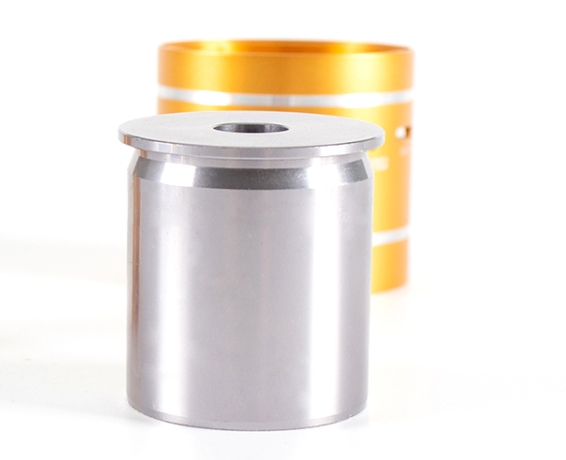
In the world of high-end manufacturing, the finish of CNC processing is much more than a cosmetic choice. It refers to the texture and smoothness of a part’s surface after the machine completes its work. While a shiny part looks impressive on a shelf, the true value of a superior finish lies in its mechanical performance.
Whether you are designing engine components for a car, structural joints for a jet, or surgical tools for a hospital, the surface quality dictates how long a part will last and how well it will function. A rough surface can lead to leaks, premature wear, or even structural failure. This guide will walk you through the core principles of surface finish, the variables that control it, and the professional strategies used by top-tier engineers to achieve perfection.
Why Does the Finish of CNC Processing Matter?
Before we look at the “how,” we must understand the “why.” If you treat surface finish as an afterthought, you risk project failure and high costs.
The Real-World Impact of Surface Quality
A high-quality finish solves four major engineering headaches:
- Fit and Seal Accuracy: Parts must work together. If a hydraulic valve has a rough surface, it cannot form a tight seal. This leads to leaks that can shut down an entire system.
- Wear Resistance: Friction is the enemy of moving parts. Data from automotive manufacturers shows that a gear with a polished CNC finish can last 2 to 3 times longer than a rough one.
- Corrosion Resistance: Rust starts in tiny cracks. A rough surface provides “pockets” for moisture to hide. A smooth finish, often paired with a protective coating, acts as a shield in harsh marine or medical settings.
- Brand Perception: For consumer tech, feel is everything. A smartphone frame that feels bumpy or uneven will instantly lower the value of the brand in a customer’s eyes.
Engineer’s Note: We once saw an aerospace firm recall 500 engine brackets. The rough finish caused “fretting” (wear from vibration) on the parts next to them. The mistake cost $200,000 to fix. Proper finish control at the start would have cost nearly nothing.
Which Factors Influence Your CNC Finish?
To control the finish, you have to control the variables. We look at four main pillars: the tool, the material, the coolant, and the machine itself.
1. Tool Materials and Coating Technology
The tool is the only thing touching your part. If the tool is weak or dull, the finish will suffer.
| Tool Material | Best For | Typical Finish (Ra) | Tool Life (Hours) |
| High-Speed Steel (HSS) | Soft metals (Aluminum) | 1.6 – 6.3 μm | 10 – 25 |
| Carbide | Hard metals (Steel) | 0.8 – 3.2 μm | 50 – 150 |
| Ceramic | Ultra-hard (Titanium) | 0.4 – 1.6 μm | 200 – 400 |
Coatings are a “cheat code” for quality. Adding Titanium Nitride (TiN) to a carbide tool can boost finish quality by 35%. When machining stainless steel, a coated tool hits a Ra of 0.8 μm easily, while an uncoated tool struggles to stay under 1.2 μm.
2. Workpiece Material Characteristics
Every metal “behaves” differently under a blade.
- Aluminum: It is easy to cut but “sticky.” Pieces of metal can weld themselves to the tool (called built-up edge), which leaves ugly tears on the surface.
- Steel: It needs durable carbide tools. If you cut too slowly, the machine will vibrate (chatter), leaving a wavy pattern.
- Stainless Steel: This is the toughest challenge. It is “gummy” and hardens as you cut it. You need sharp tools and high-pressure coolant to get a clean finish.
3. The Role of Coolant and Lubrication
Coolant does more than stop fires. It washes away chips so they don’t get “recut” and scratch the surface.
- Dry Machining: This often leads to “bluing” or discoloration and a very rough finish (Ra 12.5 μm).
- Optimal Flow: Using water-soluble coolants can lower temperatures by 50% and improve the Ra value by nearly 30%.
4. Machine Rigidity and Performance
A $500,000 machine will always produce a better finish than a $5,000 one. This comes down to vibration control. If the spindle bearings are worn, the tool will “wobble” at a microscopic level, creating a finish that looks like orange peel. Regular maintenance every six months is a must for precision work.
How Do You Measure the Finish of CNC Processing?
You cannot improve what you cannot measure. In the industry, we use both numbers and “the human touch.”
Quantitative Measurement: The Ra Value
The Ra value (Roughness Average) is the global language of surface finish. It measures the average height of the “peaks and valleys” on a surface.
- Ra > 12.5 μm: Very rough. Used for non-moving structural frames.
- Ra 0.8 – 3.2 μm: The “Sweet Spot.” This is the standard for gears, valves, and precision tools.
- Ra < 0.8 μm: Mirror-like. Reserved for medical implants and aerospace engine parts.
To get this number, we use a Surface Roughness Tester. It drags a tiny diamond needle across the part to give us a digital reading in seconds.
Qualitative Measurement: Visual and Tactile
While numbers are king, a veteran machinist uses their eyes and hands.
- Visual: Look for “rainbow” colors (heat damage) or “tracks” (tool marks).
- Tactile: Using a gloved hand, feel for “snags.” A perfect finish feels like glass or polished stone.
Practical Strategies to Boost Finish Quality
If your parts are coming off the machine looking rough, try these three professional strategies.
1. Optimize Your Tool Paths
How the tool moves is just as important as the tool itself.
- Use Climb Milling: In traditional milling, the tool “fights” the metal. In climb milling, the tool rolls with the metal. This reduces friction and leaves a much cleaner surface.
- Reduce Engagement: Don’t try to take a “big bite” out of the metal. If you reduce your depth of cut from 1mm to 0.5mm, you reduce vibration by half.
2. Adopt High-Speed Cutting (HSC)
When you spin the tool faster (over 10,000 RPM), the metal is cut so fast it doesn’t have time to deform or vibrate.
- The Result: For aluminum, HSC can cut your Ra value in half and reduce your machining time by 30%.
- Warning: You must have a very rigid machine for this. If the machine isn’t stable, high speed will just cause a crash.
3. Strategic Post-Processing
Sometimes, the machine can only go so far. That is where secondary steps come in:
- Bead Blasting: Uses glass beads to create a uniform, matte look. It hides tool marks and is great for electronics.
- Precision Grinding: Uses an abrasive wheel to hit Ra values as low as 0.1 μm.
- Electropolishing: A chemical bath that “melts” the top layer of a metal part, leaving a mirror finish. This is the gold standard for medical implants.
Yigu Technology’s Perspective
At Yigu Technology, we believe that the finish of CNC processing defines the integrity of the part. Over the last 12 years, we have mastered the art of the “first-pass finish.” By using Mastercam software to plot paths and TiAlN-coated carbide tools to execute them, we consistently deliver Ra values 35% lower than the industry average.
We don’t just ship parts; we ship inspection reports. Every batch we produce comes with a Ra value certification so our clients in the aerospace and medical sectors know exactly what they are getting. A great finish isn’t a luxury—it’s an investment in the part’s lifespan.
FAQ About the Finish of CNC Processing
What is the smoothest finish a CNC machine can hit without polishing?
With a ceramic tool and a high-end machine, you can hit Ra 0.4 μm. To go lower than that, you usually need a secondary grinding or polishing step.
Does a better finish always mean a higher price?
Not always. Often, better results come from smarter programming, like climb milling or better tool selection. These don’t add time; they just require more skill. However, if you need a “mirror finish” that requires hand-polishing, the cost will go up.
Can I get the same finish on plastic as I do on steel?
No. Plastic reacts to heat very quickly. If the tool gets too hot, the plastic melts, leaving a “fuzzy” or rough finish. You need very sharp tools and specific cooling techniques to get a smooth finish on polymers.
Does the direction of the cut matter?
Absolutely. Cutting “with the grain” of the tool path (climb milling) almost always results in a better finish than cutting against it.
Discuss Your Projects with Yigu Rapid Prototyping
Are you struggling to hit the tolerance or surface finish your project requires? At Yigu Technology, our product engineers specialize in the high-precision finish of CNC processing. We can help you choose the right material, optimize your tool paths, and select the perfect post-processing method to ensure your parts are world-class.
Would you like a free surface finish analysis for your current design? Contact us today, and let’s make your parts perform as good as they look.