
Why do you need a dedicated solution for brass milling?

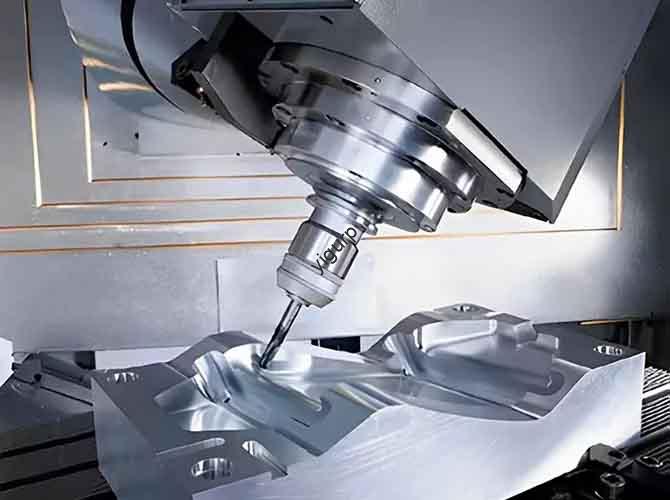
4 axis cnc machining

In the field of metal processing, brass has become a core material in electronics, automotive, aerospace and other industries due to its excellent electrical conductivity, thermal conductivity, and processing properties. However, brass milling is by no means a simple application of ordinary metalworking technology – its low hardness and high ductility can easily lead to problems such as sticking knives, burrs, and precision deviations. This article combines 10 years of precision machining experience, from basic principles to practical skills, to comprehensively dismantle the key points of brass milling, helping you avoid common pitfalls and achieve double improvement in efficiency and precision.

Table of Contents

1. Brass milling basics: understand the core logic first and then do it

1.1 Brass Material Properties: Key factors that determine the milling process

The physical properties of brass (copper-zinc alloy) directly affect the machining effect, and the core features include:

  • The hardness is low (HB 80-110), much lower than that of steel, and the cutting resistance of the tool is small but it is easy to produce sticky knives
  • Strong ductility (elongation ≥30%), easy to form continuous chips during cutting, requires special chip breaking design
  • The thermal conductivity (380 W/(m・K)) is more than three times that of steel, and the heat dissipation is fast, but it is easy to cause uneven tool wear
  • Zinc content affects processing difficulty: Brass with a zinc content of 30%-35% (such as H65) has the best processing performance, and too high zinc content is prone to embrittlement

Practical case: An electronic component factory once milled H62 brass with the parameters of processing steel, but because its high ductility was not considered, it caused chips to wind the tool, and the machine had to be stopped for cleaning 3 times per hour, and the processing efficiency was only 40% of the reasonable parameters.

1.2 Milling Principles: The core differences between brass milling and ordinary metals

The principle of milling is to remove excess material to form the desired shape through the relative movement of the rotating milling cutter with the workpiece. But brass milling has two key differences:

  1. Cutting force: Brass has low hardness, only 60%-70% of the cutting force of 45-gauge steel, and higher feed rates can be used
  2. Chip control: Brass is highly ductile and easy to form long coils, which need to be optimized through tool grooves and cutting parameters

1.3 Comparison of brass and other metals milling: a table to see the differences

Contrast dimensionsBrass (H65)45 gauge steelAluminum Alloy(6061)
Hardness (HB)80-110190-23060-90
thermal conductivity380 W/(m·K)54 W/(m·K)201 W/(m·K)
Cutting force coefficient0.6-0.71.00.3-0.4
Sticky knife riskHigh (prone to formation of edges)middlelow
Recommended cutting speed150-300 m/min80-150 m/min300-600 m/min
Core processing difficultiesSticky knife, burr, chip entanglementTool wear and high cutting temperatureFlutter, surface finish control

1.4 CNC Brass Machining: The Optimal Choice for Modern Mass Production

CNC brass machining, with its high precision, high consistency, and efficiency, has become a mainstream method in industrial production. Its core benefits include:

  • The repeatable positioning accuracy can reach ±0.005mm, meeting the requirements of precision parts
  • High degree of automation, reducing errors caused by manual intervention
  • The cutting path can be programmed to optimize the empty stroke and improve machining efficiency
  • Supports complex surface machining and is suitable for custom brass parts production

Industry data: Milling brass parts with CNC machining centers is 3-5 times more efficient than ordinary milling machines, and the scrap rate can be controlled below 0.5% (about 3%-5% for ordinary milling machines).

2. Brass milling equipment and tools: choose the right “weapon” to get twice the result with half the effort

2.1 Brass special milling machines: It does not have to be “specialized”, but these conditions must be met

There is no absolute “brass-specific milling machine” on the market, but when choosing equipment, you need to focus on:

  • Spindle speed: Brass milling requires a higher cutting speed, the spindle speed is recommended ≥ 8000rpm (high-speed machining centers can reach more than 20000rpm)
  • Rigidity: Insufficient rigidity of the equipment can easily lead to chatter and affect the surface finish, so it is recommended to choose a model with a bed weight ≥ 2.5 tons
  • Cooling system: It is necessary to support high-pressure cooling (pressure ≥ 10 bar) to effectively wash away chips and avoid sticking knives
  • Control system: Support high-speed feed (≥10m/min) and tip radius compensation function

2.2 Selection of milling cutter type: Different tools correspond to different scenarios

The core principle of choosing a milling cutter is “matching material properties + machining needs”, common types and applicable scenarios:

Milling cutter typeApplicable scenariosRecommended materialKey benefits
Carbide end millsPlane milling, contouringTungsten Cobalt Alloy (WC-Co)High hardness and good wear resistance
Diamond coated milling cuttersHigh-precision, high-finish processingCarbide + diamond coatingLow coefficient of friction, anti-stick knife
Corn milling cutterRough machining, large margin removalHSS + TiN coatingThe chip holding space is large and the chip breaking effect is good
Ball head milling cutterSurface processing, cavity processingcemented carbideSmooth cutting and good surface quality

Experience Sharing: When milling brass, prefer milling cutters with sharp cutting edges and a groove of “large rake angle + forgiving chip groove” to significantly reduce the risk of knife sticking. An auto parts factory once replaced ordinary milling cutters with diamond-coated end mills, reducing sticking problems by 80% and extending tool life by 3 times.

2.3 Tool coating technology: the “invisible shield” for performance

Tool coating technology can effectively improve the tool performance of brass milling, mainstream coatings and effects:

  • TiN coating: Hardness about 2300HV, friction coefficient 0.4, suitable for high-speed steel tools, tool life increased by 1-2 times
  • TiAlN coating: Hardness of about 3000HV, good high temperature resistance (up to 800°C), suitable for carbide tools, 2-4 times longer life
  • Diamond coating (DLC): Hardness about 7000HV, friction coefficient of only 0.15, anti-stick knife is the best, 5-8 times longer life, but higher cost

2.4 CNC Machine Setup: These parameters cannot be wrong

The correct setting of CNC machine tools directly affects the machining effect, the core setting points:

  1. Spindle speed: Calculated based on milling cutter diameter and cutting speed (rotational speed = cutting speed ×1000÷ (π× tool diameter))
  2. Feed rate: 0.1-0.3mm / tooth is recommended for carbide tools, 0.05-0.15mm / tooth for high-speed steel tools
  3. Cutting depth: the roughing side cutter amount is ≤5mm, and the finishing ≤ is 0.5mm
  4. Cooling method: preferential emulsion cooling, flow ≥ 20L/min, nozzle aimed at the cutting area
  5. Tool compensation: enable tip radius compensation to avoid contour accuracy errors

2.5 Application of cooling system: not only cooling, but also the key to anti-stick knives

Cooling system applications are crucial in brass milling, and common cooling methods are compared:

  • Emulsion cooling: the most cost-effective, cooling + lubrication dual function, suitable for most scenarios
  • Cutting oil cooling: good lubrication effect, strong anti-stick knife ability, but average cooling effect, suitable for finishing
  • High-pressure air cooling: suitable for precision parts that are afraid of pollution, but it needs to be used with coated tools, otherwise it is easy to stick to the knife

Practical tip: Adding 5%-8% extreme pressure additives to the emulsion can reduce the coefficient of friction between the tool and chips, and reduce the risk of knife sticking by more than 60%.

3. Brass milling parameters and optimization strategies: Accurately regulate and control high-quality products

3.1 Cutting speed and feed rate: the core parameters of brass milling

Cutting speed and feed rate are the key to affecting machining efficiency and quality, and the recommended parameters for different tools and machining scenarios:

Tool typeProcessing typeCutting speed (m/min)Feed rate (mm / tooth)
High-speed steel end millsrough machining80-1200.05-0.10
High-speed steel end millsFinishing120-1800.03-0.06
Carbide end millsrough machining150-2500.15-0.30
Carbide end millsFinishing250-3000.08-0.15
Diamond coated milling cuttersHigh finish processing300-4000.10-0.20

Professional interpretation: too high cutting speed can easily lead to aggravated tool wear, and too low will cause sticky tools due to insufficient cutting temperature; The feed rate needs to match the cutting speed, too fast feed is easy to produce burrs, too slow is inefficient.

3.2 Surface Roughness Control: Comprehensive optimization from parameters to processes

The surface roughness control of brass parts directly affects product performance (such as sealing and conductivity), and the core optimization methods are:

  1. Tool Selection: Diamond-coated tools or polished edge mills with edge roughness Ra≤0.02μm
  2. Cutting parameters: finishing cutting speed ≥250m/min, feed rate 0.08-0.12mm/tooth, cutting depth 0.2-0.5mm
  3. Tool path: use the forward milling method to reduce the friction between the tool and the workpiece; Finishing uses spiral feed or arc cut-in and cut-out
  4. Cooling and lubrication: Use a high-lubricity cutting fluid with a pressure ≥ 15 bar to ensure that the cutting area is sufficiently cooled

Case: An electronic component factory needs to process brass contacts with a Ra≤0.8μm, and by optimizing the tool (diamond-coated end mill) and parameters (cutting speed 300m/min, feed rate 0.1mm/tooth), the surface roughness is stable at Ra 0.4-0.6μm to meet customer requirements.

3.3 Tool Life Optimization: The Key to Cost Reduction

Tool life optimization needs to start from the whole process of “material selection – parameters – maintenance”, practical tips:

  • Tool Material: Prefer carbide tools with a tungsten and cobalt content ≥ 94% for better wear resistance
  • Cutting parameters: avoid excessive cutting speed (more than 350m/min), and appropriately reduce the speed to improve life
  • Cooling maintenance: Regularly clean the cutting fluid filter to maintain the cooling effect; Cleaning the tool with kerosene in the machining gap to remove accumulated edges
  • Tool sharpening: High-speed steel tools can be sharpened 3-5 times, and carbide tools are recommended to be professionally sharpened to avoid self-grinding affecting accuracy

Data reference: After reasonable optimization, the life of carbide milling cutter milling brass can reach 800-1200 minutes, which is more than 40% higher than before optimization.

3.4 Brass Milling Parameter Table: A practical guide for direct application

Processing materialsTool specificationsProcessing typeSpindle speed (rpm)Feed Rate (mm/min)Depth of Cutting (mm)Cooling method
H62 brassφ10mm carbide end millrough machining4800(250m/min)360 (0.2mm / tooth)3-5Emulsion is high-pressure cooled
H62 brassφ10mm carbide end millFinishing6400(320m/min)160 (0.1mm / tooth)0.3-0.5Emulsion + extreme pressure additive
H65 brassφ8mm diamond coated milling cutterHigh finish processing10000(400m/min)160 (0.1mm / tooth)0.2Cooling of the cutting oil
H70 brassφ12mm corn milling cutterLarge margin roughing3200(120m/min)480 (0.2mm / tooth)5-8Emulsion cooling

3.5 Processing efficiency improvement skills: efficiency enhancement methods without increasing costs

  1. Optimized cutting path: “shortest path” programming to reduce empty stroke; Roughing is done by layer cutting, and finishing is done by contour wire
  2. Batch processing: centralized processing of the same parts, reducing tool change and clamping time; Utilize the tool magazine function of CNC machines to achieve automatic tool changes
  3. Tool combination: The corn milling cutter for roughing quickly removes the margin, and the end mill for finishing ensures the accuracy, avoiding a knife from beginning to end
  4. Clamping optimization: use hydraulic clamps or vacuum suction cups to shorten clamping time; Batch parts use tooling fixtures to ensure consistent positioning

Experience sharing: A component factory reduced the unit machining time of brass parts from 45 seconds to 32 seconds by optimizing cutting paths and batch machining, increasing daily output by 34%.

4. Common problems and solutions for brass milling: avoid pits to avoid detours

4.1 Burr and flash treatment: from source prevention to subsequent cleanup

Burrs and flash are the most common problems in brass milling, with causes and solutions:

Cause of the problemPreventive measuresFollow-up cleanup methods
The feed rate is too highReduce the feed rate to less than 0.1mm / toothSand by hand with a file or polish with a belt sanding machine
The cutting edge of the knife becomes dullReplace or resharpen the knife in timeUltrasonic cleaning + hand finishing
The cutting speed is too lowIncrease the cutting speed to more than 200m/minElectrochemical deburring (mass production)
Inadequate coolingIncrease the cooling flow rate and adjust the nozzle positionHigh-pressure water gun rinsing

Practical case: When milling brass joints in an auto parts factory, the port burr was serious due to the high feed rate (0.3mm / tooth), and the defect rate was reduced from 12% to 0.8% by reducing the feed rate to 0.15mm / tooth and adding a deburring process after finishing.

4.2 Tool Wear Prevention: A Core Tip for Extending Life

Tool wear prevention requires targeted addressing different wear types:

  • Front face wear: The solution is to reduce the cutting speed by 10%-20% and strengthen the cooling
  • Rear tool surface wear: often due to mismatched tool materials, the solution is to replace carbide or diamond-coated tools
  • Accumulated edge wear: Often due to too low cutting speed or insufficient cooling, the solution is to lift the speed to more than 250 m/min and use extreme pressure cutting fluid

4.3 Brass sticky knife problem: the root cause of the most difficult problem

The essence of the brass sticking knife problem is that the chips are bonded to the cutting edge, and the root cause needs to be cured from three aspects:

  1. Tool optimization: Choose a milling cutter with a large rake angle (15°-20°) and a wide chip groove, and diamond-coated tools have the best anti-stick effect
  2. Parameter adjustment: increase the cutting speed (≥250m/min) to avoid low-temperature bonding; Increase the feed rate appropriately to allow chips to quickly detach from the tool
  3. Cooling and lubrication: use extreme pressure cutting fluid containing sulfur or chlorine to reduce the friction coefficient; High-pressure cooling (≥20bar) is used to wash away chips

Professional advice: If the sticking problem is serious, you can add 5% kerosene to the cutting fluid to enhance permeability and cleanability, and the risk of sticking knives can be reduced by more than 70%.

4.4 Accuracy Error Adjustment: Comprehensive calibration from equipment to process

Accuracy error adjustment in brass milling requires the following key points:

  • Equipment accuracy: Regularly calibrate the spindle runout (should ≤ 0.005mm), guide rail parallelism (should ≤ 0.01mm/m)
  • Clamping error: use three-point positioning or special fixture to reduce workpiece deformation; The clamping force should not be too large to avoid crushing the workpiece
  • Tool error: Check the tool runout (should be ≤ 0.01mm), replace the worn tool regularly, and enable tool tip radius compensation
  • Thermal deformation: brass conducts heat quickly, and a thermal deformation allowance of 0.01-0.02mm needs to be reserved during processing; Avoid continuous processing time for too long and stop the machine for cooling

4.5 Safety Operation Guidelines: Basic specifications that cannot be ignored

Key Points of the Safe Operation Guide for Brass Milling:

  • Protective equipment: wear protective glasses, dust masks, and cut-resistant gloves to avoid chips splashing and injuring people
  • Equipment operation: check whether the cooling system and tool clamping are firm before starting the machine tool; It is forbidden to touch the rotating parts with your hands during processing
  • Chip disposal: use special tools to clean the chips, and it is forbidden to grab them directly by hand; Regularly clean the internal chips of the machine tool to avoid build-up and fire
  • Emergency treatment: familiar with the position of the emergency stop button; If the tool breaks or the workpiece is loose, stop the machine immediately and wait for the equipment to stop completely

5. Application fields and case studies of brass milling: practical reference for theoretical implementation

5.1 Electronic component manufacturing: the ultimate embodiment of high precision requirements

Electronic component manufacturing is a core application area for brass milling, with typical products include:

  • Connector contacts: Requires surface roughness of Ra≤0.8μm and dimensional accuracy of ±0.01mm
  • Circuit board heat sinks: high thermal conductivity is required, and the surface after milling is free of burrs to avoid the risk of short circuit
  • Sensor housing: complex curved surface processing, wall thickness uniformity is required ≤ 0.1mm

Case study: An electronics company produces brass connector contacts, using CNC machining center + diamond-coated milling cutter, cutting speed 300m/min, feed rate 0.1mm/tooth, ensuring precision through three finishing, product qualification rate of 99.2%, monthly output of 100,000 pieces.

5.2 Auto parts machining: the dual challenges of batch and precision

In auto parts processing, brass milling is mainly used in:

  • Fuel system parts: such as fuel injectors and fuel joints, which require good sealing and dimensional accuracy ±0.008mm
  • Brake system parts: such as brake valve spools, which need to be wear-resistant, corrosion-resistant, and have a surface hardness ≥ HRC30
  • Electrical system parts: such as terminal blocks, which require good conductivity and no oxide layer after processing

Industry Trends: With the development of new energy vehicles, the demand for brass heat dissipation components has surged, and the adoption of high-speed milling technology can increase machining efficiency by more than 50% to meet mass production demands.

5.3 Milling of Ornaments and Artwork: A Combination of Aesthetics and Craftsmanship

The requirements for brass processing in ornaments and artwork milling are:

  • The surface finish is high, eliminating the need for subsequent polishing or small polishing
  • Complex pattern processing, support personalized customization
  • No obvious machining marks, maintaining the metallic luster of brass

Case sharing: A craft factory uses a CNC engraving machine to mill brass decorative discs, using ball head milling cutter + spiral feed method, cutting speed 200m/min, feed rate 0.05mm/tooth, processed pattern accuracy of 0.02mm, surface finish Ra 0.4μm, can be used directly without subsequent polishing.

5.4 Aerospace Applications: Demanding requirements for high-end manufacturing

Aerospace applications demand extremely demanding brass milling:

  • Dimensional accuracy: within ±0.005mm, some key parts up to ±0.002mm
  • Material requirements: High-strength brass (such as HAl77-2) is used for strong corrosion resistance
  • Processing environment: It needs to be carried out in a clean workshop to avoid impurities affecting product performance

Data support: For brass parts processing in the aerospace field, a five-axis linkage machining center is adopted, and with laser detection technology, the product qualification rate can reach more than 99.8%, meeting the requirements of extreme environments such as high altitude and high pressure.

5.5 Custom Brass Parts Examples: Solutions for Low-Volume Production

The processing difficulties of custom brass parts examples are small batches, many varieties, and different requirements, solutions:

  • Equipment selection: Flexible manufacturing system (FMS) is used to support rapid production changeover
  • Programming Optimization: Automatic programming with CAD/CAM software reduces preparation time
  • Tool generalization: Choose general-purpose tools to reduce the number of tool changes
  • Quality control: First article inspection + sampling inspection is used to ensure that the product meets the requirements of the drawings

Case: A mechanical processing factory undertakes customized brass gear processing, modulus 2mm, tooth number 20, precision level 6, through CNC machining center + special fixture, a single batch of 50 pieces, the processing cycle is 2 days, the dimensional accuracy is all up to standard, and the customer satisfaction is 100%.

6. Yigu Technology’s views

The core pain point of brass milling lies in the problems of sticking knives and burrs caused by material properties, and the key to solving it lies in “precise matching” – equipment and process matching, tool and material matching, parameters and demand matching. As the manufacturing industry transforms towards high precision and efficiency, CNC machining + special tools + intelligent parameter optimization will become the mainstream trend. Enterprises should pay attention to process accumulation, establish an exclusive parameter database, and pay attention to the application of new materials and technologies, such as diamond-coated tools, high-pressure cooling systems, etc., in order to gain an advantage in the competition to reduce costs and increase efficiency. For small to medium-volume customization needs, flexible manufacturing solutions are the best choice for balancing cost and efficiency.

7. FAQ: Quick answers to frequently asked questions

  1. What is the best tool for brass milling?

Answer: Preferential choice is cemented carbide end mills (made of tungsten and cobalt alloy), diamond-coated tools are recommended for high-precision or anti-stick knife needs, and corn milling cutters can be used for roughing processing.

  1. What is the general cutting speed set for brass milling?

A: High-speed steel tools are 80-180m/min, carbide tools are 150-300m/min, and diamond-coated tools can reach 300-400m/min.

  1. How to Fix Burrs After Brass Milling?

A: Control from the source (reduce the feed rate, keep the knife sharp), after finishing can be done by hand sanding, ultrasonic deburring or electrochemical deburring (mass production).

  1. What should I do if the brass sticking knife is serious?

Answer: Increase the cutting speed to more than 250m/min, use a large rake angle tool, add extreme pressure cutting fluid (sulfur/chlorine), and use high-pressure cooling to wash away chips.

  1. How accurate can CNC brass machining be?

A: Ordinary CNC machining centers can reach ±0.005mm, and five-axis linkage machining centers can reach ±0.002mm, meeting most precision parts needs.

  1. What is the best cooling method for brass milling?

Answer: In most scenarios, high-pressure cooling of emulsion is recommended (pressure ≥ 10bar), cutting oil can be used for high-finish processing, and high-pressure air cooling + coating tools can be used for parts that are afraid of contamination.

Table of Contents

Index
Scroll to Top