
Introduction
If you have ever wondered how the precision parts inside your phone, the engine in your car, or even intricate sculptures are made, the answer often lies in CNC machines. Short for “computer numerical control,” these programmable tools have completely revolutionized manufacturing. They handle everything from subtractive processes that carve material away to additive ones that build parts layer by layer. But with so many CNC machine types available, how do you know which one fits your specific project needs? This guide breaks down 11 key types, their uses, and how to pick the perfect one.
What Is a CNC Machine, Exactly?
Let’s start with the basics. A CNC machine is an automated tool controlled by a computer program. It performs machining operations without needing constant human oversight. Most follow either subtractive manufacturing, which removes material from a solid “blank” workpiece, or additive manufacturing, which builds parts layer by layer.
The core of CNC machining is the CAD/CAM process. First, Computer-Aided Design (CAD) software creates a digital blueprint of the part. Then, Computer-Aided Manufacturing (CAM) software translates that design into a code, usually G-code, that the machine can execute. This precision is why CNC machines are used in industries from electronics to aerospace—they deliver a level of consistency that human-operated tools simply cannot match.
11 Essential CNC Machine Types: How They Work and When to Use Them
Each CNC machine type is built for specific tasks, materials, and levels of precision. Below, we will dive into their mechanics, real-world applications, and unique benefits.
1. Pick and Place Machine
This CNC machine is the unsung hero of electronics manufacturing. Equipped with multiple tiny nozzles, it picks up minuscule electrical components, like resistors or microchips, and places them onto circuit boards with millimeter-perfect accuracy.
- Real-World Case: A smartphone assembly plant uses over 20 pick and place machines to populate circuit boards for 5G phones. Each machine can handle more than 10,000 components per hour. This is far faster than manual labor, which would take ten times longer and result in 50% more errors.
- Best For: Mass-producing cell phones, computers, tablets, and other electronic devices.
2. CNC 3D Printer (Additive Manufacturing)
Unlike most CNC tools, 3D printers use additive manufacturing. They build parts layer by layer from materials like plastic, resin, or metal powder. The CAD/CAM process defines the design, and the printer deposits material to match it exactly.
- Key Insight: Early 3D printers were only used for prototyping. However, modern models now produce end-use parts. For example, a medical device company uses CNC 3D printers to make custom prosthetic sockets, cutting production time from two weeks down to just two days.
- Best For: Prototyping, custom one-off parts, and low-volume production of complex shapes.
3. CNC Router
Think of a CNC router as a high-tech woodworking tool, but it handles much more than wood. Similar to a CNC mill but designed for softer materials, it uses a fast-spinning spindle to shape foam, plastic, aluminum, composites, and even steel. A furniture maker I worked with replaced their manual routers with a CNC model and saw 30% less material waste and 40% faster production on custom table legs.
- Best For: Woodworking, sign-making, and shaping soft to medium-hard materials.
4. CNC Drilling Machine
As the name suggests, this machine creates precise, cylindrical holes in a workpiece using rotating drill bits. The bits are specially designed to channel “chips,” or waste material, away from the part, keeping the hole clean and preventing clogging.
- Best For: Drilling holes in metal, plastic, or wood. It is commonly used in automotive manufacturing for engine blocks and in construction for steel beams.
5. CNC Lathe Machine
Lathes use single-point cutting tools to remove material from a workpiece that is rotating at high speed. This process, called “turning,” is ideal for creating cylindrical parts like bolts, shafts, and bushings. The tools vary by task: roughing tools remove large chunks of material, finishing tools create smooth surfaces, and threading tools add screw threads.
- Real-World Case: A motorcycle shop uses a CNC lathe to make custom axle shafts. The lathe’s precision ensures the shafts fit perfectly, which reduces vibration and extends the bike’s lifespan.
- Best For: Cylindrical parts, threading, and facing operations.
6. 5-Axis CNC Machine
Traditional CNC machines move along three linear axes (X, Y, and Z). 5-axis CNC machines add two rotational axes. This allows the cutting tool to access five out of six sides of a part in a single operation—meaning you never need to reposition the workpiece by hand. This is a game-changer for complex parts. A sculptor I know uses a 5-axis machine to carve marble statues; what used to take six weeks manually now takes just three days.
- Key Fact: 5-axis machines can reduce setup time by up to 70% compared to standard 3-axis models.
- Best For: Complex parts like aerospace components, medical implants, and intricate sculptures.
7. CNC Milling Machine
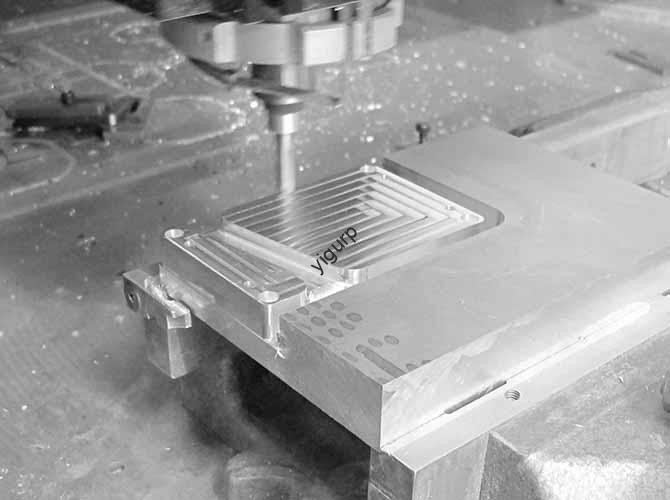
Milling uses rotating multi-point cutting tools, such as end mills, to shape a stationary workpiece. Mills can be configured horizontally, with the tool spinning side-to-side, or vertically, with the tool spinning up and down. Basic mills have three axes, while advanced models add more for complex geometries.
- Best For: Shaping flat or curved surfaces. It is widely used in aerospace for wing components and in robotics for gearboxes.
8. CNC Plasma Cutting Machine
Plasma cutters use a plasma torch to slice through electrically conductive materials. The torch creates an electric arc that turns high-velocity gas into plasma, which then melts and cuts the material. They handle tough materials like steel, titanium, and aluminum with ease. A metal fabrication shop I consulted with uses a plasma cutter to cut 1-inch thick steel plates for industrial shelves. It is much faster than oxy-fuel cutting and leaves cleaner edges.
- Must-Know: The material must be electrically conductive. Plasma cutters will not work on plastic or wood.
- Best For: Cutting thick metal sheets in construction and heavy manufacturing.
9. CNC Laser Cutting Machine
Laser cutters use a focused, high-power laser beam to cut or engrave materials. They are incredibly versatile and precise. Gas lasers, like CO₂ lasers, are best for non-metals such as wood, fabric, and acrylic. Solid-state lasers, like Nd:YAG, are used for metals and ceramics. A signage company I know uses a CO₂ laser to cut acrylic letters with an impressive 0.1mm precision.
- Best For: Precision cutting and engraving of metals, plastics, and organic materials.
10. Electric Discharge CNC Machine (EDM)
Also called “spark machines,” EDM uses controlled electric sparks to shape material. The workpiece is placed between two electrodes, and the computer precisely controls the spark intensity to erode the material into the desired shape. EDM is perfect for extremely hard materials like tungsten that would destroy standard cutting tools. A mold-making company uses EDM to create intricate plastic injection molds, carving tiny details that a mill would simply miss.
- Best For: Very hard materials, intricate molds, and high-precision parts.
11. CNC Grinding Machine
Grinders use a rotating abrasive wheel to remove very small amounts of material. This creates an ultra-smooth surface finish and achieves extremely tight tolerances, often down to ±0.001mm. They are critical for finishing parts like camshafts, ball bearings, and transmission shafts. An auto parts manufacturer relies on CNC grinders to finish engine bearings; an uneven bearing would quickly lead to engine failure.
- Best For: High-precision finishing of metal parts where surface quality is critical.
How to Choose the Right CNC Machine Type: 5 Critical Steps
Selecting the right CNC machine comes down to your project’s specific needs. Follow these steps to avoid a costly mistake.
- Step 1: Define Your Process and Material. Start with two basic questions. What operation do you need? Are you cutting, drilling, or 3D printing? What material will you use? If you are cutting thick steel, a plasma cutter is a great choice. If you are making a one-off plastic prototype, a CNC 3D printer is much better.
- Step 2: Check Size and Work Radius. The machine you choose must be larger than your biggest workpiece. A woodworker making 4×8 foot tables needs a CNC router with at least a 4×8 foot work area. Otherwise, they would have to split the table into smaller pieces and join them later.
- Step 3: Evaluate Speed and Feed Rate. The feed rate, or how fast the tool moves through the material, determines your productivity. A high feed rate is great for mass production, but slower rates are often necessary for high-precision work like grinding.
- Step 4: Prioritize Durability and Repairs. The materials used to build the machine matter. An iron cast frame is the most durable and best for tough jobs like milling steel. Aluminum or polymer frames are lighter and better for routers or 3D printers.
- Step 5: Check Power Requirements. Some machines, like plasma cutters, need a 220V or higher power supply. Make sure your workshop can handle the electrical load.
Conclusion
The world of CNC machine types is vast and varied, with each machine designed to excel at a specific task. From the high-speed precision of a laser cutter to the brute force of a plasma cutter and the geometric freedom of a 5-axis mill, understanding these tools is the first step to successful manufacturing. By carefully defining your project’s needs—your material, your desired process, and your precision requirements—you can confidently choose the right machine to bring your ideas to life with accuracy and efficiency.
FAQ
Is a CNC 3D printer considered a “true” CNC machine?
Yes, absolutely. While it uses an additive process instead of a subtractive one, it is still controlled by CNC programming, which makes it a type of CNC machine.
Can one CNC machine do multiple jobs?
Some machines, like an ATC (Automatic Tool Changer) mill, can handle drilling, milling, and tapping. However, specialized machines will always do a single task better. A plasma cutter, for example, cannot replace a laser cutter for high-precision engraving.
What is the most cost-effective CNC machine for a beginner?
An entry-level CNC router for wood and plastic, or a CNC 3D printer, are both excellent choices. They are generally affordable, often under $5,000, and they have a gentler learning curve than industrial metal-cutting machines.
Do 5-axis CNC machines require special training?
Yes, they do. Their programming and operation are significantly more complex than 3-axis machines. Most operators require at least 20 hours of dedicated training to use them safely and effectively.
Discuss Your Projects with Yigu Rapid Prototyping
Are you ready to choose the perfect CNC machine for your next project, or do you need expert help to get your parts made? At Yigu Rapid Prototyping, we have extensive experience with a wide range of CNC machine types. Our team can help you navigate the options and select the most efficient and cost-effective process for your specific needs, from a single prototype to a full production run.
Contact Yigu Rapid Prototyping today to discuss your project. Let’s build something great together.