
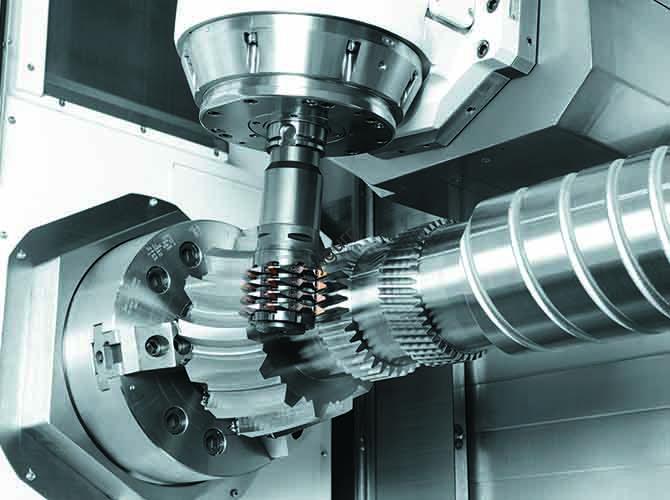
In the world of mechanical parts, the inner hole keyway is a small detail that does a massive job. It ensures that gears and shafts lock together to transmit power without slipping. But how do you make these grooves with perfect accuracy every time?
Many engineers are moving away from old manual lathes. Instead, they choose CNC machine tool processing inner hole keyway technology. This method solves the biggest “pain points” of manual work: low accuracy, slow speeds, and the struggle to handle complex shapes. This guide will show you how CNC transforms keyway production into a fast, high-precision process.
What Is CNC Inner Hole Keyway Processing?
This process uses Computer Numerical Control (CNC) systems to cut precise grooves inside a cylindrical hole. These grooves allow a “key” to be inserted, locking two parts—like a gear and a shaft—together so they rotate as one.
Unlike manual lathes, where the operator moves the tool by hand, a CNC machine follows pre-programmed code. This removes human error. Every keyway comes out with the exact same depth and width. For parts that need a perfect fit, CNC can hold a tolerance of ±0.01mm, which is nearly impossible to hit consistently by hand.
CNC vs. Traditional Methods: Which Wins?
Choosing the right method changes your bottom line. Below is a breakdown of how CNC machining compares to traditional manual processing.
| Aspect | CNC Machine Tool Processing | Traditional Manual Lathe |
| Accuracy | High (±0.01–0.03mm) | Low (±0.1–0.2mm) |
| Efficiency | 20–30 parts per hour | 5–8 parts per hour |
| Tool Wear | 40% lower due to even feed | High due to shaky manual feed |
| Adaptability | Handles any size via software | Needs custom, expensive fixtures |
| Labor | 1 person runs 3 machines | 1 skilled person per machine |
What Are the Core Advantages?
CNC isn’t just about being “high-tech.” it solves real-world manufacturing problems that cost shops money.
1. Unmatched Precision
A gear maker once struggled with keyway depths. Their manual lathes were off by 0.1mm, causing gears to slip and fail. By switching to CNC, they used precise feed control (0.001mm steps). They cut their failure rate from 8% down to a tiny 0.5%.
2. Massive Efficiency Boost
A shaft factory was falling behind on a 100-part order. They could only make 40 keyways a day by hand. With the G71 compound fixed cycle on a CNC machine, they tripled their speed. They finished 120 keyways in the same 8-hour shift, beating their deadline easily.
3. Handling Large Workpieces
A heavy machinery client needed keyways for 1-meter-tall cylinders. A manual setup would have cost $10,000 for custom fixtures. CNC allowed them to use universal fixtures costing only $500. They simply adjusted the program to fit the large part.
How Do CNC Machines Cut Keyways?
There are three main ways a CNC machine handles this task. Each method is best for a specific type of job.
- Milling: A rotating cutter moves along the path. This is great for small-to-medium parts and complex shapes like semicircles.
- Broaching: A toothed tool is pushed through the hole in one pass. This is the king of high-volume production (1,000+ parts).
- Insertion: A single-point tool “pecks” into the hole using reciprocating movements. This is best for tough materials like titanium or hardened steel.
A Step-by-Step Workflow for Success
To get the best results, we follow a linear process. Each step ensures the final part is flawless.
1. Preparation and Programming
First, we check the inner hole. It must be within ±0.05mm of the design. We then write the code using G-codes for the cutting cycles. We set the feed rate (usually 50–100 mm/min for steel) and the spindle speed.
2. Machine Setup
We mount the part in the CNC fixture. We use a dial indicator to make sure it is perfectly centered. If the part is off by even 0.01mm, the keyway will be crooked. We then calibrate the tool position using a tool setter.
3. Testing and Production
We always run a test piece first. We check the depth with a gauge. If it looks good, we start the automated run. We monitor the first five parts closely. Finally, we inspect 10% of the batch to ensure the surface quality stays high.
Yigu Technology’s Perspective
At Yigu Technology, we believe that CNC machine tool processing inner hole keyway technology is the future of gear and shaft production. Our systems use built-in G71 cycles that cut your programming time by 25%. We have helped our clients lower their scrap rates by 30% through real-time tool monitoring. Whether you are making auto parts or heavy gears, our goal is to help you cut costs while hitting ±0.008mm accuracy.
FAQ
What is the maximum hole size a CNC can handle?
Standard machines handle holes up to 500mm. For massive parts, we offer custom machines that can process holes up to 1.5 meters wide.
Can CNC cut keyways in plastic or ceramic?
Yes. For plastics, we use sharp tools and slow feed rates to prevent melting. For ceramics, we use diamond-coated tools to stop the material from cracking.
How long does it take to train an operator?
Basic setup and operation take about 2 weeks. Learning to write complex programs takes about 1 month. Our interface makes this much faster than learning a manual lathe.
Discuss Your Projects with Yigu Rapid Prototyping
Do you need high-precision keyways for your next project? Our team at Yigu Technology is ready to help. We offer the latest in CNC inner hole keyway processing to ensure your parts fit perfectly every time. Would you like me to provide a custom quote or a tool path analysis for your specific gear or shaft design?