
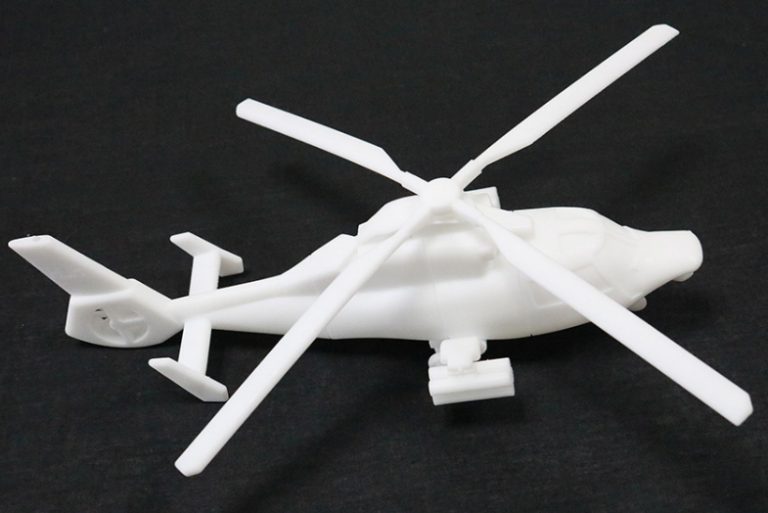
3D printing has moved far beyond simple prototypes. It is now a core production technology that changes how we make things. This guide explores its game-changing uses across major fields. You’ll see how it saves lives in healthcare, cuts costs in factories, and even builds houses. We cover aerospace, education, food, and design. Each section has real cases and clear data. Learn why this tech is a key tool for innovation, customization, and efficiency in the modern world.
Introduction
Is 3D printing just for making plastic trinkets? That’s a common first thought. But the truth is much bigger. Additive manufacturing (its industrial name) is reshaping entire industries. It solves old problems in new ways. From custom medical implants that fit perfectly to airplane parts that save fuel, its impact is real.
This guide is for engineers, business leaders, educators, and the curious. We skip the basic “how it works” to focus on what it does. We’ll show you the concrete, valuable applications that make 3D printing a strategic tool, not just a cool gadget. You’ll understand its power to personalize, optimize, and accelerate almost any creation process.
How is 3D Printing Revolutionizing Healthcare?
In medicine, one-size-fits-all often doesn’t fit. 3D printing brings personalization and speed to patient care.
Creating Anatomical Models for Surgery
Surgeons can now practice on perfect replicas of a patient’s anatomy before the actual operation. Using CT or MRI scans, hospitals print exact models of a tumor, a fractured bone, or a complex heart defect. This lets surgeons plan the best approach, choose the right tools, and even explain the procedure to the patient.
Impact: Studies show this can reduce operating time by up to 30% and improve surgical outcomes. At a major children’s hospital, using a 3D printed model of conjoined twins’ shared organs helped plan a successful, 20-hour separation surgery.
Manufacturing Custom Implants and Guides
This is where 3D printing shines. Instead of forcing a standard implant to fit, doctors can design one that matches the patient’s unique geometry.
- Cranial Implants: For skull repair after trauma, implants are printed in titanium or PEEK to fit the exact defect.
- Dental Crowns & Aligners: Millions of clear dental aligners are now 3D printed daily from digital scans, making orthodontics faster and more comfortable.
- Surgical Guides: These are custom tools printed to guide a surgeon’s drill or saw during procedures like knee replacements, ensuring sub-millimeter precision.
Advancing Prosthetics and Assistive Devices
Traditional prosthetics are expensive and slow to make. 3D printing changes this.
Case Study: The nonprofit e-NABLE connects volunteers with people who need a hand. They share free 3D printable designs for prosthetic hands. A child can get a colorful, functional mechanical hand for a fraction of the cost of a traditional one, often in just days.
How is it Transforming Manufacturing and Industry?
For product developers and factories, 3D printing is a flexibility engine.
Accelerating Prototyping and Design
This is the classic use, but it’s more powerful than ever. Engineers can print a concept overnight, test it, and revise the CAD model the next day. This rapid design iteration cycle speeds up development dramatically. A car maker might test 20 different bracket designs in the time it used to take to machine one.
Enabling Low-Volume and On-Demand Production
For spare parts, custom fixtures, or limited-edition products, printing on-demand beats traditional tooling.
- Spare Parts: Airlines like Airbus use 3D printing to make obsolete parts for older aircraft. They keep a digital file, not physical stock, and print parts as needed.
- Custom Tooling: Factories print specialized jigs, fixtures, and assembly aids. A printed tool is often lighter, cheaper, and can be made in days, not weeks.
- End-Use Parts: From customized hearing aid shells to high-performance sunglasses frames, many products are now directly 3D printed for sale.
Unlocking Complex, Optimized Designs
3D printing can make shapes that are impossible to cast or machine. This allows for topology optimization—software designs parts that use material only where it’s needed for strength.
Example: An aerospace company redesigned a satellite bracket. The software created a strange, organic-looking shape. The 3D printed version was 40% lighter but just as strong as the old machined block, saving crucial launch weight.
Can We Really 3D Print Buildings and Large Structures?
Yes, construction 3D printing is a fast-growing field. Large gantry systems or robotic arms extrude a special concrete mix layer by layer to form walls.
- Benefits: It’s faster (a house shell in days), can create complex curves, and reduces material waste. It also addresses labor shortages.
- Use Cases: Companies are printing affordable homes, disaster relief shelters, and even complex architectural features. In Dubai, a government office was 3D printed, reducing labor costs by 50% and waste by 30%.
How is 3D Printing Used in Aerospace and Automotive?
Weight is critical in these fields. Lighter parts mean better fuel efficiency and performance.
| Industry | Application | Material | Benefit |
|---|---|---|---|
| Aerospace | Fuel nozzles, ducting, brackets | Titanium, Inconel, Composites | Weight reduction (25-50%), part consolidation, performance gains |
| Automotive | Prototypes, custom tools, end-use parts (e.g., ducts) | Polymers, Sand (for casting molds) | Faster development, lightweighting, customization for racing |
Notable Example: GE Aviation’s LEAP engine fuel nozzle. It was once an assembly of 20 machined parts. Now, it’s a single 3D printed piece that is 25% lighter, five times more durable, and more efficient.
What Role Does it Play in Education and Research?
3D printing makes abstract concepts tangible. It fosters hands-on learning and creativity.
- STEM Education: Students print molecules, engineering models, and historical artifacts. They learn design, iteration, and problem-solving.
- Research: Scientists print custom lab equipment, models for wind tunnel testing, or scaffolds for tissue engineering research.
Is 3D Printing Used for Food?
Yes, food 3D printing is a niche but growing area. It allows for custom shapes, textures, and nutrition.
- Applications: Personalized nutrition for elderly patients, intricate chocolate decorations for chefs, and NASA’s research into printing meals for long space missions.
- Principle: It typically extrudes a paste (chocolate, dough, puree) or uses a powder bed binding process.
What Are the Environmental Impacts?
3D printing’s sustainability story is mixed but promising.
- Pros: Less waste (additive vs. subtractive), potential for localized production (cutting shipping), and lightweighting products to save energy in use (e.g., lighter cars/planes).
- Cons: Most desktop printers use plastic polymers (like PLA/ABS), which are derived from fossil fuels. Energy use can be high for metal printing.
- Future: Use of recycled and bio-based materials is growing, improving the eco-footprint.
Conclusion
3D printing is not a single tool for a single job. It is a versatile platform for innovation. Its core value lies in three areas: Mass Customization (from medical implants to consumer goods), Design Freedom (creating lighter, stronger, integrated parts), and Supply Chain Resilience (making what you need, where and when you need it).
The shift is from using 3D printing because we can to using it because it solves a specific business or human problem. Whether it’s getting a child a prosthetic hand, testing a new car part in a day, or building a house with less waste, the technology’s real-world impact is profound and expanding. The question is no longer “What is 3D printing?” but “What problem can we solve with it next?”
FAQ
Q: Can 3D printing be used for mass production?
A: Yes, in specific cases. It’s ideal for mass customization (like hearing aids or dental aligners) where every item is different. For making millions of identical simple parts (like water bottles), traditional injection molding is still faster and cheaper. However, for high-value, complex parts in aerospace or medical, it is already a certified production method.
Q: How strong are 3D printed parts compared to traditionally made ones?
A: It depends on the material and process. Well-printed parts in engineering plastics or metals can meet or exceed the strength of cast parts and approach the properties of forged material. However, strength can be anisotropic (different depending on direction) in some processes, which engineers must account for in design.
Q: Is 3D printing accessible to small businesses or just large corporations?
A: It’s highly accessible. Desktop printers start under $500, opening doors for entrepreneurs, designers, and small workshops. Online 3D printing services (like Shapeways, Protolabs) also let anyone upload a design and get a professional part made in metal or resin without owning a machine. The barrier to entry is lower than ever.
Discuss Your Project with Yigu Rapid Prototyping
Have you identified a challenge in your workflow that could benefit from customization, rapid iteration, or complex geometry? At Yigu Rapid Prototyping, we help businesses across all these industries implement 3D printing solutions. From concept validation with fast prototypes to low-volume production of end-use parts, our expertise can guide you from idea to reality.
For more information on our capabilities, please visit our 3D Printing Services page.