
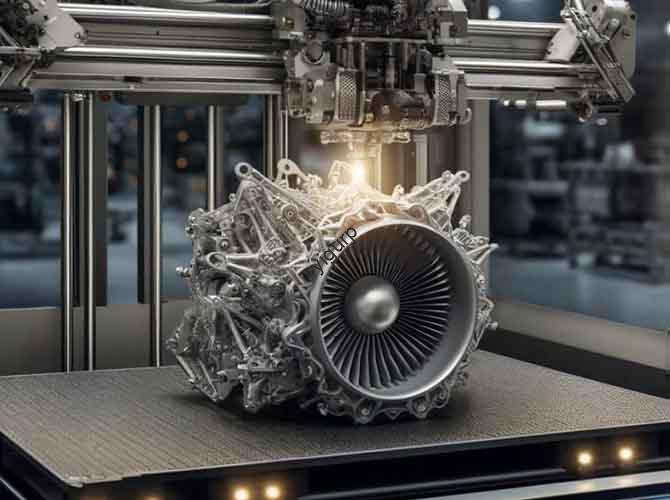
You’re designing a component that needs to be strong, corrosion-resistant, and perhaps even biocompatible. Your mind goes to stainless steel—the industry workhorse. But then you wonder: can this rugged, traditional material really be 3D printed? The answer is a resounding yes, and it’s revolutionizing how we make everything from custom medical implants to lightweight aerospace brackets. However, printing stainless steel isn’t as simple as loading a spool of plastic filament. It involves specific technologies, material grades, and post-processing steps that determine success. This guide cuts through the complexity. We’ll break down the how, why, and when of 3D printing stainless steel, giving you the clear, practical knowledge to evaluate it for your next project.
What Types of Stainless Steel Can You Actually 3D Print?
Not all stainless steels are created equal for additive manufacturing. While many grades exist, only a handful are optimized for the unique thermal cycles of 3D printing. The most common and reliable grades offer a balance of printability, mechanical properties, and corrosion resistance. Choosing the right one is your first critical decision.
| Stainless Steel Grade | Core Properties & Why They Matter | 3D Printing Suitability | Ideal Application Scenarios |
|---|---|---|---|
| 316L | – Superior corrosion resistance: Excellent against chlorides and acids. – Biocompatible: Meets ASTM F138 for medical implants. – Good mechanical strength: Tensile strength ~480-550 MPa. | Excellent. The most widely used grade. Prints reliably with high density. | Medical implants (spinal cages, dental crowns), marine hardware, chemical processing parts, food-grade equipment. |
| 17-4 PH | – Precipitation-hardenable: Achieves very high strength (up to 1300 MPa) after heat treatment. – Good fatigue and wear resistance. | Excellent. Responds well to the thermal cycle of printing and subsequent aging. | Aerospace brackets, high-strength gears, fluid handling valves, and tooling inserts. |
| 304 | – Good general-purpose corrosion resistance. – Cost-effective and widely available. | Good, with caveats. More prone to oxidation during printing than 316L, requiring strict atmosphere control. | Architectural features, non-critical industrial components, consumer product housings. |
| 420 | – Martensitic, can be heat-treated for hardness. – Good wear resistance. | Moderate. Used for applications requiring hardness, but more challenging to print crack-free. | Cutlery, molds, and wear-resistant tooling components. |
A Real-World Case from Our Shop: A medical device startup approached us with a design for a patient-specific cranial implant. It needed to be sterile, biocompatible, and strong enough to protect neural tissue. We recommended 316L for its proven biocompatibility certification and excellent corrosion resistance. Using Selective Laser Melting (SLM), we produced a part that not only fit the patient’s anatomy perfectly but also met all regulatory requirements for implantation. Trying to use a non-certified grade would have failed at the validation stage.
How Is Stainless Steel 3D Printed? The Core Technologies Explained
You can’t extrude stainless steel like PLA. Printing metal requires high-energy systems that fuse fine powder. The three primary technologies—SLM, EBM, and Binder Jetting—differ dramatically in process, performance, and cost. Understanding this “how” is key to selecting the right service or technology for your part.
| Technology | Working Principle | Key Advantages | Key Limitations | Best For |
|---|---|---|---|---|
| SLM (Selective Laser Melting) | A high-power laser (200-1000W) fully melts fine metal powder layer-by-layer in an inert gas (argon) chamber. | – Highest part density (>99.5%) and mechanical properties. – Excellent feature detail (layer thickness 20-50 µm). – Broadest material compatibility. | – High machine and operational cost. – Relatively slow for large, solid parts. – Thermal stress requires supports. | Precision, high-performance parts: Medical implants, complex aerospace components, detailed fluidics. |
| EBM (Electron Beam Melting) | A focused electron beam melts powder in a high-vacuum chamber at elevated bed temperature (~700°C). | – Reduced thermal stress due to hot build chamber. – Faster build speed for thick sections. – Excellent for pure, reactive metals. | – Lower surface resolution (layer 50-200 µm). – Limited to conductive materials. – Higher equipment cost than some SLM systems. | Dense, stress-resistant parts: Aerospace structural components, orthopedic implants, turbine blades. |
| Binder Jetting | A print head deposits a liquid binding agent onto a powder bed. The “green” part is then sintered in a furnace. | – No supports needed, enabling complex geometries. – Very fast printing stage. – Lower cost per part for certain volumes. | – Lower mechanical strength (porosity after sintering). – Significant part shrinkage during sintering (must be accounted for in design). – Limited material properties. | Non-critical functional prototypes, complex decorative items, tooling patterns for casting. |
Professional Insight: The choice often boils down to property requirements vs. cost. For a prototype engine bracket that just needs to “feel” right and fit, Binder Jetting in 316L might be a cost-effective choice. But for the final flight-certified part that must withstand fatigue loads, SLM or EBM is non-negotiable. I recently advised a client who initially requested Binder Jetting for a fluid manifold. Upon learning the part would see 5000 PSI cyclic pressure, we switched to SLM. The superior density and lack of sintered porosity were critical to preventing catastrophic failure.
Why Choose 3D Printing Over Traditional Methods?
Why go through this complex process? Because 3D printing unlocks capabilities that machining or casting simply cannot provide, especially for complex, customized, or low-volume parts. Here are the compelling advantages:
- Unmatched Design Freedom: This is the biggest game-changer. You can create internal cooling channels within a mold, topology-optimized lattices that reduce weight by 40% while maintaining strength, or consolidated assemblies (multiple parts printed as one). Traditional methods would require impossible tool paths or costly multi-part fabrication.
- Efficiency for Low Volumes & Customization: Need 50 specialized surgical guides or 10 bespoke car parts? The high upfront cost of tooling for casting or forging is eliminated. Digital files mean you can change the design for the next batch with zero tooling changeover, making it ideal for mass customization.
- Material and Time Efficiency: Subtractive machining can waste over 70% of a solid block of expensive stainless steel as chips. Powder-based 3D printing typically uses only the material in the final part, plus a small percentage of recyclable unfused powder. Lead times can shrink from weeks for machined parts to days.
- Performance Retention: When processed correctly (especially via SLM/EBM), printed stainless steel parts achieve mechanical properties and corrosion resistance that meet or exceed their wrought counterparts. ASTM testing standards now exist specifically for additively manufactured metals, providing a benchmark for quality.
What Are the Key Challenges and How Do You Solve Them?
3D printing stainless steel isn’t without its hurdles. Being aware of these challenges—and their solutions—is crucial for designing successful parts and setting realistic expectations.
Challenge 1: Managing Internal Stress and Cracking
The rapid localized heating and cooling during printing creates significant residual stress. This can lead to part warping, delamination between layers, or cracking, especially in large, solid sections.
Proven Solutions:
- Intelligent Support Design: Supports aren’t just for overhangs; they act as thermal heat sinks and mechanical anchors to resist warping. Using block-style supports for large flat areas is a common tactic.
- Process Parameter Optimization: Adjusting laser power, scan speed, and scan strategy (e.g., rotating the scan pattern each layer) distributes heat more evenly. This is where a provider’s expertise is invaluable.
- Stress Relief Heat Treatment: Performing an in-situ or immediate post-build anneal (heating the part to ~800-900°C) in the machine or an oven relieves up to 90% of the residual stress before the part is even removed from the build plate.
Challenge 2: Achieving the Desired Surface Finish and Accuracy
As-printed metal parts, particularly from powder-bed processes, have a characteristic rough, granular surface (Ra 10-25 µm) and may exhibit “stair-stepping” on curved surfaces.
Proven Solutions:
- Post-Processing is Mandatory: Budget for and plan finishing steps. Common methods include:
- CNC Machining: For critical sealing surfaces or precise interfaces.
- Abrasive Flow Machining: For smoothing internal channels.
- Vibratory or Electropolishing: For overall cosmetic improvement and enhanced corrosion resistance.
Challenge 3: Controlling Costs
Metal 3D printing is capital and resource-intensive. Costs come from machine time, material (powder is expensive), and post-processing.
Proven Solutions:
- Design for Additive Manufacturing (DfAM): This is the most powerful cost-control tool. Hollowing out solid parts with lattices, minimizing support volume, and orienting the part to reduce Z-height can dramatically reduce print time and material use.
- Nest Multiple Parts: A reputable service will pack the build chamber efficiently, sharing fixed costs across several of your parts or projects.
Conclusion: Is 3D Printed Stainless Steel Right for You?
3D printing stainless steel has moved far beyond a laboratory curiosity. It’s a mature, reliable manufacturing method for producing strong, complex, and corrosion-resistant parts. The decision to use it hinges on your project’s specific geometry, performance requirements, and economics. If your design involves internal complexity, lightweight structures, or is a low-volume/customized component, then 3D printing offers unparalleled advantages over traditional methods. Start by selecting the appropriate grade (316L for corrosion/biology, 17-4 PH for strength) and technology (SLM for precision, EBM for stress reduction, Binder Jetting for cost-effective prototypes). Partner with experienced engineers who can guide you through DfAM and post-processing to navigate the challenges and unlock the full potential of this transformative technology.
FAQ: Your Questions on 3D Printing Stainless Steel
Q: How strong is 3D printed stainless steel compared to machined or cast steel?
A: When processed correctly using SLM or EBM, the mechanical properties are excellent. SLM-printed 316L can match or exceed the yield and tensile strength of wrought 316L, typically around 500 MPa yield strength. However, fatigue strength can be slightly different due to the as-built surface roughness, which is why critical surfaces are often machined post-print. Binder Jetted parts will be less dense and therefore weaker.
Q: Is 3D printing stainless steel cost-effective for production?
A: It depends on volume and complexity. For highly complex, lightweight, or customized parts in low to medium volumes (1-10,000 units), it can be very cost-effective by eliminating tooling and assembly. For simple shapes in very high volumes (>50,000), traditional methods like stamping or casting will almost always have a lower per-part cost. The breakeven point is constantly shifting as technology improves.
Q: What about corrosion resistance? Is 3D printed stainless steel less resistant?
A: The base material retains its chemistry, so the inherent corrosion resistance is the same. However, the as-printed rough surface can trap contaminants and initiate corrosion. This is why post-processing like electropolishing or passivation is critical for parts used in corrosive environments. A properly finished 3D printed 316L part will perform as well as a traditionally made one.
Q: Can you achieve tight tolerances with 3D printed metal?
A: Directly from the printer, expect tolerances in the range of ±0.1% to ±0.2% (with a typical minimum of ±0.1 mm). For features requiring tighter tolerances (e.g., ±0.025 mm or better), you must designate them as “critical surfaces” in your design and plan for a secondary CNC machining operation. This hybrid approach is standard in the industry for precision interfaces.
Discuss Your Stainless Steel Projects with Yigu Rapid Prototyping
Navigating the intricacies of metal 3D printing requires a partner with deep technical expertise and practical experience. At Yigu Rapid Prototyping, we specialize in turning complex stainless steel designs into high-performance, reliable reality.
Our end-to-end service includes:
- Expert DfAM Consultation: We’ll analyze your design to optimize for printability, strength, and cost, recommending the best grade and technology.
- Industrial-Grade Production: Our facility houses state-of-the-art SLM and Binder Jet systems, ensuring part quality meets the highest industry standards.
- Complete Post-Processing: We handle everything from stress relief and support removal to precision machining and surface finishing, delivering a part that’s ready for use.
Let’s engineer a solution together. [Contact our engineering team] for a comprehensive project review. Send us your CAD file, and we’ll provide a detailed analysis, technology recommendation, and quote to bring your most challenging stainless steel concept to life.