
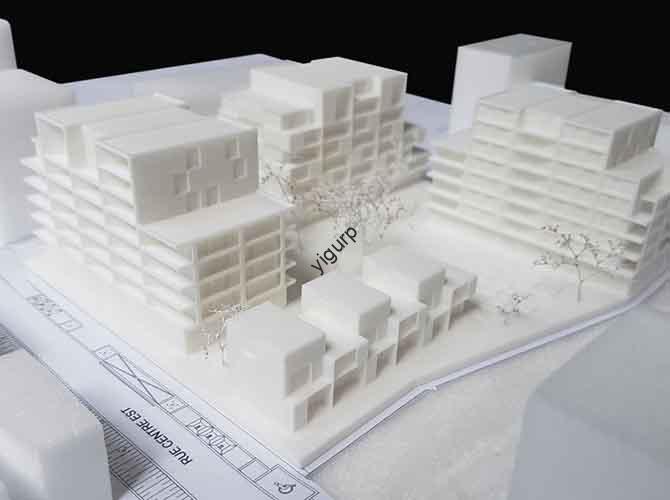
Introduction
The journey from a brilliant idea to a perfect 3D print often stumbles at a critical juncture: software choice. The right digital tools can make this process intuitive and efficient, while the wrong ones can lead to frustration, failed prints, and wasted time. Whether you’re a hobbyist crafting your first model or an engineer optimizing an aerospace component, your software stack is the linchpin of success. This guide provides a professional framework to navigate the landscape of 3D printing software, moving beyond simple lists to explain the why behind each tool. We’ll categorize software by its functional role, match solutions to specific project goals, and provide a clear path to building your ideal digital workflow.
The 3D Printing Software Ecosystem: More Than Just Slicers
Professionals view 3D printing software not as a single tool, but as a specialized pipeline. Each stage of the journey requires a different type of software with a distinct purpose. Understanding this ecosystem is the first step to selecting the right tools.
Here is a breakdown of the core software categories and how they contribute to the additive manufacturing workflow:
| Category | Primary Function | Key Outcome | Why It’s Essential |
|---|---|---|---|
| CAD (Computer-Aided Design) | Creation & Engineering. Used to design the 3D model from scratch, define precise dimensions, tolerances, and assemblies. | A parametric, editable 3D model (e.g., .STEP, .SLDPRT). | This is the source of truth. A well-designed CAD model ensures manufacturability, fit, and function. It is where design intent is captured. |
| Mesh Editing & Repair | Validation & Preparation. Fixes errors in 3D models (non-manifold edges, holes, inverted normals), decimates polygons, or adds custom textures. | A “watertight,” print-ready mesh file (e.g., .STL, .3MF). | Prints fail on bad geometry. This software acts as a diagnostic and repair clinic, ensuring the model is physically possible to print. |
| Slicer (The Core of Prep) | Process Translation. Converts the 3D model into layer-by-layer machine instructions (G-code), setting paths, speeds, temperatures, and supports. | Printer-specific G-code file. | This is where design meets physics. Slicer settings directly determine print quality, strength, speed, and success rate. |
| Printer Management & Monitoring | Execution & Oversight. Sends G-code to the printer, controls it remotely, and monitors the print job via camera or sensors. | A live, managed print job with error alerts and progress tracking. | Enables reliability, remote operation, and early failure detection, crucial for long or overnight prints. |
| Simulation & Analysis (Advanced) | Prediction & Optimization. Simulates the printing process to predict thermal stresses, warping, and potential failures before printing. | Insights to adjust orientation, supports, or design to prevent print failures and improve part quality. | Saves time and material by moving trial-and-error from the physical to the digital realm, especially vital for expensive materials. |
Pro Insight: A common pitfall is exporting a CAD model directly to a slicer without a mesh check. Always use a tool like Netfabb (Autodesk) or the built-in repair functions in PrusaSlicer to analyze and fix your STL file. A “watertight” mesh is non-negotiable for a successful print.
How to Choose the Right Software: A Goal-Oriented Selection Matrix
Your ideal software combination depends entirely on your project type, expertise, and desired outcome. Use this matrix as a decision guide.
| Your Profile & Goal | Recommended CAD Software | Recommended Slicer | Rationale & Workflow Tip |
|---|---|---|---|
| Beginner / Educator: Learning concepts, printing simple downloaded models. | Tinkercad (Web). Intuitive, block-based. | Ultimaker Cura or PrusaSlicer. | Maximizes simplicity. Use Tinkercad for basic customizations. Rely on the slicer’s built-in default profiles for your printer; avoid advanced settings initially. |
| Maker / Advanced Hobbyist: Designing functional parts, gadgets, and complex artistic models. | Fusion 360 (Personal Use) or Shapr3D (iPad). Parametric for precision; Shapr3D for intuitive 3D sketching. | PrusaSlicer or OrcaSlicer. | Balances professional-grade CAD with accessible slicing. Use CAD for precise dimensions and assemblies. Leverage the slicer’s advanced support and infill controls for strength. |
| Professional Engineer: Developing end-use parts, mechanical assemblies, and prototypes for manufacturing. | SolidWorks, Fusion 360, or CATIA. Industry-standard for parametric design and simulation. | PrusaSlicer or a printer-native slicer (e.g., Bambu Studio for Bambu Labs printers). | Prioritizes design integrity and workflow integration. Design in CAD with manufacturing in mind. Use the slicer as a precise process optimization tool, not a creative one. |
| Digital Artist / Jewelry Designer: Creating organic, sculptural forms with high aesthetic detail. | Blender or ZBrush. Unmatched for sculpting and organic modeling. | Lychee Slicer (for resin) or PrusaSlicer. | Separates artistic creation from technical execution. Sculpt freely in Blender/ZBrush. Use Lychee Slicer’s excellent auto-support generation for resin prints. |
What Are the Advanced Tools and Emerging Trends?
Beyond the core tools, several specialized and next-generation software solutions are changing the professional landscape.
- Generative Design & Topology Optimization (e.g., nTopology, Fusion 360 Generative Design): These tools don’t just let you draw a part; they let you define design goals and constraints (loads, fixed points, weight limits), and the software generates optimized organic shapes that minimize material while maximizing strength. This is the frontier of lightweight, high-performance design.
- Process Simulation Software (e.g., Simufact Additive, Ansys Additive Suite): For metal 3D printing especially, these tools are critical. They simulate thermal stresses during the print, predicting where warping or cracking may occur. Engineers can then pre-deform the digital model to compensate, ensuring the final printed part meets exact dimensional tolerances.
- Unified Platforms (e.g., 3DPrinterOS, MakerOS): These cloud-based platforms integrate the entire workflow—from file storage and slicing to printer queue management, access control, and billing. They are essential for labs, schools, and service bureaus managing multiple users and machines.
Conclusion
Choosing 3D printing software is not about finding the single “best” program, but about assembling the right toolkit for your specific pipeline. Start by clearly defining your end goal: Is it a precise functional part, a detailed sculpture, or simply learning the process? Your answer will point you to the appropriate CAD, repair, and slicing tools. Remember, the most effective workflow often involves using specialized tools for specialized jobs—a powerful CAD program for design, a dedicated slicer for preparation, and a monitoring tool for execution. Invest time in learning the core principles of your chosen slicer, as this knowledge will have the greatest direct impact on your print success. Finally, don’t be afraid to evolve your toolkit as your skills and projects grow more complex.
FAQ (Frequently Asked Questions)
Q: I have a Mac. Are there good 3D printing software options for me?
A: Yes, the landscape has improved significantly. For CAD, Shapr3D is a fantastic, Apple-native option. Fusion 360 and Blender also have full macOS support. For slicing, Ultimaker Cura, PrusaSlicer, and OrcaSlicer all run natively on macOS. The key is to ensure your specific 3D printer model is supported within the slicer.
Q: Is paid slicing software worth it over free options like Cura or PrusaSlicer?
A: For the vast majority of users, no. Modern free/open-source slicers like PrusaSlicer and OrcaSlicer are exceptionally powerful, receiving constant updates from large communities. Paid slicers (e.g., Simplify3D) once held an advantage in speed and control, but that gap has largely closed. Exceptions might be highly specific industrial workflows that require proprietary features.
Q: How important is the .3MF file format compared to the traditional .STL?
A: Very important. You should prefer .3MF. The .STL format is decades old and only contains basic mesh data. The .3MF format is modern and superior because it can store mesh data, color information, multiple objects, slicer settings, and metadata all in one compressed file. It prevents corruption and loss of information, making project sharing and archiving more reliable.
Q: Can AI help with 3D printing software?
A: AI integration is a growing trend, primarily in slicing. Features now include AI-based automatic support generation (analyzing overhangs more intelligently than simple angle rules) and print failure detection via camera analysis. Expect AI to play a larger role in optimizing print parameters and predicting issues before they happen.
Discuss Your Projects with Yigu Rapid Prototyping
Navigating the digital front-end of 3D printing is just the first step. At Yigu Rapid Prototyping, we bridge the gap between your digital design and a flawless physical part. Our engineers are experts in Design for Additive Manufacturing (DfAM) and can review your models to suggest optimizations for strength, surface finish, and cost-effectiveness. We handle the entire back-end process with industrial-grade equipment and rigorous quality control. From complex CAD file preparation to selecting the ideal print technology and executing precision post-processing, we ensure your vision is realized with professional results. Contact us today for a consultation on your next project.