
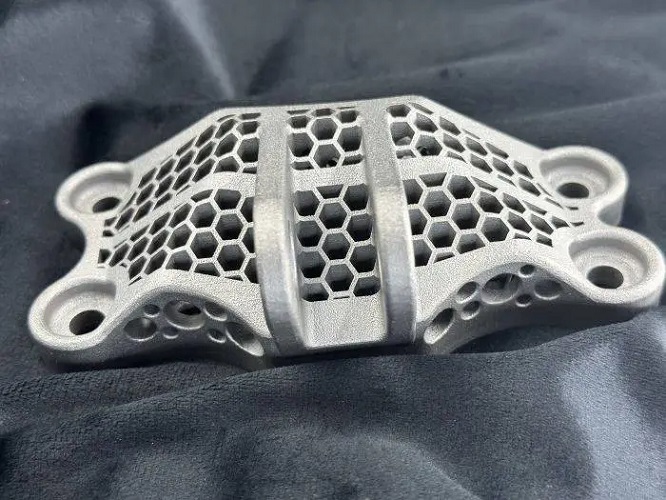
For engineers and manufacturers pushing the boundaries of design, Selective Laser Melting (SLM) represents the pinnacle of metal 3D printing. It unlocks geometries impossible with CNC machining—internal lattices, conformal cooling channels, and consolidated assemblies. But this power comes with complexity. An SLM part isn’t just “printed”; it’s micro-welded, layer by layer, in a high-energy process where material science, thermal dynamics, and precision engineering collide. A small oversight in powder handling, parameter setting, or post-processing can lead to costly failures: parts with cracks, internal porosity, or residual stress that compromises performance. This guide is your strategic manual. We’ll move beyond basic precautions to provide a comprehensive, engineer-focused framework for SLM success, ensuring every build yields dense, strong, and reliable metal components ready for demanding applications.
What Foundational Choices Dictate SLM Success from the Start?
Success in SLM is determined before the first laser fires. The choices made in material selection and digital preparation set the trajectory for the entire build.
How Do You Select and Handle Metal Powder Like a Metallurgist?
The powder isn’t just feedstock; it’s the raw microstructure of your final part.
- Particle Size Distribution (PSD) is Critical: The common 15-45 micron range is correct, but the distribution within that range matters more. A tight Gaussian distribution (e.g., 20-35 microns) ensures consistent packing density and melt pool stability. Powders with a “long tail” of fine particles (<10µm) can cause spattering and increased porosity, while coarse particles (>50µm) may not melt fully. Reputable powder suppliers provide a PSD graph—demand it.
- Material Properties Go Beyond the Datasheet: Standard alloys like 316L Stainless Steel, AlSi10Mg, and Ti6Al4V are well-characterized. However, for critical applications, consider:
- Reusability and Degradation: Powder can be reused, but with each cycle, it oxidizes and satellite particles (fines) increase. For aerospace-grade Ti6Al4V, powder is often used for a maximum of 5-7 build cycles before being refreshed to maintain oxygen content below 1300 ppm, a threshold critical for ductility.
- Alloy-Specific Behavior: Aluminum alloys are highly reflective and conductive, requiring careful parameter tuning to avoid lack-of-fusion defects. Nickel-based superalloys (e.g., Inconel 718) are prone to cracking from residual stress, necessitating heated build plates (up to 80-100°C) and specific scan strategies.
How Should You Design and Orient Parts for SLM, Not Just for 3D Printing?
Design for Additive Manufacturing (DfAM) for SLM has unique, non-negotiable rules to manage thermal stress and ensure printability.
- The 45-Degree Rule & Support Strategy: Overhangs below 45 degrees require supports. However, the goal is to minimize supports, as they waste material, increase post-processing labor, and can leave surface defects. Use self-supporting angles where possible. For critical upward-facing surfaces, consider a 5-10 degree “up-skin” with lower laser power to improve surface finish.
- Managing Internal Stresses:
- Avoid Massive, Solid Sections: Large, continuous volumes of melted material create huge thermal gradients and residual stress, leading to warping or cracks. Use lattice structures or internal lightweighting to break up mass.
- Incorporate Stress-Relief Features: Add small, temporary “stress relief” or “sacrificial” tabs at corners or thin extensions. These act as controlled failure points for stress, preventing it from cracking the main part. They are machined off during post-processing.
- Critical File Preparation: Ensure your STL file is manifold (watertight) and has correctly defined normals. Use advanced slicing software that allows for contour and hatch scan strategy customization, not just basic layer slicing.
What Are the Core Process Parameters That Make or Break a Build?
SLM is a ballet of energy input. The interplay of key parameters determines density, microstructure, and mechanical properties.
How Do You Navigate the “Parameter Window” for Optimal Density?
Achieving >99.5% density requires balancing Volumetric Energy Density (VED). The formula is: VED = Laser Power / (Scan Speed x Hatch Distance x Layer Height).
| Parameter | Controls What? | Effect on Part & Process | Pro Tip / Typical Range (316L) |
|---|---|---|---|
| Laser Power (P) | Melt pool depth & width | Too Low: Lack of fusion, porosity. Too High: Keyholing, spatter, rough surface. | 150-300W. Start in middle, adjust based on material reflectivity. |
| Scan Speed (v) | Interaction time & heat input | Faster: Less heat, faster build. Slower: Deeper melt, more stress. | 800-1500 mm/s. Balance with power to achieve target VED. |
| Hatch Distance (h) | Overlap between scan lines | Smaller: Better overlap, higher density. Larger: Faster, risk of voids. | 0.08-0.12 mm. ~80% overlap of melt pool width is a good target. |
| Layer Height (t) | Z-axis resolution & remelting | Thinner: Better detail, more layers. Thicker: Faster, risk of stair-step. | 30-50 μm. Thinner layers improve surface but increase build time. |
A Case Study: A client needed a dense, pressure-tight manifold from 316L. Initial prints showed ~97% density with micro-porosity. By reducing layer height from 50μm to 30μm and adjusting hatch distance, we increased the remelting of previous layers, achieving 99.8% density and passing a 5000 psi helium leak test.
Why Are Scan Strategy and Inert Atmosphere Non-Negotiable?
- Scan Strategy Controls Stress: A simple unidirectional stripe pattern accumulates stress in one direction. Modern SLM systems use island or chessboard patterns (e.g., 5x5mm squares scanned in alternating directions) to localize and randomize thermal stress, reducing part distortion. The rotation angle between layers (e.g., 67°) is also crucial to break up columnar grain growth.
- Inert Gas is Your Shield: The build chamber must be flooded with high-purity argon (often <10 ppm O₂). Oxygen causes oxidation, soot formation (especially with Ti alloys), and embrittlement. Monitor oxygen levels throughout the build. For reactive materials like titanium or aluminum, recirculating gas filtration systems are essential to remove condensate and particles from the atmosphere.
What Does a Comprehensive Post-Processing & Validation Workflow Entail?
The part coming off the build plate is only semi-finished. Its true properties are unlocked through rigorous post-processing.
What is the Step-by-Step Journey from Build Plate to Finished Part?
- Stress-Relief Heat Treatment (In-Situ or Immediately After): For most steels and nickel alloys, stress relieve the part before removing it from the build plate. This prevents distortion or cracking from released stress during cutting. A typical cycle: heat to 650-750°C for 1-2 hours, then slow cool.
- Wire EDM Removal: Use Wire Electrical Discharge Machining to precisely cut the part from the substrate plate, preserving the baseplate for reuse.
- Support Removal & Surface Finishing: Remove supports via CNC machining, band sawing, or hand tools. Then, apply abrasive blasting (e.g., with glass bead or aluminum oxide) to clean the surface and prepare it for further finishing.
- Hot Isostatic Pressing (HIP): For critical, fatigue-sensitive parts (e.g., aerospace, medical implants), HIP is the gold standard. The part is subjected to high temperature (e.g., 920°C for Ti6Al4V) and isostatic gas pressure (1000+ bar). This closes internal porosity and homogenizes the microstructure, significantly improving fatigue life and fracture toughness.
- Final Heat Treatment & Machining: Apply final heat treatment (e.g., solution treatment and aging for Inconel 718) to achieve target mechanical properties. Then, perform precision CNC machining on critical interfaces (threads, sealing surfaces) to achieve final tolerances.
How Do You Validate Part Quality with Confidence?
Relying on visual inspection is insufficient. A robust QA protocol includes:
- Non-Destructive Testing (NDT):
- X-ray Computed Tomography (CT Scan): The ultimate tool for detecting internal porosity, cracks, and dimensional deviation. It provides a 3D density map of the entire part.
- Dye Penetrant Inspection (DPI): For detecting surface-breaking defects.
- Destructive Testing for Lot Validation: For production batches, sacrifice sample coupons from the same build for tensile testing, micrographic analysis (to check grain structure and density), and hardness testing. This validates that the process parameters are producing consistent, specification-grade material.
What Are the Critical Safety and Operational Protocols?
SLM operates at the intersection of multiple hazards: Class 4 lasers, combustible metal powders, and high temperatures.
- Powder Handling = Explosion Risk: Fine metal powder suspended in air is a Class D combustible dust. All equipment must be grounded, and operations should use inert gas purging systems. Never use standard shop vacuums; use only ATEX-rated, explosion-proof vacuum systems for powder recovery.
- Comprehensive PPE: Beyond standard gear, respiratory protection with P100 filters is mandatory when handling powder to prevent metal fume exposure. Laser safety glasses specific to the 1070nm wavelength of most SLM fiber lasers are essential.
Conclusion
Mastering the SLM process is a commitment to meticulous, science-driven manufacturing. It requires viewing the printer not as a magic box, but as a highly controlled welding environment where every variable—from powder morphology to laser scan path—is a lever controlling the final part’s integrity. By adopting a holistic approach that integrates material science-informed DfAM, precise parameter optimization, and a rigorous multi-stage post-processing regimen, you transform SLM from a prototyping curiosity into a reliable production technology. The reward is the ability to create lighter, stronger, and more complex metal parts that solve engineering challenges traditional methods cannot touch.
FAQ
What particle size is best for SLM metal powder?
Optimal powder has a tight Gaussian distribution between 20-45 microns. Avoid excess “fines” (<15µm) which cause spatter and health hazards, and “coarse” particles (>50µm) which may not fully melt. Always request the Particle Size Distribution (PSD) report from your supplier.
How often should SLM equipment be calibrated?
Laser power and calibration should be verified before every critical build using a powder burn test. Full system calibration, including recoater blade alignment and gas flow sensors, should follow a preventive maintenance schedule, typically every 50-100 machine hours. Consistent monitoring of oxygen levels in the build chamber is a daily must.
Why is post-processing like HIP so important for SLM parts?
As-printed SLM parts contain inherent, microscopic porosity and locked-in residual stress. Hot Isostatic Pressing (HIP) subjects the part to high heat and pressure, collapsing internal voids and creating a fully dense, isotropic microstructure. This is critical for dynamic load applications (like turbine blades or orthopedic implants) where fatigue failure is a risk.
How do I prevent cracking in high-strength alloys like Inconel 718?
Cracking is often due to high residual stress. Mitigation strategies include: using a heated build plate (80-100°C), employing a chessboard/island scan strategy to localize stress, designing with generous fillets to avoid stress concentrators, and applying a stress-relief heat treatment before part removal from the build plate.
Is SLM cost-effective for production?
It can be, but not through a direct per-part cost comparison with casting. SLM’s value is in complexity-for-free, part consolidation, and lightweighting. A single SLM part that consolidates 10 traditionally manufactured components saves on assembly, inventory, and weight, offering immense life-cycle value in aerospace, medical, and high-performance automotive sectors.
Discuss Your Projects with Yigu Rapid Prototyping
Navigating the intricacies of SLM in-house requires a multi-million dollar capital investment, specialized metallurgical expertise, and rigorous quality certification. For projects where material integrity and performance are non-negotiable, partnering with an experienced provider is the most efficient path to success.
At Yigu Rapid Prototyping, our metal additive manufacturing center is built to industrial production standards. We provide more than just printing; we offer a certified, full-spectrum metal parts service:
- Material & Process Expertise: We work with a range of aerospace and medical-grade alloys (Ti6Al4V ELI, Inconel 718, AlSi10Mg, 316L) and have developed validated parameter sets for each to ensure optimal density and mechanical properties.
- Advanced Post-Processing & QA: Our in-house capabilities include stress-relieving furnaces, HIP outsourcing management, CNC machining for hybrid manufacturing, and comprehensive NDT including CT scanning to validate internal quality against your most stringent specifications.
- Application Engineering: Our engineers work with you from the concept stage to optimize designs for SLM, minimizing supports and anticipating thermal stresses to ensure a manufacturable, high-quality outcome from the first build.
Ready to leverage true production-grade metal 3D printing? Send us your CAD model and requirements for a detailed manufacturability review and a transparent quote. Let’s build the impossible, layer by perfect layer.