
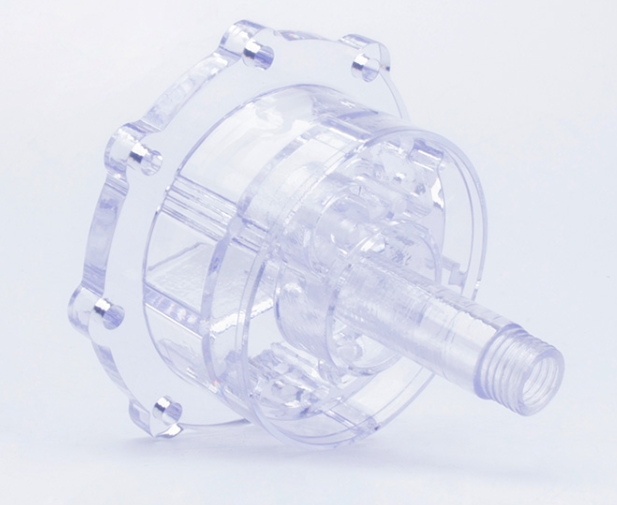
For product engineers, the promise of 3D printing crystal-clear, durable acrylic (PMMA) parts is compelling. Its high optical clarity, impact resistance, and chemical stability make it ideal for functional prototypes, transparent housings, and detailed models. However, the journey from digital model to a polished acrylic part is fraught with technical hurdles and material science complexities. Pure PMMA, while excellent for traditional manufacturing like laser cutting, behaves poorly in common 3D printers. This guide cuts through the confusion, offering a realistic roadmap for engineers. We’ll explore practical alternatives, expert-driven processes for achieving optical clarity, and strategic applications where 3D printed “acrylic-like” parts deliver true value, helping you decide when to print and when to use traditional methods.
The Core Challenge: Why Not Just Use Acrylic Filament?
The direct 3D printing of pure Polymethyl Methacrylate (PMMA) is notoriously difficult with standard desktop printers, creating a significant barrier for engineers. The problems are rooted in the material’s fundamental properties.
For Fused Deposition Modeling (FDM) printers, PMMA melts into a viscous, sticky consistency that clogs nozzles, causes extreme stringing, and results in poor layer adhesion. It also has a high tendency to warp as it cools. In resin-based printing (SLA/DLP), the problem is chemical: PMMA is not a photopolymer, meaning it will not harden when exposed to UV light, rendering the process useless.
Therefore, the practical solution is not to print pure acrylic, but to use advanced alternative materials that mimic its desirable properties—clarity, strength, and thermal stability—while being printable. The choice depends on your priority: ultimate transparency or functional durability.
Navigating Your Material Alternatives
Choosing the right material requires balancing optical performance with mechanical needs. The market offers clear paths for both resin and filament printing.
Path One: Resin Printing for Supreme Clarity
When the primary goal is optical purity and fine detail, resin printing is superior. Materials like clear Standard Resin or specialized blends such as the TGM-7 acrylic resin are engineered for this purpose. For functional prototypes needing more toughness, ABS-like or “tough” clear resins provide better impact resistance. Stratasys offers high-end solutions like VeroUltraClear, a PolyJet material specifically designed to simulate PMMA, achieving 86% light transmission in 6mm samples.
Path Two: FDM Printing for Functional Durability
For parts that must withstand stress, FDM with the right filament is key. PETG (Polyethylene Terephthalate Glycol) is the standout choice, offering an excellent balance of clarity potential, strength, chemical resistance, and good layer adhesion. For less demanding visual models, Clear PLA is easier to print but is more brittle and less transparent. When higher heat resistance and strength are needed, engineering-grade copolyesters or even Polycarbonate (PC) filament are options, though they require more precise printer calibration.
The table below provides a direct comparison to guide your selection:
| Criterion | Clear Resin (SLA/DLP) | PETG Filament (FDM) | Traditional Acrylic (PMMA Sheet) |
|---|---|---|---|
| Best-Case Clarity | Excellent | Good to Very Good | Excellent |
| Durability | Varies; often brittle | Good to Excellent | Good, but can shatter |
| Print Resolution | Excellent | Good | N/A |
| Post-Processing Effort | Low to Medium | High | Low to Medium |
| Ideal For | Display models, detailed prototypes | Functional parts, enclosures | Large flat panels, mass production |
The Engineering Process: From Cloudy Print to Crystal Clear
Achieving professional, transparent results from a 3D print is a deliberate, multi-stage post-processing ritual. Skipping steps leads to a permanently cloudy or streaked part.
Foundational Step: Optimize the Print
Success starts in the slicer. Use 100% infill to eliminate internal light-scattering voids. For FDM, orient the model to minimize layer lines on critical surfaces and use a slightly higher print temperature to improve layer bonding. Research indicates that printing at a 45-degree angle can yield more dimensionally accurate models with some resins.
The Critical Phase: Wet Sanding
This is the most labor-intensive but crucial step. You must progress through increasingly fine grits of waterproof sandpaper (400 → 600 → 800 → 1200 → 2000+ grit), constantly using water to lubricate. The water prevents heat buildup and removes debris, ensuring you polish the surface rather than grind it down. The goal is a uniform, matte finish that feels perfectly smooth.
Final Polishing and Coating
After the finest sanding, use a plastic polishing compound with a microfiber cloth or rotary tool to buff out the micro-scratches, bringing back a shine. The final, transformative step is applying a high-gloss clear coat. A thin, even layer of a two-part epoxy resin or UV-resistant acrylic spray lacquer flows into the remaining microscopic imperfections, creating a perfectly smooth surface that allows light to pass through without scattering, delivering the “glass-like” finish.
Strategic Applications: Where 3D Printing Outshines Tradition
Understanding the strengths of 3D printed clear materials guides their smart application versus traditional acrylic fabrication.
Ideal Use Cases for 3D Printing:
- Complex, Integrated Geometries: Creating custom light guides, fluidic channels, or lenses with internal features that are impossible to machine or mold.
- Rapid Functional Prototyping: Testing the fit, light diffusion, and assembly of transparent housings for electronics or sensor covers in days, not weeks.
- Low-Volume Custom Parts: Producing one-off or small batches of specialized items, like a unique display case or a prototype lampshade, cost-effectively.
When to Choose Traditional Acrylic:
- Large, Simple Panels: For applications like machine guards, signage, or display case sides, laser-cut or CNC-machined acrylic sheet is faster and more cost-effective.
- High-Volume Production: For thousands of identical parts, injection molding is vastly more economical.
- Optical/Laboratory Grade Components: Where absolute, distortion-free clarity and perfect material homogeneity are required, commercial-grade cast acrylic is unmatched.
Emerging Frontier: Biomedical Applications
The medical field showcases a high-value application. 3D printing is used to create precise denture bases and surgical guides from biocompatible resins. Clinical studies are actively enhancing these materials, for instance, by reinforcing denture base resin with nanoparticles like Zirconia (ZrO2) and Titanium Dioxide (TiO2) to improve their long-term dimensional stability and trueness. Another 2026 clinical study found that 3D-printed custom trays for dental impressions demonstrated accuracy comparable to conventional techniques, validating their clinical use.
Conclusion
For the product engineer, “3D printing acrylic” is less about the raw material and more about a strategic manufacturing workflow. By selecting the correct alternative material—be it a high-clarity resin or a durable PETG filament—and mastering the essential post-processing techniques of wet sanding and clear coating, you can reliably produce transparent parts that meet both aesthetic and functional demands. This approach unlocks unique advantages for prototyping complex geometries and low-volume custom production. However, for large, simple forms or mass production, traditional acrylic fabrication remains the more efficient choice. The power lies in knowing which tool to use for the job.
FAQ: 3D Printing with Acrylic-Like Materials
- What is the best clear material for a strong, functional 3D printed part?
For FDM printing, PETG filament is the top recommendation. It offers the best combination of potential clarity, excellent layer adhesion for strength, good chemical resistance, and lower warping compared to materials like ABS. - Can I achieve true glass-like transparency from a resin printer?
Yes, with the right resin and post-processing. Start with a high-clarity or “ABS-like” clear resin. After printing and washing, ensure the part is fully cured. Then, wet sand with progressively finer grits and finish with a glossy clear coat (e.g., spray lacquer or dip in epoxy) to fill micro-scratches and achieve a transparent finish. - Is polycarbonate (PC) a better choice than acrylic-like materials?
It depends on the requirements. Polycarbonate has superior strength, durability, and heat resistance (up to 150°C), making it ideal for high-stress, high-temperature functional parts. However, it is harder to print, prone to warping, and typically has a slightly lower optical clarity than the best acrylic-simulating materials. Choose PC for engine bay components or rugged enclosures, and acrylic alternatives for displays or lenses where perfect clarity is key. - How do I prevent my clear 3D prints from turning yellow over time?
Yellowing is often caused by UV degradation. To mitigate this, use resins or filaments with built-in UV stabilizers. For critical outdoor applications, always apply a UV-protective clear coat after finishing the part. Studies on materials like ASA, a UV-stable alternative to ABS, confirm that these additives significantly improve long-term color stability.
Discuss Your Projects with Yigu Rapid Prototyping
Navigating the complexities of material selection and process optimization for clear 3D printed parts can be challenging. At Yigu Rapid Prototyping, our engineering team leverages firsthand experience with a wide range of advanced polymers and finishing techniques. We can help you determine whether a 3D printed solution is optimal for your transparent component or if a traditional method would yield better results, ensuring your project balances aesthetics, functionality, and cost-effectiveness. Let’s collaborate to bring your clearest ideas to life.