
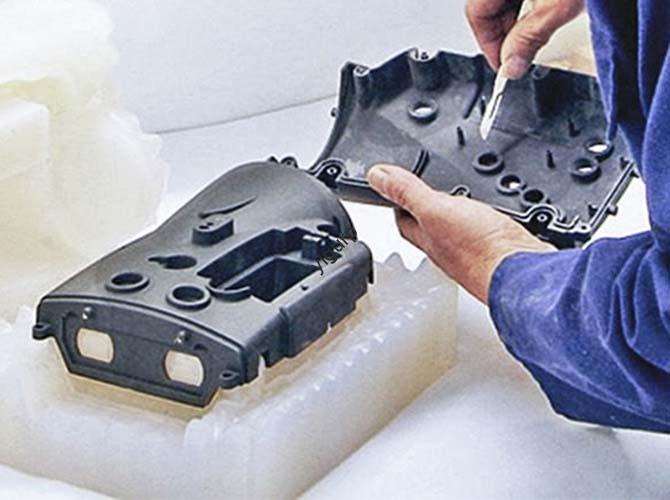
If you are exploring rapid prototyping or low-volume production in Spain, vacuum casting offers a precise, cost-effective solution. Spanish providers use vacuums to draw liquid polyurethane into silicone molds, creating high-fidelity parts that mimic mass-produced components. With 1–2 week turnaround times and tooling costs of just €500–€2,000, it is ideal for startups, SMEs, and large firms needing 10–500 parts for automotive, medical, or consumer electronics projects.
How Does Vacuum Casting Work for Spanish Projects?
Master Model Creation
The process starts with a high-precision master model. Spanish shops often use SLA 3D printing with resin to capture fine details. A Barcelona automotive supplier recently created an SLA master for a dashboard component achieving 0.1mm accuracy—critical for mold replication.
Mold Making
Technicians place the master in a frame and pour liquid silicone around it. The silicone cures in 24–48 hours to form a flexible mold. Spanish providers use high-quality silicone with a 10–20 part lifespan, meaning one mold produces up to 20 identical parts before replacement.
Vacuum Casting Process
Workers place the silicone mold in a vacuum chamber. Liquid polyurethane is injected, and the vacuum removes air bubbles—essential for avoiding defects. Spanish facilities use computer-controlled systems maintaining -0.95 bar pressure for consistent quality.
Curing and Finishing
Parts cure at room temperature or in ovens for 4–8 hours. After demolding, Spanish technicians add finishes like painting, engraving, or assembly. Many offer ISO 9001-certified quality checks to meet strict industry standards.
What sets Spanish vacuum casting apart? Local providers often integrate 3D scanning to verify master model accuracy, and some specialize in flame-retardant or biocompatible materials—key for EU medical and automotive clients.
What Advantages Does Vacuum Casting in Spain Offer?
Cost-Effective for Low Volumes
Injection molding requires expensive metal tooling costing €10,000+. Vacuum casting uses silicone molds for just €500–€2,000. A Madrid wearable tech firm saved 70% on tooling costs by using vacuum casting for their first 200 prototypes.
Fast Turnaround
Spanish providers deliver parts in 5–10 business days, compared to 4–6 weeks for injection molding. A Valencia medical device company produced 50 test parts in 7 days, helping them submit for CE certification on time.
High Material Versatility
Spanish shops offer over 50 casting materials, including options mimicking ABS, PP, or rubber. Many stock EU-compliant materials like REACH-certified polyurethanes. A Seville toy manufacturer used food-safe polyurethane for 100 prototype teething toys, ensuring EU safety compliance.
Precision and Detail
Vacuum casting achieves ±0.1mm tolerances, suitable for complex parts with fine features. A Bilbao automotive supplier replicated a sensor housing with 12 tiny holes—without any post-processing fixes.
How to Choose the Right Vacuum Casting Provider in Spain?
Industry Expertise
Look for providers with sector experience:
- Automotive: Choose shops understanding heat-resistant polyurethanes and IATF 16949 standards. A Barcelona provider has worked with SEAT and Renault on prototype components.
- Medical: Prioritize ISO 13485-certified facilities using biocompatible materials. A Valencia lab specializes in medical parts and provides CE approval documentation.
- Consumer Goods: Opt for providers with in-house finishing to avoid delays. A Madrid shop offers custom color matching, reducing lead times by 3 days.
Quality Certifications
Verify certifications for EU compliance:
- ISO 9001: Consistent quality management
- ISO 13485: Medical device parts
- IATF 16949: Automotive components
- REACH Compliance: Materials free of restricted substances
Capacity and Lead Times
Ask about maximum production volume—most Spanish shops handle 1–500 parts per order. Be wary of under-3-day promises—this often means quality cuts. Reliable shops quote 5–7 days for standard orders and 10–12 days for complex parts with custom finishes.
Customer Support
Choose providers with dedicated account managers speaking your language—many offer English support. A Seville provider sends daily casting photos so clients can address issues early.
| Provider Name | Location | Key Industries | Certifications | Lead Time | Max Volume |
|---|---|---|---|---|---|
| CastingPro Spain | Barcelona | Automotive, Aerospace | ISO 9001, IATF 16949 | 5–7 days | 500 parts |
| SiliconeMold Valencia | Valencia | Medical, Dental | ISO 13485, REACH | 7–10 days | 300 parts |
| RapidCast Madrid | Madrid | Consumer Electronics | ISO 9001 | 4–6 days | 400 parts |
| PrecisionCast Bilbao | Bilbao | Industrial Machinery | ISO 9001 | 6–8 days | 200 parts |
Real-World Case Study: Spanish Automotive Manufacturing
A Tier 2 automotive supplier in Zaragoza needed 150 prototype door handle housings for a new EV model with these requirements:
- Material: Must mimic ABS, heat-resistant to 80°C
- Tolerance: ±0.05mm for mounting holes
- Timeline: 10 days for OEM design review
The supplier chose a Barcelona vacuum casting provider, which:
- Created an SLA master using high-temperature resin
- Made an 8-cavity silicone mold to speed production
- Cast parts using polyurethane matching ABS tensile strength (45 MPa) and heat resistance
- Added matte finish matching EV interior design
Result: All 150 parts delivered in 9 days with zero defects. The OEM approved the design, and the supplier saved €8,000 compared to injection molding tooling. They later ordered 200 more parts for field testing—proving vacuum casting’s value beyond prototyping.
What Trends Are Shaping Vacuum Casting in Spain?
Sustainable Materials
More providers offer bio-based polyurethanes from corn or sugarcane. A Madrid shop reports 30% of clients request sustainable materials—up from 10% in 2022.
Automated Mold Making
Facilities use robots for silicone pouring and demolding. A Valencia provider has cut mold making time by 25% with automation, enabling faster turnaround for higher volumes.
Integration with Additive Manufacturing
Many Spanish shops offer one-stop services combining 3D scanning, 3D printing for masters, and vacuum casting. This reduces lead times by 3–4 days by eliminating shipping between facilities.
Expansion to Renewable Energy
With Spain’s goal of 100% renewable electricity by 2050, vacuum casting prototypes solar panel components and wind turbine parts. A Seville provider recently prototyped a solar inverter housing using UV-resistant polyurethane.
Conclusion
Vacuum casting in Spain offers a precise, cost-effective bridge between prototyping and production. With 5–10 day turnaround, tooling costs of €500–€2,000, and ±0.1mm tolerances, it serves automotive, medical, and consumer goods sectors. Material options range from ABS-mimicking polyurethanes to food-safe and biocompatible formulations. Choosing the right provider means verifying industry expertise, certifications, capacity, and customer support. With trends toward sustainable materials, automation, additive integration, and renewable energy applications, Spanish vacuum casting continues evolving to meet modern manufacturing needs.
FAQ About Vacuum Casting in Spain
What’s the minimum order quantity for vacuum casting in Spain?
Most providers have no strict MOQ—you can order as few as 1 part. Ordering 10+ parts reduces per-unit cost by spreading the mold setup fee across more units.
Can vacuum casting parts be used for long-term testing?
Yes—with the right material. Polyurethane parts last 1–2 years under normal conditions, suitable for environmental testing or field trials. For longer use, ask about UV-resistant or reinforced materials.
Do Spanish vacuum casting providers ship to other EU countries?
Absolutely. Most offer fast shipping to France, Germany, Italy, and Portugal with 1–2 day delivery. Many handle customs documentation to avoid delays—crucial for CE-certified parts.
How much does vacuum casting in Spain cost compared to other EU countries?
Spanish services are generally 10–15% more affordable than Germany or Switzerland due to lower labor costs. A 100-part order for a 5cm component might cost €1,200 in Spain versus €1,400 in Germany.
Can vacuum casting replicate overmolded parts with hard plastic and soft rubber?
Yes—some Spanish providers offer two-shot vacuum casting for multiple materials in one part. This is ideal for consumer goods or medical devices needing both rigidity and comfort.
Discuss Your Projects with Yigu Rapid Prototyping
Ready to start your vacuum casting project in Spain? Yigu Technology combines global manufacturing expertise with practical support for European businesses. We help automotive suppliers, medical device companies, and consumer goods manufacturers select the right materials and casting partners. Our AI-powered design tools optimize your parts for vacuum casting—reducing defects and speeding up production. We connect you with vetted Spanish providers holding ISO 13485, IATF 16949, or ISO 9001 certifications matching your industry requirements. From master model creation to finishing and assembly, our team reviews your designs for manufacturability and ensures compliance with EU regulations. Contact Yigu Rapid Prototyping today to discuss your vacuum casting needs and discover how we can help you bring products to market faster, more sustainably, and cost-effectively in Spain.