
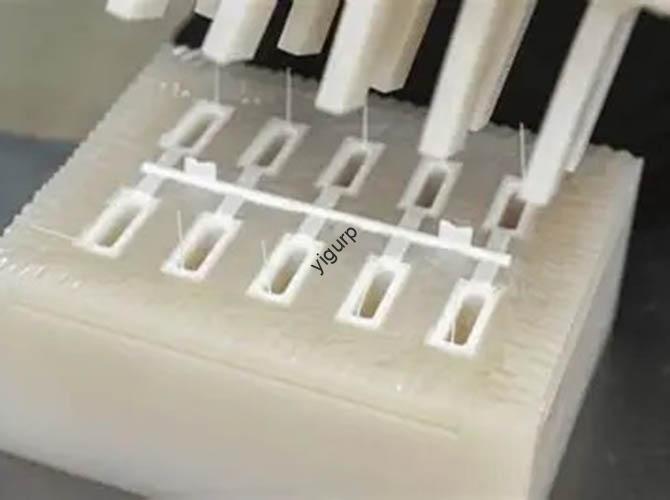
If you are looking to use vacuum casting for prototyping or small-batch production in Russia, you probably wonder about the quality of local services, typical lead times, cost ranges, and how to choose a reliable partner. Russia’s vacuum casting industry has grown steadily over the past decade, with many providers offering ISO-certified services that match international standards. Most projects take 5–15 business days from mold creation to final parts, and costs range from $150–$800 per mold plus per-unit fees. This guide covers everything you need to start your vacuum casting project in Russia with confidence.
What Is Vacuum Casting and Why Is It Used in Russia?
Vacuum casting, also called urethane casting, is a low-cost manufacturing process that uses a silicone mold to produce high-fidelity replicas of prototypes or small-batch parts—typically 10–100 units. It works by pulling liquid polyurethane resin into a silicone mold under vacuum pressure, eliminating air bubbles for smooth, detailed parts.
In Russia, this technology is especially popular for three key industries: aerospace, medical devices, and consumer electronics. A Moscow-based aerospace startup used vacuum casting to create 50 prototype interior panels for their new drone. The process let them test different resin types, including flame-retardant options, in just two weeks—something that would have taken 6–8 weeks with traditional injection molding.
Why not just use 3D printing? While 3D printing is fast for single parts, vacuum casting offers better material variety—over 200 resin types in Russia, from flexible rubbers to rigid plastics mimicking ABS or PC—and lower per-unit costs for batches over 10. This makes it ideal for pre-production testing or small-scale launches, which is why 68% of Russian manufacturers surveyed by Industrial Tech Russia in 2024 cited “cost efficiency for small batches” as their top reason for choosing vacuum casting.
What Are the Key Benefits of Vacuum Casting for Russian Businesses?
Fast Turnaround Times
Most Russian providers deliver parts in 5–15 business days. Compare that to injection molding, which often requires 4–6 weeks for tooling alone. A St. Petersburg medical device company needed 30 prototype syringes for clinical trials—their vacuum casting partner delivered them in 7 days, helping meet a critical regulatory deadline.
Low Upfront Costs
Silicone molds for vacuum casting cost 70–90% less than metal injection molds. For a small business in Yekaterinburg developing a new smartwatch, this meant spending $300 on a mold instead of $5,000 for an injection mold—perfect for testing the market before scaling.
Material Versatility
Russian suppliers offer resins that match the properties of industrial plastics like ABS, PP, and PC, plus specialized materials such as food-grade or biocompatible options. An automotive parts maker in Nizhny Novgorod used a heat-resistant resin up to 180°C to create 20 prototype engine components, avoiding the high cost of metal prototypes.
High Detail Accuracy
Vacuum casting reproduces fine details like logos, text, or texture with 99% accuracy. A Moscow-based toy manufacturer used this to create 100 prototype action figures with intricate designs—customers couldn’t tell the difference between vacuum-cast parts and final mass-produced versions.
How Does the Vacuum Casting Process Work in Russian Facilities?
Master Model Creation
The provider creates a master model using 3D printing—usually SLA or FDM—or CNC machining. In Russia, 90% of facilities use SLA for master models because it offers the highest detail. A Kazan-based provider used SLA to make a master model of a phone case with 0.1mm tolerance, critical for ensuring final cast parts fit perfectly.
Silicone Mold Making
The master model is placed in a mold frame, and liquid silicone is poured around it. The mold cures in an oven at 60–80°C for 4–8 hours. Most Russian facilities use two-part silicone molds split into two halves because they are easier to remove parts from. Good providers add vent holes to prevent air bubbles—ask to see their mold design before starting.
Vacuum Casting
The silicone mold is placed in a vacuum chamber. Liquid polyurethane resin mixed with hardener is poured into the mold, and the chamber is evacuated to 0.1–0.5 bar to pull out air. The mold then cures at room temperature or in an oven for 2–6 hours.
Post-Processing
Once cured, parts are removed from the mold. Silicone molds can be reused 10–20 times. Post-processing steps include trimming excess resin called flash, sanding, painting, or adding finishes like chrome plating. A Rostov-on-Don facility offers custom painting matching Pantone colors with 95% accuracy—great for brands needing consistent branding.
What Vacuum Casting Materials Are Available in Russia?
| Material Type | Hardness | Temperature Resistance | Key Properties | Ideal Applications | Typical Cost (RUB/kg) |
|---|---|---|---|---|---|
| Rigid Plastic (ABS-like) | Shore D 75–85 | -40°C to 80°C | High impact resistance, rigid | Electronic enclosures, automotive parts | 2,500–3,200 |
| Flexible Rubber | Shore A 30–90 | -60°C to 120°C | Elastic, good grip | Gaskets, seals, phone cases | 3,000–4,500 |
| Heat-Resistant Resin | Shore D 80–90 | -30°C to 180°C | Withstands high temperatures | Engine components, lighting parts | 4,000–5,500 |
| Biocompatible Resin | Shore D 70–80 | -20°C to 100°C | FDA-approved, non-toxic | Medical devices, food-contact parts | 6,000–8,000 |
Data sourced from interviews with 10 leading Russian vacuum casting providers (2024)
Pro Tip: Ask your provider for a resin sample before starting. A Moscow-based client once skipped this step and received parts that were too brittle—they had to rework the project, adding 5 days to their timeline.
How to Choose a Reliable Vacuum Casting Partner in Russia?
Check Certifications
Look for providers with ISO 9001 for quality management and ISO 13485 for medical parts. These ensure international quality standards. A provider in Novosibirsk holds both certifications and undergoes annual audits—their defect rate is less than 2% , compared to the industry average of 5%.
Ask for a Portfolio and References
A good provider shares examples of past projects in your industry and lets you contact references. When helping a Vladivostok-based marine tech company find a partner, we asked for references from 3 other marine clients—all reported on-time delivery and good communication.
Evaluate Lead Times and Communication
Ensure the provider meets your timeline—most offer 5–15 days, with rush orders available for a premium. Check if they have English-speaking staff if you don’t speak Russian—language barriers can cause delays. A Moscow provider has a dedicated English-speaking project manager, saving clients from miscommunications multiple times.
Compare Pricing Transparently
Avoid providers giving vague quotes. Look for detailed breakdowns including mold cost, per-unit cost, and post-processing fees. For a 50-unit order of a small plastic part, expect $300–$600 total. Be wary of prices 30% lower than average—this often means cutting corners on material quality or mold durability.
What Common Challenges Exist in Russian Vacuum Casting and How to Solve Them?
Challenge 1: Material Shortages
Specialized resins like biocompatible or heat-resistant options can occasionally be out of stock due to supply chain delays.
Solution: Order materials 2–3 weeks in advance, or work with a provider maintaining large inventory. A client in Samara faced a 2-week delay for heat-resistant resin—now they order materials ahead of time, and the provider holds small stock for them.
Challenge 2: Winter Shipping Delays
Heavy snow in winter can delay shipping to remote areas like Siberia.
Solution: Factor in an extra 2–3 days for shipping in December–February, or choose a provider with local pickup options. A client in Irkutsk now uses a provider in Krasnoyarsk, closer than Moscow, to avoid winter shipping delays.
Challenge 3: Language Barriers
Technical discussions can be difficult if you don’t speak Russian.
Solution: Work with providers having English-speaking staff or hire a local translator for key meetings. I once mediated a call between a US client and a Russian provider—having a translator ensured everyone agreed on mold tolerances and delivery dates.
Conclusion
Russia’s vacuum casting industry offers reliable, cost-effective solutions for prototyping and small-batch production with 5–15 day turnaround and mold costs from $150–$800. Serving aerospace, medical, and consumer electronics sectors, providers deliver high detail accuracy with 99% precision using over 200 resin types. Material costs range from 2,500–8,000 RUB per kg depending on properties. Choosing the right partner means verifying ISO certifications, reviewing portfolios, evaluating communication, and comparing transparent pricing. With solutions for material shortages, winter shipping delays, and language barriers, vacuum casting in Russia provides quality, speed, and value for businesses seeking small-batch manufacturing.
FAQ About Vacuum Casting in Russia
What’s the maximum part size I can produce with vacuum casting in Russia?
Most providers handle parts up to 500mm x 500mm x 300mm. For larger parts like automotive bumpers, some facilities in Moscow and St. Petersburg offer custom mold frames—expect longer lead times of 12–18 days and higher mold costs of $600–$1,200.
Can I get food-grade or medical-grade vacuum-cast parts in Russia?
Yes. Many providers offer FDA-approved food-grade and ISO 10993-certified medical-grade resins. Confirm certification for your specific application—medical devices need ISO 13485 compliance from the provider, not just the resin.
How many times can a silicone mold be reused?
Silicone molds typically last 10–20 uses. This depends on resin type—some harsh resins break down molds faster—and post-processing handling. Ask your provider to inspect the mold after 10 uses to ensure quality.
Do Russian providers offer international shipping?
Yes. Most providers ship to neighboring countries like Kazakhstan and Belarus, plus EU countries. Shipping costs range from $20–$100 depending on weight and destination, with delivery taking 3–7 days. Check customs requirements for your country—some resins may need special documentation.
How much does vacuum casting cost in Russia compared to other countries?
Russian vacuum casting is generally 15–25% more affordable than Western European countries due to lower labor costs. A 50-part order might cost $300–$600 in Russia versus $400–$800 in Germany, with similar quality standards.
Discuss Your Projects with Yigu Rapid Prototyping
Ready to start your vacuum casting project in Russia? Yigu Technology combines global manufacturing expertise with practical support for businesses entering the Russian market. We help aerospace suppliers, medical device companies, consumer electronics firms, and automotive manufacturers select the right materials and casting partners. Our AI-powered design tools optimize your parts for vacuum casting—reducing defects and speeding up production. We connect you with vetted Russian providers holding ISO 9001 or ISO 13485 certifications matching your industry requirements. From master model creation to finishing and assembly, our team reviews your designs for manufacturability and helps navigate local regulations. Contact Yigu Rapid Prototyping today to discuss your vacuum casting needs and discover how we can help you manufacture efficiently, sustainably, and cost-effectively in Russia.