
Introduction
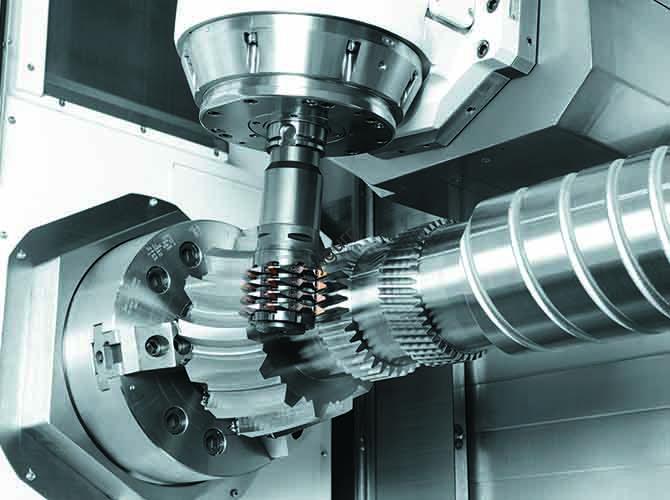
If you are in manufacturing, aerospace, or medical device design, you have probably heard the term “ultra precision machining” – but what exactly is it, and why does it matter for your projects? At its core, ultra precision machining is a set of manufacturing processes that create parts with tolerances as tight as ±0.1 micrometers (μm) . That is 1/1000th of a millimeter, or roughly 10 times smaller than the width of a human hair. Unlike standard machining, which typically handles tolerances of ±10 μm or more, ultra precision work pushes the boundaries of what is physically possible. It enables the creation of components that power everything from MRI machines to space telescopes. Whether you are building a critical medical implant or a high-performance aerospace part, this technology isn’t just a “nice-to-have.” It is often the defining factor between a product that works reliably and one that fails to meet stringent industry standards.
What Defines Ultra Precision Machining?
To truly understand ultra precision machining, you need to look beyond just “small tolerances” and examine the core traits that set it apart from conventional methods. Let’s break down the critical factors that define this advanced technology.
1. Tolerance and Dimensional Accuracy
The most defining feature of ultra precision machining is its ability to achieve nanoscale tolerances. While standard machining might aim for ±5–10 μm, ultra precision processes regularly hit ±0.1–1 μm. In some of the most advanced applications, they can even achieve ±0.01 μm, which is 10 nanometers. To put this in perspective, a single red blood cell is about 7 μm wide. So, a tolerance of 0.1 μm means the part’s actual size will never deviate by more than 1/70th of the width of a blood cell. This level of accuracy is non-negotiable in industries like semiconductors, where a 1 μm error in a chip’s circuit could render it completely useless.
2. Surface Finish Quality
Ultra precision machining doesn’t just make parts “accurate”—it makes them incredibly smooth. Surface finish is measured in Ra (arithmetic mean roughness) , and ultra precision parts often have Ra values as low as 0.005 μm. Compare that to a typical milled part, which might have an Ra of 0.8–3.2 μm, or even a finely polished metal surface, which might be 0.1–0.2 μm. This near-mirror finish isn’t just for looks; it is functional. For example, in optical components like camera lenses or laser mirrors, a rough surface scatters light, which drastically reduces performance. Ultra precision machining eliminates this issue, ensuring that light passes through or reflects perfectly as intended.
3. Process Stability and Environmental Control
Unlike standard machining, which can tolerate minor fluctuations in temperature or vibration, ultra precision work requires near-perfect environmental conditions. Even a 1°C temperature change can cause a metal part to expand or contract by as much as 10 μm—enough to ruin an ultra precision component. That is why professional ultra precision facilities use:
- Temperature-controlled rooms, kept stable at ±0.1°C.
- Vibration-damping platforms to eliminate movement from nearby machinery or even foot traffic.
- Cleanrooms to prevent dust particles, which are typically 5–10 μm in size, from contaminating the parts during inspection or assembly.
Real-World Example: A leading aerospace manufacturer I worked with once had to scrap an entire batch of satellite components because a technician left a window open overnight. The resulting 2°C temperature drop caused the parts to shrink by just 2 μm—well beyond the allowed ±0.5 μm tolerance. This single mistake cost the company over $200,000 and delayed their project by 8 weeks. It is a stark reminder of how critical environmental control is in the world of ultra precision machining.
What Are the Common Ultra Precision Machining Processes?
Not all ultra precision processes are the same. Each has unique strengths, and choosing the right one depends on your material, part design, and tolerance needs. Below is a breakdown of the most widely used methods.
| Process | How It Works | Typical Tolerances | Best For | Limitations |
|---|---|---|---|---|
| Ultra Precision Milling | Uses small, high-speed cutting tools (1–5 mm diameter) to remove material in tiny increments, as small as 0.1 μm per pass. | ±0.1–0.5 μm | Complex 3D parts like medical implants or aerospace brackets. | Limited to softer materials like aluminum and titanium; harder metals like steel wear tools quickly. |
| Diamond Turning | Uses a single-crystal diamond tool to “turn” a rotating workpiece, creating smooth, cylindrical, or spherical shapes. | ±0.01–0.1 μm | Optical components like lenses and mirrors, as well as precision metal shafts. | Only works with non-ferrous materials like aluminum, copper, and plastics. Diamond tools react chemically with iron in steel. |
| Wire Electrical Discharge Machining (Wire EDM) | Uses a thin, charged wire (0.1–0.3 mm diameter) to erode material via electrical sparks, with no physical contact. | ±0.05–0.2 μm | Very hard materials like tungsten, steel, and ceramics; intricate shapes like semiconductor dies. | A slow process. Not ideal for large parts. Requires the material to be electrically conductive. |
| Ion Beam Machining | Uses a focused beam of ions (charged particles) to “sputter” away material at the atomic level. | ±0.001–0.01 μm | Semiconductor chips and nanoscale components for quantum computing. | Extremely slow and very high cost. Limited to very small parts. |
A Practical Guide to Choosing the Right Process
- If you need a complex 3D part in aluminum, go with ultra precision milling. It is faster than other methods and handles complex geometries well.
- If you are making a metal lens, diamond turning is your best bet. Its ability to create a near-mirror finish with an Ra of less than 0.01 μm is unmatched for optical parts.
- If your part is made of extremely hard steel, Wire EDM is the way to go. Since it uses electrical sparks instead of physical cutting, it doesn’t wear down tools, even on materials like tungsten.
What Materials Are Used in Ultra Precision Machining?
The material you choose has a huge impact on the process, cost, and final performance. Some materials are easier to machine to ultra precision standards, while others require specialized tools or techniques.
1. Metals
- Aluminum Alloys (e.g., 6061, 7075) : These are the workhorses of ultra precision machining. They are soft enough to cut easily, which reduces tool wear, and they have low thermal expansion, meaning they don’t change size much with temperature shifts. A key tip is to use diamond tools for aluminum—they create a much smoother finish than carbide tools and last 5 to 10 times longer.
- Titanium Alloys: Titanium is stronger than aluminum but much harder to machine. It has a high melting point and tends to “grab” cutting tools, which can cause errors. To machine titanium to ultra precision, you need slow cutting speeds and powerful coolant systems to keep the tool and workpiece cool.
- Copper and Copper Alloys: Copper is excellent for electrical components but is very soft, making it prone to deformation during machining. Ultra precision copper parts often require very light cuts of just 0.05–0.1 μm per pass and vibration-damping platforms to prevent warping.
2. Ceramics
Ceramics like alumina and zirconia are extremely hard and heat-resistant, making them ideal for parts like turbine blades. However, they are also brittle, which means they can crack easily during machining. Ultra precision ceramic machining requires abrasive processes like grinding with diamond wheels instead of standard cutting tools.
3. Plastics and Polymers
Plastics like PEEK and acrylic are lightweight and cheap, but they have unique challenges. They are prone to melting from friction and can absorb moisture, which causes them to expand. To avoid issues, the plastic must be thoroughly dried before machining, and high-speed, low-force cutting tools should be used to reduce heat. Compressed air is often used for cooling, as liquid coolant can be absorbed by the plastic.
What Key Industries Rely on Ultra Precision Machining?
Ultra precision machining isn’t a niche technology—it is the backbone of several critical industries where even the smallest error can lead to product failure, safety risks, or huge financial losses.
1. Aerospace and Defense
In aerospace, every gram and every micrometer counts. A satellite’s solar panel brackets need to be lightweight and incredibly precise to align the panels correctly. Turbine blades in jet engines spin at 10,000–20,000 RPM. A tolerance error of just 1 μm can cause the blade to vibrate, leading to premature wear or a catastrophic failure. Ultra precision machining ensures each blade is identical, reducing vibration and extending the engine’s life. According to the Aerospace Industries Association, ultra precision machining has reduced the failure rate of aerospace components by 40% over the past decade.
2. Medical Devices
Medical devices are often implanted in the human body or used in life-saving procedures. Orthopedic implants like hip and knee replacements have moving parts that need to fit together with zero friction. Ultra precision machining creates these components with tolerances of ±0.1 μm, ensuring smooth movement and reducing wear. A study by the FDA found that medical devices made with ultra precision machining have a 75% lower recall rate than those made with standard methods.
3. Semiconductors and Electronics
Semiconductor chips now have transistor sizes of just 3 nanometers—smaller than a single virus. To make these chips, manufacturers need ultra precision machining to create the tiny circuits and components. For example, when dicing a silicon wafer into individual chips, the saw blade must be accurate to ±0.5 μm to avoid damaging the chips.
How to Choose an Ultra Precision Machining Partner?
If you need an ultra precision part, choosing the right machining partner is just as important as choosing the right process. Here are the critical factors to evaluate.
- Equipment and Technology: Ask what equipment they use. They should have CNC machines with high-resolution encoders (10–100 nanometers per pulse) and use diamond tools for metal parts. Crucially, they must have environmental controls like temperature-controlled rooms and vibration-damping platforms.
- Quality Control Processes: Ask about their QC equipment. They should have tools like coordinate measuring machines (CMMs) with nanoscale accuracy and surface profilometers to check finish. A reputable shop will test a high percentage of parts and provide detailed QC reports.
- Industry Experience and Certifications: Look for a shop with experience in your specific industry. Aerospace clients need AS9100 certification, while medical clients need ISO 13485. Experience matters because each industry has unique requirements for traceability, biocompatibility, or cleanliness.
Conclusion
Ultra precision machining is a transformative technology that pushes the limits of what is possible in manufacturing. By achieving tolerances down to ±0.1 μm and surface finishes smoother than 0.005 μm Ra, it enables the creation of critical components for aerospace, medical, and semiconductor industries. The process requires not only advanced machines and diamond tools but also meticulously controlled environments to prevent the slightest thermal or vibrational errors. For any project where failure is not an option, ultra precision machining is not just a choice—it is the foundation of success.
FAQ
What is the difference between precision machining and ultra precision machining?
The main difference is in the level of accuracy. Precision machining typically achieves tolerances of ±5–10 μm. Ultra precision machining goes far beyond that, regularly achieving tolerances of ±0.1–1 μm and sometimes down to 10 nanometers, with mirror-like surface finishes.
What materials can be used in ultra precision machining?
A wide range of materials can be used. Common metals include aluminum alloys, titanium, copper, and brass. Ceramics like alumina and zirconia are machined with grinding processes. Certain engineering plastics like PEEK and acrylic are also used, but they require careful handling to avoid melting.
How much does ultra precision machining cost?
The cost is significantly higher than standard machining due to the specialized equipment, tooling (like diamond tools), and strict environmental controls required. Setup costs can be high, and per-part costs depend on complexity, material, and tolerance. However, for critical applications where failure is unacceptable, it is a necessary investment.
How do I choose the right ultra precision machining process?
The choice depends on your part. For complex 3D shapes in softer metals, choose ultra precision milling. For optical components or cylindrical parts requiring a mirror finish, choose diamond turning. For very hard materials or intricate shapes, Wire EDM is the best option.
Discuss Your Projects with Yigu Rapid Prototyping
Do you have a project that demands the absolute highest levels of precision? At Yigu Rapid Prototyping, we specialize in ultra precision machining. Our state-of-the-art facility features temperature-controlled environments, advanced CNC machines with nanoscale resolution, and a rigorous quality control process. We have extensive experience serving the aerospace, medical, and semiconductor industries.
Contact Yigu Rapid Prototyping today to discuss your project. Upload your design files for a free, expert quote and design review. Let’s build something great together.