
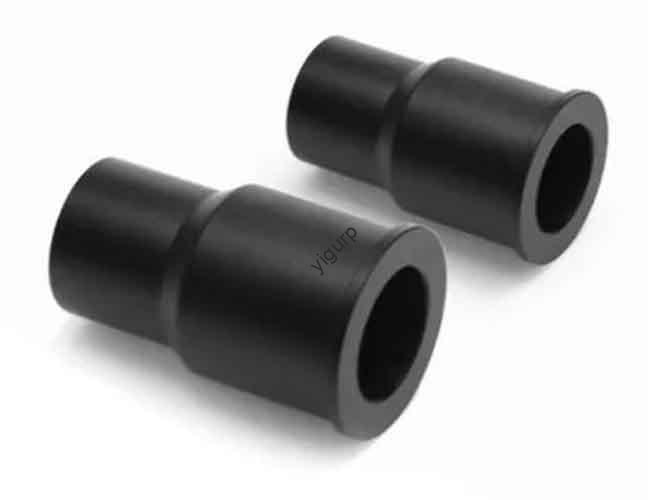
Introduction
If you have ever worked with T-slot aluminum extrusions for a project involving linear motion—like a sliding table, a 3D printer frame, or a simple drawer—you know they are incredibly versatile. But to make a part slide smoothly along those tracks, you need the right component: a T-slot wheel. These specialized wheels are designed to ride inside the grooves of the extrusion, providing low-friction, wobble-free movement. They are a simple, effective solution for DIYers, hobbyists, and industrial engineers alike. This guide will explain how they work, the different types available, and how to select the perfect one for your project.
How Do T-Slot Wheels Work?
To understand the wheel, you first need to understand the track. T-slot aluminum extrusions have a profile with open, T-shaped channels running down their length. A T-slot wheel is engineered to fit precisely inside this channel. Its rim is shaped to match the groove’s profile, which for most standard extrusions is a 60-degree angle.
When you attach the wheel to a moving part—like a shelf or a tool carriage—it rolls along the inside of the T-slot. This design achieves two critical things:
- Precision Alignment: The close fit between the wheel and the groove keeps the moving part perfectly aligned, preventing any side-to-side wobble.
- Reduced Friction: Rolling is far more efficient than sliding. This allows heavy loads to be moved with minimal effort.
Most T-slot wheels incorporate ball bearings or roller bearings inside the hub, which further reduce friction. This is why a heavy tool cart on a T-slot rail can often be moved with just one hand.
A quick example: A friend was building a garage workbench with a sliding tool tray. He used 2020 series T-slot extrusions and simple plastic T-slot wheels. Before adding the wheels, the tray felt clunky and would stick. After installation, it glides so smoothly he can adjust it with his elbow while holding a tool.
What Are the Common Types of T-Slot Wheels?
Different projects demand different wheel characteristics. Here is a breakdown of the most common types.
| Type | Material | Key Features | Best For |
|---|---|---|---|
| Plastic | Nylon, Acetal, Polypropylene | Lightweight, low cost, quiet, chemical-resistant | DIY projects, light loads (up to 50 lbs per wheel), indoor use (e.g., 3D printer parts, small drawers) |
| Metal | Anodized Aluminum, Stainless Steel | High load capacity (100+ lbs), durable, heat-resistant | Industrial projects, heavy loads (e.g., tool carts, conveyor systems), outdoor or high-heat environments |
| Rubber-Coated | Metal/Plastic core, rubber outer layer | Shock-absorbent, non-marking, extra grip | Projects needing surface protection (e.g., sliding glass doors) or noise reduction |
| Precision Ball Bearing | Any material with integrated bearings | Ultra-smooth movement, low friction | Applications requiring high precision (e.g., CNC machine slides, laser cutters) |
A Real-World Example: Plastic vs. Metal
A local makerspace needed a mobile storage rack for four heavy 3D printers, totaling about 200 lbs. They initially considered plastic wheels to save money. However, because the rack would be moved frequently, they chose aluminum wheels with ball bearings. The metal construction ensures long life with frequent use, and the ball bearings guarantee it will always roll easily. Months later, the rack is still in perfect condition.
What Key Factors Should You Consider When Choosing?
Choosing the wrong wheel can lead to breakage, bumpy movement, or parts that simply don’t fit. Focus on these five critical factors.
Load Capacity
Every wheel has a maximum load rating. To determine your needs:
- Find the total weight of the moving part (e.g., a 150 lb table).
- Decide how many wheels you will use (4 to 8 is common).
- Divide the total weight by the number of wheels (150 lbs / 6 wheels = 25 lbs per wheel).
- Choose wheels with a capacity 20-30% higher than this calculated number (aim for wheels rated at 30+ lbs).
Mistake to avoid: Using plastic wheels rated at 50 lbs each for a 300 lb cart. Even with 8 wheels, the per-wheel load is 37.5 lbs, which is too close to the limit and risks cracking over time.
Compatibility with Extrusion Size
T-slot extrusions come in standard sizes like 2020 (20mm x 20mm) , 3030 (30mm x 30mm) , and 4040 (40mm x 40mm) . The wheel must match the extrusion’s groove width. A wheel made for a 3030 extrusion will be too wide for a 2020 groove. Always check the manufacturer’s specifications.
Environment
Consider where your project will live.
- Indoor, dry spaces: Plastic or aluminum wheels are fine.
- Outdoor or wet areas: Choose stainless steel or rubber-coated wheels for corrosion resistance.
- High-temperature areas: Avoid plastic, which can soften. Use aluminum or steel.
Movement Smoothness
For applications needing ultra-smooth motion, like a laser cutter head, look for wheels with integral ball bearings. For a shelf moved only occasionally, simpler, bearing-less plastic wheels are a cost-effective choice.
Noise Level
- Plastic wheels are quiet.
- Rubber-coated wheels are the quietest, as the rubber absorbs sound and vibration.
- Metal wheels can be loud, especially on metal extrusions. Reserve them for garages or industrial shops.
How to Install T-Slot Wheels: A Step-by-Step Guide
Installation is straightforward. Here is a simple guide.
What You’ll Need:
- T-slot wheels matched to your extrusion
- Mounting brackets
- Screws
- Drill and drill bit
- Wrench or Allen key
- Mark Mounting Points: Decide where the wheels will go on your moving part. For a sliding table, you will typically have two wheels on each side, aligned with the extrusion grooves. Mark the spots with a pencil, ensuring they are even.
- Drill Pilot Holes: Drill small pilot holes at your marks. This prevents the material from splitting when you drive the screws.
- Attach the Brackets: Line up the mounting brackets with the pilot holes and drive the screws in. Tighten until secure.
- Install the Wheel: Attach the wheel to the bracket using the provided bolt or axle. Tighten it so the wheel spins freely without wobbling.
- Test the Movement: Slide the moving part onto the extrusion. It should glide smoothly. If it feels bumpy, check that the wheels are aligned with the grooves and that the bolts are not over-tightened.
How to Maintain T-Slot Wheels
A little maintenance ensures long-lasting performance.
- Clean Regularly: Wipe dust and debris from the extrusion grooves and wheel rims every few months. A small brush or dry cloth works well.
- Lubricate Bearings: If your wheels have bearings, apply a single drop of silicone-based lubricant once or twice a year. Avoid oil, which attracts dust.
- Check for Wear: Inspect plastic wheels for cracks. Check metal wheels for rust or bent rims. If a wheel feels stiff or grinds, the bearing may need replacement.
Conclusion
T-slot wheels are a simple yet ingenious component that unlocks the full potential of modular aluminum framing. By choosing the correct type—whether plastic for a light-duty DIY project or precision ball-bearing metal for an industrial application—you can create smooth, reliable linear motion systems. The key is to match the wheel to your project’s specific needs in terms of load, environment, and required precision. With the right selection and proper installation, your sliding parts will move effortlessly for years to come.
Frequently Asked Questions
1. Can I use T-slot wheels on any T-slot extrusion?
Generally, yes, but you must match the wheel to the extrusion’s series size (e.g., a 2020 wheel for a 2020 extrusion). Most standard extrusions have a 60-degree groove angle, but it’s always wise to verify.
2. How many wheels do I need for my project?
Four wheels (two on each side) provide good stability for most projects. For heavier loads or longer spans, using six to eight wheels helps distribute the weight more evenly.
3. Are plastic T-slot wheels strong enough for heavy loads?
Plastic wheels are typically rated for 30 to 50 lbs per wheel. For loads exceeding that per wheel, you should switch to metal wheels, which can often handle 100+ lbs each.
4. Can I use T-slot wheels outdoors?
Yes, but material choice is critical. Stainless steel wheels resist rust, and rubber-coated wheels handle moisture well. Standard aluminum wheels are not recommended for prolonged outdoor exposure.
5. How do I fix a stuck T-slot wheel?
First, clean the wheel and the T-slot groove thoroughly, as debris is the most common cause. If it is still stuck, check if the mounting bolt is too tight. If the wheel spins stiffly or makes noise, the bearing is likely worn and needs replacement.
Discuss Your Projects with Yigu Rapid Prototyping
At Yigu Rapid Prototyping, we love helping people bring their ideas to life, whether it’s a simple workshop upgrade or a complex piece of machinery. We have extensive experience with modular framing systems and motion components. If you have a project involving T-slot extrusions and need advice on selecting the right wheels, designing a custom carriage, or prototyping a new product, our team of engineers is here to help. Contact us today to discuss your requirements.