
Introduction
If you are looking to work with sheet metal Russia providers—whether for manufacturing, construction, or industrial projects—you need clear answers on quality, costs, key players, and how to navigate local regulations. The short answer? Russia’s sheet metal industry is well-established, with strengths in heavy industry and local production, but it also faces post-2022 shifts in supply chains and technology access. This guide breaks down everything you need to make informed decisions, from choosing a supplier to understanding market trends.
Key Overview of the Sheet Metal Industry in Russia
Market size and growth drivers
Russia’s sheet metal sector is a critical part of its manufacturing economy, serving sectors like aerospace, automotive, construction, and energy. Before 2022, the industry relied heavily on imported machinery from Germany, Italy, and Japan, and raw materials like high-grade steel. Today, it is in a phase of adaptation—prioritizing local sourcing and domestic equipment production to reduce dependence on imports.
According to the Russian Union of Metalworkers and Steelmakers (RSMP) , the country produced approximately 18 million metric tons of sheet metal in 2024, a 5% increase from 2023. This growth is driven by government investments in infrastructure like road and pipeline projects and a push for “import substitution” in manufacturing.
A Moscow-based construction firm we worked with in 2023 shifted from imported sheet metal to local suppliers for a residential complex project. They reported a 12% lower cost per unit and faster delivery times of 2 weeks versus 6 weeks for imports, though they needed to adjust their quality checks to align with local standards.
Types of Sheet Metal Services Available in Russia
Understanding service options
Not all sheet metal Russia providers offer the same services. Understanding your project’s needs will help you narrow down options. Here is a breakdown of the most common services, with examples of when to use each:
| Service Type | Description | Ideal For |
|---|---|---|
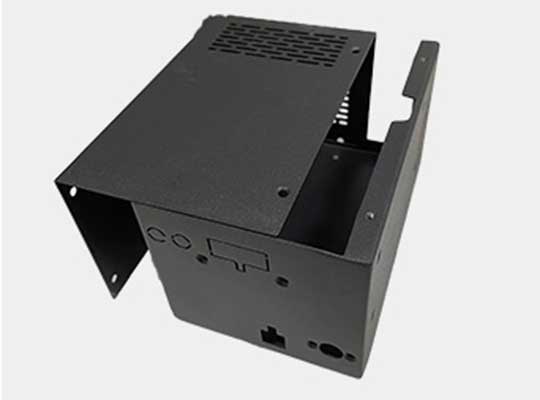
| Cutting (Laser, Plasma, Waterjet) | Precision shaping of sheet metal into custom sizes. Laser cutting is best for thin metals up to 20mm, while plasma handles thicker materials from 20-100mm. | Automotive parts, electronic enclosures, decorative elements |
| Bending & Forming | Using presses to fold sheet metal into 3D shapes like brackets and frames. Most providers offer CNC bending for consistency. | Industrial machinery components, HVAC ductwork |
| Welding & Assembly | Joining sheet metal parts into finished products such as tanks and cabinets. Common methods include MIG and TIG welding. | Storage solutions, agricultural equipment bodies |
| Finishing (Painting, Galvanizing) | Protecting metal from corrosion and improving aesthetics. Galvanizing is popular for outdoor use like construction. | Exterior signage, marine components |
Specialization matters
Some Russian companies focus exclusively on heavy-industry sheet metal, such as for oil pipelines, while others cater to smaller projects like consumer electronics. Always ask for a portfolio of similar work before partnering.
Top Regions for Sheet Metal Production in Russia
Moscow and Moscow Oblast
The largest market for sheet metal services, with over 300 registered providers. This region is ideal for projects requiring quick turnaround, thanks to dense logistics networks, and access to advanced technology—many firms here still use pre-2022 imported CNC machines.
MetallService Group, a Moscow-based company, specializes in custom sheet metal for the aerospace industry and holds ISO 9001 certification.
Ural Federal District
The heart of Russia’s steel production, with proximity to major steel mills like Magnitogorsk Iron and Steel Works (MMK) . This region offers lower material costs since steel does not need to be transported far. It excels in heavy-duty sheet metal for applications like mining equipment.
A local supplier here told us they can reduce material costs by up to 15% compared to Moscow-based firms.
Northwestern Federal District
Focused on export-oriented sheet metal production, especially for European and Scandinavian markets before 2022, though some trade has shifted to Turkey and China. St. Petersburg is known for high-precision work, such as sheet metal for medical devices.
LenenergoMetall, a St. Petersburg company, produces sheet metal parts for wind turbines and has experience with international quality standards like DIN and ASTM.
How to Choose a Reliable Sheet Metal Supplier in Russia
Step 1: Verify certifications
Choosing the right sheet metal Russia supplier is critical—poor quality or delayed deliveries can derail your project. Follow these practical steps.
Look for ISO 9001 for quality management and ISO 14001 for environmental management. For specialized sectors like aerospace, ask for AS9100. Avoid suppliers without third-party certifications, as they may cut corners on quality.
Step 2: Check production capacity
Ask about their machinery. Do they use CNC laser cutters? What is their maximum order size? A small workshop may struggle with a large order like 10,000 sheet metal brackets, while a large factory may not prioritize small projects.
Step 3: Request samples and references
Always ask for a sample of their work, such as a bent metal bracket, to test durability and precision. Also, ask for 2-3 client references. Call them to ask about on-time delivery and communication.
Step 4: Understand lead times
Post-2022, lead times can vary. Local suppliers typically take 1-4 weeks, while those relying on imported materials may take 6-8 weeks. Be clear about your timeline and get a written commitment.
Step 5: Negotiate payment terms
Most Russian suppliers require a 30-50% deposit upfront, with the balance due on delivery. For long-term projects, ask about volume discounts. We have seen clients secure 10% off for annual orders over 500,000 rubles.
Challenges and Solutions for Working with Sheet Metal Providers in Russia
Challenge 1: Supply chain disruptions
Post-2022, many suppliers cannot access imported steel or machinery parts. This can lead to delays or lower-quality alternatives.
Solution: Prioritize suppliers that use domestic steel from mills like MMK or Novolipetsk Steel and have stockpiled critical parts. Ask: “What percentage of your raw materials are sourced locally?” A good supplier will be transparent about this.
Challenge 2: Language barriers
Not all small to mid-sized suppliers have English-speaking staff, which can lead to miscommunication such as wrong dimensions for a part.
Solution: Work with suppliers that have English-speaking project managers, or hire a local translator for key meetings. Always get technical drawings and specifications in both Russian and English to avoid errors.
Challenge 3: Quality inconsistency
While top providers meet international standards, some smaller firms have variable quality, such as uneven welding or imprecise cuts.
Solution: Conduct on-site inspections if possible, or hire a local quality control firm to check parts before shipment. For remote projects, ask for video inspections of production runs.
Future Trends in Russia’s Sheet Metal Industry (2025-2030)
Growth of domestic machinery production
The Russian government is investing 50 billion rubles (approximately $600 million) in 2024-2026 to develop domestic CNC machines and sheet metal equipment. This will reduce reliance on imports and lower costs for suppliers over time.
Sustainability focus
More providers are adopting eco-friendly practices. These include using recycled steel, which now makes up 30% of raw materials in some factories, and energy-efficient cutting machines. This is driven by both government regulations and demand from European clients via Turkey or China.
Digitalization
Large firms are using AI to optimize production—for example, predicting maintenance needs for CNC machines to reduce downtime. Some providers now offer online portals where clients can track orders in real time, improving transparency.
Yigu Technology’s Perspective on Sheet Metal in Russia
Yigu Technology, as a global provider of manufacturing solutions, sees significant potential in Russia’s sheet metal sector—especially for companies willing to adapt to local dynamics. The shift to import substitution has created opportunities for partnerships between international firms and Russian suppliers. For example, sharing technology to improve domestic equipment, or collaborating on sustainable projects using recycled steel.
However, success requires due diligence: verifying supplier capabilities, understanding local regulations, and building flexible supply chains. We recommend clients start with small pilot projects to test quality and communication before scaling up. For sectors like energy or infrastructure, Russia’s sheet metal industry offers cost advantages and proximity to projects—making it a viable option for long-term growth.
FAQ About Sheet Metal in Russia
1. What is the average cost of sheet metal services in Russia?
Costs vary by service and region. Laser cutting starts at 500 rubles ($6) per meter. Bending starts at 300 rubles ($3.60) per part. Welding starts at 800 rubles ($9.60) per hour. Ural-based suppliers are typically 10-15% cheaper than Moscow firms.
2. Can Russian sheet metal meet international quality standards like DIN or ASTM?
Yes. Top providers like MetallService Group or LenenergoMetall regularly meet DIN, ASTM, and ISO standards. Always confirm with certifications and samples.
3. How long does it take to ship sheet metal from Russia to other countries?
To Turkey or Central Asia: 1-2 weeks by road. To China: 3-4 weeks by rail. To Europe via third countries: 4-6 weeks. Shipping times may vary due to customs delays.
4. Are there any import taxes or duties for sheet metal from Russia?
This depends on your country. The EU has a 25% duty on Russian steel products as of 2024, while Turkey has a 10% duty. Check your local customs authority for updates.
5. What materials are most commonly used in Russian sheet metal production?
Carbon steel accounts for 70% of production, stainless steel for 20%, and aluminum for 10%. High-grade alloys for aerospace are still partially imported, but domestic production is growing.
Discuss Your Projects with Yigu Rapid Prototyping
Navigating sheet metal services in Russia requires the right expertise and partners. At Yigu Technology, we specialize in connecting innovators with top-tier Russian sheet metal providers. These shops meet the highest standards for aerospace, automotive, construction, and industrial applications.
Whether you need rapid prototypes in weeks or high-volume production runs, we offer tailored solutions. Our team provides design for manufacturability feedback, material selection guidance, and end-to-end project management. We work with certified providers across Russia’s key industrial hubs—from Moscow to the Ural region to St. Petersburg—that excel in laser cutting, bending, welding, and finishing processes.
If you have a project ready to move forward, contact Yigu Rapid Prototyping today. Let’s turn your ideas into precision sheet metal reality.