
Introduction
In the realm of CNC machining, pocket milling stands as a fundamental and widely used operation. It is critical for creating cavities, recesses, and pockets in a vast range of workpieces, from aerospace components to consumer electronics parts. Whether you are a seasoned CNC programmer, a manufacturing engineer, or a procurement professional sourcing machining services, understanding the nuances of this process is essential to ensuring part quality, reducing production costs, and optimizing efficiency. This article is designed to take you from the basics of pocket milling to advanced best practices, covering key concepts like how it works, material-specific techniques, and virtual machining applications. By the end, you will have a comprehensive grasp of pocket milling and the knowledge to apply it effectively to your projects.
1. What Is Pocket Milling?
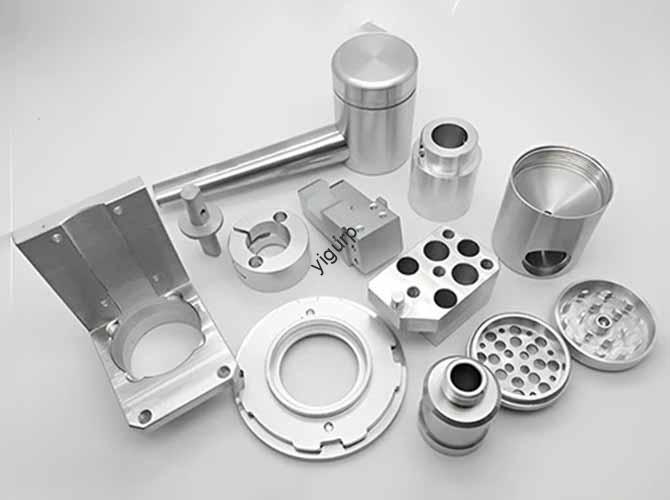
Pocket milling is a subtractive CNC machining operation that involves cutting out a flat-bottomed or curved cavity, known as a “pocket,” from the surface of a workpiece while leaving the surrounding material intact. Unlike drilling, which creates cylindrical holes, pocket milling can produce cavities of various shapes—including rectangular, circular, irregular, and complex geometric forms—making it highly versatile.
There are two primary types of pocket milling based on depth:
- Standard Pocket Milling: Creates shallow cavities, typically up to five times the cutter diameter. This is the most common type used in general manufacturing.
- Deep Pocket Milling: Involves cutting cavities with a depth greater than five times the cutter diameter. This type requires specialized techniques to avoid tool deflection, overheating, and poor surface finish.
Key applications of pocket milling include housing components for electronics, engine blocks in automotive manufacturing, mold and die cavities, aerospace structural parts, and medical device casings. According to a 2025 survey by the Association for Manufacturing Technology, pocket milling accounts for approximately 35% of all CNC milling operations, highlighting its importance.
2. How Does Pocket Milling Work?
Pocket milling operates on the principle of using a rotating cutter, typically an end mill, to remove material in a controlled, programmed path. The process involves several key steps, each critical to achieving precision results.
- Workpiece Setup: The workpiece is secured to the CNC machine table using jigs, fixtures, or clamps to prevent movement during machining. Proper fixturing is essential to avoid vibration, which can cause tool wear and a poor surface finish.
- Tool Selection: The appropriate end mill is chosen based on the pocket size, material, depth, and desired surface finish. Common types include flat-end mills for flat-bottomed pockets, ball-end mills for curved pockets, and corner radius end mills for reducing stress concentrations in corners.
- Programming: The CNC machine is programmed using CAM software to define the tool path. The program includes parameters such as cutting speed, feed rate, and depth of cut.
- Roughing Cut: The initial passes remove the majority of material from the pocket area. Roughing is typically done at a faster feed rate and larger depth of cut to maximize material removal efficiency.
- Finishing Cut: A final pass achieves the exact dimensions, surface finish, and tolerances of the pocket. Finishing is done at a slower feed rate and smaller depth of cut to minimize tool deflection and ensure precision.
- Quality Inspection: The finished pocket is inspected using tools like calipers, micrometers, or a CMM to verify dimensions and tolerances.
3. Pocket Milling Techniques for Different Materials
Different materials present unique challenges, requiring adjusted techniques, tooling, and machining parameters.
Milling Deep Pockets in Aluminum
Aluminum is a lightweight, ductile material that is relatively easy to machine. However, deep pocket milling in aluminum requires careful attention to chip evacuation. Chips can easily clog the pocket, causing overheating and a poor surface finish.
- Tool Selection: Use a carbide end mill with a large flute count (4-6 flutes) to improve chip evacuation.
- Machining Parameters: Opt for high cutting speeds (1500-3000 SFM) and moderate feed rates.
- Chip Evacuation: Use coolant to flush chips out of the pocket. For deep pockets, consider using a through-coolant end mill.
- Tool Path: Use a spiral or helical tool path to gradually plunge into the material, reducing tool stress.
Case Study: Yigu Technology was tasked with deep pocket milling in 6061 aluminum for an automotive heat sink component. The initial challenge was chip clogging. By switching to a 4-flute carbide end mill with through-coolant and using a spiral tool path, they successfully completed the project with a 99.5% yield and a surface finish of 32 Ra.
Pocket Milling of Titanium Alloys
Titanium is strong and heat-resistant but difficult to machine due to its low thermal conductivity, which traps heat at the cutting edge. Pocket milling titanium requires specialized tooling and low cutting speeds.
| Parameter | Titanium Alloy (Ti-6Al-4V) | Aluminum (6061) |
|---|---|---|
| Cutting Speed (SFM) | 50-150 | 1500-3000 |
| Feed Rate (IPM) | 10-30 | 50-150 |
| Depth of Cut (inches) | 0.02-0.05 | 0.1-0.2 |
| Tool Material | Carbide with TiAlN coating | HSS or carbide |
4. What Are the Best Practices for Pocket Milling?
Following these best practices will help you achieve consistent, high-quality results.
- Optimize Tool Selection: Match the end mill to the pocket geometry and material.
- Use Proper Fixturing: Secure the workpiece firmly to prevent movement and vibration.
- Separate Roughing and Finishing Cuts: Roughing removes material quickly, while finishing ensures precision.
- Manage Chip Evacuation: Clogged chips cause overheating and tool wear. Use coolant and adjust the tool path.
- Program for Tool Path Efficiency: Minimize tool retractions to reduce cycle time.
- Inspect Early and Often: Conduct in-process inspections to catch dimensional errors early.
Another critical practice is avoiding sharp internal corners. Design pockets with a corner radius equal to or larger than the end mill radius to improve tool life and surface finish.
5. What Are the Advanced Technologies in Pocket Milling?
Virtual Machining for Pocket Milling
Virtual machining is a digital simulation technology that allows manufacturers to test pocket milling programs before running them on a physical machine. This helps identify potential issues like tool collisions and inefficient tool paths, reducing the risk of costly errors.
Yigu Technology uses advanced virtual machining software to simulate programs for complex aerospace components. This has reduced programming errors by 85% and shortened setup time by 40%.
Hybrid Abrasive Waterjet and Milling Process
For extremely hard materials or complex pocket geometries, a hybrid process combines the high material removal rate of abrasive waterjet cutting with the precision of CNC milling. The waterjet does the roughing, and the CNC mill performs the finishing cut. This reduces cycle time by 30-50% and minimizes tool wear.
Conclusion
Pocket milling is a fundamental and versatile CNC operation essential for creating cavities in a wide range of components. By understanding the differences between standard and deep pocket milling, mastering material-specific techniques, and following best practices for tool selection and chip evacuation, manufacturers can achieve high precision and efficiency. Advanced technologies like virtual machining and hybrid processes further enhance capabilities, enabling the production of even the most complex parts.
FAQ
What is the difference between pocket milling and face milling?
Pocket milling creates cavities within the workpiece, while face milling flattens or smooths the surface. Face milling is typically a surface operation, while pocket milling is a deep-cutting operation.
What causes tool deflection in pocket milling, and how can it be prevented?
Tool deflection is caused by excessive cutting forces, a long tool length, or insufficient rigidity. To prevent it, use the shortest possible end mill, select a rigid carbide tool, reduce the depth of cut, and use a spiral tool path.
Can pocket milling be used for irregularly shaped pockets?
Yes, pocket milling is ideal for irregular shapes. Modern CAM software allows for custom tool paths that follow the contour of any free-form curve or complex geometric pattern.
How does CAM software improve pocket milling results?
CAM software generates optimized tool paths that reduce cutting forces and cycle time, simulates paths to detect collisions, and supports advanced strategies like high-speed machining. It also ensures consistency across multiple workpieces.
Discuss Your Projects with Yigu Rapid Prototyping
At Yigu Rapid Prototyping, we specialize in precision pocket milling services for a wide range of industries. Our team has the expertise to handle complex projects, from shallow pockets to deep cavities in materials like aluminum, titanium, and steel. We use advanced virtual machining and offer hybrid processes for hard-to-machine materials.
Contact Yigu Rapid Prototyping today to discuss your project. Let’s build something great together.