
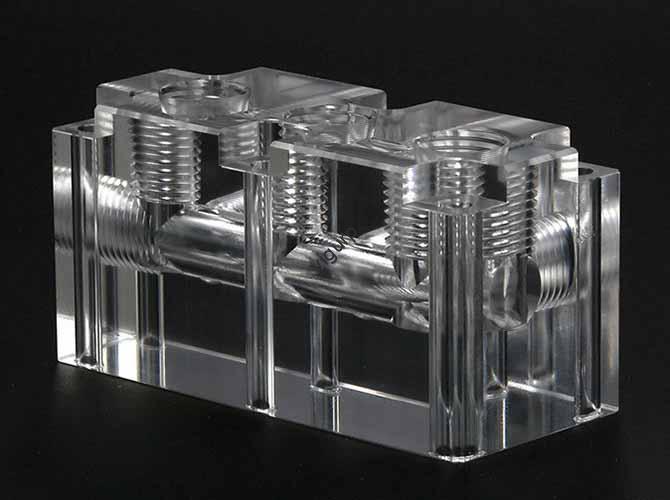
Acrylic is a go-to material for prototypes, especially when you need that clear, glass-like look without the weight or fragility. From sleek phone stands to durable display cases, making acrylic prototypes helps you verify design, fit, and function before committing to mass production. But acrylic is different from machining metal or printing plastic. It’s brittle, can crack easily, and requires specific tools and techniques. This article walks you through the entire process, from choosing the right acrylic sheet to bonding and polishing, so you can create high-quality, precision prototypes every time.
What Are the Core Objectives of Making Acrylic Prototypes?
Before you start cutting, know exactly what you want the prototype to achieve. This guides your material choice and processing steps.
How Does Appearance Validation Work?
Acrylic is often chosen for its clarity. You need to confirm that look.
- Check transparency: Does the prototype have that crystal-clear, 90%+ light transmittance you need? Or is it cloudy or yellowish?
- Verify surface finish: Is it smooth and scratch-free? A prototype for a retail display needs a perfect, polished surface.
- Match color: For colored acrylic, does the shade of red or black match your brand guidelines?
Real example: A client wanted a clear acrylic phone stand. The first prototype, cut with a laser at too high a speed, had a rough, frosted edge. It didn’t look premium. We adjusted the laser settings and polished the edges. The second prototype was crystal clear, and they approved the design immediately.
Why Check Structural Feasibility?
Acrylic is rigid but can crack under stress. You need to test if it’s strong enough.
- Test load-bearing: Will a 3mm thick acrylic shelf hold a 5kg weight without bending or snapping?
- Check thickness: Is the material thick enough to prevent flexing in the final product?
- Evaluate joints: Will glued corners hold under normal use, or will they pop apart?
What Does Assembly Compatibility Testing Involve?
Your acrylic part will likely need to fit with other components.
- Align holes: Do the 5mm diameter hinge holes line up perfectly with the metal pins?
- Check tolerances: Is there enough gap (or too much) between the acrylic part and a plastic housing? A tolerance of ±0.1mm on a hole position is often critical.
- Test fit: Does the acrylic cover snap into place, or is it too tight and at risk of cracking?
When Is Material Performance Verification Needed?
Sometimes you need to test how acrylic behaves in its intended environment.
- Heat resistance: Will the prototype warp if left near a warm window or inside a car? Acrylic softens around 80°C-100°C.
- Chemical resistance: For a food container, will it stain from coffee or resist kitchen cleaners?
- Impact resistance: For a protective cover, do you need a special impact-resistant acrylic that’s 5x stronger than the standard type?
What Is the Step-by-Step Workflow for Making Acrylic Prototypes?
Follow this linear process. Skipping steps leads to cracks, cloudy edges, or parts that don’t fit.
Step 1: Preliminary Preparation: How Do You Lay the Foundation?
Good preparation prevents mistakes.
What Goes into Design Drawing and File Prep?
- Create a 3D model: Use software like SolidWorks or Fusion 360. Model every detail.
- Specify all dimensions, like 200mm x 150mm x 5mm for a phone stand.
- Add features like chamfers (aim for at least 0.5mm to avoid sharp, dangerous edges).
- Define hole positions and sizes.
- Set tolerances: Decide which dimensions are critical. A hole for a pin might need ±0.1mm. An outer edge might be fine at ±0.2mm.
- Export the right file: For CNC or laser cutting, export an STL or DXF file. For manual cutting, a 2D drawing with dimensions is fine.
How Do You Choose the Right Acrylic Sheet?
The type of acrylic you pick changes everything.
| Acrylic Type | Key Properties | Best Use Cases |
|---|---|---|
| Transparent Acrylic | 90-92% light transmittance, crystal clear | Phone stands, display cases, light covers, clear boxes |
| Colored Acrylic | Opaque or translucent, color runs through the whole sheet | Branded signage, decorative panels, colored furniture parts |
| Thick Acrylic (10-20mm) | Very rigid, can bear heavy loads | Shelves, table tops, heavy-duty displays |
| Thin Acrylic (1-5mm) | Lightweight, can be bent with heat | Phone case inserts, flexible display frames, small boxes |
| Specialty Acrylic | Impact-resistant (5x stronger) or food-grade (non-toxic) | Protective covers, food containers, medical device housings |
What Tools and Equipment Will You Need?
Gather your tools based on your cutting method.
| Tool Category | For Manual Cutting | For Automated Cutting (CNC/Laser) | Purpose |
|---|---|---|---|
| Cutting Tools | Sharp utility knife, fine-tooth acrylic saw (18-24 TPI), ruler | CNC Engraving Machine, Laser Cutter | Shaping the acrylic sheet |
| Sanding Tools | Sandpaper (80 to 2000 grit), sanding block | Orbital sander, polishing machine | Smoothing edges and surfaces |
| Drilling Tools | Hand drill (variable speed), acrylic-specific drill bits | CNC drill press for precision holes | Creating holes for assembly |
| Bonding Tools | Acrylic solvent glue (like trichloromethane), clamps, cotton swabs | Automated glue dispenser (for batches) | Joining multiple acrylic parts |
| Safety Gear | Safety glasses, chemical-resistant gloves, dust mask | Machine safety enclosure, ventilation system | Protecting yourself |
Step 2: Processing and Production: How Do You Shape the Acrylic?
This is where your design becomes a physical object.
Cutting: Manual vs. Automated – Which Method Is Best?
Choose your method based on the part’s complexity and your budget.
- Manual Cutting:
- Process: Mark your lines with a ruler. For straight cuts, score deeply with a knife 5-10 times, then snap the sheet over a sharp edge. For curves, use a fine-tooth saw.
- Pros: Very low cost, fast setup for simple shapes.
- Cons: Low precision (maybe ±0.5mm), high risk of uneven edges or cracks. Not for complex shapes.
- Best for: A simple, one-off rectangular part.
- Laser Cutting:
- Process: Import your file. Set laser power (e.g., 30-50W for 1-5mm acrylic) and speed. The machine cuts automatically.
- Pros: Very high precision (±0.1mm), clean edges that often need no sanding, perfect for complex shapes.
- Cons: High equipment cost. The laser can leave a slightly frosted edge on some acrylics.
- Best for: Complex prototypes with curves and fine details.
- CNC Machining:
- Process: Import your file. Set spindle speed (e.g., 10,000-15,000 RPM) and feed rate. The machine cuts the shape.
- Pros: High precision (±0.05mm), good for thicker acrylic and creating 3D features like pockets.
- Cons: Slower than laser for thin sheets, requires tool changes for different features.
- Best for: Thick acrylic parts or prototypes with 3D contours.
Sanding: How Do You Achieve Smooth Surfaces?
Sanding removes rough edges and prepares the surface for polishing.
- Coarse sanding (80-120 grit): Use this to quickly remove big burrs and saw marks. Sand perpendicular to the edge.
- Medium sanding (240-400 grit): This smooths out the scratches from the coarse sanding.
- Fine sanding (800-2000 grit): This prepares the surface for a clear, polished finish. For transparent parts, you must go this fine.
- Check your work: Wipe the surface with a damp cloth between grits to see your progress and remove dust.
Drilling: How Do You Create Holes Without Cracking Acrylic?
Acrylic cracks easily if drilled wrong. Follow these steps.
- Mark the spot: Use a center punch to make a small dent. This stops the drill bit from wandering.
- Pick the right bit: Use a drill bit specifically for acrylic or plastic. It has a sharper angle (around 60 degrees) than a standard bit.
- Set up: Secure the acrylic sheet firmly with clamps. Put a scrap piece of wood underneath. This prevents chipping as the drill breaks through.
- Drill carefully: Use a medium speed (1000-1500 RPM). Apply light, steady pressure. Don’t force it. If the acrylic gets hot, pause and let it cool, or dip the bit in water.
Bonding: How Do You Join Acrylic Parts Strongly?
For prototypes with multiple pieces, you need to bond them.
- Prepare the surfaces: Clean the edges to be glued with isopropyl alcohol. They must be perfectly clean and oil-free.
- Apply the glue: Use a solvent-based acrylic glue. For small parts, apply a thin layer with a cotton swab or a syringe. Less is more – too much glue causes cloudiness.
- Clamp and cure: Press the parts together. Use clamps to hold them firmly in place. Let them cure for at least 4-24 hours at room temperature. Don’t move them during this time.
Step 3: Post-Processing: How Do You Refine the Prototype?
Final steps make the prototype look and perform its best.
Polishing: How Do You Get a High-Gloss Finish?
For transparent acrylic, polishing makes it look like glass.
- Manual polishing: Apply a small amount of acrylic polishing paste (with cerium oxide) to a soft cloth. Rub in circular motions for a few minutes, then buff clean.
- Machine polishing: Use a low-speed polisher (1000-1500 RPM) with a soft cotton or felt wheel. Apply polishing paste and work across the surface. This is faster for large areas.
Cleaning and Final Inspection: How Do You Know It’s Right?
- Clean: Wash the prototype with mild soap and water to remove all dust, glue residue, and polishing compound. Use a soft cloth or brush.
- Dry: Pat it dry with a lint-free microfiber cloth to avoid water spots.
- Inspect:
- Appearance: Check for scratches, cloudiness, or glue marks.
- Dimensions: Measure critical holes and edges with digital calipers. Is the hole 5mm ±0.1mm?
- Structure: Gently pull on glued joints. They should feel solid. If it’s a shelf, put a weight on it. Does it hold?
- Safety: Run your finger along all edges. They should be smooth and chamfered, not sharp.
What Are the Critical Safety Precautions?
Working with acrylic involves sharp tools, potentially toxic glue, and heat. Stay safe.
- Cutting and drilling safety: Always wear safety glasses. Acrylic shards can fly off and hurt your eyes. Use clamps to hold the work, never your hands.
- Glue safety: Use solvent-based glues only in a well-ventilated area. The fumes are strong. Wear chemical-resistant gloves (like nitrile) to protect your skin.
- Laser cutting safety: Laser cutters must have a ventilation system. They produce fumes that are harmful to breathe.
- Material handling safety: Acrylic is brittle. Don’t drop thick sheets; they can shatter. Keep prototypes away from high heat (like direct sunlight in a car), as acrylic can soften and warp above 80°C.
Conclusion
Making acrylic prototypes is a precise craft. It starts with a clear goal: are you testing appearance, strength, or fit? Choose your acrylic sheet based on that goal—transparent for clarity, thick for strength. Prepare a detailed 3D model with proper tolerances. For cutting, laser cutting offers the best precision for most parts, while manual cutting works for simple, one-off shapes. Sanding is essential, moving from coarse to fine grits. Drilling requires the right bit and gentle pressure to avoid cracks. Bonding needs clean surfaces and proper curing time. Finally, polish for that glass-like finish and inspect every detail. By following this step-by-step workflow, you can create acrylic prototypes that are accurate, beautiful, and functional.
FAQ
How do I prevent acrylic from cracking when drilling?
Use a drill bit specifically designed for acrylic. It has a sharper point angle. Clamp the acrylic securely to a workbench with a scrap piece of wood underneath. Drill at a medium speed (1000-1500 RPM) with light, steady pressure. Don’t force the bit. Let the tool do the work.
Can I bend acrylic sheets at home for a prototype?
Yes, thin acrylic (under 3mm) can be bent using a strip heater or even a heat gun. Heat the acrylic along the bend line until it becomes soft and pliable (around 160°C). Then, quickly bend it to the desired angle and hold it in place until it cools and hardens. For precise angles, use a simple jig or mold.
What’s the best glue for clear acrylic prototypes?
Solvent-based acrylic glues, like those containing methylene chloride or trichloromethane, are the best. They chemically weld the acrylic together, creating a bond that is nearly as strong as the original material and leaves no visible glue line. Always use them in a well-ventilated area.
Discuss Your Projects with Yigu Rapid Prototyping
Need a flawless acrylic prototype for your next product? At Yigu Rapid Prototyping, we specialize in precision acrylic fabrication. Whether you need a crystal-clear phone stand for a photoshoot, a durable acrylic display case for a trade show, or a complex part with tight tolerances, we have the expertise. Our team in Shenzhen uses advanced laser cutting and CNC machining to deliver parts with clean edges and perfect fit. We help you choose the right acrylic type and finish, from high-gloss polishing to matte textures. Contact us to discuss your project and get a detailed quote today.