
What Are Key Machining Manufacturing Process Types and Steps?

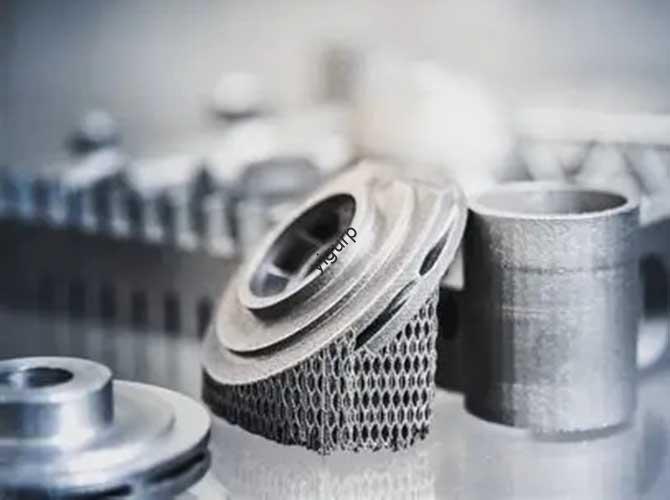
cobalt chrome 3d printing

The machining manufacturing process is the backbone of modern manufacturing, enabling the creation of precise, functional components used in aerospace, automotive, medical, and countless other industries. From shaping raw materials into intricate parts to refining surfaces for optimal performance, understanding the diverse machining manufacturing process types, their principles, and applications is critical for engineers, machinists, […]

The machining manufacturing process is the backbone of modern manufacturing, enabling the creation of precise, functional components used in aerospace, automotive, medical, and countless other industries. From shaping raw materials into intricate parts to refining surfaces for optimal performance, understanding the diverse machining manufacturing process types, their principles, and applications is critical for engineers, machinists, and business owners alike. Whether you’re selecting a process for a new project, optimizing existing production, or simply expanding your industry knowledge, this guide provides a comprehensive breakdown of the core machining manufacturing process elements—delivering actionable insights and real-world context to help you make informed decisions.

What Is Machining Manufacturing Process? A Fundamental Definition

At its core, a machining manufacturing process refers to a set of operations that remove material from a raw workpiece (e.g., metal, plastic, composite) to achieve a desired shape, size, and surface finish. Unlike additive manufacturing (which builds parts layer by layer) or formative processes (which mold or cast materials), machining is a subtractive process—relying on cutting tools, abrasives, or other energy sources to eliminate excess material.

Key characteristics of a successful machining manufacturing process include precision (tolerances as tight as ±0.0001 inches), repeatability (consistent results across high-volume production), and adaptability (ability to process a wide range of materials). According to the Manufacturing Technology Association, subtractive machining accounts for approximately 60% of global manufacturing output for metal components, highlighting its widespread importance.

Machining vs. Manufacturing: Clarifying the Key Differences

A common source of confusion is the distinction between “machining” and “manufacturing.” While the two terms are often used interchangeably, they are not synonymous. Below is a clear breakdown of their differences and relationship:

AspectManufacturingMachiningRelationship
DefinitionThe broad process of converting raw materials into finished goods, using any combination of techniques (subtractive, additive, formative).A specific subtractive technique within manufacturing that removes material to shape workpieces.Machining is a subset of manufacturing.
Technique TypesIncludes machining, 3D printing, casting, forging, injection molding, welding, etc.Includes turning, milling, drilling, grinding, EDM, ECM, etc.Machining techniques are specialized subsets of manufacturing methods.
Material HandlingCan add, remove, or reshape material; works with raw materials, semi-finished parts, or assemblies.Exclusively removes material; focuses on refining raw or semi-finished workpieces.Machining often serves as a finishing step in broader manufacturing workflows.
Primary GoalProduce functional, market-ready products (e.g., a complete car engine, a medical implant).Create precise components or refine surfaces to meet design specifications (e.g., a engine piston, a implant screw).Machining outputs are critical inputs for final manufacturing assembly.

Example: Manufacturing a stainless steel medical implant involves several steps: casting the raw implant blank (formative manufacturing), machining the blank to precise dimensions (machining manufacturing process), and polishing the surface (finishing process). Here, machining is a key subset of the overall manufacturing workflow.

Core Classifications of Machining Manufacturing Process

The machining manufacturing process is divided into two primary categories based on the energy source and material removal mechanism: Conventional Machining Processes (relying on physical cutting tools) and Non-Conventional Machining Processes (using electrical, chemical, or thermal energy). Below is a detailed breakdown of each category, including key process types, principles, and applications.

1. Conventional Machining Manufacturing Processes

Conventional machining manufacturing process types use solid cutting tools to physically shear or chip away excess material from the workpiece. These processes are well-established, cost-effective for many applications, and ideal for processing a wide range of metals and plastics. Common conventional processes include:

Process TypeCore PrincipleKey EquipmentIdeal MaterialsTypical ApplicationsPrecision Level
TurningWorkpiece rotates; stationary cutting tool removes material from the outer or inner diameter to create cylindrical shapes.CNC lathe, manual latheSteel, aluminum, brass, stainless steelShafts, bolts, nuts, cylindrical housings±0.0005 inches
MillingCutting tool rotates; workpiece moves (or tool moves relative to workpiece) to create flat surfaces, slots, pockets, or complex 3D features.3/4/5-axis CNC mill, vertical/horizontal millAluminum, steel, composites, titaniumAerospace brackets, automotive engine parts, mold cavities±0.0001 inches
DrillingRotating drill bit penetrates the workpiece to create cylindrical holes; may include secondary steps like countersinking or counterboring.Drill press, CNC mill, latheMost metals, plastics, woodHoles for fasteners, fluid passages, electrical components±0.001 inches (standard); ±0.0005 inches (precision)
GrindingAbrasive wheel rotates to remove small amounts of material; used for finishing or refining surfaces to tight tolerances.Surface grinder, cylindrical grinder, centerless grinderHardened steel, carbide, ceramicPrecision bearings, tool bits, medical implant surfaces±0.00005 inches
SawingToothed blade (circular, band, or hacksaw) cuts workpiece into smaller pieces; often a preliminary step before other machining processes.Band saw, circular saw, CNC sawSteel, aluminum, wood, plasticCutting raw material blanks, separating finished parts±0.01 inches
BroachingMulti-toothed broach tool is pushed or pulled through the workpiece to create complex internal or external shapes (e.g., keyways, splines).Broaching machine, CNC mill (for broach tools)Steel, cast iron, aluminumKeyways in shafts, splined holes, gear teeth±0.0005 inches
PlaningLinear cutting tool moves back and forth across the workpiece to create flat surfaces; similar to milling but for larger workpieces.Planer machineSteel, cast iron, large aluminum partsLarge machine bases, engine blocks, structural components±0.001 inches

Case Study: Yigu Technology was contracted to produce 10,000 aluminum automotive connecting rods. The team selected a conventional machining manufacturing process workflow: sawing raw aluminum blanks to length, turning the outer diameter to create cylindrical features, milling the rod ends to flat surfaces, and drilling holes for fasteners. By optimizing the turning and milling parameters (cutting speed, feed rate), Yigu achieved a cycle time of 2.5 minutes per part and maintained a tolerance of ±0.0008 inches—meeting the automotive manufacturer’s strict quality requirements while ensuring cost-effectiveness for high-volume production.

2. Non-Conventional Machining Manufacturing Processes

Non-conventional machining manufacturing process types use energy sources other than physical cutting tools (e.g., electrical, chemical, thermal, or abrasive jet) to remove material. These processes are ideal for hard-to-machine materials (e.g., titanium, carbide, ceramics), complex geometries that are impossible with conventional tools, or applications requiring minimal tool wear and no mechanical stress on the workpiece. Common non-conventional processes include:

Process TypeCore PrincipleKey EquipmentIdeal MaterialsTypical ApplicationsAdvantages
Electrical Discharge Machining (EDM)Electric sparks between tool (electrode) and workpiece melt and vaporize material; no physical contact.CNC EDM machine (wire EDM, sinker EDM)Hardened steel, carbide, titaniumComplex mold cavities, small holes, intricate parts for aerospace/medicalNo tool wear; can machine hard materials; high precision
Electrochemical Machining (ECM)Electrochemical reaction dissolves material from the workpiece; tool acts as cathode, workpiece as anode.ECM machine, electrolyte systemStainless steel, titanium, superalloysTurbine blades, aerospace components, large complex partsNo thermal stress; high material removal rate; smooth surface finish
Chemical Machining (CM)Chemical etchant dissolves unmasked areas of the workpiece; used for shallow features or surface patterning.Etching tank, masking equipmentAluminum, copper, stainless steel, glassPrinted circuit boards (PCBs), decorative panels, thin-walled partsLow cost for large batches; no mechanical stress
Abrasive Jet Machining (AJM)High-pressure jet of abrasive particles (e.g., aluminum oxide) erodes material from the workpiece.AJM machine, abrasive feeder, pressure systemGlass, ceramic, plastic, brittle metalsCutting glass, deburring delicate parts, creating fine holesNo thermal damage; can machine brittle materials
Laser Beam Machining (LBM)High-intensity laser beam melts, vaporizes, or ablates material; precise and fast for small features.CNC laser cutting machine, laser engraverMost metals, plastics, compositesPrecision cutting of thin sheets, engraving, drilling micro-holesExtremely high precision; non-contact; fast cycle times
Ultrasonic Machining (USM)High-frequency ultrasonic vibrations of a tool (with abrasive slurry) erode material from the workpiece.USM machine, ultrasonic transducer, abrasive slurry systemGlass, ceramic, carbide, brittle metalsDrilling holes in ceramic insulators, machining brittle aerospace componentsNo thermal stress; can machine hard brittle materials

The 6 Key Steps of a Standard Machining Manufacturing Process

Regardless of the specific machining manufacturing process type, most workflows follow a standardized sequence of steps to ensure quality, efficiency, and consistency. Below is a step-by-step breakdown of the typical process:

  1. Design & Planning: Start with a detailed CAD (Computer-Aided Design) model of the part, specifying dimensions, tolerances, and surface finish requirements. Engineering teams then select the appropriate machining manufacturing process (conventional vs. non-conventional), workpiece material, and cutting tools. CAM (Computer-Aided Manufacturing) software is used to generate tool paths and machining parameters (cutting speed, feed rate, depth of cut) for CNC machines. According to a study by the National Institute of Standards and Technology (NIST), thorough planning reduces machining errors by up to 40%.
  2. Material Selection & Preparation: Choose a workpiece material that matches the part’s functional requirements (e.g., strength, corrosion resistance, weight) and is compatible with the selected machining process. Raw materials are prepared by cutting to rough blank size (via sawing or shearing) and cleaning to remove debris, oil, or rust. For example, titanium aerospace components require blanks that are preheated to reduce machining stress.
  3. Machine Setup: Mount the workpiece on the machine (using fixtures, chucks, or clamps) to ensure stability during machining. Install and calibrate cutting tools or electrodes (for non-conventional processes), and verify tool alignment using a tool presetter. For CNC machines, load the CAM-generated program and perform a dry run (no material removal) to check for tool collisions or path errors.
  4. Machining Operation: Execute the selected machining manufacturing process (turning, milling, EDM, etc.) to remove excess material from the workpiece. Operators monitor the process to ensure consistent performance, adjusting parameters as needed for material variations or tool wear. For high-volume production, automated CNC machines run unattended, with sensors detecting errors or tool breakage.
  5. Quality Inspection: After machining, inspect the part using precision measuring tools (CMMs, micrometers, optical comparators) to verify compliance with CAD specifications. Non-destructive testing (NDT) techniques (e.g., ultrasonic testing, X-ray inspection) may be used for critical components (e.g., aerospace parts) to detect internal defects. Parts that fail inspection are reworked or scrapped.
  6. Finishing & Assembly: Perform post-machining finishing operations to improve surface quality or add functional properties (e.g., grinding, polishing, anodizing, or heat treatment). Finished parts are then assembled into larger components or products, with final quality checks to ensure assembly fit and performance.

How to Select the Right Machining Manufacturing Process

Selecting the optimal machining manufacturing process requires balancing part requirements, material properties, cost, and production volume. Below is a decision-making framework to guide your selection:

  • Evaluate Part Complexity & Tolerances: Simple cylindrical parts (e.g., shafts) are ideal for turning; complex 3D features (e.g., mold cavities) require 5-axis milling or EDM. Tight tolerances (±0.0001 inches) demand precision processes like grinding or LBM, while larger tolerances (±0.01 inches) can be achieved with standard milling or turning.
  • Analyze Workpiece Material: Hard materials (e.g., hardened steel, carbide) require non-conventional processes (EDM, ECM) or carbide tools for conventional machining. Soft materials (e.g., aluminum, plastic) are well-suited for turning, milling, or drilling with HSS tools. Abrasive materials (e.g., composites) may require diamond-coated tools or AJM.
  • Consider Production Volume & Cost: High-volume production (10,000+ parts) benefits from conventional processes (CNC turning/milling) due to lower per-part costs. Low-volume or prototype parts may use non-conventional processes (EDM, LBM) to avoid expensive fixture costs. According to a cost analysis by McKinsey, conventional machining is 20-30% more cost-effective than non-conventional for volumes over 5,000 parts.
  • Assess Functional Requirements: Parts requiring minimal thermal stress (e.g., medical implants) should use non-conventional processes (ECM, USM) that don’t generate heat. Parts needing high surface finish (e.g., bearings) require grinding or polishing as a final step.Key Trends Shaping the Future of Machining Manufacturing Process. The machining manufacturing process is evolving rapidly, driven by advancements in technology, sustainability demands, and industry 4.0 integration.

FAQ About Machining Manufacturing Process

Q1: What is the most common machining manufacturing process? A1: Milling and turning are the most common conventional machining manufacturing process types, accounting for over 70% of industrial machining applications. They are versatile, cost-effective, and suitable for a wide range of materials and part geometries.

Q2: When should I use a non-conventional machining process instead of a conventional one? A2: Use non-conventional processes when machining hard-to-machine materials (titanium, carbide), creating complex geometries (intricate mold cavities), requiring minimal thermal/mechanical stress (medical implants), or machining brittle materials (glass, ceramic) that would crack with conventional tools.

Q3: How does CNC technology impact the machining manufacturing process? A3: CNC (Computer Numerical Control) technology automates machining operations, improving precision (reducing tolerances by 50-80% compared to manual machining), increasing production speed (cycle time reduction of 30-50%), and enabling consistent results across high-volume production. CNC also supports complex tool paths for intricate parts.

Q4: What factors affect the machinability of a material? A4: Machinability (ease of machining a material) is influenced by hardness (softer materials are more machinable), ductility (high ductility can cause chip buildup), thermal conductivity (poor conductivity leads to heat buildup), and abrasiveness (abrasive materials wear tools quickly). For example, aluminum has excellent machinability, while titanium has poor machinability.

Q5: How can I improve the efficiency of my machining manufacturing process? A5: Improve efficiency by optimizing cutting parameters (using CAM software), selecting the right tool material/coating (e.g., TiAlN-coated carbide for hard materials), minimizing tool change time (using quick-change tool holders), implementing automation (robotic loading/unloading), and conducting regular machine maintenance to reduce downtime. Thorough process planning and quality control also prevent rework and scrap.

Discuss Your Projects Needs with Yigu

At Yigu Technology, we specialize in delivering tailored machining manufacturing process solutions for industries ranging from aerospace and automotive to medical and consumer electronics. Our team of experienced engineers and machinists has deep expertise in both conventional (turning, milling, grinding) and non-conventional (EDM, LBM, ECM) processes, enabling us to select the optimal workflow for your part’s requirements. Whether you need high-volume production of aluminum automotive components using conventional CNC milling, precision machining of titanium aerospace parts with EDM, or prototype development via hybrid additive-subtractive processes, we have the technology and expertise to deliver. We prioritize quality at every step—from design planning and material selection to final inspection—ensuring your parts meet tight tolerances and functional requirements. Additionally, our commitment to sustainable machining practices helps reduce your project’s environmental impact without compromising performance. Contact us today to discuss your machining manufacturing process needs. Let our team help you optimize your workflow, reduce costs, and deliver high-quality parts that drive your business success.

Index
Scroll to Top