
Introduction
You have a prototype—maybe a 3D-printed part, a hand-sculpted design, or a CNC-machined component. Now you need more than one. You need 10, 20, or 50 identical copies for testing, user feedback, or small-scale production.
Injection molding is too expensive for such small batches. CNC machining each copy would take forever and cost a fortune. So what do you do?
Silicone mold making is the answer. It is a flexible, cost-effective process that lets you create multiple replicas from a single master prototype. The molds capture incredible detail, cost a fraction of metal tooling, and can be ready in days instead of weeks.
This guide walks you through the entire silicone mold making process, step by step. You will learn what materials and tools you need, how to design your mold, how to avoid common mistakes, and how to produce high-quality replicas consistently. We include real-world examples, data comparisons, and practical tips from years of experience.
By the end, you will have the knowledge to create your own silicone molds—or to work confidently with a partner who can do it for you.
What Is Silicone Mold Making, and Why Use It?
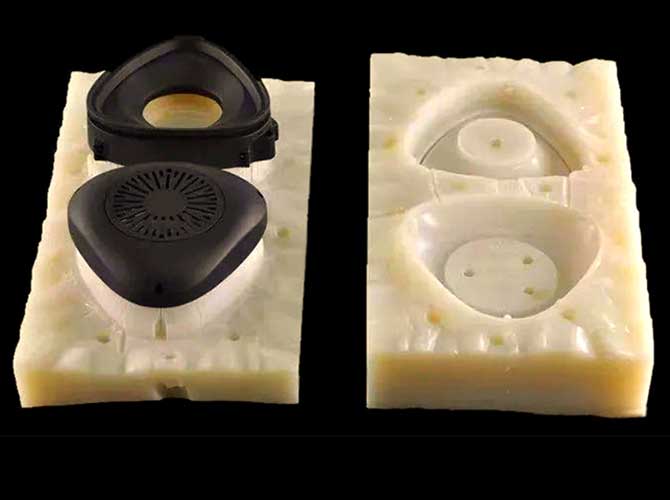
Silicone mold making is a manufacturing process where liquid silicone is poured around a master prototype. Once the silicone cures, you have a flexible, reusable mold. You can then pour casting materials—like polyurethane resin, wax, or even low-melt metals—into that mold to produce identical copies of your original.
Why Is This Process So Popular?
Flexibility: Silicone molds capture tiny details—textures, logos, small holes—that rigid molds might miss. The silicone flexes to release complex shapes without damage.
Cost-effectiveness: A silicone mold costs 30% to 50% less than a metal mold. For small batches of 10 to 100 parts, this makes all the difference.
Speed: From master prototype to finished mold takes 24 to 48 hours. Traditional metal mold making can take weeks.
Material versatility: You can cast a wide range of materials—rigid plastics, flexible rubbers, clear resins, even wax for investment casting.
When Should You Use Silicone Mold Making?
- You need 10 to 50 identical copies of a part.
- Your parts have complex details that machining would struggle with.
- You want to test multiple materials (colors, flexibilities) before committing to production.
- You need parts quickly and cannot wait for metal tooling.
When Should You Look Elsewhere?
- For hundreds or thousands of parts, injection molding becomes more cost-effective.
- For extremely high temperatures, standard silicone degrades above 200°C. Special high-temp silicones exist but cost more.
- For parts under constant mechanical stress, silicone molds wear out after 15 to 30 uses.
What Materials and Tools Do You Need?
Preparation prevents problems. Gather everything before you start.
Core Materials
| Item | Purpose | Key Notes |
|---|---|---|
| Master prototype | The template for your mold | Can be 3D-printed, CNC-machined, or handcrafted. Must be clean and smooth. |
| Liquid silicone rubber | Forms the mold itself | Choose addition-cure silicone for precision (shrinkage <1%). Avoid condensation-cure for detailed prototypes. |
| Silicone curing agent | Hardens the liquid silicone | Usually mixed at 10:1 ratio (silicone to curing agent). Check your brand’s instructions. |
| Mold release agent | Prevents silicone from sticking to the prototype | Spray-on or brush-on. Apply 2 thin coats for best results. |
Essential Tools
| Tool | Purpose | Key Notes |
|---|---|---|
| Mixing bowl and stirring rod | Mix silicone and curing agent | Use plastic bowls—metal can react with some silicones. Stir slowly to avoid bubbles. |
| Plastic container (mold frame) | Holds the prototype and silicone | Choose a container 2-3cm larger than the prototype on all sides. Must be leak-proof. |
| Support materials (gypsum/fiberglass) | Reinforces the mold frame | Gypsum for small molds. Fiberglass for larger molds (prevents frame warping). |
| Utility knife or scalpel | Cuts the cured mold | Use a sharp blade to avoid tearing the silicone. |
| Vacuum chamber (optional) | Removes bubbles from mixed silicone | Critical for detailed prototypes. Use -0.095MPa pressure for 1-2 minutes. |
Pro Tip
If you are new to silicone mold making, buy a small starter kit from a reputable supplier. It will include measured materials and instructions. Once you understand the process, you can buy in bulk.
Step 1: Design the Mold’s Parting Surface
The parting surface is the line where you will cut the cured mold to remove the master prototype. Getting this right is critical.
What Is a Parting Surface?
Think of a silicone mold like a clamshell. You pour silicone around your prototype, let it cure, then cut the mold open along a planned line. The two halves separate, you remove the prototype, and you now have a cavity in the shape of your part.
How to Choose the Parting Surface
For simple shapes (like a flat keychain or a smooth block):
- Place the parting surface in the middle, splitting the mold into two equal halves.
For complex shapes (like a figurine with limbs):
- Position the parting surface where it minimizes cutting through important details.
- Often this means following natural contours—between the body and arms, for example.
For parts with undercuts (features that would lock into a rigid mold):
- Silicone’s flexibility handles undercuts, but you still need a parting surface that lets you access all features.
Real-world example: A jewelry maker designed a mold for a pendant with an engraved pattern. They placed the parting surface along the pendant’s edge. When they cut the cured mold, the blade followed the edge line without damaging the detailed engraving inside the cavity.
Common Mistake
Placing the parting surface through a detailed area. If your blade has to cut across intricate features, you will damage the mold. Study your prototype and plan the parting line to avoid details.
Step 2: Prepare the Master Prototype
A clean, well-prepped prototype ensures your mold captures every detail.
Cleaning
- Wipe the prototype with a lint-free cloth to remove dust, oil, or fingerprints.
- For 3D-printed prototypes, check for support nubs or rough spots. Sand them smooth.
- For CNC-machined parts, ensure no cutting oil remains.
Apply Mold Release Agent
Mold release is non-negotiable. Without it, silicone bonds to your prototype, ruining both.
- Apply the release agent evenly over the entire prototype surface.
- Use a brush for detailed areas, spray for larger surfaces.
- Let it dry for 10 to 15 minutes (follow your product’s instructions).
- Apply a second thin coat for insurance.
Double-Check
Inspect the prototype under good light. Any missed spot where silicone can touch bare prototype material will cause sticking.
Common Mistake: A hobbyist once skipped mold release on a 3D-printed resin prototype, thinking “it will probably be fine.” When they tried to remove the cured silicone, the prototype snapped in half. Eight hours of work, wasted.
Step 3: Build the Mold Frame
The mold frame holds everything in place while the silicone cures.
Positioning the Prototype
- Place the prototype in the center of your plastic container.
- Ensure it is not touching the container walls—you need at least 1cm of clearance on all sides.
Reinforcing the Frame (If Needed)
For small molds (under 15cm), the plastic container may be enough. For larger molds:
- Gypsum (plaster) : Mix with water (about 2:1 ratio). Pour around the container’s edges to create a rigid outer shell. Let cure for 1 to 2 hours.
- Fiberglass: For very large molds, fiberglass reinforcement prevents the frame from warping under the weight of heavy silicone.
Seal Leaks
Check for gaps in the container. Seal any potential leaks with tape (duct tape works well). Silicone is fluid and will find the smallest opening.
Step 4: Mix Silicone and Curing Agent
Proper mixing is the most important step for a bubble-free, uniform mold.
Measure Accurately
Most addition-cure silicones use a 10:1 ratio (10 parts silicone to 1 part curing agent by weight). Check your specific product’s instructions—ratios vary.
Use a digital scale for accuracy. Eyeballing leads to soft spots or incomplete curing.
Mix Thoroughly
- Pour the liquid silicone into a plastic mixing bowl.
- Add the curing agent.
- Stir slowly and thoroughly for 3 to 5 minutes.
- Scrape the bottom and sides of the bowl repeatedly. Unmixed silicone at the edges will stay liquid and ruin your mold.
Degas (Optional but Recommended)
After mixing, let the silicone sit for 1 to 2 minutes. Small bubbles will rise to the surface—pop them with a toothpick.
If you have a vacuum chamber:
- Place the mixed silicone in the chamber.
- Apply vacuum (-0.095MPa) for 1 to 2 minutes.
- Watch the bubbles expand and burst. When the foam collapses, degassing is complete.
Pro Tip: For detailed prototypes, a vacuum chamber is worth the investment. Bubbles trapped in the mold cavity will appear as defects in every replica.
Step 5: Pour Silicone into the Mold Frame
Pouring technique matters. Done wrong, you trap bubbles. Done right, you get a flawless mold.
How to Pour
- Tilt the mixing bowl and pour slowly.
- Start at the edge of the container, not directly onto the prototype.
- Let the silicone flow gently over and around the prototype.
- Continue pouring until the silicone covers the prototype by 1cm to 2cm .
Remove Trapped Air
- If you have a vacuum chamber, place the filled mold frame inside and run it for another 1 to 2 minutes.
- If not, gently tap the sides of the container for 30 to 60 seconds. This helps small bubbles rise.
Check for Full Coverage
Ensure the prototype is completely submerged. Any exposed area will mean a incomplete mold.
Step 6: Cure the Silicone
Curing time depends on temperature and silicone type. Patience here prevents problems.
Typical Curing Times
| Temperature | Curing Time |
|---|---|
| 20-25°C (room temp) | 8 to 12 hours |
| 30-35°C (warm) | 4 to 6 hours |
| Above 40°C | Avoid—uneven shrinkage may occur |
How to Know When It’s Cured
After half the recommended time, gently press a corner of the silicone (not near the prototype). If it feels sticky or leaves residue, let it cure longer.
A fully cured silicone mold will be:
- Firm but flexible
- Not tacky to the touch
- Uniform in color and texture
Pro Tip
Place the mold on a level surface during curing. Temperature swings can cause uneven shrinkage. Avoid windows, heaters, or air conditioning vents.
Step 7: Demold and Finish the Mold
Now comes the moment of truth—removing the prototype and seeing your mold cavity.
Cutting the Parting Line
- Use a sharp utility knife or scalpel.
- Cut slowly along the parting surface you designed earlier.
- Follow the line carefully—curved cuts can tear the mold.
Separating the Halves
- Gently pull the two halves apart.
- If the prototype sticks, use a small plastic tool (not metal) to pry it loose. Metal can damage the silicone.
Inspect the Cavity
Look closely at the mold cavity (the space where your prototype was):
- Are all details captured?
- Any bubbles or defects?
- Smooth surfaces where they should be?
Patching Small Defects
If you find small bubbles or imperfections:
- Mix a tiny amount of fresh silicone (10:1 ratio).
- Apply it to the defect with a toothpick.
- Let cure for 2 to 3 hours.
For large defects, you may need to remake the mold.
Step 8: Add Gates and Exhaust Ports (For Production)
Your mold is now ready. But to use it for casting replicas, you need to add gates (where you pour material in) and exhaust ports (where air escapes).
Cutting the Gate
- Choose a location that won’t mar the final part’s appearance.
- Cut a small hole, 5mm to 8mm in diameter, in one edge of the mold.
- Angle the cut slightly inward to help material flow.
Adding Exhaust Ports
- On the opposite side of the mold, cut 1 or 2 tiny holes, 2mm to 3mm in diameter.
- These allow air to escape as you pour, preventing bubbles in your replicas.
Test the Mold
Before committing to a full production run:
- Mix a small amount of your casting material (resin, polyurethane, etc.).
- Pour it into the gate.
- Let it cure according to the material’s instructions.
- Demold and inspect.
Does the test piece have all details? Any bubbles? Does it release easily?
Adjust your gates or technique based on the test.
Real-World Case Study: Phone Case Prototypes
A small electronics startup needed 50 identical phone case prototypes for user testing. Their master was a CNC-machined ABS prototype.
The process:
- Mold design: They placed the parting surface along the phone case’s edge, avoiding the camera cutout and button details.
- Materials: Addition-cure silicone (10:1 ratio), plastic mold frame (15x10x5cm), gypsum reinforcement.
- Steps: Applied mold release, built the frame, mixed silicone for 3 minutes, poured, vacuumed for 2 minutes, cured at 22°C for 10 hours.
- Finishing: Cut along the parting line, added a 6mm gate and two 2mm exhaust ports.
Results:
- The mold produced 48 high-quality replicas.
- Two replicas had small bubbles (user error in pouring, not mold defect).
- Total cost compared to metal mold making: saved $1,200 .
What they learned: The vacuum chamber was essential for bubble-free molds. When they tried without it, every replica had surface defects.
Key Tips to Avoid Common Mistakes
Even experienced mold makers encounter issues. Here are five tips to keep your process smooth.
Tip 1: Don’t Rush Mixing
Unmixed silicone leads to soft spots. Stir for at least 3 minutes, scraping the bottom and sides. It feels tedious, but it’s essential.
Tip 2: Control Curing Temperature
Temperature swings cause shrinkage. Keep the curing area at 20°C to 25°C . Use a thermometer to monitor.
Tip 3: Choose the Right Silicone
- For detailed prototypes (miniatures, intricate patterns), use high-consistency silicone. It’s thicker and captures fine details better.
- For large parts (vases, panels), use low-consistency silicone. It pours more easily and flows into large cavities.
Tip 4: Reinforce Large Molds
Molds larger than 20cm need reinforcement. Without it, they warp when you pour heavy casting materials like concrete or dense resins. Use fiberglass or a gypsum shell.
Tip 5: Store Molds Properly
After use:
- Clean with warm water and mild soap.
- Dry thoroughly.
- Store flat in a sealed plastic bag.
- Keep away from direct sunlight.
Proper storage extends mold life significantly.
How Many Replicas Can You Make from One Silicone Mold?
Mold life depends on several factors.
| Silicone Type | Typical Uses | Notes |
|---|---|---|
| Addition-cure (high quality) | 20 to 30 uses | Best detail retention. Resists degradation. |
| Condensation-cure (economy) | 10 to 15 uses | Cheaper but shorter life. More shrinkage. |
| With abrasive materials | 10 to 15 uses | Materials with fillers (like metal powders) wear molds faster. |
| With gentle materials | 25 to 30 uses | Soft resins and polyurethanes are easier on molds. |
Extending Mold Life
- Use mold release for every casting.
- Clean the mold after each use.
- Inspect for damage before each use.
- Store properly between uses.
Yigu Technology’s Perspective on Silicone Mold Making
At Yigu Technology, we have helped over 300 clients—from solo inventors to large manufacturers—create silicone molds for their prototypes. Here is what we have learned.
Precision in mixing is non-negotiable. A 1% error in the silicone-to-curing-agent ratio can ruin a mold. Use digital scales. Follow instructions exactly.
Addition-cure silicone is worth the extra cost. It shrinks less (under 1%), captures finer details, and lasts longer. For detailed prototypes, it is the only choice.
Vacuum chambers pay for themselves. The first time you avoid remaking a bubble-filled mold, the chamber has paid off. For detailed parts, do not skip this step.
Design the parting surface carefully. This single decision determines whether your mold works or fails. Study your prototype. Plan the cut before you pour.
Silicone mold making is a skill. Your first mold may not be perfect. Your tenth will be excellent. Each attempt teaches you something.
For clients new to the process, we offer free mold design consultations. We help plan parting surfaces, choose materials, and avoid common pitfalls. Silicone mold making is a game-changer for small-batch production—it lets you test designs fast without the high cost of traditional molds.
Conclusion
Silicone mold making is one of the most useful techniques in prototyping and small-batch production. It bridges the gap between a single prototype and full-scale manufacturing.
The process follows a clear sequence:
- Design the parting surface to avoid damaging details.
- Prepare your master prototype with cleaning and mold release.
- Build a mold frame that holds everything securely.
- Mix silicone and curing agent thoroughly, degassing if possible.
- Pour carefully to avoid bubbles and ensure coverage.
- Cure at controlled temperature for the required time.
- Demold by cutting along the parting line and removing the prototype.
- Add gates and exhaust ports for casting replicas.
Each step matters. Rushing or skipping any step leads to defects. But follow the process, and you can create molds that produce dozens of high-quality replicas.
Silicone mold making is not the right answer for every situation. For thousands of parts, injection molding wins. But for batches of 10 to 100, for complex details, for testing multiple materials—silicone molds are unbeatable.
Frequently Asked Questions
How long can a silicone mold be used?
Most silicone molds last 15 to 25 uses with proper care. High-quality addition-cure silicone can last up to 30 uses. Cheaper condensation-cure silicone may only last 10 to 12 uses. Harsh casting materials (like those with solvents) shorten mold life.
Can I make a silicone mold from a flexible prototype (like rubber)?
Yes, but you need a harder silicone (Shore A 50-60) to prevent the mold from stretching when you remove the prototype. Apply 3 coats of mold release agent—flexible prototypes are more likely to stick.
What if my silicone mold has bubbles in the cavity?
Small bubbles can be patched. Mix a tiny amount of fresh silicone (10:1 ratio), apply it to the bubble spot with a toothpick, and let cure for 2 to 3 hours. For large bubbles, you will need to remake the mold—next time, use a vacuum chamber or tap the frame longer to release air.
Can I cast metal parts in a silicone mold?
Yes, for low-melt metals like tin, pewter, or zinc alloys (melting points under 250°C). Standard silicone withstands up to 200°C. For higher temperatures, you need special high-temp silicone. Never pour molten aluminum or brass—they will destroy the mold instantly.
How much does it cost to make a silicone mold?
For a small mold (fits in a 15cm cube), material costs range from (30 to )100 , depending on silicone quality. Labor (your time or your partner’s) adds to the cost. Compared to metal molds costing (1,000 to )5,000 , silicone molds are extremely cost-effective for small batches.
Discuss Your Projects with Yigu Rapid Prototyping
At Yigu Rapid Prototyping, we specialize in helping product creators bring their ideas to life. Silicone mold making is one of our core capabilities.
We offer:
- Expert mold design: We help you plan parting surfaces and gate locations for optimal results.
- Quality materials: Addition-cure silicones that capture every detail and last through multiple casts.
- Vacuum degassing: Bubble-free molds for flawless replicas.
- Casting services: We can cast your parts in a wide range of materials—rigid plastics, flexible resins, clear materials, and more.
- Fast turnaround: From your master prototype to finished replicas in days, not weeks.
Whether you need 10 parts for user testing or 100 for a limited production run, we have the expertise and equipment to deliver.
Ready to start your silicone mold project? Contact Yigu Rapid Prototyping today for a free consultation and quote. Let’s make your ideas real.