
Introduction
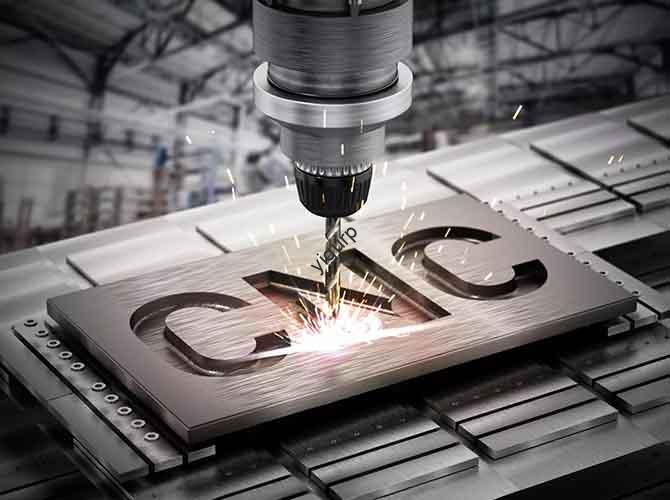
Have you ever wondered how the metal parts inside your phone, the engine block in a car, or the precise tools used by a surgeon are made? The answer, more often than not, is a process called CNC machining. It might sound like a complex industrial term, but the basic idea is surprisingly simple. CNC machining is a manufacturing process where pre-programmed computer software dictates the movement of factory tools and machinery. Think of it as a master sculptor who can create a design with incredible accuracy, thousands of times in a row, without ever getting tired. This sculptor doesn’t use a chisel and hammer; it uses advanced cutting tools. It doesn’t follow a hand-drawn sketch; it follows a digital plan. This automated, high-precision process is the heart of modern manufacturing, turning digital designs into real, working parts. This guide will give you a complete overview of the technology. You will learn the basic idea behind CNC machining, the step-by-step process, the main types of machines, the common materials, and the key benefits that make this process so essential.
What Is the Basic Idea Behind CNC Machining?
To understand CNC machining, you need to grasp its core concept and break down its name.
The Core Idea: Subtraction
CNC machining is a form of subtractive manufacturing. This means it creates a part by carefully removing material from a solid block, called a workpiece or blank. It is the complete opposite of additive manufacturing, such as 3D printing, which builds an object by adding material layer by layer.
To picture the difference, think of creating a statue. The subtractive method is like a sculptor carving away stone from a block of marble until only the final shape remains. The additive method is like building that same statue from the ground up with clay, one small piece at a time. Subtractive manufacturing is excellent at producing strong, functional parts from high-quality metals and plastics.
Breaking Down the Acronym
The term “CNC” can seem technical, but it breaks down into simple parts that define the entire process.
- Computer: The “brain” of the operation. A dedicated computer within the machine controller reads the design file and translates it into a series of specific movements.
- Numerical: The instructions themselves. The design is converted into a code made up of numbers—coordinates, speeds, feed rates, and other commands—that tell the machine exactly where and how to move. This code is typically called G-code.
- Control: The execution of the numerical instructions. The computer controls the motors and drive systems of the machine, automating its movements with extreme precision to execute the cutting process without manual help.
The Three Key Players
Every CNC machining job involves teamwork between three essential elements. When these three components work together, a digital idea becomes a physical reality.
- CAD/CAM Software: This is where the process begins. A digital design is created in Computer-Aided Design (CAD) software, and then Computer-Aided Manufacturing (CAM) software is used to plan the cutting strategy and generate the numerical code.
- The CNC Machine: This is the physical hardware that performs the work. It includes the motors, cutting tools, work-holding fixtures, and the controller that reads the code.
- The Workpiece: This is the block of raw material—whether it’s aluminum, steel, plastic, or titanium—that will be transformed into the final part.
How Does the CNC Machining Process Work Step by Step?
Understanding the theory is one thing; seeing the process in action provides true clarity. Let’s walk through the entire workflow, from a simple idea to a finished product. For this example, we will follow the creation of a custom aluminum phone stand.
Step 1: The Digital Design (CAD)
Everything starts with a digital blueprint. Using CAD software like SolidWorks, Fusion 360, or AutoCAD, a designer creates a precise 2D or 3D model of the phone stand. This model contains all the geometric information: its dimensions, angles, curves, and features. The final design is then exported into a standard file format, typically .STEP, .IGS, or .STL, which can be read by manufacturing software.
Step 2: The Toolpath (CAM)
The CAD model is a “what,” but the machine needs to know “how.” This is the job of CAM software. A programmer or machinist imports the CAD file into the CAM program. Here, they define the manufacturing strategy. This involves selecting the right cutting tools (e.g., end mills, drills), setting the spindle speed, defining the feed rate (how fast the tool moves), and planning the exact path the tool will take to cut the part. The CAM software then outputs this strategy as a set of machine-readable instructions, a program known as G-code.
Step 3: Machine Setup
Now, we move from the digital world to the physical shop floor. A skilled machine operator prepares the CNC machine. This involves several critical tasks. First, the workpiece—a solid block of aluminum—is securely clamped into a vise or fixture on the machine’s worktable. Next, the required cutting tools are loaded into the machine’s tool changer. Finally, the operator calibrates the machine by setting a precise starting point, or “work zero,” on the workpiece. This tells the machine the exact starting point for all its following movements.
Step 4: The Machining Operation
With the setup complete, the operator loads the G-code program into the machine’s controller and runs a final simulation to check for errors. Once confirmed, the cycle starts. The machine door is closed for safety, and the machine comes to life. The spindle spins the cutting tool at thousands of RPM, and a flood of coolant is sprayed onto the workpiece to lubricate the cut and carry away heat and chips. The machine automatically follows the G-code, moving its axes with incredible precision to guide the tool. It cuts away the aluminum, creating the pockets, contours, and holes of the phone stand design.
Step 5: The Finished Part
Once the program is finished, the machine stops. The operator opens the door to find the completed aluminum phone stand, precisely matching the original CAD model. The part is then removed, cleaned, and deburred to remove any sharp edges. It is now ready for quality inspection and any additional finishing processes, such as anodizing or powder coating.
What Are the Main Types of CNC Machines?
The term “CNC machine” is a broad category that includes a wide variety of equipment, each designed for specific tasks and shapes. Understanding the primary types helps in selecting the right process for a job.
| Machine Type | Primary Function & Motion | Best For Creating… | Example Part |
|---|---|---|---|
| CNC Mills | Uses a rotating cutting tool to remove material from a stationary workpiece. Operates on multiple axes (3, 4, or 5-axis). | Complex shapes, flat surfaces, pockets, and holes. | Engine blocks, molds, complex brackets. |
| CNC Lathes (Turning) | Rotates the workpiece at high speed against a stationary cutting tool. | Cylindrical, conical, or spherical parts. | Shafts, screws, custom bolts, pipes. |
| CNC Routers | Similar to mills but typically built on a gantry system for cutting softer materials over large surface areas. | Large, flat parts with intricate 2D or 2.5D cuts. | Signage, wood furniture, cabinet doors. |
| CNC Plasma/Laser Cutters | Uses a high-energy plasma torch or a focused laser beam to cut through sheet material. | 2D profiles and shapes from metal sheets. | Metal brackets, decorative panels, flanges. |
| Electrical Discharge (EDM) | Uses controlled electrical sparks to erode material. Ideal for extremely hard metals or complex internal features. | Molds and dies, micro-holes, intricate shapes that are difficult to machine conventionally. | Hardened steel molds, complex internal cavities. |
What Are the Most Common Machining Materials?
One of the greatest strengths of CNC machining is its compatibility with a vast range of high-quality materials. The choice of material is driven by factors like required strength, weight, cost, corrosion resistance, and thermal stability.
Metals: The Workhorses
Metals form the backbone of CNC machining, used for everything from aerospace structures to medical implants.
- Aluminum (e.g., 6061, 7075): Valued for its excellent strength-to-weight ratio, thermal conductivity, and natural corrosion resistance. It is also relatively easy to machine, making it a cost-effective choice for many applications. It is commonly used for aerospace components, consumer electronics casings, and bicycle frames.
- Stainless Steel (e.g., 304, 316): Known for its high strength, durability, and exceptional corrosion resistance. Its non-reactive properties make it essential for medical devices, food-grade equipment, and surgical instruments.
- Carbon Steel (e.g., 1018, 4140): A strong, hard, and cost-effective alloy of iron and carbon. It is a go-to material for high-strength applications but requires a protective coating to prevent rust. It is often used for machine parts, bolts, and gears.
- Titanium (e.g., Grade 2, Grade 5): Offers an unmatched strength-to-weight ratio, biocompatibility, and extreme resistance to both corrosion and high temperatures. It is used for demanding applications like aerospace parts and medical implants.
- Brass (e.g., 360): An alloy of copper and zinc, brass is easy to machine, has low-friction properties, and is an excellent electrical conductor. It is often chosen for plumbing fittings, decorative hardware, and electrical connectors.
Plastics: Versatility and Properties
Engineering plastics offer a lightweight alternative to metals, with a wide range of properties suitable for prototyping and end-use parts.
- ABS: A common thermoplastic known for its good impact resistance and toughness. It is often used for affordable prototypes and enclosures for electronics.
- Nylon: A strong, durable plastic with excellent wear resistance and a low coefficient of friction. This makes it ideal for producing gears, bearings, and bushings.
- Polycarbonate: Valued for its extremely high impact strength and optical clarity. It is used for machine safety guards and durable transparent covers.
- PEEK: A high-performance thermoplastic that maintains excellent mechanical properties and chemical resistance even at very high temperatures. It is used in demanding aerospace, medical, and chemical processing applications.
What Are the Key Advantages of CNC Machining?
CNC machining is a dominant force in manufacturing for several clear and compelling reasons. It offers a combination of precision, speed, and versatility that other processes struggle to match.
- Unmatched Precision and Accuracy: Computer control eliminates human error, allowing CNC machines to produce parts with tolerances as tight as ±0.005 mm (or 5 micrometers). This level of precision is critical for components that must fit and function perfectly.
- Exceptional Repeatability: Once a program is created, a CNC machine can produce hundreds or thousands of parts that are geometrically identical. This consistency is essential for mass production.
- Complex Geometry Capability: Modern 5-axis CNC machines can move a part and a tool simultaneously along five different axes. This allows for the creation of highly complex shapes in a single setup.
- Broad Material Compatibility: Unlike processes like 3D printing, CNC machining works with a vast array of solid, engineering-grade materials. This allows for the creation of robust, functional parts.
- Efficiency and Speed: Because the process is automated, CNC machines can run 24/7 with minimal supervision. This dramatically reduces cycle times and labor costs.
What Are the Typical Uses and Industries?
The precision and reliability of CNC machining have made it an essential technology across nearly every major industry.
- Aerospace & Defense: This sector demands the highest levels of precision. CNC is used for lightweight structural brackets, complex turbine blades, engine components, and landing gear assemblies.
- Medical: Biocompatibility and accuracy are paramount. CNC machining is used to create custom orthopedic implants like hip and knee replacements, intricate surgical instruments, and housings for diagnostic equipment.
- Automotive: The automotive industry relies on CNC for both durability and performance. Key parts include engine blocks, pistons, drive shafts, and the large molds used to create plastic dashboards.
- Consumer Electronics: The sleek metal bodies of high-end smartphones, laptops, and smartwatches are often milled from a single block of aluminum, a process that ensures a perfect fit and a durable finish.
- Energy: In demanding environments, CNC-machined parts provide reliability. These include precision components for power generation turbines and custom fittings for oil and gas pipelines.
How Is Quality and Precision Checked?
Creating a precise part is only half the battle; verifying that precision is equally important. Quality control ensures that every part meets the client’s exact specifications. The process of verification revolves around two key concepts: tolerances (allowable limits of variation) and surface finish (the texture of a surface).
- Coordinate Measuring Machines (CMMs): A CMM is the gold standard for quality inspection. It uses a sensitive electronic probe to touch different points on a part’s surface. It then compares this collected data against the original CAD model to confirm whether every feature is within tolerance.
- Digital Calipers and Micrometers: These are the essential handheld tools for every machinist. Digital calipers provide quick and accurate measurements of dimensions, while micrometers offer even higher precision for measuring critical features like shaft diameters.
- Profilometers and Surface Roughness Testers: For parts where surface texture is critical—such as sealing surfaces—a profilometer is used. This tool measures the microscopic peaks and valleys on a surface to provide a quantitative value for its roughness, known as Ra.
What Tips Can Optimize a Design for Machining?
How a part is designed has a direct impact on how quickly, easily, and affordably it can be machined. This practice is known as Design for Manufacturability (DFM) .
- Specify Realistic Tolerances: Only apply tight tolerances to the features that absolutely require them, such as mating surfaces. Unnecessarily tight tolerances on non-critical features increase cost without adding value.
- Use Standard Tool Sizes: Design holes, slots, and corner radii to match standard drill bit and end mill sizes. This allows the use of off-the-shelf tools, saving both time and money.
- Avoid Deep, Narrow Pockets: A good rule of thumb is to design pockets with a depth-to-width ratio of no more than 4:1. Deep pockets with small tools are slow and risky to machine.
- Design Generous Corner Radii: A perfectly sharp internal corner is impossible to machine with a standard mill. Designing parts with larger, uniform radii allows for the use of larger, more rigid tools that can cut faster.
- Keep Wall Thicknesses Reasonable: Very thin walls are prone to vibrating under the force of the cutting tool. Aim for a minimum wall thickness of at least 1mm for metals and 1.5mm for plastics.
- Limit Complex, Freeform Surfaces: Complex, organic surfaces require extensive programming and very long machining times. Reserve these for when they are an absolute necessity.
Conclusion
CNC machining is a powerful and versatile manufacturing process that has become the backbone of modern industry. By understanding its core principles—that it is a subtractive process controlled by a computer reading numerical code—you can appreciate how digital designs are transformed into precise, physical parts. From the initial CAD model and CAM programming to the final quality inspection on a CMM, every step is focused on accuracy and repeatability. Whether it’s a critical turbine blade for an aircraft made from titanium, a durable gear for a car machined from nylon, or the sleek aluminum body of a smartphone, CNC machining is the reason we can manufacture complex, reliable products with incredible efficiency. For anyone involved in product development or engineering, having a solid grasp of this technology is an invaluable asset.
FAQ
What is the simplest definition of CNC machining?
It is a manufacturing process where a computer controls machine tools to precisely cut and shape a solid block of material into a finished part. Think of it as a robot sculptor that follows a digital blueprint.
What is the difference between a CNC mill and a CNC lathe?
The main difference is in how the part and tool move. In a CNC mill, the cutting tool spins while the workpiece stays stationary. It is used for creating complex shapes, flat surfaces, and holes. In a CNC lathe, the workpiece spins at high speed while a stationary cutting tool shapes it. It is ideal for making cylindrical or round parts like shafts and screws.
What does “tolerance” mean in CNC machining?
Tolerance is the allowable limit of variation in a part’s dimension. For example, a hole might be designed to be 10mm in diameter, with a tolerance of ±0.05mm. This means any hole between 9.95mm and 10.05mm is acceptable. Tighter tolerances (smaller numbers) mean higher precision and usually higher cost.
Why is CNC machining better than 3D printing for some parts?
While both are great for prototyping, CNC machining is often better for end-use production parts. It works with a much wider range of solid, engineering-grade metals and plastics, resulting in parts that are stronger and have better material properties. It also offers higher precision and a better surface finish.
Discuss Your Projects with Yigu Rapid Prototyping
Do you have a part design that needs to become a reality? Whether you need a single prototype or a small batch of custom-manufactured components, the team at Yigu Rapid Prototyping is here to help. We specialize in high-precision CNC machining and have extensive experience working with a wide range of metals and plastics. Our engineers can provide expert feedback on your design to optimize it for manufacturability, saving you time and money.
Contact Yigu Rapid Prototyping today to discuss your project. Let’s turn your digital designs into precision parts.