
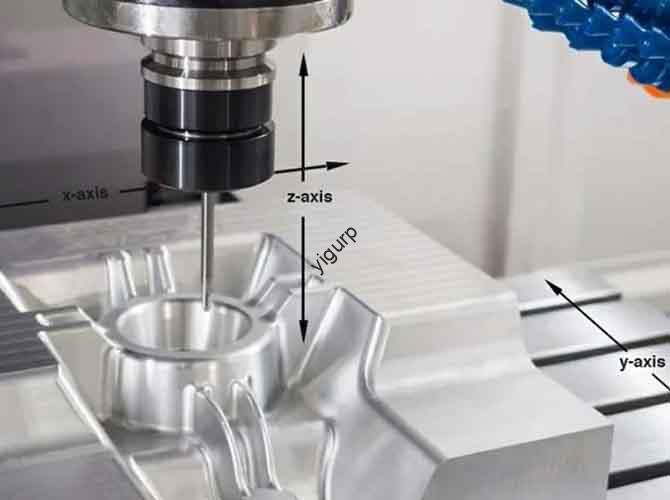
In the world of precision manufacturing, CNC machining labor costs are a major piece of the budget puzzle. Unlike fixed expenses like machine purchases, labor is a variable cost that shifts based on design, volume, and geography. If you understand what drives these numbers, you can significantly lower your project spend. This article explores the core drivers of labor pricing and provides a clear roadmap to optimize manufacturing expenses while maintaining high quality.
What Drives Your CNC Machining Labor Costs?
Labor costs aren’t just a random hourly rate. They are the result of several interconnected factors ranging from equipment overhead to the skill level of the person behind the machine.
Are Basic Overheads Driving the Base Rate?
Every workshop has a “floor price” for labor. This base rate covers the fundamental costs of staying in business. Factors like equipment depreciation and factory rent create the foundation of your labor bill.
| Basic Factor | Key Components | Cost Impact (Typical Example) |
| Machine Type | 3-axis vs. 5-axis, Brand (Haas vs. DMG) | New 5-axis adds $20–$30/hour; 3-axis adds $8–$15/hour. |
| Technician Skill | Entry-level vs. Senior Engineer | Senior staff in tech hubs can cost 2x–3x more than juniors. |
| Consumables | Electricity, Tool wear, Coolant | Hard materials wear tools faster, adding $5–$12/hour. |
| Location | First-tier cities vs. Industrial clusters | Rent in Shanghai adds $8–$15/hour compared to regional towns. |
Does Process Complexity Double the Bill?
Complexity is the single biggest variable. A simple flat plate takes minutes to program, while a 3D engine cavity requires hours of simulation and setup.
- Programming Time: A high-complexity job might add $50–$200 in upfront labor just for the CAD/CAM work.
- Setup Cycles: Every time a technician has to flip or reposition a part, you add 30–60 minutes of “non-cutting” labor time.
- Special Geometries: Deep cavities or custom angles require slower feed rates and constant monitoring, which can double the hourly rate from $60/hour to $120/hour.
How Does Production Volume Affect Unit Costs?
One of the most effective ways to lower the unit labor cost is through batch sizing. Fixed labor—like programming and machine setup—is diluted as you make more parts.
| Batch Size | Setup/Programming Time | Total Labor Cost | Labor Cost Per Part |
| Single Prototype | 3 Hours | $180 | $180.00 |
| Small Batch (10 pcs) | 4 Hours | $600 | $60.00 |
| Mass Production (100 pcs) | 10 Hours | $4,320 | $43.20 |
Key Takeaway: Scaling from a prototype to a batch of 100 can reduce your unit labor expense by over 75%.
Do Material and Accuracy Requirements Cost More?
The harder the material and the tighter the tolerance, the more “active” labor is required.
Why Material Hardness Matters
Aluminum 6061 is the gold standard for cost-efficiency. However, if you switch to Titanium (Ti-6Al-4V), your labor costs will skyrocket by $50–$80/hour. Why? Titanium requires ultra-slow cutting speeds and frequent tool checks to prevent failure.
The Price of Precision
High-accuracy parts (IT5–IT6 tolerances) require multiple finishing passes and extensive use of CMM (Coordinate Measuring Machine) testing. This precision adds a premium of $80–$120/hour compared to standard industrial tolerances.
What Are the Hidden “Extra” Fees?
Beyond the hourly rate, keep an eye out for these one-time project costs:
- Fixture Development: Custom jigs for odd-shaped parts can cost anywhere from $100 to $1,000.
- Trial Sample Fees: Expect to pay 1.5x to 3x the base rate for the first few “test” pieces.
- Overtime Surcharges: Urgent “rush” orders usually carry a 20%–50% premium to cover night shifts or weekend labor.
How Can You Lower Labor Costs Today?
Strategic changes in design and sourcing can lead to massive savings. Follow these four steps to optimize your budget:
1. Simplify the Part Design
Remove non-functional features. If a chamfer isn’t necessary for fit or safety, remove it. Standardizing hole sizes and thread types (e.g., using M5 for everything) reduces tool change time and programming complexity.
2. Consolidate Your Orders
Don’t order 10 parts today and 10 next month. Combine them into one order of 20 to save on a second setup fee. Many suppliers offer 10–20% discounts for batches exceeding 100 units.
3. Choose the Right Region
Use suppliers in industrial clusters (like Dongguan) for standard brackets or simple enclosures. Use high-end shops in first-tier cities only when you need ultra-high precision or 5-axis expertise.
4. Optimize Material Choice
Unless your application demands Titanium or Stainless Steel, stick to Aluminum or Brass. These materials allow for higher speeds and less technician intervention, directly lowering the labor bill.
Conclusion
Managing CNC machining labor costs requires a balance of smart design and strategic sourcing. By minimizing complexity, leveraging economies of scale, and choosing the right materials, you can significantly reduce your manufacturing spend. Remember, the cheapest hourly rate isn’t always the best value—true savings come from process efficiency and high-yield production.
FAQ
Why do 5-axis labor costs vary so much ($50–$100/hour)?
The range depends on the machine’s capability. Entry-level 5-axis machines for simple parts are cheaper, while high-end 5-axis linkages used for aerospace blades require expert programmers and expensive software, driving up the price.
Can I negotiate labor costs for small batches?
Yes. You can often waive trial sample fees if you commit to a long-term partnership or offer to provide your own custom fixtures to save the shop setup time.
How much do hidden fees typically add to the total?
On average, hidden fees like fixtures and shipping add 10%–40% to the base labor cost. Always request an itemized quote to see these charges clearly.
Discuss Your Projects with Yigu Rapid Prototyping
At Yigu Rapid Prototyping, we help you cut costs without cutting corners. By optimizing part designs—such as reducing setup cycles from five down to two—we’ve helped clients save up to 35% on labor. Our Dongguan facility provides cost-effective solutions for standard parts, while our Shenzhen center handles high-precision 5-axis tasks. Contact us today to see how we can optimize your next project.