
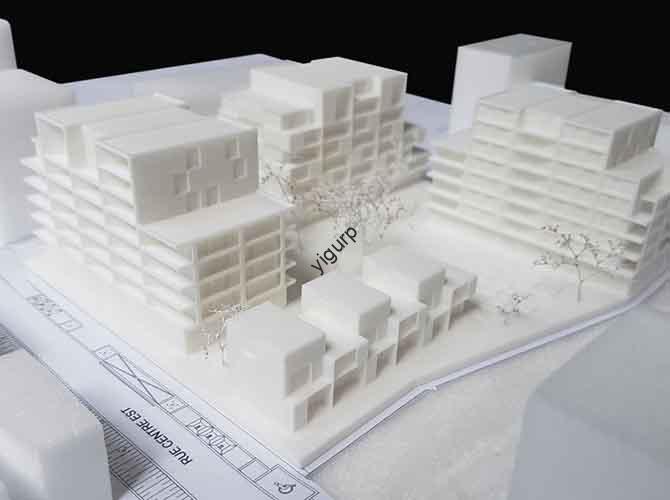
If you’re incorporating resin 3D printing into your workflow for high-detail prototypes, medical models, or end-use functional parts, you’ve likely realized that the price isn’t as straightforward as a spool of filament. The cost per gram for resin printing is a dynamic equation, influenced by a cocktail of material science, machine technology, and labor. While a basic hobbyist part might cost as little as $0.01 per gram, a certified dental surgical guide can easily exceed $0.70 per gram. This detailed guide dissects every cost component, from resin chemistry to hidden service fees. We’ll provide transparent pricing scenarios, actionable strategies for cost optimization, and clear answers to help you budget accurately and maximize the value of your resin-based additive manufacturing projects.
Introduction
Understanding the real cost of resin 3D printing requires looking beyond the price tag of the liquid resin bottle. It’s a nuanced calculation that blends direct material expenses with the significant overhead of precision equipment, essential post-processing, and technical labor. For engineers, product designers, and medical professionals, misjudging these factors can turn a promising prototype into a budgetary nightmare. Is it cheaper to print in-house or outsource? When does a $200/kg engineering resin justify its cost over a $50/kg standard resin? This guide serves as your financial and technical blueprint. We will navigate the entire cost structure, using comparative analyses and real-world case studies, to empower you with the knowledge to make smart, cost-effective decisions for every project stage—from initial concept validation to final part production.
What Primarily Drives the Cost Per Gram in Resin 3D Printing?
The final cost is not a single number but the sum of several interconnected variables. The most significant among them is your choice of material, but technology, labor, and process efficiency play crucial supporting roles.
1. How Does Resin Type Dictate the Base Material Cost?
The resin you select is the most fundamental cost driver. Prices escalate based on formulation complexity, performance properties, and regulatory certifications.
| Resin Category | Avg. Cost/Gram (USD) | Key Characteristics & Justification | Ideal Applications |
|---|---|---|---|
| Standard/General Purpose | $0.01 – $0.03 | Balanced for detail and ease of use. Low cost due to simple acrylate-based chemistry and high-volume production. Offers good visual clarity or color options. | Concept models, display figurines, basic prototypes where mechanical performance is not critical. |
| Engineering/High-Performance | $0.03 – $0.15 | Formulated for specific mechanical or thermal properties. Includes ABS-like (toughness), PP-like (flexibility), or heat-resistant (HDT >120°C) resins. Higher cost reflects advanced monomers and additives. | Functional prototypes, snap-fit enclosures, ducting, low-volume end-use parts requiring durability. |
| Specialized (Medical, Dental, Castable) | $0.15 – $0.70+ | Biocompatible (Class I/IIa), dental surgical guide, or investment casting formulations. Premium pricing covers costly biocompatible monomers, extensive batch testing, and regulatory compliance (e.g., FDA, CE). | Medical/dental models, surgical guides, try-in appliances, jewelry casting patterns. |
Expert Insight: A 100-gram prototype housing. Using a standard gray resin ($0.02/gram) costs $2 in material. Switching to a tough, ABS-like engineering resin ($0.10/gram) for drop-testing raises the material cost to $10—a 5x increase, but essential for functional validation.
2. What Are the 5 Core Factors Beyond Resin That Impact Total Cost?
The liquid resin cost is just the entry point. To understand the total cost per gram, you must account for these five critical operational and overhead factors.
How Do Equipment and Energy Costs Factor In?
Whether you own the printer or use a service, machine costs are amortized into your print.
- Capital Depreciation/Service Overhead: Industrial SLA or DLP printers range from $5,000 to over $200,000. Service bureaus bake this capital cost, along with maintenance and facility overhead, into their pricing. For in-house users, this is a calculated cost per print hour.
- Energy Consumption: Resin printers with high-power UV light sources (lasers or projectors) and heated vats consume more energy than typical FDM printers, adding a small but real cost per gram.
Why Is Post-Processing a Non-Negotiable Cost Center?
Post-processing is mandatory for resin prints and involves both consumables and labor.
| Post-Processing Step | Est. Added Cost/Gram* | Purpose & Cost Drivers |
|---|---|---|
| Washing/Cleaning | $0.01 – $0.05 | Removes uncured resin from the part surface using isopropyl alcohol (IPA) or dedicated wash stations. Cost includes solvent, disposal, and labor. |
| Curing | $0.005 – $0.03 | Final UV curing in a curing station ensures full polymerization, maximizing strength and stability. Cost involves equipment and electricity. |
| Support Removal & Finishing | $0.02 – $0.20+ | Manually removing supports and sanding/polishing to achieve the desired surface finish (Ra value). This is highly labor-intensive; complex geometries or high-gloss finishes dramatically increase cost. |
*Costs are highly dependent on part complexity and labor rates.
Do Labor and Service Fees Really Double the Cost?
For outsourced projects, labor is often the largest single cost component, especially for low-volume, high-touch jobs.
- Basic Service Fee: Covers file preparation, machine setup, basic wash & cure. May add $0.50 – $2.00 per gram to the resin cost.
- Premium/Precision Fee: For parts requiring critical tolerances, specialized handling (medical), or extensive finishing. Can add $2.00 – $5.00+ per gram.
Case Study: A 50-gram dental model. The biocompatible resin might cost $15 ($0.30/gram). A service bureau’s fee for precise printing, certified cleaning, and delivery could be $75 ($1.50/gram), making the total cost $90. Here, the service/labor constitutes over 80% of the total cost.
How Much Does Material Waste Inflate the Price?
Support structures are essential but become waste. This “support tax” can increase resin consumption by 15-50%, depending on part geometry.
- Pro Tip: Advanced slicing software (e.g., Lychee Slicer, Chitubox Pro) with auto-orientation and tree-style supports can reduce support volume by 20-30%, directly lowering material cost.
Can Order Volume Create Significant Savings?
Yes. Economies of scale apply powerfully. Fixed costs (setup, calibration) are spread over more parts, and service providers offer tiered pricing.
- Single Part: Highest cost per gram due to setup overhead.
- Full Build Volume: Maximizing the printer’s build plate with multiple parts is the most cost-effective way to print, drastically reducing the cost per individual part.
What Are Real-World Total Cost Scenarios?
Let’s translate these factors into total cost estimates for common use cases.
| Project Scenario | Typical Resin | Key Cost Drivers | Est. Total Cost/Gram (USD) | Example: 100g Part Cost |
|---|---|---|---|---|
| Hobbyist Miniature (In-House) | Standard | Resin cost, low equipment amortization, basic wash/cure. | $0.04 – $0.08 | $4 – $8 |
| Engineering Prototype (Service) | ABS-Like | Engineering resin, service fee, standard finishing. | $0.60 – $1.20 | $60 – $120 |
| Dental Surgical Guide (Service) | Biocompatible Class IIa | Premium resin, high-precision service fee, validated post-processing, certification. | $1.50 – $2.50+ | $150 – $250+ |
What Are the Most Effective Strategies to Reduce Your Costs?
Intelligent planning and process choices can lead to substantial savings without compromising part quality.
- Conduct a Tiered Material Strategy: Don’t use a $0.50/gram dental resin for a preliminary form-and-fit check. Use the least expensive resin that meets the current project phase’s requirements. Step up material performance only when needed for functional testing or compliance.
- Master Design for Additive Manufacturing (DfAM) for Resin: Orient parts to minimize support contact on critical surfaces and reduce overall support volume. Design self-supporting angles (typically > 45°) where possible. Hollow large, solid models with drainage holes to slash resin use by 40-70%.
- Evaluate the In-House vs. Outsourcing Break-Even Point: If your monthly resin print volume exceeds a certain threshold (e.g., constant prototyping), the capital investment in a reliable desktop printer (e.g., Formlabs, Prusa) may pay for itself within 6-12 months by eliminating service fees.
- Consolidate and Batch Orders: Whether printing in-house or using a service, always aim to fill the build plate. Combine multiple small projects into a single print job to dramatically lower the per-part cost.
Industry Perspective: Optimizing the Cost-Quality Balance
At YiGu Rapid Prototyping, we analyze resin 3D printing costs through the lens of project value rather than just unit price. We frequently consult with clients who are over-specifying materials or under-utilizing their build volume. Our approach involves a collaborative review: we might recommend a durable engineering resin for a functional hinge instead of a more expensive specialty option, or show how nesting five iterations of a component on one plate cuts the per-unit cost by 60%. For a recent client developing a medical device, we audited their prototype workflow. By switching early-stage prototypes to a standard resin and reserving biocompatible material only for final design verification, we reduced their material costs by over 40% across the project lifecycle without impacting timeline or compliance. Our expertise lies in aligning the sophisticated capabilities of resin printing with smart, efficient project economics.
Conclusion
Pinpointing the true cost per gram for resin 3D printing is less about finding a universal number and more about understanding and managing the variables within your control. It’s a balance between material performance needs, technology selection, process efficiency, and labor. By dissecting the cost structure as outlined—recognizing when a premium resin is an investment and when it’s an overkill, accounting for the full post-processing pipeline, and leveraging volume—you transform from a passive consumer to an informed decision-maker. You now have the framework to create accurate budgets, ask precise questions of service providers, and implement strategies that deliver exceptional resin prints at the most rational cost point for your specific application.
FAQ
Is resin 3D printing always more expensive per gram than FDM/ filament printing?
Typically, yes, when comparing raw material cost alone. Standard resin costs $0.01-$0.03/gram, while PLA filament is about $0.02-$0.04/gram. However, the total cost of ownership can be complex. Resin printing often has higher equipment maintenance (vats, LCD screens), consumable costs (IPA, gloves), and mandatory post-processing labor, which can make the final part cost higher despite a similar base material price.
Can I recycle or reuse leftover uncured resin from the vat?
You can filter and reuse resin that has been in the vat but not cured, often for several print cycles. However, its viscosity and curing properties can change over time due to partial exposure and contamination. Reusing is acceptable for non-critical models but not recommended for functional or high-precision parts. Proper filtering and stirring are essential.
Why do service bureaus charge so much more per gram than my in-house cost calculation?
Service pricing incorporates full business overhead: high-end industrial equipment depreciation, skilled labor for file preparation and machine operation, quality control, facility costs, liability insurance (crucial for medical/engineering parts), customer service, and profit margin. You’re paying for guaranteed results, expertise, and capacity without capital investment or operational hassle.
How critical is post-curing, and can I skip it to save time/money?
Post-curing is not optional for achieving the resin’s stated mechanical properties and long-term stability. Uncured or under-cured parts are weaker, more brittle, and can leach uncured monomers. Skipping this step risks part failure and invalidates any material data sheet specifications. It is a essential, non-negotiable part of the process.
Discuss Your Projects with YiGu Rapid Prototyping
Navigating the intricate balance of detail, material properties, and cost in resin 3D printing demands a partner with both technical depth and practical business acumen. At YiGu Rapid Prototyping, we specialize in translating complex requirements into cost-optimized, high-fidelity results. Our fleet of industrial-grade SLA, DLP, and MSLA printers is matched by our material science expertise, allowing us to guide you to the perfect resin for your application—never overspecified, never underperforming.
Ready to achieve clarity on your project costs? Send us your CAD files and project goals. We’ll provide a detailed, transparent quote that breaks down material, technology, and finishing options, alongside actionable DfAM feedback to reduce waste and improve performance. Let’s ensure your next resin printing project delivers maximum value.
Contact us today for a professional consultation and quote.