
Introduction
Have you ever wondered how companies make those tiny, perfect parts inside your smartwatch or medical devices? Parts smaller than a grain of rice, yet machined with incredible accuracy. That is the world of CNC micro machining. In simple terms, it is a computer-controlled process that creates extremely small components with tolerances as tight as ±0.001 mm. That is about 100 times smaller than a human hair. Unlike standard machining, which works well for larger parts, micro machining uses specialized tiny tools, high-speed spindles, and advanced software to carve miniature features out of metal, plastic, or ceramic. Whether you need a 0.2 mm medical needle or a micro-gear for a drone, this technology turns impossible designs into real, working parts. In this guide, I will walk you through how it works, what materials work best, and how to avoid the common pitfalls that ruin micro projects.
What Makes CNC Micro Machining Different from Standard Machining?
To really understand micro machining, you need to see how it stacks up against the regular CNC work you might already know. The differences are not just about size—they change everything about how you approach a job.
| Aspect | Standard CNC Machining | CNC Micro Machining |
|---|---|---|
| Typical Part Size | 10 mm and larger | 5 mm and smaller (often under 1 mm) |
| Holding Tolerances | ±0.01 mm to ±0.1 mm | ±0.0001 mm to ±0.001 mm |
| Tool Diameter | 3 mm and up | 1 mm down to 0.01 mm |
| Spindle Speed | Up to 20,000 RPM | 30,000 to 150,000 RPM |
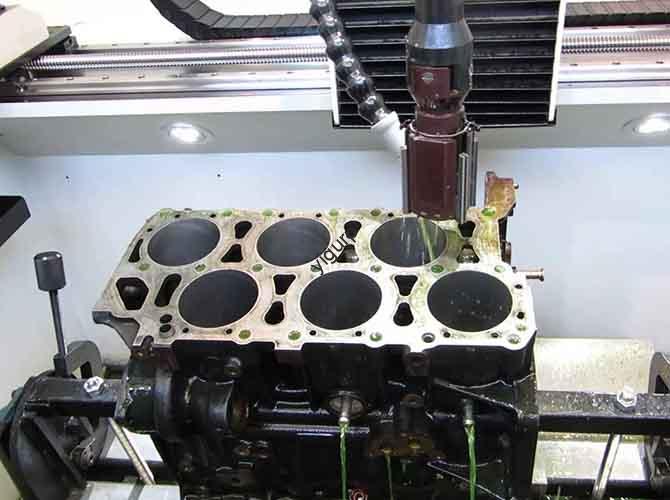
| What It Makes | Engine blocks, brackets | Medical stents, micro-sensors |
A Real Story That Shows the Gap
A few years back, a client came to us with a problem. They made parts for automotive engines and were great at it—big sturdy components with tolerances they could hit easily. Then they got a contract for a tiny sensor part for a hybrid vehicle. The part was only 2 mm wide and needed internal grooves. Their standard tools, which worked fine on 20 mm parts, kept breaking when they tried to cut those tiny features. And the tolerance they needed? ±0.001 mm. Their best effort was off by 0.02 mm, which made the sensor fail. When they switched to CNC micro machining, everything changed. We used a 0.5 mm tool, ran the spindle at 80,000 RPM, and the part came out perfect. That is the difference micro machining makes.
What Materials Work Best for Micro Machining?
Not every material behaves well when you try to cut it at a microscopic scale. Here is what you need to know about the most common options.
Metals and Alloys
Stainless Steel (316L, 17-4 PH) : This is a top choice for medical and aerospace parts because it resists corrosion and stays strong. We once made micro-forceps for a surgical device—the tips were only 2 mm wide. The steel held up through repeated sterilization without any issues. But stainless is hard. You need to run it slower, around 40,000 to 60,000 RPM, or you will wear out your tools fast.
Titanium (Grade 5) : If you need something strong but lightweight, titanium is your friend. It is also biocompatible, so it goes into the human body for things like dental implants. A client asked us to make 3 mm turbine blades for a mini drone. Titanium kept them from bending at high speeds while keeping the drone light.
Aluminum (6061) : This is the easy one. Aluminum machines beautifully at high speeds—80,000 to 100,000 RPM—and costs less. It is great for electronics, like micro-heat sinks for cooling tiny chips. Just do not use it for parts that take heavy loads; it is not as strong as steel or titanium.
Polymers and Plastics
PEEK (Polyether Ether Ketone) : This plastic handles heat and is biocompatible. A medical client needed a 1.5 mm valve for a drug delivery system. PEEK was perfect, and micro machining gave us the precision to make the valve open at exactly the right pressure.
Acrylic (PMMA) : Clear and cheap, acrylic is great for micro-lenses or optical parts. But it is brittle. If you cut too fast, it cracks. We keep speeds around 50,000 to 70,000 RPM for acrylic to keep it safe.
Ceramics
Alumina and Zirconia : These are incredibly hard and handle high heat. They are used for micro-insulators in electronics, like 0.8 mm parts that keep high-voltage sensors from shorting out. But ceramics are tough to machine. We always use diamond-coated tools for them—they cut cleanly and last 30 percent longer than standard tools.
How to Pick Your Material
Start with what the part needs to do. If it goes in the body, pick titanium or PEEK. For electronics, aluminum or acrylic saves money. For high-stress, hot environments, stainless steel or ceramics are the way to go.
What Are the Core Techniques in CNC Micro Machining?
Micro machining is not one single process. Different shapes call for different methods.
Micro Milling: For Complex 3D Shapes
Micro milling uses tiny rotating tools, from 0.01 mm to 1 mm in diameter, to carve out features like slots, pockets, and contours. Think of it as microscopic sculpting.
- Best for: Parts with intricate 3D shapes, like micro-gears with 0.1 mm teeth or sensor housings with tiny cavities.
- Real case: A smartwatch maker needed 0.5 mm slots in a 2 mm aluminum housing for a sensor. We used a 0.3 mm carbide tool in a high-speed spindle at 100,000 RPM. The slots came out perfect, with accuracy within ±0.0005 mm. No other method could do that.
- Pro tip: For hard materials like stainless steel, high spindle speed reduces vibration. Vibration is the enemy here—it breaks tools and ruins surfaces.
Micro Turning: For Cylindrical Parts
Micro turning spins the workpiece while a cutting tool shapes it. It is like a tiny lathe.
- Best for: Round parts like 0.2 mm medical needles or 1 mm shafts for small motors.
- Key stat: Micro turning can give you a surface finish as smooth as Ra 0.02 μm. For a medical needle, that smoothness matters—rough surfaces irritate tissue.
- The challenge: Parts under 1 mm can bend from the spinning force. We fix this by using “live tooling” that moves with the part and slowing down the rotation for thin pieces.
Micro Drilling: For Tiny Holes
Micro drilling creates holes as small as 0.005 mm. That is smaller than a human hair, which is about 0.05 mm.
- Best for: Parts that need tiny fluid or electrical channels. Think 0.01 mm holes in a micro-fluidic chip for medical testing.
- Common mistake: Using a drill bit that is too sharp. Sharp bits “walk” or drift off center, especially on soft plastics. We use slightly rounded bits and run at lower speeds—30,000 to 50,000 RPM—to keep the hole exactly where it should be.
What Critical Factors Make or Break a Micro Machining Project?
Micro machining is unforgiving. Small mistakes become big problems. Here is what you must get right.
Tolerance Control: Every Micron Counts
In micro machining, we measure errors in microns. One micron is 0.001 mm. A mistake of just a couple of microns can ruin a part.
- The story: A client ordered 1 mm micro-gears for a tiny robot. The tolerance needed was ±0.001 mm. Their first supplier delivered gears with a ±0.002 mm error. When assembled, the gears did not mesh properly, and the robot’s motor burned out.
- How to get it right:
- Use machines with high-precision linear guides that have almost no backlash.
- Calibrate your tools daily. Even 0.0001 mm of wear changes your part.
- Pick materials with low thermal expansion if your part sees temperature changes. Invar, a nickel-iron alloy, is great for this.
Tool Selection: One Wrong Choice and You Are Done
Micro tools are fragile. Using the wrong one is the fastest way to break tools and scrap parts.
- Material matters: Carbide tools work for most metals. Diamond-coated tools are for ceramics and plastics. High-speed steel is cheaper and fine for soft aluminum.
- Coatings help: A TiAlN coating reduces friction and makes tools last 50 percent longer on steel. For titanium, use TiSiN coating—it handles the heat better.
- Size rule: Never use a tool smaller than 10 percent of your part’s smallest feature. If you are making a 0.5 mm hole, use a 0.3 mm tool, not a 0.05 mm one. The tiny one will snap.
Vibration Management: The Hidden Precision Killer
Vibration is a silent problem. Even a little shake from a nearby machine can make your tool “chatter,” leaving a rough surface or missing features.
- The fix: We had a client whose micro-milled parts kept coming out with inconsistent slot widths. After chasing the problem for weeks, we realized their machining room was next to a printing press. The vibration from the press was enough to ruin the parts. Moving the machine fixed it.
- Practical steps:
- Put your CNC machine on a vibration-dampening base—rubber or granite works well.
- Use shorter tools. A 5 mm-long tool vibrates three times less than a 10 mm-long tool.
- Find the “sweet spot” spindle speed for your material. For stainless steel, that is often 60,000 to 80,000 RPM. Too fast or too slow makes vibration worse.
Real-World Examples: Where Micro Machining Changes Industries
This technology is not just a lab curiosity. It is out in the world, making new products possible.
Medical Devices: Saving Lives at Small Scales
The medical field runs on micro machining. Devices have to be small, precise, and safe for the body.
- Surgical robots: A company needed 2 mm titanium “fingers” for a robotic surgical tool. These tiny fingers had to grip blood vessels and suture them with incredible accuracy. Tolerance needed was ±0.0005 mm. Micro machining delivered.
- Drug delivery: Insulin pens use 0.1 mm PEEK valves to control the flow of medicine. We drilled 0.08 mm holes in these valves so each dose came out exactly right.
- Market growth: The medical micro machining market is growing fast—from (1.2 billion in 2023 to )2.1 billion by 2028. That is a 12 percent annual increase, driven by demand for smaller, smarter surgical tools.
Aerospace and Defense: Light and Strong
In aerospace, every gram of weight costs fuel. Micro machining makes lightweight, strong parts for drones and satellites.
- Mini drones: A defense contractor needed 3 mm turbine blades for a micro-drone that weighed only 50 grams. We turned them from titanium. They spun at 20,000 RPM without bending, and the drone flew 15 percent longer because of the weight savings.
- Satellite sensors: Satellites use 0.5 mm aluminum heat sinks to cool sensitive electronics. Micro milling created fins just 0.1 mm thick on these heat sinks, maximizing cooling while keeping weight low.
Electronics: Making the Tiny Gadgets You Love
Your phone, watch, and fitness tracker are full of micro-machined parts.
- Fitness trackers: A tech company needed 1 mm connectors for a smartwatch heart rate sensor. We milled them from aluminum with a 0.3 mm tool. The connectors transmit data with 99.9 percent accuracy, which is critical for reliable heart rate readings.
- Semiconductor testing: Chip makers use 0.05 mm probes to test their products. Micro drilling creates the tiny holes in these probes that carry the electrical signal.
Conclusion
CNC micro machining is the technology that makes the invisible parts of our modern world possible. It lets you create components smaller than a grain of rice with tolerances measured in millionths of a meter. But it is not just about small size. It is about precision, repeatability, and the ability to use advanced materials like titanium and PEEK in ways that were impossible just a few years ago. Whether you are building a medical device that saves lives, a drone that flies longer, or a smartwatch that tracks your health, micro machining is the tool that turns your vision into reality. The key is understanding the materials, choosing the right process, and controlling the tiny details that make all the difference.
FAQ About CNC Micro Machining
1. How much does CNC micro machining cost?
It typically costs 2 to 3 times more than standard machining. A 1 mm micro-gear might run (50 to )100, while a 10 mm version would be (10 to )20. The price depends on material—titanium costs more than aluminum—and the tolerance you need. Tighter tolerances take more time and money.
2. What is the smallest part CNC micro machining can make?
We have made parts as small as 0.1 mm in diameter—about the size of a dust particle. That was a tungsten probe for testing semiconductors. Most micro machining work falls in the 0.1 mm to 5 mm range. Below 0.1 mm, parts become very hard to handle, even with specialized tools.
3. How long does a micro machining project take?
For a simple part like a 1 mm aluminum shaft, you might get 10 to 50 pieces in 1 to 2 days. For a complex part like a PEEK micro-fluidic chip with 0.01 mm holes, a run of 1000 pieces could take 1 to 2 weeks. Prototypes are faster—often 3 to 5 business days.
4. Can you machine flexible materials like rubber?
It is possible but tricky. Rubber and silicone stretch and deform during cutting, which ruins precision. If you need micro parts from flexible materials, micro molding is better for large quantities. For small runs, you can coat the material with a temporary stiffener like wax, machine it, then wash the wax away.
5. What certifications should a micro machining provider have?
Look for ISO 9001 for general quality. If you are making medical devices, ISO 13485 is essential. For aerospace, AS9100 certification is critical. These ensure the provider follows strict processes and checks their work. At Yigu, we hold all three.
Discuss Your Projects with Yigu Rapid Prototyping
At Yigu Rapid Prototyping, we have spent over a decade mastering CNC micro machining for clients in medical, aerospace, and electronics. We know that a successful micro project is about more than just running a machine. It is about listening to your goals, catching potential problems in your design, and choosing the right material and process from the start. When a medical client came to us with a failed micro-needle design—rough tips that did not meet FDA standards—we did not just re-cut the part. We adjusted the tool coating, changed the spindle speed, and delivered needles that passed every test. That is the level of care we bring to every job. Our shop is equipped with high-speed spindles, precision tooling, and the expertise to handle the toughest materials. Whether you need a prototype or a production run, we are ready to help. Contact Yigu today and let us bring your micro design to life.