
Introduction
If you are looking for reliable CNC machining in Spain, you likely need precision parts for aerospace, automotive, medical, or industrial applications. You want to understand the industry landscape and how to find the right partner. Spain’s CNC machining sector is a vital part of its manufacturing industry, known for a mix of small to medium-sized enterprises and larger corporations that serve both domestic and international markets. The industry is valued at approximately €3.5 billion, contributing around 0.3% to the country’s GDP . Whether you are a business owner seeking a local partner, an investor exploring opportunities, or a professional wanting to learn more, this guide covers everything from the current state of the industry to how to choose the right provider—and even future trends to watch.
What Is the Current State of CNC Machining in Spain?
Market size and growth
Spain’s CNC machining market is robust and growing. The machine tool sector, which includes CNC equipment, generated over €3.2 billion in revenue in 2024, with exports accounting for 70% of that total . This highlights Spain’s position as a net exporter of CNC machining solutions, with strong demand from European neighbors like France, Germany, and Portugal, as well as markets in Latin America .
Government incentives for digitalization and Industry 4.0 help manufacturers upgrade equipment and adopt automation. Regional programs in Basque Country and Catalonia further support advanced manufacturing investments, making Spanish providers attractive partners for global OEM projects .
Key industrial clusters
A significant portion of Spain’s CNC machining activity is concentrated in specific regions:
- Catalonia: A hub for automotive and aerospace components, home to over 300 CNC machining firms . Barcelona hosts companies like DEM Barcelona, which specializes in high-precision copper machining for projects like ITER and CERN .
- Basque Country: Focuses on high-precision parts for energy and industrial machinery sectors . This region is also home to machine tool builders like Danobat Group and IBARMIA .
- Valencia: Strong base for automotive and general engineering, with companies like MIPESA serving diverse industries .
- Andalusia: Has seen growth in medical device machining, thanks to government support for healthcare manufacturing .
This clustering effect allows buyers to access specialized subcontractors in heat treatment, coating, and metrology within a single region, simplifying logistics and project management .
Case study: A small CNC shop in Barcelona
Mecánica Precision SL, a family-run CNC machining business in Barcelona, illustrates the typical success story. Founded in 2005, the company started with two CNC mills and now operates 12 machines, serving clients in the automotive sector—supplying parts to SEAT—and renewable energy. “Our key to growth has been investing in 5-axis CNC technology and building long-term relationships with local engineers,” says owner Carlos Martínez. “We compete with larger firms by offering faster turnaround times—usually 5–7 days for prototype parts—and personalized service that big corporations can’t match.”
Key Factors to Consider When Choosing a CNC Machining Provider in Spain
Technology and capabilities
Not all CNC machining providers in Spain are the same. The type of equipment a provider uses directly impacts the quality and complexity of parts they can produce. Look for shops that offer:
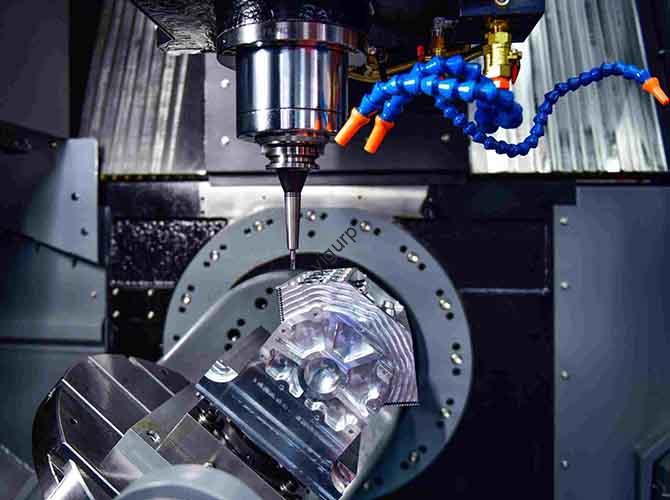
- Multi-axis machining: 5-axis CNC machines are essential for complex parts like aerospace components that require precision from multiple angles . Companies like DEM Barcelona use 5-axis machining for parts up to 3 meters long .
- Material expertise: Ensure the provider has experience with your material—whether it’s aluminum common in automotive, titanium for aerospace and medical, or specialty materials like copper for scientific applications . MEPREVAL in Valencia, for example, works with materials ranging from special steels to titanium, copper, and technical plastics .
- Secondary services: Many projects need more than just machining. Look for providers that offer finishing like anodizing or painting, assembly, or quality testing with CMM inspections to avoid working with multiple vendors .
Certifications and quality standards
Quality is non-negotiable in CNC machining, especially for industries like aerospace or medical. Reputable providers in Spain will hold certifications such as:
| Certification | Industry | Purpose |
|---|---|---|
| ISO 9001 | General | Global standard for quality management systems |
| ISO 13485 | Medical | Specific to medical device manufacturing, ensuring compliance with strict health regulations |
| AS9100 / EN 9100 | Aerospace | Required for aerospace parts, covering safety and reliability standards |
| IATF 16949 | Automotive | Ensures compliance with automotive quality standards |
Companies like Mecánica Curiel hold both ISO 9001:2015 and ISO 13485:2016 certifications, serving critical sectors like medical devices and aerospace . SOKAR Mechanics is both ISO and EN certified, holding approvals as a trusted supplier for major automotive and aerospace companies .
Pro Tip: Ask to see a provider’s quality control process. Some shops perform 100% inspection on critical parts using coordinate measuring machines. DEM Barcelona, for instance, uses three-dimensional control machines including portable units to verify pieces up to 3 meters long . A transparent QC process is a sign of reliability.
Cost and lead times
Costs for CNC machining in Spain vary based on part complexity, material, and order size:
- Prototype parts (small batches of 1–10 units): €50 to €500
- Large-scale production (1,000+ units): €5–€50 per part
Lead times typically range from 3–14 days for prototypes and 2–6 weeks for mass production, though some providers offer “rapid machining” for urgent projects (1–3 days) at a premium .
It’s important to balance cost and quality. Choosing the cheapest provider may lead to defects or delays, which can cost more in the long run. Instead, ask for a detailed quote that includes all costs—material, machining, finishing—to avoid surprises.
Experience and portfolio
Ask for examples of past projects similar to yours. A provider with experience in your sector will understand your needs better:
- For aerospace parts, look for shops that have worked with Airbus or participated in scientific projects. MECANITZATS PRIVAT S.L. has manufactured mechanical parts for the European Space Agency (ESA), the European Southern Observatory (ESO), and the ALBA synchrotron .
- For medical devices, choose shops familiar with ISO 13485 requirements and biocompatible materials.
- For automotive parts, look for experience with high-volume production and just-in-time delivery.
Communication and location
Most Spanish CNC shops have staff who speak English, especially those that work with international clients. This is particularly true for larger shops and those serving aerospace or medical industries, where global partnerships are common . However, for smaller, local-focused shops, Spanish may be the primary language. If English is important for your project, confirm this during the initial consultation.
Spain’s geographic position within Europe facilitates efficient logistics, enabling timely delivery across the continent and beyond . Local providers mean faster delivery and easier collaboration if you need design tweaks or urgent revisions.
Top Industries Served by CNC Machining in Spain
Automotive
The automotive industry is Spain’s largest manufacturing sector, with companies like SEAT, Renault, and Ford operating production facilities. It accounts for approximately 35% of the CNC machining market . CNC machining is used to make engine components like cylinder heads and crankshafts, chassis parts, and interior components.
Spanish CNC shops that serve automotive clients often have experience with high-volume production and just-in-time (JIT) delivery, as car manufacturers require consistent supply to keep assembly lines running . Companies like MIPESA in Valencia serve the automotive sector alongside aerospace and railway industries .
Aerospace
Spain has a strong aerospace industry, with Airbus maintaining a major presence in Seville where it assembles A400M military transport planes, and Madrid for engineering and design. The aerospace sector accounts for approximately 25% of the CNC machining market .
CNC machining is critical here for producing precision parts like turbine blades, aircraft frames, and landing gear components. These parts require tight tolerances, often as small as ±0.001mm, and must meet AS9100 standards . Aerospace-focused CNC shops invest heavily in advanced equipment and training.
Companies like DEM Barcelona have been involved in Big Science projects for ITER, CERN, and ALBA, demonstrating their capability to meet the most demanding specifications . MECANITZATS PRIVAT S.L. has manufactured parts for ESA missions including JANUS JUICE and FIXBOX .
Medical devices
The medical device market in Spain is growing, driven by an aging population and demand for innovative healthcare products. It represents about 10% of the CNC machining market and is expected to grow at an impressive 7% due to medical technology innovations .
CNC machining is used to make surgical instruments like scalpels and forceps, implantable devices such as hip replacements and dental implants, and diagnostic equipment parts. Shops in this space must comply with ISO 13485 and often work with biocompatible materials like titanium or stainless steel .
Mecánica Curiel specializes in precision CNC machining for laboratory and medical instrumentation, serving critical sectors with high-precision requirements .
Renewable energy
Spain is a leader in renewable energy, particularly wind and solar power. CNC machining supports this industry by producing parts for wind turbines—gearboxes, rotor hubs—and solar panels—mounting systems, frames . These parts are often large and require heavy-duty CNC machines, so providers in this sector typically have larger facilities and specialized equipment.
Industrial machinery and other sectors
CNC machining in Spain serves a broad spectrum of other industries including railway, electronics, defense, and scientific instrumentation . Companies like MEPREVAL manufacture precision parts for telecommunications, hydraulics, electronics, and hardware, exporting 45% of their sales to EU countries including France, Germany, Denmark, and Sweden .
Future Trends Shaping CNC Machining in Spain
Automation and Industry 4.0
More Spanish CNC shops are adopting Industry 4.0 technologies to improve efficiency and reduce costs . This includes:
- Automated loading/unloading: Robotic arms that feed materials into CNC machines, allowing 24/7 operation without human intervention .
- Data-driven monitoring: Sensors on CNC machines that collect data on performance, enabling predictive maintenance—reducing downtime by up to 30% .
- Digital twins: Virtual replicas of machining processes that allow shops to test and optimize production before starting physical work, reducing errors and waste.
Government initiatives like “Industria Conectada 4.0” (Connected Industry 4.0) fund research and development, enhancing the competitiveness of local manufacturers .
Sustainability
Sustainability is a growing priority for Spanish manufacturers. Shops are taking steps like:
- Using eco-friendly materials: Recycled aluminum or biodegradable plastics to reduce environmental impact .
- Optimizing energy use: Upgrading to energy-efficient CNC machines which can cut energy consumption by 20–25%, and using smart lighting and heating systems.
- Reducing waste: Implementing lean manufacturing practices to minimize material waste, such as reusing metal shavings for recycling, and reducing water waste in cooling systems .
Integration of additive manufacturing
Many Spanish CNC shops now combine 3D printing (additive manufacturing) with CNC machining . Companies like SOKAR Mechanics offer 3D metal printing using Selective Laser Melting (SLM) alongside traditional CNC machining . This hybrid approach enables rapid prototyping and production of complex geometries that were previously difficult or impossible to machine conventionally.
Reshoring and local supply chains
In recent years, many Spanish and European companies have shifted from offshoring manufacturing to reshoring—bringing production back to Spain . This trend is driven by concerns about supply chain disruptions, such as those experienced during the COVID-19 pandemic, and a desire for faster lead times and better quality control .
For CNC machining shops, this means increased demand from local businesses, as well as opportunities to partner with larger corporations looking to shorten their supply chains.
AI-powered manufacturing
Some Spanish CNC shops are beginning to use AI software to predict tool wear and optimize cutting speeds in real-time . This improves part accuracy and extends tool life. The integration of AI and IoT with CNC machines is expected to be a key growth driver, with the market projected to reach approximately €5 billion by 2030, growing at a compound annual rate of 4.5% .
Conclusion
CNC machining in Spain offers world-class precision, quality, and innovation. The industry serves critical sectors like automotive, aerospace, medical, and renewable energy with advanced technology and skilled craftsmanship. Spanish providers combine traditional expertise with a willingness to invest in new tools like 5-axis machining, automation, and Industry 4.0 technologies.
When choosing a partner, verify certifications, equipment capabilities, material expertise, and quality control processes. Look for providers with experience in your specific industry and a track record of on-time delivery. Consider location for logistics efficiency, and don’t hesitate to ask for client references or samples.
With strong government support, strategic investment in technology, and a focus on sustainability, Spain’s CNC machining sector is well-positioned for continued growth. By following this guide, you can confidently navigate the Spanish CNC machining landscape and find the right partner for your project.
FAQ About CNC Machining in Spain
1. Is CNC machining in Spain more expensive than in other European countries?
Not necessarily. While labor costs in Spain are slightly higher than in Eastern Europe, they are lower than in Germany or Switzerland . Additionally, Spanish CNC shops often offer competitive pricing due to lower overhead costs compared to larger European markets. For most projects, the cost difference is minimal, and the benefit of faster lead times due to geographic proximity often outweighs small cost variations.
2. Can Spanish CNC shops handle large-scale production orders?
Yes. Many Spanish CNC machining providers have the capacity for large-scale production, especially those serving the automotive and renewable energy industries. Shops in regions like Catalonia and the Basque Country often have multiple CNC machines (20+) and dedicated production lines to handle orders of 10,000+ units . It’s important to confirm a shop’s production capacity upfront, but most reputable providers can scale to meet large orders.
3. What languages do Spanish CNC shops typically use for communication?
Most Spanish CNC shops have staff who speak English, especially those that work with international clients. This is particularly true for larger shops and those serving the aerospace or medical industries, where global partnerships are common . However, for smaller, local-focused shops, Spanish may be the primary language. If English is important for your project, it’s best to confirm this during the initial consultation.
4. How long does it take to get a prototype from a Spanish CNC shop?
Lead times for prototypes vary, but most Spanish CNC shops can deliver prototype parts in 3–7 days . For urgent projects, some shops offer “rapid machining” services, which can reduce lead times to 1–3 days for simple parts. The exact timeline depends on part complexity, material availability, and the shop’s current workload, so it’s always best to discuss your deadline upfront.
5. Do Spanish CNC shops offer design support for custom parts?
Many do. While some CNC shops focus solely on machining, others have in-house engineering teams that can help with part design, optimization for manufacturing (DFM) , and troubleshooting . Companies like DEM Barcelona have project management engineering teams that follow every project from beginning to delivery, ensuring demanding tolerances and technical requirements are met . This is especially useful if you have a concept but need help refining it for CNC production. Be sure to ask about design services when contacting a provider—some include this as part of the machining process, while others charge an additional fee.
Discuss Your Projects with Yigu Rapid Prototyping
Navigating CNC machining in Spain requires the right expertise and partners. At Yigu Technology, we specialize in connecting innovators with top-tier Spanish machine shops. These providers meet the highest standards for aerospace, automotive, medical, and industrial applications.
Whether you need rapid prototypes in days or high-volume production runs, we offer tailored solutions. Our team provides design for manufacturability feedback, material selection guidance, and end-to-end project management. We work with certified shops across Spain’s key industrial clusters—from Catalonia to the Basque Country—that excel in 5-axis milling, CNC turning, and precision machining for demanding sectors.
If you have a project ready to move forward, contact Yigu Rapid Prototyping today. Let’s turn your ideas into precision-machined reality.