
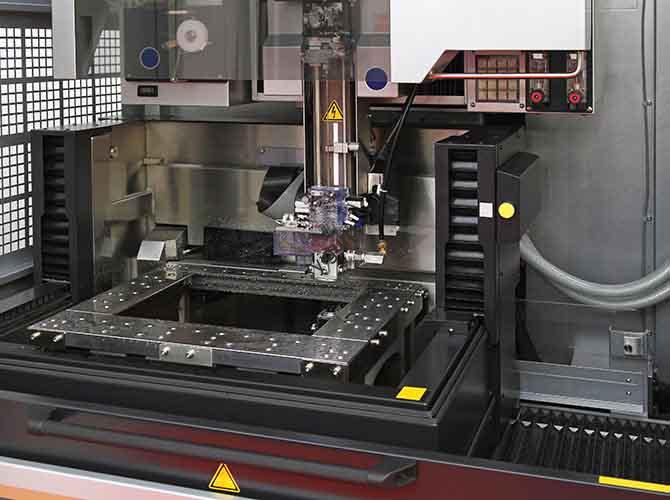
In the world of high-end manufacturing, speed and extreme accuracy are the keys to success. 5-axis CNC precision machining has emerged as the ultimate solution for creating complex parts that traditional machines simply cannot handle. By moving a cutting tool across five different axes at once, this technology allows for incredible design freedom. Whether it is a jet engine blade or a custom medical implant, 5-axis machining ensures your parts are perfect the first time. This guide explores how it works, why it beats 3-axis methods, and how to choose the right partner for your project.
How Does 5-Axis Machining Actually Work?
To understand the value, you first need to know the mechanics. Most machines move in three linear directions: X (left-right), Y (front-back), and Z (up-down). A 5-axis machine adds two rotary axes (usually called A, B, or C).
The Core Operating Principles
These extra axes allow the machine to tilt and rotate the part or the tool. This means the cutting edge always stays at the optimal angle, even when carving deep holes or curved surfaces.
- Axis Logic: The machine follows the ISO Cartesian coordinate system. While the tool moves linearly, the rotary table or spindle head spins to reach every angle of the part.
- Precision Standard: These machines typically hit an accuracy of ±0.01 mm. They also produce a very smooth surface finish (Ra 0.8 μm), which often removes the need for extra polishing.
- One-Setup Benefit: Because the tool can reach almost every side of a part, you only need to clamp the workpiece once. This is the biggest secret to its high accuracy.
Why Is 5-Axis Better Than 3-Axis?
Many shops still use traditional 3-axis machines. However, for complex work, they often fall behind. Below is a comparison of why 5-axis CNC precision machining is the superior choice for modern industry.
Comparison: 5-Axis vs. 3-Axis Performance
| Advantage | 5-Axis Precision Machining | Traditional 3-Axis Machining |
| Setup Accuracy | Single setup removes clamping errors. | Needs 3–5 setups; errors add up. |
| Production Speed | Completes a part in hours. | Can take days due to repositioning. |
| Complex Shapes | Perfect for deep cavities and curves. | Struggles with anything non-flat. |
| Surface Quality | Consistent contact for a mirror finish. | Leaves tool marks; requires manual sanding. |
The Bottom Line: An aerospace turbine blade made with a 5-axis machine has a profile error of less than 2 μm. On a 3-axis machine, that error jumps to 10 μm. In the sky, that difference matters for fuel safety and efficiency.
Where Is This Technology Used Most?
High-tech industries rely on 5-axis machining because they cannot afford mistakes. Here is how different sectors use it to solve real problems.
Aerospace and Defense
Parts like impellers and turbine blades have complex, twisted shapes. A 5-axis machine can carve these from a single block of Titanium alloy. This ensures the part is light but strong enough to handle extreme heat and pressure.
Automotive Innovation
Car makers use this for engine blocks and gearbox gears. For example, engine blocks have oil channels that sit at 45° angles. A 5-axis machine drills these in one pass. This reduces oil resistance by 20%, making the engine run much smoother.
Medical and Electronics
In surgery, implants must match the human body’s curves. 5-axis machining creates hip joints with less than 5 μm of deviation. In electronics, it is used for 5G base station brackets, ensuring signal parts align perfectly to prevent data loss.
How to Choose a 5-Axis Machining Service?
Not all shops are equal. When you look for a partner, keep these four priorities in mind to ensure your project succeeds.
1. Equipment and Control Systems
Check if they use top-tier brands like Siemens Sinumerik or Fanuc. The machine frame should be made of cast iron, which damps vibration 3 times better than steel. This leads to a much better surface finish.
2. Programming and CAM Skills
The machine is only as good as its code. Ensure the team uses advanced software like Mastercam or UG NX. Poor programming can lead to expensive tool collisions or “gouging” (cutting too deep) into your part.
3. Quality Control Standards
A high-end provider should have CMM (Coordinate Measuring Machines) with ±0.001 mm accuracy. They should also hold ISO 9001 or AS9100 certifications to prove they follow strict quality rules.
What Is the Future of 5-Axis Tech?
The industry is moving toward Intelligent Automation. New machines now use AI to predict when a tool is about to wear out. They can adjust their own speed in real-time to save energy. We are also seeing a shift toward Dry Machining, which uses less coolant to protect the environment while still hitting 60,000 RPM speeds.
Conclusion
5-axis CNC precision machining is more than just a fancy tool; it is a necessity for modern manufacturing. By eliminating multiple setups and providing unmatched accuracy, it saves time and reduces material waste. Whether you are working with Inconel 718 or Aluminum 7075, this process delivers the precision required to stay competitive.
FAQ
What is the smallest feature a 5-axis machine can make?
Using micro-tools, we can machine features as small as 0.05 mm. This is common for medical catheters or micro-electronics.
Is it too expensive for just 10 or 20 parts?
Actually, it can be cheaper. While the hourly rate is higher, you save 70% of the labor time spent on setups. Faster delivery often outweighs the machine cost.
How does it help reduce material waste?
Because the tool can follow the part’s final shape so closely, we can use smaller raw blocks. For expensive titanium, this can save thousands of dollars per batch.
Discuss Your Projects with Yigu Rapid Prototyping
At Yigu Technology, we specialize in solving the toughest manufacturing puzzles. For our aerospace partners, we produce turbine blades that meet strict AS9100 standards using advanced Siemens controls. For automotive projects, our online measurement tools ensure every gear tooth is perfect. We offer a full “turnkey” service, from CAM programming to anodizing and assembly.
Would you like us to review your 3D models and provide a free 5-axis feasibility study today?