
Introduction
In the fast-paced world of manufacturing, the ability to create high-quality molds quickly can make all the difference in getting your product to market first. Rapid prototyping (RP) technology has revolutionized mold making, offering a range of innovative methods that save time, reduce costs, and boost design flexibility. But with so many options available, you might be wondering: just how many ways can rapid prototyping technology be applied to mold making? Let’s explore the diverse techniques that are transforming the industry.
1. Understanding Rapid Prototyping in Mold Making
Before diving into the specific methods, let’s clarify what we mean by rapid prototyping in the context of mold making. Rapid prototyping refers to a group of technologies that build physical objects layer by layer from digital 3D models. When applied to mold making, these technologies enable manufacturers to create molds faster, more affordably, and with greater design freedom compared to traditional methods like conventional machining.
The core advantage of using rapid prototyping for mold making is its ability to streamline the development process. Instead of waiting weeks or months for tooling, you can have functional molds in days. This speed is a game-changer for industries where time-to-market is critical, such as automotive, medical, and consumer electronics.
2. What Are the 3D Printing Methods for Rapid Mold Prototyping?
3D printing has emerged as a powerhouse in rapid mold prototyping, offering several distinct methods to create molds quickly.
Fused Deposition Modeling (FDM)
Fused Deposition Modeling (FDM) is one of the most accessible 3D printing methods for mold prototyping. It works by extruding thermoplastic filaments layer by layer to build up the mold geometry. It is ideal for basic prototype molds and low-volume production runs. The materials commonly used include ABS, PLA, and nylon. FDM is a great choice when you need a quick, inexpensive mold for initial design validation or very small production runs.
Stereolithography (SLA)
Stereolithography (SLA) uses ultraviolet (UV) light to cure liquid resin layer by layer, creating highly detailed molds with smooth surface finishes. It offers high precision, making it ideal for intricate mold designs, and an excellent surface finish that reduces the need for post-processing. SLA molds are perfect for prototypes that require a high level of detail or when you need to test the aesthetic appearance of your product.
Selective Laser Sintering (SLS)
Selective Laser Sintering (SLS) works by using a laser to melt and fuse powdered materials, such as nylon, polycarbonate, or even some metals, layer by layer. It produces durable molds suitable for functional testing and is excellent for achieving complex geometries and internal features. SLS molds offer a balance between speed, durability, and design complexity, making them a good choice for small-to-medium volume production runs.
3. How Is CNC Machining a Hybrid Rapid Prototyping Approach?
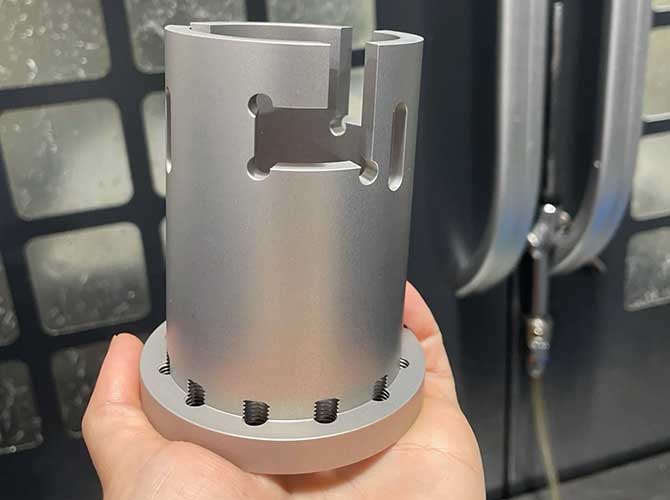
While CNC machining is a traditional manufacturing method, it has evolved to become part of the rapid prototyping toolkit for mold making, especially when combined with modern technologies. It uses computer-controlled machines to carve molds from solid blocks of material, typically metals like aluminum or steel. It offers high accuracy and precision, essential for molds that require tight tolerances, and excellent durability, especially when using metal materials.
Metal CNC molds have higher durability and longer cycle life compared to non-metal alternatives and can produce molds with superior surface finishes. CNC machining is often the go-to choice when you need a durable mold that can withstand multiple production cycles or when working with high-temperature materials that would damage 3D printed molds.
4. What Are Hybrid Prototyping Approaches for Mold Making?
As manufacturing technology advances, hybrid approaches that combine additive and subtractive manufacturing techniques are becoming increasingly popular.
Direct Metal Laser Sintering (DMLS)
Direct Metal Laser Sintering (DMLS) bridges the gap between 3D printing and CNC machining. It uses a laser to sinter powdered metals, creating durable metal molds with complex geometries. It combines the design freedom of 3D printing with the durability of metal and can produce molds with internal channels and complex features. DMLS is ideal for creating metal molds with complex geometries that would be difficult or expensive to produce with traditional machining.
Hybrid Prototyping Machines
Hybrid prototyping machines integrate additive and subtractive manufacturing in a single system, optimizing speed and precision based on the specific requirements of the mold. For example, an additive method like SLA might be used to create the detailed cavity geometry of an injection mold, while the larger features of the metal mold base are fabricated using high-speed CNC machining. This combination leverages the strengths of both technologies.
5. What Are the Soft Tooling Materials for Rapid Mold Prototyping?
Soft tooling refers to the use of non-metallic materials to create molds quickly and affordably for prototype and low-volume production.
- Silicone Rubber Molds: These are created by pouring liquid silicone over a master pattern. They offer quick production time, low cost, and are excellent for capturing fine details. They are ideal for short-run injection molding trials and prototyping parts with complex geometries.
- Aluminum Tooling: Aluminum strikes a balance between cost, speed, and durability. It is much easier to machine than steel, making it a popular choice for rapid mold prototyping. It enables faster time-to-market and is suitable for small to medium production runs.
6. Comparing Rapid Prototyping Methods for Mold Making
| Method | Speed | Cost | Durability | Complexity | Best For |
|---|---|---|---|---|---|
| FDM | Fast | Low | Low | Low to Medium | Basic prototypes, low-volume tests |
| SLA | Fast | Medium | Low to Medium | High | Detailed prototypes, master patterns |
| SLS | Medium | Medium | Medium | High | Functional prototypes, small production runs |
| CNC Machining | Medium to Slow | High | High | Medium to High | Durable molds, production-grade tooling |
| DMLS | Medium | High | High | High | Complex metal molds |
| Hybrid | Medium | Medium to High | High | Very High | Complex molds with varying requirements |
| Silicone Rubber | Fast | Low | Low | High | Short runs, design iterations |
| Aluminum Tooling | Medium | Medium | Medium | Medium to High | Small to medium production runs |
Conclusion
Rapid prototyping technology offers a diverse and powerful toolkit for mold making. From the speed and accessibility of FDM and silicone rubber to the precision of SLA, the durability of SLS and CNC machining, and the design freedom of hybrid methods like DMLS, there is a solution for nearly every prototyping need. By understanding the strengths and limitations of each approach, manufacturers can select the optimal method to accelerate development cycles, reduce costs, and bring innovative products to market faster.
FAQ
What is the fastest rapid prototyping method for making molds?
Fused Deposition Modeling (FDM) and silicone rubber molding are among the fastest methods, often producing molds in just a few days. These are ideal when you need to quickly validate a design concept or produce a small number of prototype parts.
Can rapid prototyping molds be used for mass production?
While some methods like CNC machined aluminum or steel molds can handle small to medium production runs, most rapid prototyping molds are not designed for mass production. They typically lack the durability of traditional production tooling but excel at bridge production, allowing you to start producing limited quantities while waiting for your production tooling to be completed.
How do I choose the right rapid prototyping method for my mold?
The right method depends on your timeline, budget, design complexity, material requirements, and production volume. For quick, low-cost prototypes with basic geometry, FDM or silicone rubber may be best. For detailed, high-precision molds, consider SLA or SLS. When durability and production capability are key, CNC machining or hybrid methods are often the way to go.
Discuss Your Projects with Yigu Rapid Prototyping
At Yigu Rapid Prototyping, we believe rapid prototyping is reshaping mold making. We leverage a range of methods—from SLA for intricate details to CNC for durable tooling—to help our clients iterate fast, cut costs, and speed up time-to-market. Let our team help you choose the perfect approach for your next project.
Contact Yigu Rapid Prototyping today to discuss your project. Let’s build something great together.