
Introduction
If you are developing a new product, you need prototypes that look and feel like the real thing. Two popular methods for small-batch production are vacuum molding and low-pressure infusion. Both use silicone molds to create plastic parts quickly and affordably. But they are not the same. One works best for small, detailed components. The other handles large, complex shapes with thick walls. So how do you choose? This guide breaks down how each process works, their key differences, and when to use them. By the end, you will know exactly which method matches your project needs.
What Is Vacuum Molding?
How Does Vacuum Molding Work?
Vacuum molding, also called vacuum casting, uses negative pressure to pull liquid material into a silicone mold. This ensures every tiny detail of the original part gets copied. Here is the step-by-step process:
- Create the Master Pattern: You start with a master prototype, usually made by 3D printing or CNC machining.
- Make the Silicone Mold: The master is suspended in a frame, and liquid silicone is poured over it inside a vacuum chamber. The vacuum removes air bubbles, ensuring the mold captures every detail.
- Cast the Parts: Once the silicone cures, it is cut open and the master is removed. Liquid resin, often polyurethane (PU) , is poured into the mold cavity.
- Vacuum Casting: The filled mold goes back into the vacuum chamber. The vacuum pulls the resin into all the fine features and removes trapped air.
- Demold and Finish: After the resin cures in an oven, you peel open the mold to reveal your replica.
What Are the Main Advantages?
Vacuum molding is a favorite for rapid prototyping because of these benefits:
- High Detail: The vacuum ensures excellent replication of surface textures, logos, and thin walls.
- Material Variety: You can use resins that mimic ABS, PC, PMMA (acrylic) , rubber, or even transparent materials.
- Cost-Effective for Small Runs: Tooling costs are much lower than injection molding, making it ideal for 10 to 50 pieces.
- Good Mechanical Properties: Parts are strong and can be used for functional testing.
Where Is It Used?
You will find vacuum molding used for:
- Electronic Housings: Phone cases, sensor enclosures, and remote controls.
- Automotive Interiors: Dashboard knobs, vents, and small trim pieces.
- Medical Devices: Housings for diagnostic tools during testing phases.
- Display Models: Showroom samples that need a perfect finish.
What Is Low-Pressure Infusion?
How Does Low-Pressure Infusion Work?
Low-pressure infusion is a different casting method. Instead of using a vacuum to pull material, it uses gentle positive pressure to inject resin into the mold. This makes it better for bigger parts.
- Prepare the Mold: A silicone mold is created, often with a harder durometer (shore hardness) to hold its shape.
- Mix the Resin: A two-part polyurethane or epoxy system is mixed. The mixing ratio must be very accurate.
- Inject the Material: The mixed resin is injected into the mold cavity under low pressure, typically less than 5 bar. This pressure fills the mold evenly.
- Cure and Demold: The part cures at room temperature or in an oven. After curing, it is removed from the mold.
What Are the Main Advantages?
This process solves specific problems that vacuum molding cannot handle:
- Handles Large Parts: It is perfect for parts that are too big for a standard vacuum chamber, like bumpers or panels.
- Manages Thick Walls: You can cast parts with sections up to 50mm thick without sink marks or voids.
- Faster Cycle Times: Injection is quicker than relying on vacuum draw, making it good for 50 to 200 pieces.
- Consistent Quality: The controlled pressure ensures uniform material distribution.
Where Is It Used?
Low-pressure infusion is the go-to method for:
- Large Automotive Parts: Bumpers, spoilers, and interior door panels.
- Industrial Housings: Covers for machinery, electrical boxes, and outdoor equipment.
- Thick Components: Handles, grips, or parts requiring structural ribs.
Core Similarities: What Do They Have in Common?
Before we dive into the differences, it helps to understand what links these two processes.
1. Both Use Silicone Molds
Both methods rely on flexible silicone molds to create parts. This material is key because it can bend to release complex shapes without damaging the replica.
2. Ideal for Small-Batch Production
Neither process is for mass production. They are designed for low-volume manufacturing where injection molding tools would be too expensive. You typically get 10 to 200 parts from a single silicone mold.
3. Material Flexibility
Both use polyurethane-based resins that can simulate the look and feel of production plastics. You can get different colors, hardness levels, and even flame-retardant properties.
4. Replication Principle
The core workflow is the same: Master pattern $\rightarrow$ Silicone mold $\rightarrow$ Cast parts. This makes both processes quick and versatile for prototyping.
Key Differences: How to Tell Them Apart
Understanding the differences is crucial for making the right choice.
1. Part Size: Small vs. Large
This is the most important factor.
| Feature | Vacuum Molding | Low-Pressure Infusion |
|---|---|---|
| Ideal Part Size | Small to medium. | Medium to large. |
| Typical Max Size | ~ 300mm x 300mm x 200mm | Up to 1500mm x 1000mm x 500mm |
| Wall Thickness | Best for thin walls (1-3mm). | Can handle thick sections (up to 50mm). |
| Example Parts | Phone cases, knobs, connectors. | Car bumpers, machine covers. |
Why? Vacuum molding happens inside a chamber. If the part is too big, the chamber and mold become unmanageable. Low-pressure infusion injects material into the mold, so the part size is only limited by the mold you can make.
2. The Silicone Mold Itself
The molds are engineered differently for each process.
- Vacuum Molds: These are usually softer ( 20-30 Shore A ) to capture fine details. They are often cast as a single block and then cut open.
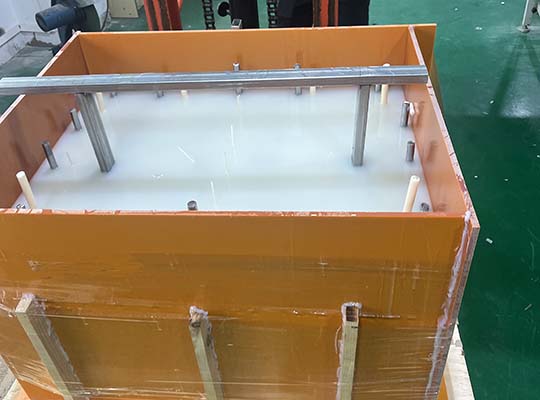
- Infusion Molds: These need to be harder ( 40-50 Shore A ) to resist deforming under injection pressure. They often require a rigid support frame or backing to keep their shape.
3. How Pressure Is Applied
This is a fundamental mechanical difference.
- Vacuum Molding uses negative pressure (suction). The vacuum removes air from the mold and “pulls” the resin into every crevice.
- Low-Pressure Infusion uses positive pressure ( 2-5 bar ). It “pushes” the resin into the mold. This pushing action is better for filling large cavities quickly and forcing resin into thick sections.
4. Production Volume Sweet Spot
While both are for low volumes, they excel at different quantities.
- Vacuum Molding is most cost-effective for 10 to 50 pieces. If you need 100+ small parts, the per-unit time might become too high.
- Low-Pressure Infusion is more efficient for 50 to 200 pieces, especially for large parts. The faster injection cycle saves significant time over multiple casts.
Which Process Should You Choose?
Here is a simple decision guide based on real project requirements.
Pick Vacuum Molding If:
- Your parts are smaller than a shoebox.
- You need high detail, like sharp lettering or a textured surface.
- You only need a handful of parts (under 50).
- You want materials that feel exactly like ABS or polycarbonate.
- Your parts have thin walls and a consistent thickness.
Pick Low-Pressure Infusion If:
- Your parts are large, like a motorcycle fairing or an equipment housing.
- Your design has thick ribs or bosses.
- You need 50 to 200 parts from the same tool.
- You want faster turnaround for each part.
- You are working with large, flat surfaces that need even filling.
Real-World Examples from Experience
Let’s look at two projects to see this in action.
Example 1: A Medical Device Housing
A client needed 30 prototypes of a new handheld scanner. The part was about the size of a TV remote, with a complex shape and a textured grip. We used vacuum molding. The vacuum pulled the resin perfectly into the texture, and the soft silicone mold released the complex shape easily. The client got functional parts that matched the 3D-printed master exactly.
Example 2: An Automotive Bumper Trim
Another client needed 80 prototype bumper trims for a new car model. Each trim piece was over 1 meter long. Vacuum molding was impossible—it would not fit in the chamber. We used low-pressure infusion. We created a hard silicone mold in a steel frame and injected the resin. The pressure filled the long, thin shape without voids, and we produced all 80 parts in a week.
Troubleshooting Common Issues
Even with the right process, things can go wrong. Here is how to fix common problems.
1. Mold Wear and Tear
- Problem: The silicone mold starts to tear after several casts.
- Solution: For vacuum molding, use a slightly harder silicone (30-40 Shore A) if the part geometry allows. For infusion, always use a support frame. You can also rotate between two identical molds to extend tool life.
2. Bubbles or Voids in the Part
- Problem: Air bubbles get trapped, creating weak spots or bad surfaces.
- Solution:
- Vacuum: Make sure your resin is degassed in the chamber before pouring. Check for leaks in the vacuum line.
- Infusion: Increase the injection pressure slightly or check if the mold needs better air vents at the far ends.
3. Parts Sticking to the Mold
- Problem: The part is hard to remove, or it tears.
- Solution: You likely need a better release agent. Spray a high-quality silicone release agent evenly on the mold before every single cast. Let it dry properly before pouring resin.
Conclusion
Choosing between vacuum molding and low-pressure infusion does not have to be hard. Think about your part. Is it small and detailed? Go with vacuum molding. Is it large or thick? Low-pressure infusion is your answer. Both methods are excellent for rapid prototyping and low-volume production. They save you the huge cost of injection molding tools while giving you real, functional plastic parts. By matching the process to your part’s size and complexity, you get quality replicas fast and on budget.
FAQ
1. Can I use vacuum molding for parts with very thick walls?
It is not ideal. Thick sections in vacuum molding can take a long time to cure and may have internal shrinkage or voids. Low-pressure infusion is much better for thick walls because the pressure packs the material in.
2. How many parts can I get from one silicone mold?
Typically, a good silicone mold can produce 20 to 50 parts in vacuum molding, and 50 to 200 parts in low-pressure infusion. The harder silicones used in infusion generally last longer. The part geometry also affects mold life; simple shapes last longer than complex ones with undercuts.
3. Is the surface finish the same for both processes?
For small parts, vacuum molding usually gives a superior finish. For large parts, low-pressure infusion gives a very good finish, but you might see subtle flow lines on very large surfaces that you don’t get with vacuum casting.
4. Which method is faster for getting the first part?
Vacuum molding is often faster for the first part if the part is small. Making the silicone mold is quick. For large parts, creating the larger, reinforced mold for infusion takes a bit more time initially.
5. What materials can I use?
Both use liquid polyurethane (PU) resins. You can get resins that mimic standard plastics (ABS, PP, PA), rubbers, and even clear materials like PMMA. For high-temperature needs, special resins are available for both processes.
Discuss Your Projects with Yigu Rapid Prototyping
Not sure which path to take? At Yigu Rapid Prototyping, we specialize in both vacuum molding and low-pressure infusion. We have helped engineers and designers across automotive, medical, and consumer electronics industries get their parts right. Share your 3D files and project goals with us. We will analyze your part geometry, volume, and budget to recommend the best process. Let’s turn your design into a reality. [Contact Yigu Technology today] for a free consultation and quote.